Travel-friendly mesh Wi-Fi systems can make hotel rooms, vacation rentals, RVs, and larger temporary spaces easier to connect. The best options balance portability with dependable coverage, modern wireless standards, simple setup, and useful security features.
This roundup includes compact travel routers, full mesh kits, Starlink-compatible options, and flexible systems for work, streaming, and multiple devices. Use the guide below to narrow the choices by trip type, coverage needs, speed, and budget.
Best 10 Travel-Friendly Mesh Wi-Fi Systems Picks for 2026
Best Compact Whole-Home Pick

- Three compact Wi-Fi 6 nodes cover up to 4,800 square feet.
- App-based setup, parental controls, and Trend Micro security.
- AiMesh support enables flexible expansion with compatible ASUS routers.
Best For: Compact whole-home coverage with ASUS ecosystem flexibility
Best Cellular Connectivity
GL.iNet MUDI 7 5G Travel Router

- Combines 5G, eSIM, dual nano-SIM, and Wi-Fi 7.
- 13.5-hour battery supports untethered travel use.
- Multi-WAN failover and VPN features target demanding mobile setups.
Best For: International travel and mobile work requiring resilient connectivity
Best Large-Area Coverage

- Three Wi-Fi 6 units cover up to 6,500 square feet.
- Supports up to 150 devices and wired Ethernet backhaul.
- Three Gigabit ports per unit add flexible connectivity.
Best For: Large homes and high-device households needing broad mesh coverage
Best Pocket VPN Router

- Compact Wi-Fi 6 router with 2.5G WAN and USB 3.0.
- Pre-installed OpenVPN and WireGuard support client and server modes.
- OpenWrt, WPA3, and encrypted DNS provide customization and security.
Best For: Privacy-focused travelers needing a customizable portable router
Best Large-Home Value
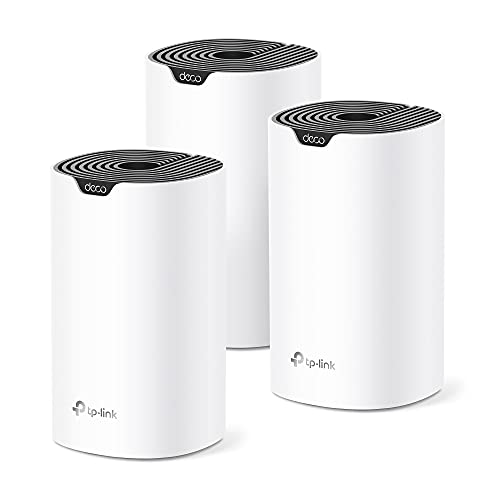
- Covers up to 5,500 square feet
- Seamless roaming with one network
- Six Gigabit Ethernet ports total
Best For: Large homes and family networks
Best for Starlink Travel

- Works with supported Starlink systems
- Wired or wireless mesh expansion
- Portable, wall- or table-mountable design
Best For: Starlink users adding coverage on the go
Best Flexible Two-Node System

- Covers up to 1,700 square feet
- Two Gigabit ports per node
- Supports router, AP, repeater, and client modes
Best For: Small homes and flexible travel setups
Best Portable Pick
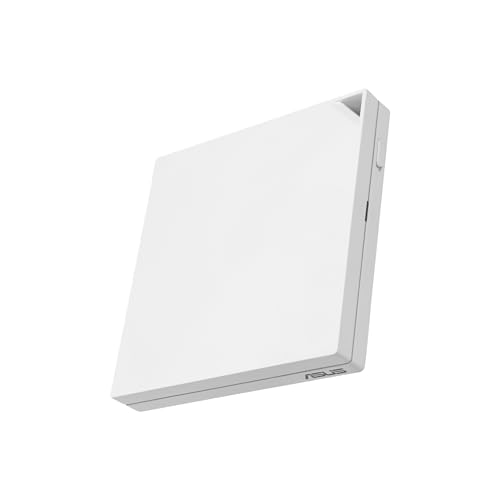
- Wi-Fi 6 speeds up to 3,000 Mbps
- 4G/5G tethering and WISP mode
- VPN and multi-layer network security
Best For: Travelers needing flexible connectivity on the go
Best for Wide Coverage
Linksys Micro Mesh WiFi 6 System

- Three-pack covers up to 5,000 square feet
- Supports 100+ devices at up to 3.0 Gbps
- Guest mode and WPA3 security
Best For: Large temporary spaces with many connected devices
Best Compact Starlink Option
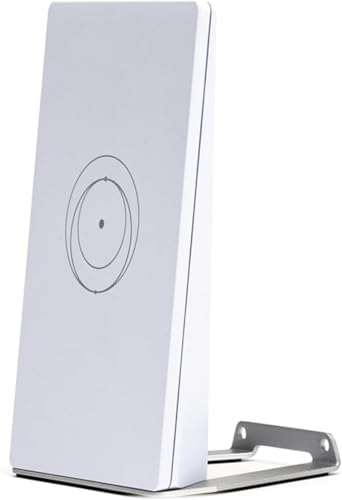
- Compatible with Starlink Gen 3 and Mini
- Wi-Fi 6 speeds up to 1,200 Mbps
- Mesh-ready and energy efficient
Best For: Small mobile spaces and Starlink-based setups
Best Compact Whole-Home Pick – ASUS ZenWiFi AX Mini
The ASUS ZenWiFi AX Mini is a practical choice for shoppers who want travel-friendly mesh Wi-Fi systems that can also provide broad coverage at home. Its three compact Wi-Fi 6 nodes cover up to 4,800 square feet and support app-based setup, parental controls, and AiMesh expansion.
Best For: Travelers who want a compact three-node system for larger homes, guest spaces, or flexible ASUS AiMesh setups.
Pros:
- Three-node Wi-Fi 6 system covers up to 4,800 square feet.
- Compact 3.54-inch-square nodes are easy to place around a home or temporary living space.
- ASUS Router App supports three-step setup and network management.
- Includes lifetime cloud-based Trend Micro security and parental controls.
Cons:
- Dual-band AX1800 performance is more modest than newer tri-band systems.
- Designed for whole-home coverage rather than cellular or battery-powered travel connectivity.
The ZenWiFi AX Mini stands out when compact hardware and broad indoor coverage matter more than cutting-edge throughput. AiMesh compatibility also gives ASUS users room to expand or mix compatible routers later.
Best Cellular Connectivity – GL.iNet MUDI 7 5G Travel Router
The GL.iNet MUDI 7 is built for travelers who need more than a conventional mesh node. This travel-friendly mesh Wi-Fi system alternative combines 5G, tri-band Wi-Fi 7, eSIM and dual nano-SIM support, battery power, VPN tools, and multiple failover options in one portable router.
Best For: International travelers, mobile professionals, event teams, and remote workers who need flexible cellular connectivity and backup links.
Pros:
- Supports 5G, eSIM, and two physical nano-SIM slots with dual standby.
- Tri-band Wi-Fi 7 supports up to 64 connected devices.
- 13.5-hour battery and 30W USB-C fast charging support untethered use.
- Quad-path multi-WAN failover can combine 5G, Ethernet, Wi-Fi repeater, and USB tethering.
Cons:
- Its advanced cellular, VPN, and multi-WAN features may be more than casual travelers need.
- Actual wireless, 5G, and VPN speeds vary with network and setup conditions.
With a touchscreen, SIM switching, VPN support, and wired connectivity, the MUDI 7 is the most connectivity-focused option here. It is particularly compelling when staying online matters across hotels, Airbnbs, vehicles, or temporary work sites.
Best Large-Area Coverage – TP-Link Deco X55
The TP-Link Deco X55 is a strong option for shoppers comparing travel-friendly mesh Wi-Fi systems that can transition into full home coverage. Its three Wi-Fi 6 units cover up to 6,500 square feet, connect up to 150 devices, and support wired Ethernet backhaul for more consistent performance.
Best For: Large homes, connected households, and travelers who want a three-pack that can handle many devices when back at home.
Pros:
- Three-node system covers up to 6,500 square feet.
- Supports up to 150 connected devices with Wi-Fi 6 AX3000 performance.
- Each unit has three Gigabit Ethernet ports and supports wired backhaul.
- Deco app provides guided setup, remote management, and network controls.
Cons:
- It is a larger three-unit home mesh kit rather than a battery-powered travel router.
- Premium HomeShield features may require an additional service, while basic security and parental controls are included.
The Deco X55 makes the most sense when coverage area and device capacity are priorities. Its Ethernet ports and backhaul support add flexibility, while the app keeps setup manageable for users who do not want to configure a network manually.
Best Pocket VPN Router – GL.iNet Beryl AX
The GL.iNet Beryl AX is a compact choice for travelers seeking travel-friendly mesh Wi-Fi systems with stronger privacy controls. It offers Wi-Fi 6, a 2.5G WAN port, OpenVPN and WireGuard support, OpenWrt customization, and a travel-oriented design for sharing a secure connection from hotels or other temporary networks.
Best For: Travelers who want a small, customizable router for VPN-protected hotel Wi-Fi, international trips, and portable network sharing.
Pros:
- Compact travel router supports dual-band Wi-Fi 6 with speeds up to 574 Mbps and 2402 Mbps.
- Pre-installed OpenVPN and WireGuard can operate as either client or server.
- 2.5G WAN, Gigabit LAN, and USB 3.0 support flexible wired connections.
- OpenWrt firmware enables extensive customization, while WPA3 and encrypted DNS add security options.
Cons:
- It is a single portable router, not a multi-node mesh system.
- VPN speeds are lower than the advertised Wi-Fi link rates and depend on network conditions.
- Advanced OpenWrt features may require more setup than a basic plug-and-play router.
The Beryl AX is a particularly useful travel companion when privacy and flexibility outweigh maximum coverage. Its VPN cascading, physical toggle, and multi-gigabit WAN make it well suited to users comfortable with a little configuration.
Best Large-Home Value – TP-Link Deco S4 3-Pack
The TP-Link Deco S4 is a practical choice for shoppers comparing travel-friendly mesh Wi-Fi systems that can also handle broad home coverage. Its three-unit design covers up to 5,500 square feet, supports seamless roaming, and provides six Gigabit Ethernet ports in total.
Best For: Large homes, families needing parental controls, and users who want simple app-based setup with Alexa support.
Pros:
- Three units provide coverage of up to 5,500 square feet.
- Single network name enables seamless roaming between nodes.
- Supports up to 100 devices and includes six Gigabit Ethernet ports.
- Offers profile-based parental controls and easy Android or iOS setup.
Cons:
- It is a three-unit system, so it may be more equipment than smaller spaces require.
- Uses Wi-Fi 5 rather than a newer Wi-Fi generation.
- A modem is required for most internet providers.
The Deco S4 stands out when coverage and straightforward whole-home roaming matter more than the newest wireless standard. Its larger three-pack footprint is less compact for travel, but it offers strong flexibility for extended stays or larger properties.
Best for Starlink Travel – Mini Mesh Router for Starlink
This compact Starlink-compatible node is a specialized option among travel-friendly mesh Wi-Fi systems. It supports wired or wireless expansion for compatible Starlink setups, covers up to 1,250 square feet, and can sit on a table or mount to a wall.
Best For: Starlink users who need a portable mesh node for Gen 2, Gen 3, Gen 4, or Mini systems.
Pros:
- Compatible with Starlink Gen 2, Gen 3, Gen 4, and Mini systems.
- Supports both Ethernet and wireless mesh setup.
- Portable design includes a stand, power supply, screws, and drywall anchors.
- Provides up to 1,250 square feet of coverage and supports 128-plus devices.
Cons:
- Not compatible with Starlink Gen 1 wireless mesh networking.
- Cannot wirelessly mesh with third-party mesh systems.
- Placement is recommended within two rooms of the main router and away from obstructions.
This router makes the most sense when you already use a supported Starlink system and want a small additional node. Its compatibility limitations mean it is not a general-purpose mesh system for unrelated internet setups.
Best Flexible Two-Node System – Cudy M1300 2-Pack
The Cudy M1300 2-Pack is a flexible pick for travel-friendly mesh Wi-Fi systems when you want multiple operating modes and wired connectivity. The pair covers up to 1,700 square feet, provides two Gigabit ports per node, and supports fast roaming across one network.
Best For: Travelers and small-home users who need flexible router, access point, repeater, or client modes.
Pros:
- Two nodes cover up to 1,700 square feet, with support for up to three nodes and 2,400 square feet.
- Each node has two Gigabit Ethernet ports.
- Offers fast roaming and multi-band simultaneous backhaul.
- Includes app and cloud management plus VPN server and client support.
Cons:
- The supplied coverage is smaller than the TP-Link Deco S4 three-pack.
- Up to 128 clients are supported, with 50 recommended for best results.
- It uses Wi-Fi 5, despite the supplied listing also identifying Wi-Fi 6 in its details.
The M1300 is appealing for users who value configuration choices and wired performance in a compact two-node package. Its broad mode selection makes it more adaptable than a basic mesh kit, while the coverage suits smaller spaces.
Best Portable Pick – ASUS RT-AX57 GO
The ASUS RT-AX57 GO is a versatile choice for shoppers comparing travel-friendly mesh Wi-Fi systems and portable routers. Its Wi-Fi 6 performance, USB-C power, public Wi-Fi mode, and 4G/5G tethering support make it well suited to changing travel setups.
Best For: RV trips, cruises, hotels, remote work, and travelers who want flexible connection options.
Pros:
- Wi-Fi 6 speeds up to 3,000 Mbps with support for up to 70 devices.
- Supports 4G LTE/5G tethering and private hotspot creation through WISP mode.
- Includes VPN features, AiProtection, DNS over TLS, and WPA3 support.
- Compact 7.36-ounce design with USB-C power and AiMesh compatibility.
Cons:
- It is a single portable router rather than a multi-unit mesh kit.
- Its advanced features may be more than casual travelers need.
The RT-AX57 GO stands out when portability and connection flexibility matter more than whole-home mesh coverage. AiMesh compatibility gives it room to fit into a broader ASUS setup later.
Best for Wide Coverage – Linksys Micro Mesh WiFi 6 System
The three-pack Linksys Micro Mesh system is a practical option among travel-friendly mesh Wi-Fi systems when coverage across a larger temporary property matters. Its dual-band Wi-Fi 6 design is rated for up to 5,000 square feet and more than 100 connected devices.
Best For: Vacation rentals, large homes, workspaces, and groups with many connected devices.
Pros:
- Three-unit system designed to provide coverage up to 5,000 square feet.
- Supports more than 100 devices and speeds up to 3.0 Gbps.
- Four ports and 3.0 Gbps LAN bandwidth support wired connections.
- Includes guest mode and WPA3 security.
Cons:
- Less compact and less travel-oriented than a single portable router.
- The supplied information does not specify battery or USB-C power support.
This Linksys kit makes the most sense when you need distributed coverage rather than a pocket-sized travel router. The three-node format can help reduce weak spots, but it requires more packing space and setup than a single unit.
Best Compact Starlink Option – Mini Dual-Band WiFi Router
This compact dual-band router is worth considering when comparing travel-friendly mesh Wi-Fi systems for small spaces or mobile Starlink setups. It supports Starlink Gen 3 and Mini systems, offers mesh expansion, and covers approximately 110 square meters.
Best For: Small homes, apartments, mobile setups, and Starlink users wanting a simple secondary router.
Pros:
- Compatible with Starlink Gen 3 and Mini systems as well as standard ISPs.
- Dual-band Wi-Fi 6 supports speeds up to 1,200 Mbps.
- Mesh-ready design allows coverage expansion.
- Compact, energy-efficient design with plug-and-play setup.
Cons:
- Coverage is limited to approximately 110 square meters.
- It has fewer advanced travel features than the ASUS model.
- The generic branding and limited supplied specifications may warrant careful compatibility checking.
This mini router is a sensible fit for straightforward, low-power deployments where Starlink compatibility and expandable coverage are priorities. Its modest coverage makes it better for small areas than large group accommodations.
How We Picked These Travel-Friendly Mesh Wi-Fi Systems
We selected systems and portable routers based on practical travel requirements: compact designs, flexible internet-source support, wireless performance, coverage potential, setup convenience, and security features. The list includes Wi-Fi 6 and Wi-Fi 7 models, traditional multi-node mesh kits, VPN-capable travel routers, and options designed for Starlink or cellular tethering.
Because “travel-friendly” can mean different things, the selection covers both highly portable single-router solutions and larger kits suitable for vacation homes, RVs, group accommodations, or temporary offices. Product claims such as coverage and connected-device capacity should be treated as ideal maximums; walls, interference, backhaul quality, and internet service can reduce real-world performance.
Quick Comparison
- Best for full-home or vacation-rental coverage: Three-piece Wi-Fi 6 mesh kits such as the ASUS ZenWiFi AX Mini, TP-Link Deco X55, and Linksys Micro Mesh.
- Best for true portability: The GL.iNet Beryl AX, ASUS RT-AX57 GO, and GL.iNet MUDI 7 offer compact designs and travel-oriented networking features.
- Best for Starlink setups: The Starlink-compatible Mini Mesh Wi-Fi Router is designed around Gen 2, Gen 3, Gen 4, and Mini systems.
- Best for value: Older Wi-Fi 5 kits such as the TP-Link Deco S4 and Cudy M1300 can provide broad coverage at a lower cost.
Key Buying Factors for Travel-Friendly Mesh Wi-Fi Systems
Portability and Power
Check the router’s size, power adapter requirements, and whether it is practical to pack. A compact travel router is usually better for hotels and public Wi-Fi, while a multi-node kit makes more sense when you are staying in one location for several days or weeks.
Internet-Source Compatibility
Determine how the system connects to the internet. Useful options include Ethernet WAN, hotel or public Wi-Fi repeater/WISP mode, USB or phone tethering, 4G/5G support, eSIM service, and Starlink compatibility. Not every mesh system supports every source.
Wireless Standard and Capacity
Wi-Fi 6 is a strong baseline for busy trips and multiple modern devices. Wi-Fi 7 can offer higher performance with compatible hardware, but it may cost more and deliver limited benefits when the source connection is slow. Consider Ethernet port speeds as well as wireless ratings.
Security and Management
Look for WPA3 support, automatic updates, guest networking, parental controls when needed, and VPN features. OpenWrt-based travel routers can offer extensive control, but they may require more configuration than app-managed mesh systems.
Backhaul and Placement
For multi-node systems, place satellites where they still receive a strong signal from the main unit. Wired Ethernet backhaul is preferable when available; wireless links share airtime with connected devices and may reduce throughput.
Who Should Buy Which Travel-Friendly Mesh Wi-Fi Systems?
Choose a compact travel router if you mainly need secure, flexible connectivity in hotels, airports, rentals, or public Wi-Fi locations. Choose a three-pack mesh system if you need consistent coverage across multiple rooms and can leave the nodes installed. Pick a cellular- or eSIM-capable model for trips where wired broadband is unavailable. Starlink owners should prioritize a compatible router to avoid unnecessary adapters or setup work. Finally, choose a lower-cost Wi-Fi 5 kit for basic browsing and streaming when maximum speed, Wi-Fi 6 features, and long-term capacity are not priorities.
