Choosing studio monitors with subwoofer output can make a small setup sound bigger, cleaner, and easier to mix on. The right pair gives you accurate mids and highs while leaving room for a sub when you want fuller low-end response.
In this roundup, we focus on compact, desk-friendly options that suit music production, editing, and everyday listening without overcomplicating your signal chain.
Best 10 Studio Monitors with Subwoofer Output Picks for 2026
Best for Easy Sub Expansion
PreSonus Eris Accent BT 60W Bluetooth Bookshelf Speakers
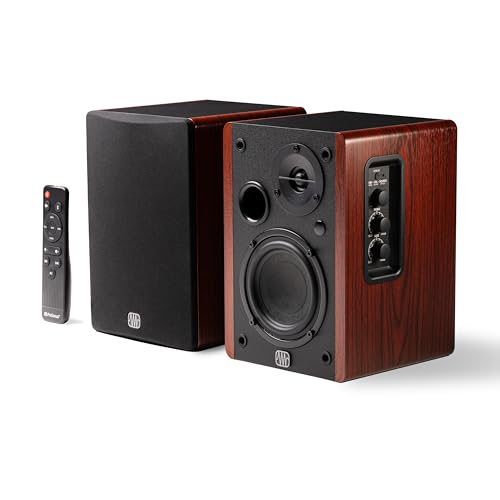
- RCA sub-out supports a future 2.1 setup
- Bluetooth 5.3 plus USB-C, optical, coax, RCA, and AUX inputs
- Front-panel tone controls make tuning simple
Best For: Desktop and home users who want flexible speakers with a simple path to add a subwoofer.
Best for Tight, Controlled Low-End

- 8-inch nearfield design with solid low-end extension
- Clear, mix-focused sound for accurate decisions
- Pairs well with a subwoofer in larger setups
Best For: Producers and home studio owners who want a precise main monitor that can integrate cleanly with a subwoofer.
Best Compact Desktop Pick

- Compact powered monitors for desks and small rooms
- Balanced TRS, RCA, and front aux inputs
- Tuning controls help tailor sound to your space
Best For: Bedroom producers and desktop listeners who want small, flexible powered monitors.
Best for Small Studios
PreSonus Eris Sub 8 BT White 8-inch Subwoofer

- Tight 8-inch low end with 30 Hz extension
- Easy integration with crossover and tuning controls
- Bluetooth 5.0 plus TRS, RCA, and aux inputs
Best For: Bedroom producers and compact home studios that need clean bass extension.
Best for Easy Setup
Yamaha HS3 Powered Studio Monitors

- Compact 3.5-inch monitors for tight desktop spaces
- Flexible XLR/TRS, RCA, and stereo mini connectivity
- Room control and high-trim help dial in placement
Best For: Home studios and editors who need compact monitors with easy subwoofer pairing.
Best for Desktop Listening
Mackie CR3.5 Creative Reference Monitors

- Compact 3.5-inch powered monitors for desks and small rooms
- Tone knob and location switch add useful everyday flexibility
- Can be expanded with a compatible subwoofer for deeper bass
Best For: People who want compact desktop monitors that can start simple and later pair with a subwoofer.
Best for Flexible Connectivity
Edifier MR3 Powered Studio Monitors

- Hi-Res Audio certification with a neutral monitoring tune
- Balanced TRS, RCA, AUX, Bluetooth, and headphone output
- App-based EQ and sound modes for quick customization
Best For: Creators and desktop users who want a compact monitor pair with flexible inputs.
Best for Desktop Monitoring
M-AUDIO BX3 3.5" Studio Monitors

- Zero-latency wired monitoring for desk setups
- Compact 3.5-inch drivers with punchy bass
- Flexible RCA, 1/4-inch, and 1/8-inch inputs
Best For: Bedroom producers and streamers who need compact wired monitors with subwoofer-ready flexibility.
Best for Bass Expansion
Mackie CR8SBT Powered Subwoofer

- 8-inch woofer with deep bass extension
- Bluetooth, TRS, and RCA connectivity
- Desktop remote plus crossover/polarity controls
Best For: Creators and home studio users who want an easy-to-integrate subwoofer for powered monitors.
Best for Desktop Bluetooth Setup

- Compact nearfield monitors with accurate sound
- Bluetooth 5.0 and multiple wired inputs
- Room-tuning controls for easier desk placement
Best For: Home studio users and desktop listeners who want flexible, compact monitors for small spaces.
Best for Easy Sub Expansion – PreSonus Eris Accent BT 60W Bluetooth Bookshelf Speakers
If you want studio monitors with subwoofer output that are simple to wire into a growing setup, the PreSonus Eris Accent BT is a practical choice. It combines Bluetooth 5.3, multiple wired inputs, and an RCA sub-out, so you can start with a compact 2.0 system and add a sub later without replacing the speakers.
Best For: Desktop listeners, home studios, and turntable setups that need flexible connectivity plus an easy path to add a subwoofer.
Pros:
- RCA sub-out makes it easy to expand into a 2.1 system
- Multiple inputs, including USB-C, optical, coax, RCA, AUX, and Bluetooth
- Front-panel bass, treble, volume, and source controls for quick tuning
- Compact powered design suits desks, shelves, and small rooms
Cons:
- 4-inch woofer size limits deep bass without a subwoofer
- More of a versatile bookshelf speaker than a true nearfield pro monitor
Overall, this model stands out among studio monitors with subwoofer output because it balances convenience, connectivity, and upgrade flexibility in one affordable package. If you want an easy starter system that can grow with a sub, it fits the brief well.
Best for Tight, Controlled Low-End – Yamaha HS8 Studio Monitor
For mixers who want a straightforward nearfield speaker that can integrate cleanly with a sub, the Yamaha HS8 is a strong fit in the studio monitors with subwoofer output category. Its larger 8-inch design gives you plenty of headroom and a clear reference point for balancing bass, mids, and highs, especially in project rooms where accuracy matters more than hype.
Best For: Producers, engineers, and home studio owners who want a precise main monitor that pairs well with a subwoofer for fuller low-end coverage.
Pros:
- Clear, detailed response that works well for mixing decisions
- 8-inch woofer provides solid low-end extension before adding a sub
- Room controls help tailor the sound to your setup
- Reliable choice for stereo monitoring with a subwoofer system
Cons:
- Can be too large for very small desks or untreated rooms
- Best results usually require careful placement and calibration
Overall, the HS8 is a practical option if you want studio monitors with subwoofer output support in a setup that prioritizes accuracy and scalable bass rather than boosted playback. It’s especially appealing when you plan to add a subwoofer later and want monitors that stay honest up top.
Best Compact Desktop Pick – PreSonus Eris 3.5
If you want compact nearfield speakers that can still anchor a small studio setup, the PreSonus Eris 3.5 is a practical choice for studio monitors with subwoofer output workflows. They deliver clear, accurate sound for desktop music production, casual mixing, and everyday listening, with flexible inputs that make them easy to integrate into a PC, interface, or media system.
Best For: Bedroom producers, desktop creators, and buyers who need small powered monitors with easy room-to-room flexibility.
Pros:
- Compact powered design fits desks, bookshelves, and tight studio spaces
- Balanced TRS, RCA, and front aux inputs cover most source types
- Tuning controls help you adjust the sound for your room and setup
- Clear stereo imaging and punchy bass for the size
Cons:
- Small woofers limit deep low-end extension without a subwoofer
- Not intended for loud, large-room monitoring
- No dedicated subwoofer crossover/output control on the speaker itself
The Eris 3.5 works well if you need honest desktop monitoring first and plan to add bass support later. For shoppers comparing studio monitors with subwoofer output in a compact form factor, it stands out for its value, flexibility, and easy placement rather than sheer output.
Best for Small Studios – PreSonus Eris Sub 8 BT White 8-inch Subwoofer
PreSonus Eris Sub 8 BT White 8-inch Front-Firing Studio Subwoofer with Bluetooth Wireless Technology
Check Price On AmazonIf you want studio monitors with subwoofer output to feel fuller without overcomplicating your setup, the PreSonus Eris Sub 8 BT is a practical add-on. It brings a tight 8-inch low end, flexible wired connections, and Bluetooth 5.0 for quick reference listening in a compact room.
Best For: Bedroom producers, desktop studios, and home listeners who need clean bass extension with easy integration.
Pros:
- Front-firing 8-inch design fits small rooms and desktop setups.
- Useful crossover controls help blend smoothly with main monitors.
- Multiple inputs, including balanced TRS, RCA, and front aux, make setup easy.
- Bluetooth 5.0 adds convenient wireless playback for casual listening.
Cons:
- Wireless convenience is nice, but critical monitoring still works best over wired connections.
- May be more sub than needed for very tiny spaces or nearfield-only setups.
For studio monitors with subwoofer output, this model stands out as an approachable way to add controlled low-end depth without sacrificing flexibility. It is especially appealing if you need a sub that can serve both production and everyday listening.
Best for Easy Setup – Yamaha HS3 Powered Studio Monitors
If you want studio monitors with subwoofer output-friendly integration in a compact desktop setup, the Yamaha HS3 pair is a practical pick. They’re small, straightforward to connect, and tuned for creators who need honest monitoring without giving up too much desk space.
Best For: Home studios, editors, and producers working in tight spaces who want compact monitors that can pair cleanly with a sub.
Pros:
- Compact 3.5-inch monitors fit easily on crowded desks
- XLR/TRS combo, RCA, and stereo mini inputs make hookup flexible
- Room control and high-trim adjustments help fine-tune placement
- Included cables and anti-slip pads simplify setup
Cons:
- Limited low-end output from the small woofer alone
- Not ideal if you want loud playback or deep bass without a sub
Overall, the HS3 makes sense when space is limited and accuracy matters more than size. For buyers comparing studio monitors with subwoofer output, it’s a tidy desktop solution that leaves room to add bass support later.
Best for Desktop Listening – Mackie CR3.5 Creative Reference Monitors
Mackie’s CR3.5 is a practical pick for buyers who want studio monitors with subwoofer output support in a compact desktop-friendly format. It gives you clean nearfield sound, flexible inputs, and a tone knob that can tilt the presentation from neutral reference to a more fun, bass-forward sound when you’re not mixing.
Best For: Desktop music production, gaming, and casual listening in small rooms where you may later add a subwoofer.
Pros:
- TRS, RCA, and 3.5 mm inputs make it easy to connect PCs, interfaces, and consoles
- Tone knob lets you move from flat reference sound to extra bass and sparkle
- Location switch helps optimize desktop or bookshelf placement
- Can be paired with the CR8SBT subwoofer for fuller low-end expansion
Cons:
- 3.5-inch woofer size limits deep bass without a subwoofer
- Subwoofer is not included, so full low-end setup costs more
- Not the best choice for larger rooms or louder monitoring needs
As a compact starter monitor set, the CR3.5 works well when you want flexibility first and maximum bass later. If you’re shopping for studio monitors with subwoofer output support, this is an easy desktop option that can grow into a 2.1-style setup.
Best for Flexible Connectivity – Edifier MR3 Powered Studio Monitors
If you want studio monitors with subwoofer output-style expandability in a compact desktop setup, the Edifier MR3 is worth a look for its balanced TRS, RCA, AUX, Bluetooth, and headphone connections. It’s aimed at users who need accurate nearfield sound for music production, editing, gaming, or casual listening without giving up easy hookup options.
Best For: Creators and desktop users who want a compact monitor pair with multiple input options and a clean, neutral tuning.
Pros:
- Hi-Res Audio certification with a flat response for monitoring and everyday playback
- Balanced TRS, RCA, AUX, Bluetooth, and headphone output for versatile connections
- Music, Monitor, and Custom modes plus EQ control through the EDIFIER ConneX app
- MDF cabinet and 18W x 2 output help keep desktop sound controlled and clear
Cons:
- Not a true 2.1 system, so bass extension will still depend on room setup or an external sub
- Best results come from app tuning, which adds an extra step for some users
- Smaller drivers limit low-end impact compared with larger studio monitors
The MR3 is a practical pick if you’re shopping for studio monitors with subwoofer output compatibility in a compact, affordable package. It gives you the connectivity flexibility to integrate into a wider desk or production setup, while staying simple enough for everyday use.
Best for Desktop Monitoring – M-AUDIO BX3 3.5" Studio Monitors
If you want affordable studio monitors with subwoofer output support for a compact desktop setup, the M-AUDIO BX3 pair is a practical pick. These wired monitors deliver zero-latency monitoring, flexible rear inputs, and enough bass response to handle casual mixing, streaming, and multimedia without taking up much space.
Best For: Bedroom producers, streamers, and PC users who want compact wired monitors with easy subwoofer integration.
Pros:
- Zero-latency wired connection is ideal for recording, gaming, and streaming
- 3.5-inch Kevlar woofers and rear bass reflex design add solid low-end punch
- 1/4-inch, 1/8-inch, and RCA inputs make setup with gear and computers easy
- Compact MDF cabinets fit neatly on a desk or small studio shelf
Cons:
- 3.5-inch drivers are limited for deeper bass without a subwoofer
- Not intended for larger rooms or high-volume mixing
- Requires wired placement and cable management
The BX3 is a smart entry-level option if you need studio monitors with subwoofer output flexibility and a small-footprint design. It works best as a desktop monitor pair that can later be paired with a sub for fuller low-end monitoring.
Best for Bass Expansion – Mackie CR8SBT Powered Subwoofer
If you’re building studio monitors with subwoofer output for music production or a compact listening setup, the Mackie CR8SBT adds real low-end weight without making the system complicated. It pairs easily over Bluetooth, accepts TRS and RCA connections, and gives you front-of-desk volume control through the included remote.
Best For: Creators and home studio users who want an easy-to-integrate subwoofer for adding bass to powered monitors.
Pros:
- 8-inch woofer with custom-tuned ports for fuller bass extension
- TRS, RCA, and Bluetooth inputs make setup flexible
- Desktop remote adds convenient volume control
- Crossover and polarity controls help fine-tune the system
Cons:
- More subwoofer than some small desks or dorm setups need
- No built-in app control for advanced tweaking
- Best suited to users who already have powered speakers
The CR8SBT is a practical pick if you want studio monitors with subwoofer output to feel more complete, especially when you need straightforward connectivity and adjustable bass management. It’s a solid match for CR Series monitors, but it can also round out other powered speaker systems that need deeper low-end reinforcement.
Best for Desktop Bluetooth Setup – PreSonus Eris 3.5BT Powered
The PreSonus Eris 3.5BT is a practical pick if you want compact studio monitors with subwoofer output-style expandability in a desktop-friendly package. You get accurate nearfield sound, Bluetooth 5.0, and enough connectivity for a computer, interface, phone, or turntable setup, making them easy to work into a small mixing or listening space.
Best For: Home studios, desktop producers, and casual listeners who want compact monitors with flexible wired and wireless inputs.
Pros:
- Clean, accurate sound for music production and everyday listening
- Bluetooth 5.0 plus TRS, RCA, and front aux inputs for flexible hookups
- Tuning controls help you dial in the sound for your room
- Compact size works well on desks and bookshelves
Cons:
- 3.5-inch drivers limit deep bass without adding a subwoofer
- Not ideal for larger rooms or high-volume monitoring
For buyers comparing studio monitors with subwoofer output, the Eris 3.5BT stands out as an easy-to-place, budget-friendly nearfield option that still leaves room to grow into a 2.1 setup. It’s a smart choice if you want reliable desktop monitors now and the option to add a sub later.
How We Picked the Best Studio Monitors with Subwoofer Output
We looked for models that make low-frequency expansion practical, whether through dedicated sub outputs, easy pairing with a powered sub, or system-friendly connectivity. Priority factors included neutral tuning, usable desktop size, input flexibility, and controls that help integrate a sub cleanly.
Quick Comparison
For small rooms and close listening, 3.5-inch and 4-inch monitors are easiest to place, but they usually benefit most from a sub. Larger 8-inch models can produce more bass on their own, yet they still matter if you want a more complete 2.1 setup. Bluetooth may be convenient for casual use, but wired connections are typically better for monitoring accuracy.
Key Buying Factors for Studio Monitors with Subwoofer Output
Subwoofer Connectivity
Look for dedicated sub out, line out, or a matching sub with crossover control. This helps keep bass management consistent and prevents overlap between the monitors and sub.
Driver Size and Room Size
Smaller drivers often work well on desks and in untreated rooms, but they need more help below the bass region. Larger drivers can move more air, though placement becomes more important.
Crossover and Gain Control
A good sub integration setup should let you adjust crossover, level, and phase or polarity. These controls are important for avoiding muddy bass or gaps in the low end.
Inputs and Noise
Balanced inputs are preferable for studio use because they reduce interference. RCA and Bluetooth can still be useful for hybrid desktop setups, but they are not the first choice for critical monitoring.
Who Should Buy Which Studio Monitors with Subwoofer Output?
If you are building a compact production desk, choose smaller monitors and add a sub later for better extension. If you want the simplest path to fuller sound, a larger powered monitor or an integrated subwoofer package is often the easiest route. For casual creators who also want media playback, Bluetooth-equipped models can offer extra convenience without giving up much flexibility.
Overall, the best Studio Monitors with Subwoofer Output are the ones that match your room, your workflow, and how much bass control you actually need. Focus on placement, connectivity, and integration features first, then choose the sound profile that fits your work.
