Choosing the right audio interface for podcasting can make your voice sound cleaner, reduce setup headaches, and give you more reliable control over recording levels.
This roundup focuses on podcast-friendly options for solo creators, co-hosts, and small interview setups, with an emphasis on value, ease of use, and sound quality.
Best 10 Audio Interface for Podcasting Picks for 2026
Best for Easy Setup
Focusrite Scarlett 2i2 4th Gen USB Audio Interface

- Auto Gain and Clip Safe simplify level setting.
- Clean, studio-style sound with 120dB dynamic range.
- Includes software and plugins for quick starts.
Best For: Podcasters and solo creators who want an easy, reliable interface with polished sound.
Best Portable Starter
PreSonus AudioBox 96 25th Anniversary
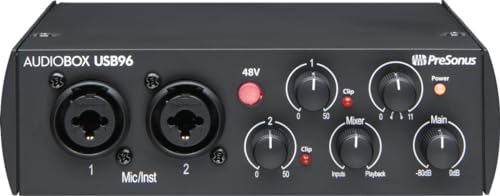
- Two Class-A mic preamps for simple two-mic podcasting
- Zero-latency monitoring for easier live voice tracking
- USB bus-powered design is easy to travel with
Best For: New podcasters and small two-person shows that need a simple, portable interface.
Best for Easy Plug-and-Play Setup

- No-driver USB-C setup for Mac, PC, and iOS
- 24-bit/192kHz recording with dual combo inputs
- Direct monitor and loopback support for podcasting
Best For: Podcasters and streamers who want a portable, no-driver interface with clean monitoring.
Best Value 4-Channel

- Four MIDAS-designed mic preamps
- 4-in/4-out USB with MIDI I/O
- Rugged metal build for regular use
Best For: Podcasters who want four microphone inputs and dependable sound on a budget.
Best for Easy Podcast Setup
Focusrite Scarlett Solo 3rd Gen

- Clean mic preamp with Air mode for clearer vocals
- Gain Halo metering helps avoid clipping
- Included software bundle is beginner-friendly
Best For: Solo podcasters and creators who want simple, reliable recording quality.
Best for Beginners
M-AUDIO M-Track Duo USB Audio Interface
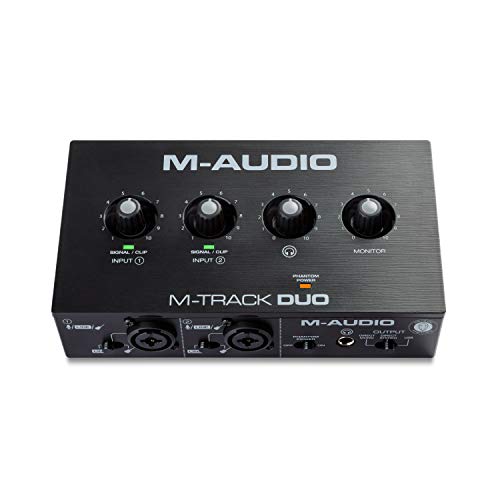
- Two combo XLR/line/instrument inputs
- Direct monitoring with USB/Direct switch
- Includes MPC Beats software bundle
Best For: New podcasters who want a simple, affordable interface with two inputs.
Best for Live Voice Effects

- Voice changer, reverb, and 4 sound pads
- Noise cancellation reduces room and fan noise
- Bluetooth input for music and backing tracks
Best For: Podcasters and streamers who want live effects and hands-on audio control.
Best for Studio-Quality Vocal Recording
Focusrite Scarlett Solo 4th Gen

- 120dB dynamic range for clean, detailed audio
- Air mode adds vocal presence and harmonic lift
- Includes recording software and plugins to start fast
Best For: Solo podcasters and creator-musicians who want a simple, high-quality recording setup.
Best for Portable Multi-Input Podcasting
Synido USB-C 2x2 Audio Interface

- 24-bit/48kHz recording with low-latency performance
- Three monitoring modes for recording, streaming, and editing
- 48V phantom power and XLR support for condenser mics
Best For: Podcasters and streamers who want a compact, flexible interface for simple multi-input setups.
Best for Beginner Podcasters
M-AUDIO M-Track Duo HD 2x2 USB-C Interface

- Two combo inputs for mics, instruments, or line-level sources
- 24-bit/192kHz audio with Crystal preamps for cleaner capture
- Zero-latency monitoring keeps podcast recording simple
Best For: Solo hosts and small two-mic podcasts that want an easy, reliable interface.
Best for Easy Setup – Focusrite Scarlett 2i2 4th Gen USB Audio Interface
If you want an audio interface for podcasting that makes recording feel straightforward but still sounds polished, the Focusrite Scarlett 2i2 4th Gen is a strong pick. It delivers clean mic pres, studio-grade converters, and helpful tools like Auto Gain and Clip Safe so you can focus on the conversation instead of fixing levels after the fact.
Best For: Podcasters, solo creators, and streamers who want an easy-to-use interface with reliable sound quality and quick level setting.
Pros:
- Auto Gain and Clip Safe help prevent bad takes and clipping.
- 120dB dynamic range and upgraded converters deliver detailed, low-noise audio.
- Air mode adds extra presence to vocals for a more broadcast-ready sound.
- Includes recording software and plugin bundles to get started fast.
Cons:
- Only two inputs, so it’s not ideal for multi-person roundtables with several mics.
- Best features are focused on simplicity, not advanced routing or expansion.
Overall, this is a smart audio interface for podcasting if you want dependable results with minimal setup friction. It’s especially appealing for creators who value clean vocal recording, easy gain management, and a package that includes the software needed to start producing right away.
Best Portable Starter – PreSonus AudioBox 96 25th Anniversary
If you want an affordable audio interface for podcasting that still covers the essentials, the PreSonus AudioBox 96 is a smart pick. It gives you two clean mic preamps, zero-latency monitoring, and bus-powered portability, so you can record at home or on the go without extra gear.
Best For: New podcasters, solo hosts, and small two-person setups that need a simple, travel-friendly interface.
Pros:
- Two Class-A mic preamps for dual-host or guest recording
- Zero-latency mixer control makes monitoring easy while speaking
- USB bus power keeps the setup compact and mobile
- Includes recording software to help beginners get started
Cons:
- Only two input channels, so it is not ideal for larger shows
- Best suited to basic podcast workflows rather than advanced studio routing
Overall, this is a practical audio interface for podcasting if you value simple operation, dependable sound, and portability over extra features. It is especially appealing for creators who want a straightforward setup that works with minimal fuss.
Best for Easy Plug-and-Play Setup – 2×2 USB-C Audio Interface
If you want an audio interface for podcasting that keeps setup simple, this USB-C 2×2 model is built for fast, class-compliant use on Mac, PC, and iOS. It offers 24-bit/192kHz recording, combo XLR/TRS inputs, direct monitoring, and loopback support, making it a practical fit for solo hosts, remote interviews, and small creator setups.
Best For: Podcasters and streamers who want a portable, no-driver interface with clean monitoring and easy device switching.
Pros:
- Plug-and-play USB-C design with bus power and no driver install
- 24-bit/192kHz audio with dual combo inputs and 48V phantom power
- Direct monitor and loopback features suit podcast recording and streaming
Cons:
- Limited to two inputs, so it is not ideal for larger panel shows
- 3.5mm headphone output may require adapter-free, but still basic, monitoring needs
For creators who value speed and portability, this is a solid audio interface for podcasting because it covers the essentials without adding setup complexity. The tradeoff is channel count, but for most solo and two-person recording workflows, it delivers a capable and low-fuss experience.
Best Value 4-Channel – Behringer U-PHORIA UMC404HD
If you need an audio interface for podcasting that can handle multiple mics without pushing into pro-level pricing, the Behringer U-PHORIA UMC404HD is a strong practical pick. It offers four mic/line inputs, solid 24-bit/192 kHz conversion, and MIDI I/O, making it flexible enough for solo shows, two-host setups, and small recording sessions.
Best For: Podcasters who want four microphone inputs and dependable sound on a budget.
Pros:
- Four MIDAS-designed mic preamps with +48V phantom power
- 4-in/4-out USB interface gives room for multi-mic podcast setups
- 24-bit/192 kHz recording supports clean, detailed audio capture
- Rugged metal chassis is built for regular studio use
Cons:
- More interface than solo podcasters need if you only record one mic
- Software bundle and feature set are basic compared with higher-end models
- Best results may take a little setup time if you’re new to routing
Overall, the UMC404HD stands out as a practical audio interface for podcasting when you want extra input count and reliable fundamentals instead of flashy extras. It is especially appealing for creators who expect guests, co-hosts, or occasional instrument recording in the same setup.
Best for Easy Podcast Setup – Focusrite Scarlett Solo 3rd Gen
If you want a straightforward audio interface for podcasting, the Focusrite Scarlett Solo 3rd Gen is a dependable pick for solo hosts, voiceovers, and simple music-plus-voice setups. It delivers clean mic preamps, easy gain staging, and enough polish to make home recordings sound more professional without adding extra complexity.
Best For: Podcasters, singer-songwriters, and creators who want an easy USB interface with solid sound quality and minimal setup hassle.
Pros:
- Clean, bright mic preamp with switchable Air mode for clearer vocals
- Gain Halo metering helps prevent clipping and distortion while recording
- 24-bit/192kHz conversion supports detailed, studio-quality podcast audio
- Included software bundle gives beginners useful tools right away
Cons:
- Only one mic input, so it is not ideal for multi-host podcasting
- Limited I/O overall if you plan to expand into a larger setup
For a solo creator, this is one of the easiest ways to get a reliable audio interface for podcasting without overbuying. The Scarlett Solo focuses on the essentials, and that simplicity is exactly what makes it a strong fit for first-time buyers and compact home studios.
Best for Beginners – M-AUDIO M-Track Duo USB Audio Interface
If you want an affordable, simple audio interface for podcasting, the M-AUDIO M-Track Duo covers the basics well. It gives you two combo XLR/line/instrument inputs, direct monitoring, and enough flexibility to record solo shows, interviews, and basic music setups from a Mac or PC.
Best For: New podcasters who want an easy, budget-friendly interface with dual inputs and direct monitoring.
Pros:
- Two combo XLR/line/instrument inputs with phantom power
- Direct/USB monitoring switch helps avoid latency while recording
- Transparent Crystal preamps suit a wide range of microphones
- Includes MPC Beats software to help you get started
Cons:
- Limited to two inputs, so it is not ideal for larger panels
- Basic feature set compared with more advanced podcast interfaces
- Plastic build feels functional rather than premium
Overall, this is a practical audio interface for podcasting if you value straightforward controls and dependable essentials over extra channels or advanced routing. It is a strong entry-level pick for creators who want to start recording quickly without overspending.
Best for Live Voice Effects – PUPGSIS Gaming Audio Mixer
If you want an audio interface for podcasting that also doubles as a streaming sound board, the PUPGSIS Gaming Audio Mixer is built for quick voice shaping and real-time effects. It combines a mic input, reverb, noise cancellation, Bluetooth audio input, and programmable sound pads in one compact unit, making it a flexible pick for creators who want more control without relying on software.
Best For: Podcasters, streamers, and gamers who want live voice effects, sound pads, and simple hands-on control.
Pros:
- Built-in voice changer, reverb, and 4 programmable sound effect pads
- Noise reduction helps cut fan noise and other background distractions
- Bluetooth input can add music or backing tracks directly to the mix
Cons:
- Not compatible with USB microphones
- Does not support 48V dynamic microphones
- XLR use requires a separate 1/4" TRS to XLR cable
As an audio interface for podcasting, this mixer makes sense if you value performance-style controls more than a clean, traditional interface layout. Just be sure your mic setup matches its connection requirements before buying.
Best for Studio-Quality Vocal Recording – Focusrite Scarlett Solo 4th Gen
If you want an audio interface for podcasting that also handles music recording well, the Focusrite Scarlett Solo 4th Gen is a strong all-around pick. It delivers clean mic input, a simple two-channel layout, and updated converters that aim for more polished, pro-style sound without adding much complexity.
Best For: Solo podcasters, singer-podcasters, and creators who want an easy setup with noticeably better vocal quality.
Pros:
- High 120dB dynamic range for detailed, studio-style recording
- Improved Air mode adds presence to vocals and acoustic instruments
- Includes recording software and plugins to get started quickly
- Independent headphone volume makes monitoring easier
Cons:
- Only one mic input, so it is not ideal for multi-host shows
- Best suited to basic solo setups rather than larger podcast rigs
For creators who prioritize clean voice capture and a straightforward workflow, this Scarlett Solo hits a very useful sweet spot. It is a smart audio interface for podcasting if your show is solo or interview-based and you also want room to record music on the side.
Best for Portable Multi-Input Podcasting – Synido USB-C 2×2 Audio Interface
If you want an audio interface for podcasting that keeps setup simple while still giving you room to grow, the Synido USB-C 2×2 is a practical pick. It delivers 24-bit/48kHz recording, phantom power for condenser mics, and flexible monitoring modes that help you track clean audio without guesswork.
Best For: Podcasters, streamers, and solo creators who need a compact interface with XLR support, easy monitoring, and lightweight portability.
Pros:
- 24-bit/48kHz conversion with a low-latency audio chip for clear, detailed capture
- Three monitoring modes make it easier to record, stream, or edit with confidence
- 48V phantom power supports condenser microphones for more versatile podcast setups
- Compact 300g design is easy to carry for mobile or small-desk workflows
Cons:
- Only two input channels, so it is not ideal for larger panel podcasts
- Best performance may require a third-party ASIO driver for some DAWs
- No advanced mixer features for complex multi-mic productions
Overall, the Synido is a solid audio interface for podcasting if you want a straightforward 2-channel device with useful monitoring options and condenser mic support. It is especially appealing for creators who value portability and easy day-to-day use over advanced studio controls.
Best for Beginner Podcasters – M-AUDIO M-Track Duo HD 2×2 USB-C Interface
If you want an audio interface for podcasting that keeps the setup simple without sacrificing sound quality, the M-AUDIO M-Track Duo HD is an easy fit. It offers two combo inputs, 24-bit/192kHz recording, zero-latency monitoring, and USB-C connectivity for Macs, PCs, iOS, and Android devices.
Best For: Solo hosts, beginner podcasters, and small two-mic shows that need a straightforward interface with clean gain and dependable monitoring.
Pros:
- Two combo inputs make it easy to connect mics, instruments, or line-level sources
- 24-bit/192kHz conversion and Crystal preamps help capture clear podcast audio
- Zero-latency monitoring with a direct/USB switch simplifies live recording
- Includes a useful software bundle with Ableton Live Lite, Reason+, and MPC Beats
Cons:
- Only two inputs, so it is not ideal for larger multi-host setups
- Feature set is intentionally basic compared with more advanced podcast interfaces
Overall, this is a practical audio interface for podcasting if you want pro-level essentials in a compact unit rather than a menu-heavy mixer. It is especially appealing for creators who value quick setup, clean sound, and a low-friction workflow.
How We Picked the Best Audio Interface for Podcasting
We prioritized an Audio Interface for Podcasting based on the features most hosts actually use: clean mic preamps, low-latency monitoring, enough inputs for your format, and simple connectivity with Mac, PC, and in some cases iOS. We also considered build quality, included software, phantom power for condenser mics, and whether the interface is easy to grow into as your show expands.
Quick Comparison
For solo podcasters, compact 1- or 2-input models usually offer the best mix of simplicity and value. If you record interviews with two microphones, look for two independent XLR inputs and separate gain control. If you plan to add music, guests, or multiple sources, a 4-input interface gives you more flexibility without moving to a larger mixer-style setup.
Key Buying Factors for an Audio Interface for Podcasting
Microphone Inputs and Phantom Power
Check how many XLR inputs you need now, then add one for future growth. Condenser microphones require 48V phantom power, while most dynamic podcast mics do not. If you use both types, make sure the interface supports each channel cleanly.
Monitoring and Headphone Control
Direct monitoring helps you hear yourself without distracting delay. A good headphone output with its own volume knob is especially important for live recording, remote interviews, and editing while tracking.
Sound Quality and Gain
Look for low-noise preamps and enough gain for your microphone. Some dynamic mics need more clean amplification than entry-level interfaces provide, so higher-gain models can be worth it for quieter voices or broadcast-style mics.
Connectivity and Workflow
USB-C support, stable drivers, and compatibility with your recording software matter more than marketing claims. If you record on a laptop or mobile device, confirm the interface works smoothly with your setup before you buy.
Who Should Buy Which Audio Interface for Podcasting?
Solo podcasters usually do best with a simple 1×1 or 2×2 interface that keeps the workflow fast and the desk uncluttered. Two-person shows should focus on dual mic inputs and independent monitoring. Creators who stream, record guests, or want room to expand should consider a 4-input model or a podcast mixer-style interface. If you want the easiest path to clean speech recording, choose the most straightforward Audio Interface for Podcasting that meets your current mic count and monitoring needs, then save the extra budget for a better microphone, stand, or acoustic treatment.
