Running a subwoofer cable across the room is rarely the cleanest way to build a home theater. A good wireless subwoofer transmitter and receiver can simplify placement, reduce clutter, and keep bass performance focused on the listening experience.
Below, we’ve rounded up 10 strong options for 2026, with a focus on connection stability, range, latency, and compatibility so you can match the right kit to your system.
Best 10 Wireless Subwoofer Transmitter and Receiver Picks for 2026
Ultra-Flexible Dual-Band Pick
WSA-5TR-V2 Wireless Subwoofer Speaker Kit

- 5.2GHz and 5.8GHz selectable dual-band
- 106 RF channels with auto switching
- 24-bit/48kHz uncompressed audio
Best For: stable, low-interference subwoofer placement
Premium Home Theater Choice
REL HT-Air MKII Wireless Transmitter and Receiver

- 5.8GHz wireless with zero-compression transmission
- L-R stereo and .1/LFE input support
- Works with REL Serie HT and all models
Best For: premium home theater and REL subwoofer setups
Brand-Specific Easy-Setup Pick
Klipsch WA-2 Wireless Subwoofer Kit

- Plug-and-play one-time pairing
- Built for compatible Klipsch-family subwoofers
- Up to 4 units can be used together
Best For: compatible Klipsch and Jamo subwoofer owners
Best Interference-Resistant Option
SVS SoundPath Tri-Band Wireless Audio Adapter

- Tri-band switching across 2.4GHz, 5.2GHz, and 5.8GHz
- 16-bit/48kHz audio up to 130 feet
- Works with subwoofers, powered speakers, and more
Best For: stable wireless audio in busy RF environments
Receiver-Only KEF Upgrade
KW1 Wireless Subwoofer Receiver

- 24-bit/48kHz high-resolution audio
- Selectable 5.2GHz/5.8GHz wireless link
- Low latency under 17ms
Best For: Existing KEF KW1 users who need the receiver side only
Easy-Install SVS Kit
Soundpath Wireless Audio Adapter

- Includes both transmitter and receiver
- Easy to install and connect
- Helps reduce clutter and widen placement
Best For: Users who want a ready-to-use wireless adapter kit
Complete KEF Sub Kit
KW1 Wireless Subwoofer Adapter Kit
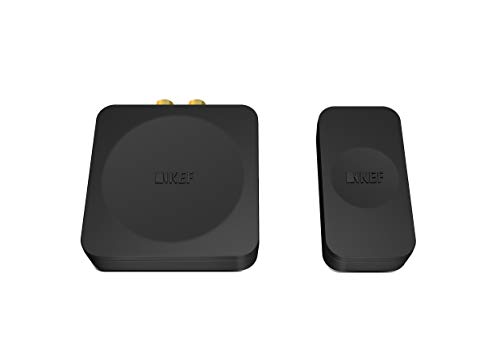
- Full transmitter and receiver kit
- 5GHz wireless with 24-bit/48kHz audio
- Up to 30m range and <17ms latency
Best For: Owners of compatible KEF subwoofers needing the full kit
Condo-Friendly Expansion
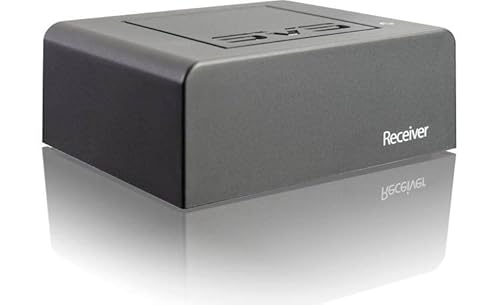
- CD-quality 16-bit/48kHz audio
- Up to 130 feet of range
- Made for congested wireless environments
Best For: SVS SoundPath users expanding an existing wireless audio setup
Long-Range Budget Pick

- Up to 160 feet outdoor range
- RCA and 3.5mm connections
- Automatic plug-and-play pairing
Best For: Simple long-range analog audio from TV or stereo gear
Low-Latency TV Link
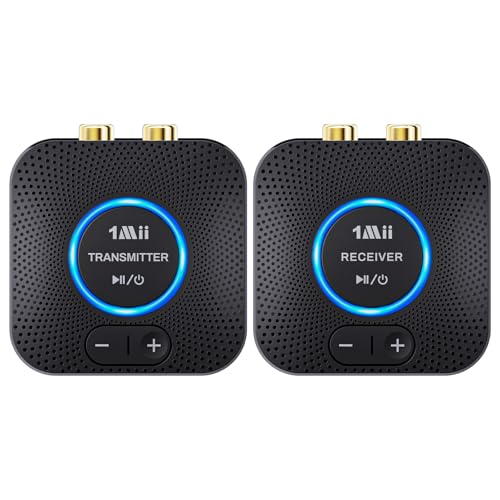
- Under 25ms latency
- Up to 262 feet of range
- AUX/RCA input and output
Best For: Compact low-latency wireless audio for TV, PC, and powered speakers
Ultra-Flexible Dual-Band Pick – WSA-5TR-V2 Wireless Subwoofer Speaker Kit
If you want a wireless subwoofer transmitter and receiver that focuses on stable performance and fewer dropouts, the WSA-5TR-V2 is built for that job. Its 5.2GHz and 5.8GHz selectable dual-band design, plus automatic RF channel switching, helps it avoid common home interference while keeping setup simple.
Best For: Users who want a flexible, low-interference wireless subwoofer kit for home theater or powered speaker placement.
Pros:
- 5.2GHz / 5.8GHz dual-band selectable with 106 RF channels for interference reduction
- Uncompressed 24-bit/48kHz audio for near lossless transmission
- Up to 100 ft line-of-sight range, or about 50 ft through walls and floors
- Simple setup for placing powered subwoofers away from the source
Cons:
- Range drops when used through walls, ceilings, or floors
- Designed for powered subwoofers and audio sources, not a universal all-in-one audio system
Overall, this is a practical choice if you want a wireless subwoofer transmitter and receiver that prioritizes channel stability, low latency, and easy placement. It stands out most when interference is a concern and you want a cleaner room layout without giving up straightforward audio performance.
Premium Home Theater Choice – REL HT-Air MKII Wireless Transmitter and Receiver
The REL HT-Air MKII is a refined wireless subwoofer transmitter and receiver built for home theater and hi-fi systems that need cleaner placement without messy cables. Its 5.8GHz wireless design and zero-compression transmission are aimed at delivering near hardwired performance with a simple setup process.
Best For: REL HT users and home theater owners who want a premium wireless subwoofer link with flexible input options.
Pros:
- 3rd generation 5.8GHz chip with zero-compression transmission
- Supports both L-R stereo inputs and .1/LFE input for different setups
- Simple pairing process with transmitter, receiver, and subwoofer
- Compatible with REL Serie HT and all models, plus broader home theater and music setups
Cons:
- Higher-end, system-specific product compared with basic universal kits
- Most compelling for users already invested in REL or similarly premium subwoofer setups
If you want a polished wireless subwoofer transmitter and receiver for a serious theater or music room, this model is designed around ease of use and performance consistency. Its flexible inputs and clean industrial design make it a strong fit where both sound quality and system integration matter.
Brand-Specific Easy-Setup Pick – Klipsch WA-2 Wireless Subwoofer Kit
The Klipsch WA-2 is a wireless subwoofer transmitter and receiver made for owners of compatible Klipsch and related branded subwoofers who want an easy, cable-light setup. It uses a proprietary plug-and-play design with one-time pairing, so it is best suited to users who need simple wireless bass extension within the supported ecosystem.
Best For: Klipsch, Jamo, Energy, and Mirage subwoofer owners with a WA-2 port.
Pros:
- Easy plug-and-play installation with one-time pairing
- Designed specifically for compatible Klipsch-branded subwoofers and select related brands
- Supports up to 4 units in an average size household
- Reduces cable clutter while keeping bass wireless
Cons:
- Works only with subwoofers that have the WA-2 port
- Not a universal solution for mixed-brand audio systems
This is a strong pick if compatibility lines up, because the whole experience is centered on simplicity and reliable pairing. For the right Klipsch-family subwoofer, it offers a clean way to move the bass where it sounds best without complicating the setup.
Best Interference-Resistant Option – SVS SoundPath Tri-Band Wireless Audio Adapter
The SVS SoundPath Tri-Band Wireless Audio Adapter is a versatile wireless subwoofer transmitter and receiver for users who want strong interference resistance and full-range audio performance. Its tri-band switching automatically moves between 2.4GHz, 5.2GHz, and 5.8GHz to find a stable connection for subwoofers, powered speakers, and other audio gear.
Best For: Buyers who want a tri-band wireless audio adapter for subwoofers, powered speakers, and multi-zone use.
Pros:
- Auto-switches among 2.4GHz, 5.2GHz, and 5.8GHz bands for stability
- Passes 16-bit/48kHz audio with no noticeable delay up to 130 feet
- Handles subwoofers, powered speakers, and other audio components
- Useful for expanding into single-source multi-zone audio setups
Cons:
- Uses Bluetooth-listed connectivity details, which may be less straightforward than a basic single-band kit
- Broader feature set may be more than some users need for a simple subwoofer link
For buyers focused on stability and flexibility, this SVS unit is a compelling wireless subwoofer transmitter and receiver solution. It balances long range, low delay, and interference resistance in a way that works well for both simple and more expanded audio setups.
Receiver-Only KEF Upgrade – KW1 Wireless Subwoofer Receiver
If you already own the KEF KW1 system and need a wireless subwoofer transmitter and receiver setup for cleaner placement, the KW1RX is the receiver side of that link. It uses KEF’s selectable 5.2/5.8GHz digital wireless connection, supports up to 24-bit/48kHz audio, and is designed for low-latency performance under 17ms.
Best For: Existing KEF KW1 owners who need a replacement or additional receiver for compatible subwoofer setups.
Pros:
- 24-bit/48kHz wireless audio for high-resolution playback
- Selectable 5.2GHz and 5.8GHz link options
- Low latency designed for less than 17ms
- Up to 30m range in line-of-sight conditions
Cons:
- Receiver only; it must be paired with the KW1 wireless subwoofer adapter kit
- Not a complete transmitter-and-receiver bundle on its own
This is a focused, component-level option rather than a full kit, so it makes the most sense when you specifically need the KEF receiver side of a compatible wireless subwoofer link. For the right setup, it offers the performance and range KEF built the KW1 system around.
Easy-Install SVS Kit – Soundpath Wireless Audio Adapter
The SVS Soundpath Wireless Audio Adapter is a practical wireless subwoofer transmitter and receiver solution for cutting cable clutter and opening up more placement options. It includes both a transmitter and receiver, plus multiple adapter cables and power supplies, making it easier to connect a subwoofer setup without running long RCA cables.
Best For: Buyers who want an easy-to-install wireless adapter kit with both transmitter and receiver included.
Pros:
- Includes both transmitter and receiver
- Designed to reduce clutter and expand sub placement options
- Comes with multiple adapter cables
- Includes two USB power adapters
Cons:
- Wireless compatibility is tied to 802.11ac/b/g/n hardware support
- Uses RCA cable connections on the wired side
If your priority is simple installation and better subwoofer placement, this SVS kit is the most straightforward option in this group. The included accessories make it especially convenient for setups where you want to get connected quickly and tidy up the room.
Complete KEF Sub Kit – KW1 Wireless Subwoofer Adapter Kit
The KEF KW1 Wireless Subwoofer Adapter Kit is a complete wireless subwoofer transmitter and receiver package for compatible KEF subwoofers. It operates in the 5GHz band, supports up to 24-bit/48kHz audio, and is designed for low-latency wireless transmission with a range of up to 30m in line-of-sight conditions.
Best For: KEF subwoofer owners who want the full transmitter-and-receiver kit for wireless placement.
Pros:
- Complete transmitter and receiver kit
- Works with KEF Kube8b, Kube10b, Kube12b, and KF92 subwoofers
- 24-bit/48kHz wireless transmission
- Up to 30m range with less than 17ms latency
Cons:
- Only compatible with specific KEF subwoofer models
- Not intended as a universal wireless audio adapter
For KEF systems, this is the most complete option here because it includes both sides of the link and is built around the brand’s supported subwoofer lineup. If you want a cleaner setup without giving up KEF’s specified wireless performance, this kit is the strongest fit.
Condo-Friendly Expansion – SVS Tri-Band Receiver
If you already use the SoundPath Tri-Band system and need a wireless subwoofer transmitter and receiver-style add-on, this SVS receiver is built for stable audio in crowded environments. It carries CD-quality 16-bit/48kHz sound up to 130 feet and is aimed at cutting cable clutter while keeping the connection full-range and reliable.
Best For: Owners of the SVS SoundPath Tri-Band system who want to expand a wireless audio setup in a congested wireless space.
Pros:
- Works well in congested wireless environments
- Supports CD-quality 16-bit/48kHz audio
- Rated for up to 130 feet of range
- Adds another device to the SoundPath Tri-Band wireless system
Cons:
- Receiver only, so it depends on the matching SoundPath wireless system
- Not a standalone transmitter/receiver kit
Overall, this is a practical expansion piece if you want SVS wireless connectivity and you already have the compatible ecosystem in place. It focuses on clean integration and dependable audio rather than broad universal compatibility.
Long-Range Budget Pick – Tendak 2.4G Audio Kit
This wireless subwoofer transmitter and receiver-style audio adapter is geared toward simple long-range analog audio transmission. With RCA and 3.5mm connectivity, 2.4GHz operation, and up to 160 feet of range, it is a flexible pick for sending stereo audio to a powered speaker, soundbar, or subwoofer-compatible setup without running extra cable.
Best For: Users who want a plug-and-play 2.4GHz wireless audio link with RCA/3.5mm compatibility and long range.
Pros:
- Up to 160 feet of outdoor range
- RCA and 3.5mm input/output support
- Plug-and-play automatic connection
- Volume control on both transmitter and receiver
Cons:
- Only transmits audio, not video
- Designed for 2.0-channel analog stereo audio
- May be affected by obstacles and routers
For straightforward wireless audio extension, this Tendak kit covers the basics well and keeps setup simple. Its biggest strength is range and compatibility, though it stays focused on stereo audio rather than more advanced surround use.
Low-Latency TV Link – 1Mii 2.4GHz TX/RX Set
For a wireless subwoofer transmitter and receiver alternative focused on TV and powered-speaker use, this 1Mii set emphasizes quick pairing and low latency. It offers AUX/RCA in and out, automatic connection, and up to 262 feet of range, making it a practical choice when you want compact wireless audio with minimal delay.
Best For: TV, PC, and powered-speaker setups that need a compact low-latency wireless audio adapter.
Pros:
- Low latency rated below 25ms
- Long range up to 262 feet outdoors
- Dual AUX/RCA input and output support
- Automatic power-on and pairing
Cons:
- Not suitable for subwoofer use
- Cannot pair with other Bluetooth devices
- Requires included power adapter for operation
This 1Mii kit is best viewed as a compact wireless audio bridge for stereo sources and powered speakers. It stands out for latency and range, but the subwoofer limitation makes it a poor fit if that is your main goal.
How We Picked the Best Wireless Subwoofer Transmitter and Receiver
We prioritized Wireless Subwoofer Transmitter and Receiver kits that balance dependable signal lock, low latency, and straightforward setup. We also looked at real-world compatibility with AV receivers, powered subwoofers, and home theater use cases, plus whether the system uses a dedicated sub-band or broader wireless audio design.
Quick Comparison
Before buying, compare the connection type, supported inputs and outputs, claimed range, and whether the kit is designed specifically for subwoofers or for general audio use. Dedicated subwoofer systems usually offer better bass integration, while broader audio adapters can be more flexible for TV or stereo setups.
Key Buying Factors for Wireless Subwoofer Transmitter and Receiver
Latency and Sync
For bass, even small delays can be noticeable if the sub falls out of sync with your main speakers. Look for low-latency designs and stable pairing to keep impact tight and natural.
Range and Interference
Published range matters less than reliable range through walls, furniture, and nearby wireless devices. Dual-band or tri-band systems can help reduce dropouts in busy homes.
Inputs, Outputs, and Compatibility
Check whether the kit supports RCA, LFE, or line-level connections and whether it matches your subwoofer’s input options. Some models are built for specific speaker ecosystems, while others work more broadly across brands.
Setup and Placement
The best Wireless Subwoofer Transmitter and Receiver should make placement easier, not harder. Compact units, simple pairing, and clear status indicators can save time during installation.
Power and Noise Behavior
Since subwoofers are sensitive to hum and interference, prioritize kits known for clean signal behavior and consistent power management.
Who Should Buy Which Wireless Subwoofer Transmitter and Receiver?
If you want the most seamless home theater upgrade, choose a kit designed specifically for subwoofer use and low-latency performance. If you need more distance, a long-range general-purpose transmitter and receiver may fit better, especially for TV-to-sub or multi-room audio needs. For premium systems, brand-matched adapters can offer the cleanest integration and easiest setup.
In short, the right Wireless Subwoofer Transmitter and Receiver depends on your room size, connection needs, and how much flexibility you want in placement. Match the kit to your system first, then narrow by range, latency, and compatibility.
