If your mixes, movies, or music sound different from room to room, a good correction setup can help you hear what is actually there. The right system can tighten bass, improve stereo balance, and reduce guesswork during setup.
This roundup covers 10 of the best room correction system under 1000 options for 2026, including processors, measurement mics, and acoustic tools for different budgets and workflows.
Best 10 Room Correction System Under 1000 Picks for 2026
Standalone Hardware Correction
Audient ORIA Mini Hardware Only

- Dedicated hardware room correction with no CPU load
- 32-bit AD/DA and 127 dB dynamic range
- Includes measurement mic; supports 2.1 systems
Best For: Users who want a standalone monitor controller with built-in calibration
Acoustic Treatment Kit
Roominator Bundle by Project1 Purple
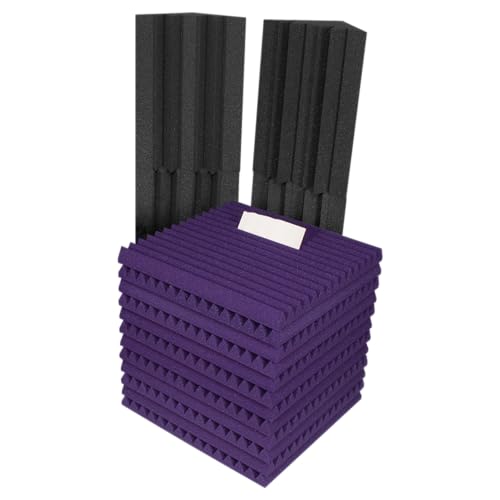
- Complete acoustical control kit for common room issues
- Includes 12 wedges, 4 bass traps, and adhesive
- Affordable treatment-first alternative to digital correction
Best For: Beginners who want simple, physical room treatment
Advanced Correction Processor
IK Multimedia ARC Studio Processor

- ARC X software plus stand-alone correction processor
- Improves frequency balance and stereo imaging
- Monitor emulation helps with reference checking
Best For: Studio users who want software-guided correction with dedicated hardware
Measurement Mic Accessory
miniDSP UMIK-1 USB Measurement Calibrated Microphone

- Calibrated USB mic with per-unit calibration file
- Works with Dirac Live, REW, and Smaart
- Driverless plug-and-play on major platforms
Best For: Anyone building a software-based room measurement setup
Digital Speaker Management
Behringer ULTRADRIVE DCX2496LE

- 2 inputs and 6 outputs for flexible routing
- 24-bit/96 kHz conversion with 113 dB dynamic range
- Dynamic EQ and parametric EQ on inputs and outputs
Best For: Users who want flexible digital crossover and speaker management
Corner Bass Control

- Stackable design fits vertical wall corners
- Deep open-cell foam for low-frequency absorption
- Can be used floor-to-ceiling in columns
Best For: Treating bass buildup in studios and home theaters
Measurement Microphone

- Built for room acoustic analyzers and measurement systems
- Includes a calibration response graph
- Comes with stand mount, windscreen, and case
Best For: Measuring room response for calibration and tuning
Portable Headphone Correction

- Corrects supported headphones and IEMs for more accurate monitoring.
- Includes DAC/amplifier hardware for portable use.
- Offers 250+ calibration profiles plus spatial processing.
Best For: Traveling producers and engineers who need calibrated headphone or IEM monitoring.
Bluesound Room Calibration Kit

- Certified by Dirac for accurate room calibration.
- USB-A plug-and-play setup with automatic file loading.
- Omnidirectional mic measures 20 Hz to 20 kHz.
Best For: Bluesound owners using Dirac Live who want simple room calibration.
Budget Measurement Mic
Superlux ECM999 Measurement Mic

- Omnidirectional measurement mic with flat 20 Hz to 20 kHz response.
- Handles up to 132 dB SPL for testing and analysis.
- Includes case, clip, and windscreen for portability.
Best For: Home theater and studio users needing an affordable calibration microphone.
Standalone Hardware Correction – Audient ORIA Mini Hardware Only
If you want a room correction system under 1000 that works as a dedicated monitoring hub, the Audient ORIA Mini focuses on accuracy without relying on computer CPU load or software dependence. It combines ultra-low-latency correction with 32-bit AD/DA conversion, onboard EQ tools, and support for 2.1 setups, making it a practical fit for treated and untreated monitoring spaces alike.
Best For: Engineers and producers who want a standalone room correction unit with monitor control and calibration tools.
Pros:
- Dedicated hardware design avoids CPU load and software dependency.
- 32-bit ADC/DAC with 127 dB dynamic range for high-quality monitoring.
- Supports 2.1 systems and can load up to 4 profiles.
- Includes a SoundID Reference measurement microphone for room analysis.
Cons:
- Hardware-only package may require more setup knowledge than simpler accessories.
- Designed around monitoring and correction rather than acoustic treatment.
The ORIA Mini is a strong choice if you want correction handled in hardware and prefer fine control over EQ, trim, delay, and bass management. It is especially appealing for users who want reliable calibration without tying their workflow to a computer.
Acoustic Treatment Kit – Roominator Bundle by Project1 Purple
If you are shopping for a room correction system under 1000, it is worth noting that this Roominator Bundle focuses on acoustic treatment rather than digital correction. It is designed to make common room problems easier to manage by adding foam wedges and bass traps, which can be a practical and affordable starting point for improving sound in smaller or medium rooms.
Best For: Beginners and budget-minded users who want an easy acoustics-first solution.
Pros:
- Complete acoustical control kit aimed at common room issues.
- Includes 12 studiofoam wedges and 4 LENRD bass traps.
- Mounting adhesive is included for easier setup.
- Positioned as an easy and affordable way to improve sound.
Cons:
- Not an electronic room correction processor or software system.
- Effectiveness depends on room layout and placement.
This bundle is best viewed as a treatment package, not a measurement-based correction solution. If your priority is taming reflections and bass buildup with physical materials, it offers a straightforward path without complicated gear.
Advanced Correction Processor – IK Multimedia ARC Studio Processor
The IK Multimedia ARC Studio Processor is a room correction system under 1000 that combines advanced ARC X software with a standalone correction processor for pro audio use. It is built to improve frequency balance and stereo imaging, while also offering monitor emulation so you can compare mixes against top-tier reference systems in a more controlled way.
Best For: Home and project studio users who want software-guided correction with standalone processing.
Pros:
- Includes advanced ARC X software plus a stand-alone processor.
- Corrects frequency imbalances and improves stereo imaging.
- Offers high-end monitor emulation for reference checking.
- Designed for easy integration across home and professional spaces.
Cons:
- No measurement microphone is included.
- Relies on software setup as part of the workflow.
For users who want a correction system with both software intelligence and dedicated hardware, ARC Studio is a compelling middle ground. Its set-it-and-forget-it approach makes it especially useful when you want consistent monitoring without constant tweaking.
Measurement Mic Accessory – miniDSP UMIK-1 USB Measurement Calibrated Microphone
The miniDSP UMIK-1 is a calibrated USB measurement microphone that pairs with acoustic software and is often part of a room correction system under 1000 workflow. It offers plug-and-play installation across Windows, Mac, Linux, and iDevices, making it a practical tool for measuring rooms with software such as Dirac Live, REW, and Smaart.
Best For: Users who need a calibrated measurement mic for room analysis and software-based correction.
Pros:
- Unique calibration file for each unit.
- Plug-and-play, driverless setup on multiple platforms.
- Compatible with popular acoustic software including Dirac Live, REW, and Smaart.
- Includes USB cable, tripod, windscreen, and padded transport case.
Cons:
- It is a microphone, not a full correction system.
- Requires separate software or hardware for correction.
The UMIK-1 is a sensible buy if you already have correction software or plan to build a measurement-based setup. It is best treated as an enabling tool that helps you get accurate room data before applying fixes.
Digital Speaker Management – Behringer ULTRADRIVE DCX2496LE
If you need a room correction system under 1000 for full-system control, the Behringer ULTRADRIVE DCX2496LE is built more like a loudspeaker management processor than a simple consumer calibrator. It gives you 2 analog inputs, 6 analog outputs, 24-bit/96 kHz conversion, and EQ tools that can help you shape a stereo setup or multi-speaker system with precision.
Best For: Users who want flexible digital crossover, EQ, and speaker management in one affordable processor.
Pros:
- 2 analog inputs and 6 analog outputs for flexible routing
- 24-bit/96 kHz converters with 113 dB dynamic range
- Dynamic EQs and parametric EQs on inputs and outputs
- Useful for shaping speaker response in more advanced setups
Cons:
- More of a speaker management unit than an automatic room correction system
- Uses analog signal format, so it may not suit every modern digital chain
- Best results depend on knowing how to configure the processing
This is a strong pick if you want deep control over system tuning rather than a one-button correction device. It stands out for flexibility and signal quality, especially in setups where you want to manage multiple outputs.
Corner Bass Control – Foroomaco Delta Bass Traps
For a room correction system under 1000 focused on taming low-frequency buildup, these Foroomaco Delta Bass Traps target one of the most important problem areas in a room: the corners. Their deep open-cell foam construction and stackable shape are designed for vertical wall corners, where bass tends to collect and cloud the low end.
Best For: Treating corner bass buildup in studios, listening rooms, and home theaters.
Pros:
- Stackable super-chunk design for vertical wall corners
- Deep open-cell foam adds substantial corner treatment depth
- Can be stacked floor-to-ceiling for taller coverage
- Helps make bass notes and kick drums easier to judge
Cons:
- Targets low-end absorption rather than full electronic room correction
- Focused on corner placement, so coverage is not universal
- Works best as part of a larger treatment plan with panels and other traps
These are a practical acoustic treatment choice when corner bass is the main issue. They won’t replace processing hardware, but they can make a room sound noticeably cleaner and more controlled where it matters most.
Measurement Microphone – Dayton Audio EMM-6
If you want to build a room correction system under 1000, a measurement mic is the foundation, and the Dayton Audio EMM-6 is designed for exactly that job. It is an omnidirectional condenser microphone made for room acoustic analyzers and audio measurement systems, with a calibration response graph included for more accurate analysis.
Best For: Measuring room response for calibration, analysis, and acoustic tuning.
Pros:
- Made for room acoustic analyzers and audio measurement systems
- Includes a unique calibration response graph
- Omnidirectional pickup suits measurement use
- Comes with stand mount, foam windscreen, and transport case
Cons:
- It is a measurement microphone, not a correction processor
- Requires compatible analysis software or hardware
- Best value comes when you already have a tuning workflow in place
This is the most direct tool here for measuring a room before making corrections. If your goal is accurate data for calibration, the EMM-6 is a smart and practical starting point.
Portable Headphone Correction – IK Multimedia ARC ON•EAR
For a room correction system under 1000 that works outside the room itself, ARC ON•EAR turns supported headphones and IEMs into a more accurate monitoring chain. It combines calibration profiles for 250+ models with DAC/amplifier hardware and spatial processing, making it useful when you need reliable mix decisions in a studio, hotel room, backstage, or any temporary setup.
Best For: Producers and engineers who need accurate headphone or IEM monitoring while traveling or working away from a treated room.
Pros:
- Supports both headphones and in-ear monitors, including Apple EarPods.
- Includes DAC/amplifier hardware for portable monitoring.
- Offers calibration profiles for more than 250 supported models.
- Spatial processing aims for a more speaker-like monitoring experience.
Cons:
- Focused on headphone and IEM correction rather than full room correction.
- Requires supported headphones or IEMs to get the intended benefit.
ARC ON•EAR is a strong fit if your priority is consistent monitoring in unpredictable spaces. It is less about fixing the room and more about giving you a calibrated reference wherever you work.
Bluesound Room Calibration Kit – Bluesound Dirac Live Mic Kit
If you want a room correction system under 1000 for a Bluesound Dirac Live Ready setup, this calibration kit is designed for straightforward measurement and correction. The certified omnidirectional mic captures sound from 20 Hz to 20 kHz, and the plug-and-play USB-A connection is built for quick setup with compatible Bluesound players.
Best For: Bluesound owners who want an easy, Dirac-certified way to measure and correct room acoustics.
Pros:
- Designed and certified by Dirac for accurate calibration results.
- Omnidirectional microphone measures the full audible range from 20 Hz to 20 kHz.
- Plug-and-play USB-A setup with automatic correction file loading.
- Driverless compatibility for Windows and macOS.
Cons:
- Requires a Bluesound Dirac Live Ready player.
- Limited to supported Bluesound and Dirac Live workflows.
This kit is a practical choice when you already own a compatible Bluesound system and want room correction with minimal setup friction. Its main strength is making Dirac Live calibration easier and more precise.
Budget Measurement Mic – Superlux ECM999 Measurement Mic
For buyers assembling a room correction system under 1000, the Superlux ECM999 is a straightforward measurement microphone for room calibration, speaker testing, and acoustic analysis. Its omnidirectional condenser design and flat 20 Hz to 20 kHz response make it suitable for use with RTA systems, audio interfaces, or calibration software that expects an XLR measurement mic.
Best For: Home theater and studio users who need an affordable measurement microphone for calibration and testing.
Pros:
- Omnidirectional design with a flat frequency response for room measurements.
- Handles up to 132 dB SPL for louder testing environments.
- Works with 12V-52V phantom power and XLR-based systems.
- Includes carrying case, mic clip, and windscreen.
Cons:
- XLR cable is required but not included.
- Calibration file details may require checking the packaging or contacting support.
The ECM999 is a sensible utility pick if you need a measurement mic rather than a bundled correction ecosystem. It keeps the focus on accurate capture, which is often the first step in any room tuning workflow.
How We Picked the Best Room Correction System Under 1000
For this roundup, we focused on practical value for buyers building a Room Correction System Under 1000. That means products needed to offer real calibration usefulness, reliable measurement performance, or meaningful acoustic improvement without pushing past the budget. We favored options that fit common use cases such as home studios, desktop listening, 2.1 speaker setups, pro audio rooms, and headphone monitoring.
Quick Comparison
The products here fall into a few clear groups. Hardware correction processors are best for streamlined speaker calibration. USB measurement microphones are the foundation for software-based tuning. Acoustic treatment helps fix problems before correction is applied. A few tools are more specialized, like headphone correction or multi-channel speaker management, and they suit users with narrower needs.
Key Buying Factors for a Room Correction System Under 1000
Measurement Accuracy
If you are using software or a processor, the microphone matters as much as the correction engine. Look for calibrated measurement mics with known consistency, low self-noise, and broad frequency response. That is especially important if you want repeatable results in a Room Correction System Under 1000.
Compatibility
Check whether the product works with your playback chain, operating system, and calibration platform. Some tools are designed for standalone speaker systems, while others depend on third-party software or specific hardware ecosystems.
Speaker or Headphone Use
Choose based on where the problem lives. Speaker-based correction is best for rooms, monitors, and sub integration. Headphone correction is useful for mobile or late-night monitoring, but it does not fix room acoustics.
Acoustic Vs Digital Correction
Digital correction can improve response at the listening position, but it cannot eliminate bad placement or severe reflections. Bass traps and other treatment products are often the smartest first step, then calibration refines the result.
Who Should Buy Which Room Correction System Under 1000?
If you want the simplest path, a hardware processor or ecosystem bundle is ideal because it reduces setup complexity. If you already have measurement software or want maximum flexibility, start with a calibrated microphone and build your own workflow. If your room has obvious low-end buildup, add bass traps before or alongside any digital solution. For headphone users, a dedicated correction system is the better fit than a speaker-room product.
In short, the best Room Correction System Under 1000 depends on whether you need full-room calibration, measurement gear, acoustic treatment, or headphone-focused correction. Matching the tool to your setup matters more than chasing the most features.
