Choosing the right subwoofer can make a mixing setup feel more accurate, not just louder. The best options extend the low end, improve translation, and help you hear what’s really happening below the mains.
In this roundup, we focus on 10 active studio subwoofers for mixing that suit different room sizes, monitoring needs, and budgets.
Best 10 Active Studio Subwoofer for Mixing Picks for 2026
Club-Style Low End
JBL LSR310S 10-Inch Studio Subwoofer
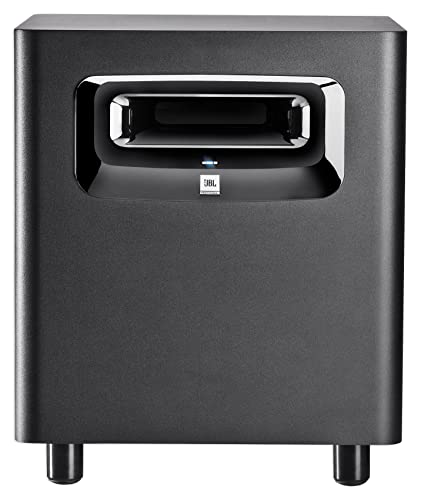
- 10-inch down-firing driver
- Deep bass into the 20 Hz region
- Balanced XLR and 1/4-inch I/O
Best For: Mix engineers seeking deep extension and club-style bass reference
Flexible Placement Pick
KRK S10.4 10-Inch Powered Subwoofer

- Front-firing bass port
- 28 Hz bass extension, 117 dB max SPL
- Footswitch bypass for sub and crossover
Best For: Mixers needing flexible placement and quick sub bypass control
Classic Monitor Match

- 22 Hz to 150 Hz response
- LOW CUT, HIGH CUT, and PHASE controls
- 150W powered 8-inch bass-reflex design
Best For: Engineers wanting a controllable sub for recording and monitoring
Feature-Rich Studio Low End

- 10-inch front-firing transducer
- Variable lowpass and switchable highpass filters
- Included footswitch for bypass control
Best For: Mixers wanting detailed control and quick bypass in a studio sub
Portable studio-style bass
Mackie ThumpSub GO 8" Portable Battery Subwoofer

- Battery-powered with up to 12 hours possible
- Horizontal or vertical placement options
- Bluetooth plus AUX/XLR connections
Best For: Mobile setups and portable bass reinforcement
Mixing-focused accuracy
Focal Sub One Dual 8" Active Studio Subwoofer

- Dual 8" Slatefiber woofers for controlled bass
- Adjustable phase, polarity, and crossover controls
- LFE and stereo I/O for flexible studio hookup
Best For: Mixing and mastering with precise low-end control
Simple budget sub
Samson MediaOne 10S Active Studio Subwoofer

- 10" woofer with 100 watts of power
- Variable low-pass control for basic tuning
- Speaker-level I/O for stereo connections
Best For: Home studios and simple desktop production setups
Compact Wireless Reference
PreSonus Eris Sub 8 BT White 8-inch Front-Firing Studio Subwoofer

- 8-inch front-firing sub with 100W output
- Crossover and tuning controls for easier integration
- Bluetooth 5.0 plus TRS, RCA, and aux inputs
Best For: Compact mixing setups, especially with Eris monitors
Budget Studio Bass
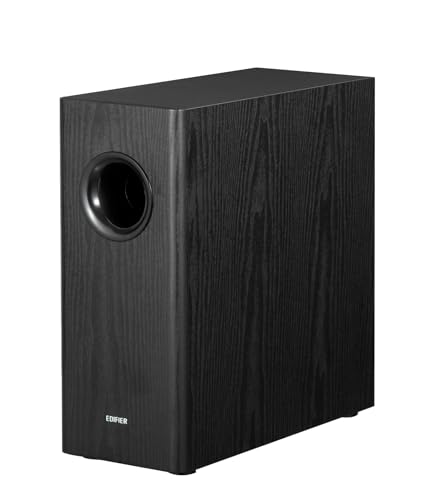
- 8-inch woofer with 70W RMS and 35 Hz bass
- Built-in amp with simple RCA setup
- Low-pass and phase controls for integration
Best For: Simple home-studio and desktop speaker systems
High-Power Studio Control
Rockville APM10D Active Studio Subwoofer

- 10-inch driver with 200W RMS output
- RCA, XLR, and TRS connectivity for studio gear
- Crossover, phase, and level controls for tuning
Best For: Larger studio mixes that need more output and control
Club-Style Low End – JBL LSR310S 10-Inch Studio Subwoofer
If you want an active studio subwoofer for mixing that can reach deep without losing control, the JBL LSR310S is built around a 10-inch down-firing driver, a patented port design, and a powerful 200W amplifier. It is designed to extend monitor systems cleanly, with balanced XLR and 1/4-inch connections and a switchable -10dBV/+4 dBu input sensitivity for broad compatibility.
Best For: Mix engineers who want deep bass extension and a club-style low end for electronic or surround setups.
Pros:
- Reaches deep low frequency response into the 20 Hz region.
- XLF setting adds a club-inspired bass tuning option.
- Balanced XLR and 1/4-inch inputs and XLR outputs simplify studio integration.
- 113 dB peak output supports loud, demanding playback.
Cons:
- Down-firing design may require a suitable floor setup.
- Focused on low-end extension rather than full-range playback.
For producers who need serious low-frequency reach, the LSR310S offers a practical mix-checking tool with enough output and connectivity to fit into many monitor systems. The XLF mode is especially useful when you want to reference bass-heavy material against a more club-like response.
Flexible Placement Pick – KRK S10.4 10-Inch Powered Subwoofer
The KRK S10.4 is an active studio subwoofer for mixing that pairs a 10-inch glass-aramid composite woofer with a front-firing bass port, making it a flexible choice when you need controlled low end and easier placement. Its Class D amplification, 28 Hz bass extension, and footswitchable sub and crossover control give it practical tools for checking mixes with and without the sub in the chain.
Best For: Producers who want a compact 10-inch sub with flexible positioning and quick bypass control.
Pros:
- Front-firing port allows more placement flexibility.
- Bass extension down to 28 Hz with 117 dB max SPL.
- Footswitch control can disable the sub and crossover filter.
- TRS and XLR connectivity suits studio monitor setups.
Cons:
- Footswitch is not included.
- Some users may prefer deeper extension than 28 Hz.
The S10.4 is a sensible fit for nearfield studios that need low-end support without a huge footprint. Its crossover bypass options make it easier to compare your mix decisions with and without sub reinforcement.
Classic Monitor Match – Yamaha HS8S Studio Subwoofer
The Yamaha HS8S is an active studio subwoofer for mixing built around an 8-inch bass-reflex design, 150W of power, and a response range that runs from 22 Hz to 150 Hz. It includes practical controls like LOW CUT, HIGH CUT, and PHASE switches, which help you integrate the sub with monitors and tailor the crossover to your room.
Best For: Engineers who want a straightforward, controllable sub for recording and live-music monitoring.
Pros:
- 22 Hz to 150 Hz frequency response covers useful low-end range.
- LOW CUT, HIGH CUT, and PHASE controls help with integration.
- 150W amplifier provides solid powered output.
- 8-inch bass-reflex design keeps the format compact.
Cons:
- Smaller 8-inch woofer may not move as much air as 10-inch models.
- Geared more toward control than flashy bass features.
This is a practical choice if you want a familiar studio workflow and easy crossover tuning. The HS8S focuses on clean system matching, making it useful when you need low end that supports decisions instead of distracting from them.
Feature-Rich Studio Low End – PreSonus Eris Pro Sub 10
The PreSonus Eris Pro Sub 10 is an active studio subwoofer for mixing designed for serious home studios and professional production rooms, with a 10-inch front-firing transducer, front bass-reflex port, and 170W RMS Class AB amplification. It adds detailed setup tools such as a continuously variable lowpass filter, switchable highpass filter, polarity invert, ground-lift, and an included footswitch for bypassing the sub and filters.
Best For: Mixers who want detailed control and easy bypass options in a modern studio sub.
Pros:
- 10-inch front-firing driver and port support strong low-frequency output.
- Variable lowpass and switchable highpass filters aid system tuning.
- Included footswitch lets you bypass the sub and filters quickly.
- Balanced XLR, TRS, and RCA inputs provide wide connectivity.
Cons:
- May be more feature-heavy than some minimal studio setups need.
- Designed to complement monitors, not replace them.
If you want an easy-to-integrate sub with multiple adjustment points, the Eris Pro Sub 10 stands out. It is especially useful when you need to audition low end both with and without sub reinforcement during mix decisions.
Portable studio-style bass – Mackie ThumpSub GO 8" Portable Battery Subwoofer
If you need an active studio subwoofer for mixing ideas in different rooms or portable playback spaces, the Mackie ThumpSub GO is built for flexibility rather than fixed-install precision. Its battery-powered design, Bluetooth streaming, and compact 8-inch format make it easy to bring deep low end wherever your setup goes.
Best For: Portable music setups, outdoor events, and mobile monitoring where battery power matters.
Pros:
- Two hot-swappable battery compartments for up to 12 hours of use
- Can be placed horizontally or vertically for easier positioning
- Bluetooth and auxiliary/XLR connectivity support flexible system hookups
- Optimized for portable loudspeakers with up to a 10″ low-frequency driver
Cons:
- Battery life depends on the included battery and optional second battery
- Portable design is less specialized for a permanent studio mix position
- 8-inch woofer is smaller than many dedicated studio subwoofers
Overall, the ThumpSub GO stands out when your sub needs to travel with you. For mix checks, mobile DJ use, or outdoor bass reinforcement, it offers real convenience and enough low-end reach to support compact systems.
Mixing-focused accuracy – Focal Sub One Dual 8" Active Studio Subwoofer
The Focal Sub One is the most directly targeted active studio subwoofer for mixing in this group, with dual 8-inch Slatefiber woofers and adjustable bass management controls. Its wide response range and studio-friendly cabinet design make it easier to integrate with monitors when you want controlled low end rather than exaggerated bass.
Best For: Mixing and mastering in home or project studios that need accurate low-end control.
Pros:
- Dual 8″ Slatefiber woofers provide neutral, dynamic bass
- Adjustable low-pass, high-pass, phase, and polarity settings help matching monitors
- LFE, left/right inputs, and link outputs support flexible integration
- Low-profile cabinet can fit along walls or under desks
Cons:
- Wired studio integration is the main focus, not portability
- 200W RMS is solid, but not the highest-power option here
- Larger footprint than a compact desktop sub
For a mixing-focused studio, this model makes the most sense if you want tunable bass management and a more neutral low-end reference. It is the clearest choice when accuracy and monitor integration are the priority.
Simple budget sub – Samson MediaOne 10S Active Studio Subwoofer
The Samson MediaOne 10S is a straightforward active studio subwoofer for mixing when you want added low end without overcomplicating the setup. With a 10-inch woofer, speaker-level inputs and outputs, and a variable low-pass control, it suits simple studio or desktop systems that need practical bass extension.
Best For: Home studios, desktop music production, and basic 2.1 listening setups.
Pros:
- 10″ copolymer woofer with 100 watts of power
- Variable low-pass frequency control for basic tuning
- Speaker-level inputs and outputs simplify stereo connections
- Selectable auto sleep mode can reduce unnecessary power use
Cons:
- Less advanced tuning options than more studio-focused subs
- RCA-based connectivity may be limiting for some pro setups
- Designed more for general music production than detailed mastering work
As an entry-level studio sub, the MediaOne 10S offers an easy path to fuller low end for small rooms and casual production spaces. It is best viewed as a practical budget option rather than a precision monitoring tool.
Compact Wireless Reference – PreSonus Eris Sub 8 BT White 8-inch Front-Firing Studio Subwoofer
PreSonus Eris Sub 8 BT White 8-inch Front-Firing Studio Subwoofer with Bluetooth Wireless Technology
Check Price On AmazonIf you want an active studio subwoofer for mixing that stays compact but still reaches deep, the PreSonus Eris Sub 8 BT is built for practical nearfield setups. Its 8-inch front-firing design, 100W power, and tuning controls are aimed at helping small monitors extend low end without turning the room into a bass mess.
Best For: Mixing with compact Eris monitors, desktop rigs, and users who want wired flexibility plus Bluetooth reference playback.
Pros:
- 8-inch front-firing woofer with a stated low end down to 30 Hz.
- Highpass and lowpass crossover controls help integrate the sub with main monitors.
- Balanced TRS, RCA, and front-panel aux input offer broad connection options.
- Built-in headphone output adds quick reference listening at the desk.
Cons:
- Designed primarily to complement compact Eris monitors rather than larger systems.
- Bluetooth is useful for convenience, but wired monitoring remains the core studio use.
- The 100W output is modest compared with bigger studio subs.
For a mixing-focused desktop setup, this model prioritizes control and compatibility over brute force. The crossover and tuning tools make it easier to keep bass tight, which matters more than sheer volume in many small studios.
Budget Studio Bass – Edifier T5s Powered Subwoofer
The Edifier T5s is a practical active studio subwoofer for mixing when you want deep bass without a complicated setup. With an 8-inch long-throw woofer, 70W RMS output, and a built-in amp, it is aimed at clean low-end support for home audio and active speaker systems.
Best For: Simple sub integration with desktop speakers, RCA-based systems, and compact home-studio listening.
Pros:
- 8-inch woofer with 35 Hz low-end extension for fuller bass.
- Low-pass filter and 0°/180° phase selector help match the room and speakers.
- Built-in amplifier makes plug-and-play setup straightforward.
- Compact MDF cabinet with front-firing driver and side port for a slim footprint.
Cons:
- Connectivity is RCA-based, so it is less flexible than some studio-oriented subs.
- No wireless support is included.
- Best compatibility is with systems that have sub out or line-in RCA paths.
This is a solid choice if your priority is easy bass extension rather than advanced studio routing. The controls are useful for dialing in low end, but the T5s is most at home in straightforward speaker setups where RCA connectivity is already part of the chain.
High-Power Studio Control – Rockville APM10D Active Studio Subwoofer
If you need an active studio subwoofer for mixing with more output and more room to shape the low end, the Rockville APM10D is the most full-featured option here. Its 10-inch driver, 200W RMS rating, and rear-panel crossover, phase, and level controls are designed for studio use where accuracy and flexibility matter.
Best For: Larger studio setups, music production, and users who want more headroom plus detailed bass tuning.
Pros:
- 10-inch sub with 400W peak / 200W RMS for stronger low-end output.
- RCA, XLR, and 1/4-inch TRS inputs/outputs support studio gear.
- Adjustable crossover, phase, volume, and treble give more control over integration.
- 0.7-inch MDF enclosure and front-firing port are built for studio-oriented bass response.
Cons:
- Larger cabinet size will take more space than 8-inch alternatives.
- More controls can mean more setup time when dialing it in.
- May be more sub than a small desktop mixing space needs.
For mixing, the APM10D stands out because it gives you both size and adjustment headroom. It is the best fit when you want a sub that can anchor a room, connect to more pro audio gear, and be tuned precisely to the rest of your monitoring chain.
How We Picked the Best Active Studio Subwoofer for Mixing
We focused on Active Studio Subwoofer for Mixing options that offer reliable amplification, practical crossover and phase controls, and enough extension to support critical listening rather than hype the bass. We also weighed driver size, enclosure design, connection flexibility, and how well each model fits common home and project studio setups.
Quick Comparison
In broad terms, 10-inch models tend to offer a stronger balance of depth and output for medium rooms, while 8-inch subs are often better for smaller spaces where tighter control matters more than maximum SPL. Ported and front-firing designs can feel more open, while compact or portable units may be easier to place but usually trade off some low-end authority.
Key Buying Factors for an Active Studio Subwoofer for Mixing
Room Size and Placement
Your room matters as much as the sub itself. In smaller rooms, a more controlled 8-inch sub may be easier to integrate, while larger spaces usually benefit from a 10-inch model with more headroom. Look for placement options that work with your desk, walls, and monitoring triangle.
Crossover, Phase, and Level Control
For mixing, adjustability is essential. A useful sub should let you set crossover points, match output level, and fine-tune phase so the low end blends with your main monitors instead of pulling attention away from them.
Frequency Extension and Accuracy
Deeper response is helpful only if it stays controlled. The best subwoofer for studio use should reproduce kick, bass guitar, and synth fundamentals clearly without excessive resonance or muddy overhang.
Connectivity and Integration
Check whether the sub offers balanced inputs and outputs, plus any bass management features you need. If your interface or monitor controller already handles routing, a simpler model may be enough. If not, built-in management can make setup easier.
Who Should Buy Which Active Studio Subwoofer for Mixing?
If you mix in a small room or nearfield desktop setup, an 8-inch sub may be the most practical choice. If you want fuller low-end confidence for production and mix decisions, a 10-inch unit is usually the safer bet. Buyers who need flexible routing should prioritize models with balanced I/O and bass management, while portable or secondary-room users may prefer compact, lower-power designs.
For most buyers, the best choice is the sub that integrates cleanly with your monitors and room, not the one with the biggest bass spec. Prioritize control, accuracy, and setup flexibility first.
