If your TV, console, or media player only has digital outputs, the right adapter can make headphone listening simple again. A good digital audio converter for headphones turns optical or coaxial signals into analog audio your headphones, speakers, or amp can use.
Below, we focus on practical, budget-friendly DAC options that are easy to connect and built for everyday home audio setups.
Best 10 Digital Audio Converter for Headphones Picks for 2026
Single-output headphone adapter
Optical to 3.5mm AUX Headphone Converter

- Direct optical to 3.5mm AUX conversion
- Supports up to 192kHz/24-bit
- USB powered and easy to set up
Best For: Simple headphone listening from a TV optical output
Inline RCA DAC cable
Optical to RCA Analog Converter Cable

- Optical to RCA analog output
- Supports up to 192kHz/24-bit
- Not designed for headphone use
Best For: Stereo systems that only need RCA output
Headphone-ready DAC
Optical/Coax to RCA + 3.5mm Jack DAC

- Optical and coaxial inputs supported
- RCA plus 3.5mm headphone output
- Up to 192kHz/24-bit PCM audio
Best For: People who want headphones and speakers from one DAC
Optical-to-RCA Starter Pick

- Converts optical Toslink to RCA stereo
- Supports up to 192kHz / 24-bit PCM
- Built-in amp chip and 7ft RCA cable
Best For: simple TV-to-RCA audio hookups with older speakers or amps
Headphone-Friendly Dual-Output DAC
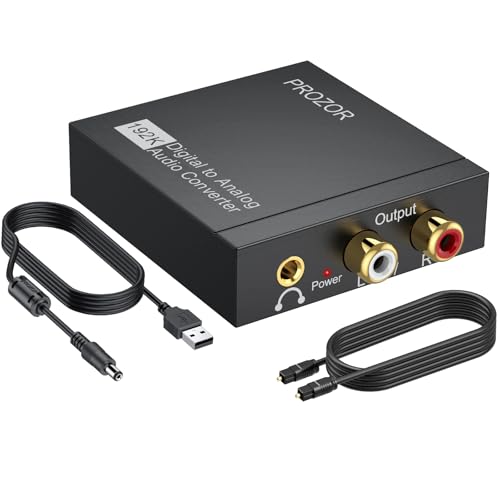
- RCA and 3.5mm outputs at the same time
- Accepts optical or coaxial input
- Built-in amp chip for stronger stereo output
Best For: mixed setups that need a 3.5mm jack and RCA output
Compact Optical-to-RCA Upgrade

- Optical Toslink to RCA stereo conversion
- Includes optical cable and aluminum body
- Supports up to 192kHz / 24-bit audio
Best For: small setups where space-saving installation matters
PCM-Only TV and Console Converter
Coaxial/Toslink to 3.5mm + RCA DAC

- Converts coaxial or Toslink to analog 3.5mm and RCA
- Supports PCM/LPCM up to 192kHz/24-bit
- Includes optical cable and power adapter
Best For: PCM-only TV and console audio into headphone-friendly analog output
Compact Optical Headphone DAC

- Converts optical audio to 3.5mm stereo output
- Built-in amplifier chip for clearer sound
- Includes optical cable and USB power cable
Best For: Simple optical-to-headphone conversion from TVs and source boxes
Manual-Volume Headphone DAC
Optical/Coaxial to 3.5mm + RCA DAC
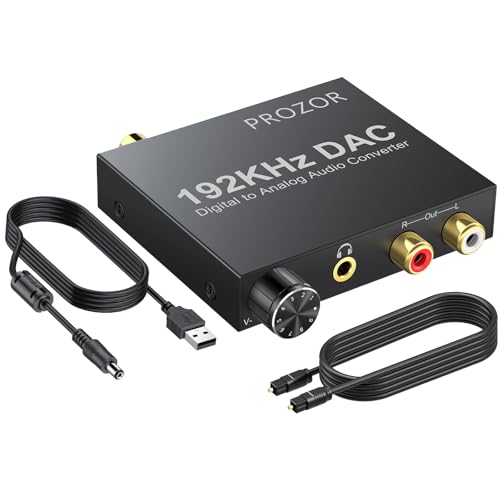
- Adds a built-in volume control knob
- Converts PCM audio to 3.5mm and RCA output
- Uses aluminum housing with gold-plated interfaces
Best For: Users who want a DAC with easy manual volume adjustment
Hybrid headphone DAC – Optical/Coax to RCA + 3.5mm Headphone Output
If you need a digital audio converter for headphones that can also feed speakers or a stereo system, this PROZOR DAC is a flexible budget-friendly option. It converts optical or coaxial PCM audio to analog RCA and a 3.5mm jack, so it works well for TV listening setups where you want both headphone and line-out connections.
Best For: TV owners and home-cinema users who want one DAC for headphones and RCA speakers.
Pros:
- Outputs to both RCA L/R and a 3.5mm jack at the same time
- Supports up to 192kHz/24-bit PCM audio
- Aluminum alloy housing helps with shielding and heat dissipation
- Includes an optical cable and USB power cable for setup
Cons:
- Requires PCM/LPCM output from the TV or source device
- Does not support Dolby, DTS, or 5.1 decoding
- Needs a 5V/1A USB power source, not a TV USB port
Overall, this is a practical all-around DAC if your source is set to PCM and you want headphone-friendly analog output without giving up RCA connectivity. The built-in 3.5mm jack makes it more versatile than RCA-only converters.
Single-output headphone adapter – Optical to 3.5mm AUX Headphone Converter
This digital audio converter for headphones is aimed at simple TV-to-headphone or TV-to-speaker use. It converts optical/TOSLINK audio into a female 3.5mm AUX output, making it a straightforward choice when you only need one analog headphone-style connection.
Best For: Quiet TV listening with headphones or small speakers using a single 3.5mm AUX connection.
Pros:
- Converts optical/TOSLINK directly to 3.5mm AUX
- Supports up to 192kHz/24-bit audio input
- Works well for headphone listening without disturbing others
- USB-powered design keeps installation simple
Cons:
- TV audio must be set to PCM/Stereo
- Does not support surround formats like Dolby or DTS
- TV remote cannot control volume through the converter
In practice, this is the most focused option here if your goal is just to get optical audio into headphones. It is compact and easy to use, but it is also the least flexible for multi-output setups.
Inline RCA DAC cable – Optical to RCA Analog Converter Cable
If you need a digital audio converter for headphones, this AUTOUTLET model is worth noting for its clean optical-to-analog conversion, though it is built around RCA output rather than a headphone jack. It is better suited to stereo systems and amplifiers than direct headphone use.
Best For: Stereo setups that need optical-to-RCA conversion and do not require a headphone output.
Pros:
- Converts optical TOSLINK audio to RCA analog output
- Supports up to 192kHz/24-bit sampling rates
- Built-in amplifier chip and dual-channel op-amp for clearer sound
- Inline cable design may suit direct connection setups
Cons:
- Does not support headphones
- Requires PCM output from the TV or source device
- Not compatible with 5.1-channel Dolby AC3 audio
This is a solid pick for analog stereo conversion, but headphone users should skip it because it lacks a 3.5mm output. It makes more sense when your target is an amplifier, receiver, or RCA-only speaker system.
Headphone-ready DAC – Optical/Coax to RCA + 3.5mm Jack DAC
This digital audio converter for headphones is a strong match when you want both headphone and speaker output from a TV or other digital source. The OREI DA21 converts optical or coaxial PCM audio to analog RCA L/R and a 3.5mm mini jack, giving it the versatility many buyers look for in a compact DAC.
Best For: Users who want a simple DAC for headphones plus RCA speakers from optical or coaxial audio.
Pros:
- Supports both optical and coaxial digital inputs
- Provides RCA L/R output and a 3.5mm mini jack
- Handles sample rates up to 192kHz/24-bit
- Includes power supply and user manual
Cons:
- Only supports PCM audio output mode
- Does not support Dolby, DTS, 5.1ch, or 7.1ch signals
- TV volume will not be controlled by the TV remote
For buyers who want a dependable headphone-friendly DAC without extra complexity, the DA21 covers the essentials well. Just make sure your source is set to PCM before expecting clean output.
Optical-to-RCA Starter Pick – LiNKFOR 192kHz DAC Converter
If you need a digital audio converter for headphones-friendly home audio setups or older stereo gear, this LiNKFOR DAC is a straightforward way to turn TV optical output into analog RCA sound. It supports PCM/LPCM input, includes a built-in amplifier chip, and is meant for simple plug-and-play use with HDTVs, Blu-ray players, game consoles, and similar sources.
Best For: users connecting a TV or set-top box to older RCA speakers or amps with a compact, no-fuss converter.
Pros:
- Converts Toslink/SPDIF optical audio to analog RCA L/R output
- Supports up to 192kHz sampling and 24-bit stereo PCM/LPCM
- Built-in amplifier chip helps raise RCA output level
- Includes a built-in 7ft/2.1m RCA cable for easier hookup
Cons:
- Not compatible with 5.1-channel formats like Dolby AC3 or DTS
- Requires 5V USB power to operate
For a simple optical-to-analog bridge, this model focuses on convenience and clear stereo conversion rather than advanced decoding. It is a practical pick if your goal is to keep using existing RCA speakers or an older amp with a modern digital source.
Headphone-Friendly Dual-Output DAC – PROZOR 192KHz Converter
The PROZOR DAC is a useful digital audio converter for headphones setups when you want both RCA and a 3.5mm analog option from an optical or coaxial source. It converts PCM/LPCM audio from TVs, game consoles, and media players, and its built-in amplifier chip is designed to deliver stronger, cleaner output for everyday listening.
Best For: people who want one converter that can feed a 3.5mm jack or RCA stereo system from a digital source.
Pros:
- Outputs to both 2 x RCA and 3.5mm jack simultaneously
- Supports optical and coaxial digital inputs
- Handles up to 192kHz / 24-bit stereo PCM or LPCM
- Built-in audio amplifier chip helps improve output level
Cons:
- Requires PCM/LPCM output settings on the source device
- Not designed for 5.1-channel decoding
- Power adapter is not included
This model stands out for versatility: if you need one converter to serve both a headphone-style 3.5mm connection and an RCA stereo path, it keeps the setup simple. It is best suited to stereo use cases where the source can be set to PCM.
Compact Optical-to-RCA Upgrade – YGiTK 192kHz DAC Converter
If you want a compact digital audio converter for headphones-related stereo systems or a small TV audio setup, this YGiTK converter turns optical Toslink audio into RCA analog with a simple plug-and-play design. It supports up to 192kHz/24-bit input, includes a built-in amplification chip, and comes with an optical cable for easier installation.
Best For: buyers who want a lightweight optical-to-RCA converter with a small footprint and included cable.
Pros:
- Converts optical digital audio to RCA analog stereo
- Supports up to 192kHz sampling and 24-bit bit streams
- Built-in audio amplification chipset boosts RCA output level
- Includes an optical cable and compact aluminum housing
Cons:
- Not compatible with Dolby AC3 or other 5.1-channel signals
- Requires PCM audio output from the source device
- Volume must be adjusted on the output device
As a straightforward optical-to-RCA converter, this model is focused on stereo compatibility and easy setup. The included cable and compact body make it a sensible choice when you want clean conversion without adding clutter.
PCM-Only TV and Console Converter – Coaxial/Toslink to 3.5mm + RCA DAC
If you need a digital audio converter for headphones and simple stereo listening, this DAC turns coaxial or Toslink PCM/LPCM signals into analog 3.5mm and RCA output. It’s a practical pick for TV, console, and home cinema setups when you want an easy way to feed analog headphones or speakers from a digital source.
Best For: Users who need a straightforward PCM-only converter for TV, Blu-ray, or console audio into 3.5mm or RCA output.
Pros:
- Supports coaxial and Toslink digital input with 3.5mm jack and RCA L/R output
- Claims up to 192kHz/24-bit sampling support for PCM/LPCM sources
- Plug-and-play setup with included optical cable and power adapter
- Aluminum housing for a sturdier desktop-friendly build
Cons:
- Does not support AC3, Dolby, DTS, or other non-PCM audio formats
- Coaxial cable is not included
- Requires the source to be set to PCM/LPCM before use
For basic digital-to-analog headphone use, this model is appealing because it keeps setup simple and gives you both 3.5mm and RCA output. Just make sure your source device can output PCM, since that limitation matters more than the high sampling-rate spec here.
Compact Optical Headphone DAC – Optical to 3.5mm Stereo DAC
This digital audio converter for headphones is built for people who want a clean optical-to-analog path without extra setup. It converts SPDIF/Toslink output to 3.5mm stereo audio and is aimed at HD TVs, set-top boxes, DVD/Blu-ray players, and game consoles.
Best For: Anyone looking for a simple optical-to-3.5mm converter for a TV or set-top box.
Pros:
- Optical input to 3.5mm stereo output in a compact adapter format
- Built-in amplifier chip for clearer signal output
- Supports 192kHz/24-bit conversion with multiple sampling rates
- Includes optical cable, USB power cable, and user manual
Cons:
- Not compatible with 5.1 channel signals like Dolby AC3
- Requires the source audio to be set to PCM
- Only covers optical input, not coaxial input
As a headphone-focused DAC, this model is best when you want a direct 3.5mm analog feed from a TV or similar device. The included accessories and amplifier chip make it a convenient option, but the PCM-only limitation is important to confirm before buying.
Manual-Volume Headphone DAC – Optical/Coaxial to 3.5mm + RCA DAC
If you want a digital audio converter for headphones with more control over output level, this PROZOR adapter adds a built-in volume knob to a standard optical/coaxial-to-analog setup. It converts PCM audio to 3.5mm and RCA output, making it useful for PC-connected or home entertainment listening.
Best For: Listeners who want a basic DAC with manual volume adjustment for 3.5mm or RCA output.
Pros:
- Converts Toslink or coaxial digital PCM audio to analog 3.5mm and RCA simultaneously
- Built-in volume control knob for adjusting output level
- Supports up to 192kHz/24-bit sampling
- Metal aluminum shell and gold-plated interfaces
Cons:
- Input and output cannot be reversed
- Requires a 5V 1A USB power source; power adapter is not included
- Only works with PCM audio, not non-PCM formats
This model stands out if you want headphone output you can tame or boost directly from the converter. The volume knob is the key advantage, but like the others here, it’s still limited to PCM sources and requires a proper USB power setup.
How We Picked the Best Digital Audio Converter for Headphones
We prioritized converters that are straightforward to use, widely compatible, and suitable for headphone listening through a 3.5mm jack or RCA output. We also favored models with common 192kHz support, stable powered operation, and enough cable length or port flexibility to fit typical TV and desktop setups.
Quick Comparison
Most options in this roundup are simple DAC boxes or adapters designed to bridge optical or coaxial digital audio to analog outputs. If you want the easiest path to headphones, look for a built-in 3.5mm jack. If you are connecting to powered speakers, an RCA output may be the better fit. Models with both outputs offer the most flexibility.
Key Buying Factors for a Digital Audio Converter for Headphones
Input and Output Match
Start with your source device. Optical TOSLINK is common on TVs and game consoles, while some audio gear uses coaxial SPDIF. On the output side, decide whether you need 3.5mm for headphones, RCA for speakers, or both.
Power Requirements
Most budget DACs need USB power to function. That is normal, but it does mean you need an available USB port or wall adapter near your setup. Check whether the power lead is long enough for your location.
Sound Format Support
For basic headphone use, 192kHz DAC support is usually more than enough. More important than the headline number is reliable conversion without hiss, dropouts, or channel imbalance.
Volume Control and Convenience
Some converters include volume adjustment, which can be helpful when driving headphones or balancing output levels with speakers. Others are fixed-output devices and may be better if you already control volume elsewhere.
Build and Cable Length
Compact metal housings, secure ports, and included cables can make setup easier and reduce desk clutter. If your TV or receiver is far from your listening position, cable length matters more than extra features.
Who Should Buy Which Digital Audio Converter for Headphones?
If you mainly want to plug headphones into a TV with only optical out, choose a converter with a dedicated 3.5mm output and simple USB power. If you are using powered speakers as well, a DAC with RCA and headphone-capable output gives you more flexibility.
For mixed home theater and desktop use, a Digital Audio Converter for Headphones with both optical and coaxial input is the safest pick. If you want the least complicated setup, prioritize clear labeling, included cables, and a compact design over extra specs you will not use.
