If your speakers sit too low on the desk, you lose clarity, stereo imaging, and comfort. The right angled desktop speaker stands can lift the sound toward ear level while helping reduce vibration and desk clutter.
Below, we focus on practical options for small to medium speakers, from simple foam wedges to sturdier metal risers, so you can match the stand to your speakers and workspace.
Best 10 Angled Desktop Speaker Stands Picks for 2026
Premium Angled Isolation
Audioengine DS1 Angled Desktop Speaker Stands
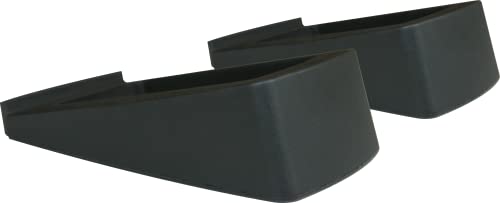
- 15-degree tilt for near-field listening
- Silicone base helps reduce vibration
- Compact stand pair with 8 lb max load
Best For: small desktop and bookshelf speakers needing a polished angled lift
Space-Saving Foam Wedge

- 16-degree wedge aims sound toward ear height
- Foam layers help isolate vibration
- Compact, non-slip design saves desk space
Best For: small speaker setups where desk space and simple placement matter
Medium Speaker Angle
HumanCentric Desktop Speaker Stands

- 15-degree tilt for better ear alignment
- Silicone wedge helps reduce vibration
- Sized for medium speakers like A5+ and HD6
Best For: medium bookshelf or studio speakers on a clean desktop setup
Angled Precision
Kanto S4 Tilted Desktop Speaker Stands

- 16° tilt aims sound toward your ears
- Foam padding helps cut resonance
- Mounting hole adds extra security
Best For: Compact desk setups with medium bookshelf speakers
High-Capacity Desk Tilt
PUTORSEN 16° Desktop Speaker Stands

- 16° upward tilt for clearer listening
- 22 lb capacity suits heavier speakers
- Freestanding or screw-mounted setup
Best For: Heavier bookshelf speakers on a stable desktop base
Low-Profile Wedge
VIVO 15° Desktop Speaker Stands
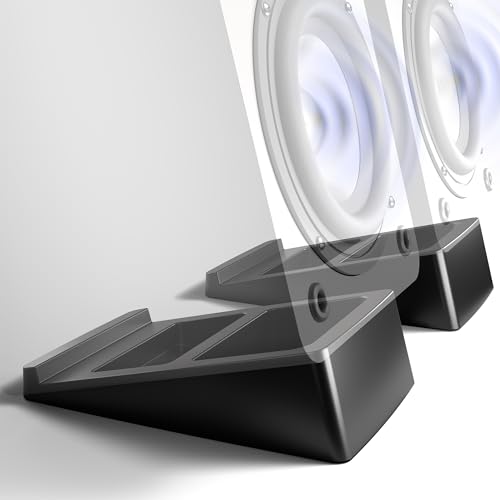
- 15° tilt improves listening angle
- No assembly required
- TPR base helps isolate vibration
Best For: Minimal desk setups that need a fast, tidy speaker lift
Compact Desktop Lift
Monoprice Small Tilted Wedge Stands

- 15-degree fixed tilt for small speakers
- Anti-vibration TPR helps reduce resonance
- Compact pair fits limited desktop space
Best For: Small speaker setups on compact desks
Heavy-Duty Listening Angle
PEGZONE 22 lb Tilted Speaker Stands
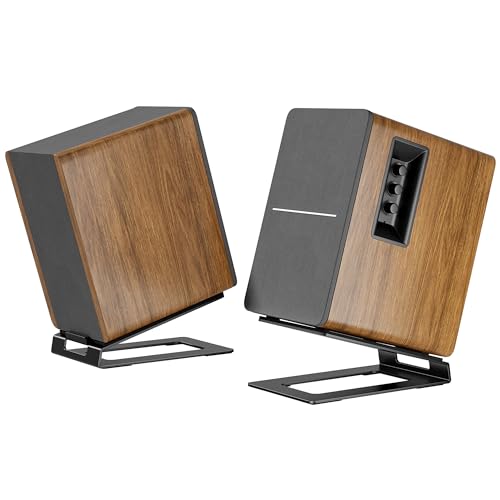
- 22 lb capacity with metal base support
- 16-degree tilt for direct listening angle
- Freestanding or screw-mounted installation
Best For: Desk setups needing stronger support and stability
Mid-Size Desktop Angle
Monoprice Medium Tilted Wedge Stands

- Fits most standard 5-inch+ bookshelf speakers
- 15-degree tilt with anti-vibration rubber
- Simple pair design for quick placement
Best For: Medium bookshelf speakers on a compact desktop
Premium Angled Isolation – Audioengine DS1 Angled Desktop Speaker Stands
If you want angled desktop speaker stands that are built to improve near-field listening, the Audioengine DS1 pair keeps the setup simple. The 15-degree tilt is aimed at directing sound toward your ears while the isolation base helps reduce vibration that can muddy bass and detail.
Best For: Small bookshelf, desktop, or gaming speakers that need a clean 15-degree lift on a desk or office setup.
Pros:
- 15-degree angle is designed to improve soundstage and high-frequency clarity.
- Silicone construction helps dampen vibration for cleaner bass response.
- Compact 3.75 x 6.25 inch base fits many small speakers.
- Includes two stands with an 8 lb maximum load limit.
Cons:
- 8 lb max capacity may rule out heavier speakers.
- Best suited to smaller speakers rather than medium or large bookshelf models.
The DS1 is a straightforward choice if you want a premium-looking angled desktop speaker stand with a proven tilt and vibration control. It is especially appealing for users who value a simple, polished desktop setup and want a stable platform for compact speakers.
Space-Saving Foam Wedge – 16° Tilt Speaker Riser Pair
These angled desktop speaker stands are a practical pick if you want a simple wedge-style lift without adding bulk to your desk. The 16-degree incline aims the speaker toward ear height, while the shock-absorbing foam layers help isolate the speaker from the surface and reduce unwanted resonance.
Best For: Home offices, gaming desks, and small studio setups that need a compact, non-slip speaker wedge.
Pros:
- 16-degree tilt helps aim sound directly toward the listener.
- Shock-absorbing foam layers help control vibration and resonance.
- Compact footprint keeps the desktop tidy.
- Non-slip base adds stability during daily use.
Cons:
- No published weight limit is provided in the notes.
- Plastic construction may feel less premium than silicone or metal options.
The Hyparade wedge is a good fit if your priority is a space-saving desktop riser with a stronger angle than many basic stands. It focuses on easy placement, vibration control, and a low-profile shape rather than adjustability or heavy-duty construction.
Medium Speaker Angle – HumanCentric Desktop Speaker Stands
If you need angled desktop speaker stands for medium-sized speakers, this HumanCentric pair is built around a 15-degree listening tilt and a stable silicone wedge design. The platform is sized for computer, bookshelf, desktop, and studio speakers, and the low-profile shape keeps the desk looking clean while helping direct audio toward your ears.
Best For: Medium speakers such as Audioengine A5+, HD4, HD6, P4, and HDP6, plus similarly sized desktop or studio models.
Pros:
- 15-degree upward tilt helps improve listening alignment.
- Premium silicone build is flexible, lightweight, and low profile.
- Designed to reduce vibration and keep speakers stable.
- Sized for medium speakers and includes two stands.
Cons:
- Size is aimed at medium speakers, so smaller models may look oversized.
- No load capacity is listed in the supplied notes.
This is a strong choice if you want a simple, clean stand that targets a common medium-speaker footprint. It balances tilt, vibration control, and minimal desk presence without adding extra hardware or adjustment complexity.
Adjustable Cantilever Lift – PUTORSEN Desk Speaker Stands
For buyers looking at angled desktop speaker stands with more structure than a simple wedge, this PUTORSEN pair adds a cantilevered C-shaped design and a 6-degree tilt. The extendable ledge stopper lets you adjust depth for different speaker sizes, while the anti-vibration pads and EVA contact points help keep sound cleaner and the desk protected.
Best For: Small to medium bookshelf speakers, computer speakers, and studio monitors that benefit from adjustable depth and extra desk clearance.
Pros:
- 6-degree tilt helps align speakers toward ear level.
- Adjustable depth range supports different speaker sizes.
- C-shaped design frees up space underneath the speakers.
- Anti-vibration and EVA pads help reduce resonance and protect surfaces.
Cons:
- 6-degree angle is milder than some wedge-style competitors.
- Assembly and fit may depend on speakers matching the stand’s depth range.
This is the most flexible option in the group if you want a stand that creates desk space and offers some size adjustment. It is especially appealing for users who need a more supported platform for speakers with bottom mounting holes or who want a cleaner, elevated desktop layout.
Angled Precision – Kanto S4 Tilted Desktop Speaker Stands
If you’re shopping for angled desktop speaker stands, the Kanto S4 is a compact option built to tilt medium bookshelf speakers and mid-size 3″-4″ studio monitors toward your ears. Its 16° angle, foam padding, and solid metal construction make it a practical pick for cleaner desk placement and steadier nearfield listening.
Best For: Desktop setups where you want a low-profile angled stand with secure mounting options.
Pros:
- 16° tilt helps aim higher frequencies toward the listener
- Foam padding helps reduce unwanted resonance and improve stability
- Includes a 1/4″-20 mounting hole for compatible speakers
- Solid metal construction with a clean, minimal desktop profile
Cons:
- 8 lb load capacity is lower than some larger-capacity alternatives
- Designed for medium bookshelf speakers and 3″-4″ studio monitors, so it may be too small for bigger models
The S4 makes sense if you want a simple, sturdy way to angle speakers without adding visual clutter. It focuses on secure placement and listening position rather than extra features.
High-Capacity Desk Tilt – PUTORSEN 16° Desktop Speaker Stands
These angled desktop speaker stands are designed for listeners who want a stronger base and a more pronounced tilt for bookshelf speakers. With a 16° upward angle, 22 lb capacity, and anti-vibration padding, the PUTORSEN pair is built to improve speaker positioning while keeping your desk setup tidy.
Best For: Users who want sturdy angled stands for heavier bookshelf speakers and everyday desk setups.
Pros:
- 16° tilt directs sound toward the listener for clearer projection
- 22 lb weight capacity supports a wide range of bookshelf speakers
- Can be used freestanding or secured with included screws
- Anti-vibration pads help reduce resonance and protect the desk
Cons:
- Bulkier than some lower-profile wedge-style options
- Maximum height is limited, so it may not suit users wanting a taller riser
This is a strong all-around choice if you want angled stands that prioritize stability and support. The combination of tilt, padding, and flexible installation makes it easy to fit into most desktop audio setups.
Low-Profile Wedge – VIVO 15° Desktop Speaker Stands
For a simple pair of angled desktop speaker stands, the VIVO STAND-SP2A-M offers a low-profile wedge shape with a 15° tilt. It’s made for users who want an easy, no-assembly way to raise speakers off the desk, improve listening angle, and keep a clean workspace.
Best For: Minimal desk or gaming setups that need quick placement and a subtle angled lift.
Pros:
- 15° tilt improves speaker aim and listening clarity
- No assembly required, so setup is immediate
- TPR material helps isolate vibration and reduce resonance
- Low-profile black finish blends easily into desktop environments
Cons:
- 15° tilt is slightly less aggressive than some competing stands
- Wedge design may not offer the same secure mounting as screw-based options
The VIVO stands are a practical pick if you want straightforward angling without extra hardware or setup time. They deliver a tidy, space-saving solution for improving desktop speaker placement.
Compact Desktop Lift – Monoprice Small Tilted Wedge Stands
If you want angled desktop speaker stands that keep a small setup tidy, this Monoprice pair offers a simple 15-degree wedge design with anti-vibration TPR construction. They’re built for limited desk space and are easy to place, making them a practical fit for small bookshelf speakers and studio monitors.
Best For: Small speaker setups where space is tight and a clean, low-profile stand is preferred.
Pros:
- 15 degrees of tilt helps aim sound toward the listening position.
- Anti-vibration thermoplastic rubber construction helps reduce surface noise.
- Compact pair is designed for quick installation in limited desktop space.
- Neat black finish keeps the setup looking clean and simple.
Cons:
- Only suited for small-sized speakers.
- No height adjustment beyond the fixed wedge angle.
Overall, this is a straightforward choice if you want angled desktop speaker stands that prioritize simplicity, vibration control, and a small footprint over adjustability. It’s a good match for compact desks and minimalist audio setups.
Heavy-Duty Listening Angle – PEGZONE 22 lb Tilted Speaker Stands
These angled desktop speaker stands are built for buyers who want a sturdier platform and a more pronounced tilt. With a metal base, anti-vibration pads, and a 16-degree angle, they’re designed to support most bookshelf speakers while helping direct sound more cleanly toward your ears.
Best For: Desk setups that need stronger support, better vibration control, and a more stable angled speaker platform.
Pros:
- 22 lb capacity supports a wide range of bookshelf speakers.
- 16-degree tilt aims sound upward for better listening alignment.
- Anti-vibration pads help reduce resonance and protect the desk surface.
- Two installation methods: freestanding or secured with screws.
Cons:
- Heavier metal construction may be more than needed for very small speakers.
- Footprint may take more desk space than compact wedge-style stands.
As angled desktop speaker stands go, this model stands out for stability and load support rather than a minimal profile. If your priority is a dependable, vibration-resistant base for desktop listening, it’s a strong pick.
Mid-Size Desktop Angle – Monoprice Medium Tilted Wedge Stands
If you’re shopping for angled desktop speaker stands for standard bookshelf speakers, this Monoprice pair is aimed at medium-sized setups. The 15-degree tilt, anti-vibration rubber build, and clean wedge shape make it a simple way to improve speaker positioning without adding clutter.
Best For: Medium bookshelf speakers and studio monitors that need a compact angled lift on a desktop.
Pros:
- Made for most standard 5-inch and larger bookshelf speakers.
- 15-degree tilt helps improve speaker aim and listening angle.
- Anti-vibration rubber construction supports a cleaner desktop setup.
- Pair design keeps the installation quick and straightforward.
Cons:
- Fixed angle offers no tilt adjustment.
- Rubber wedge design may not provide the rigid feel some buyers want.
This is a good middle-ground option if you need angled desktop speaker stands that fit common speaker sizes and keep the setup simple. It focuses on easy placement, vibration reduction, and a neat footprint.
How We Picked the Best Angled Desktop Speaker Stands
We looked for Angled Desktop Speaker Stands that solve the most common desktop audio problems: poor listening height, resonance, limited desk space, and compatibility with small to medium bookshelf speakers or studio monitors. Priority went to products with clear tilt angles, strong weight support, anti-slip or damping materials, and a footprint that makes sense for real desks.
Quick Comparison
In general, 6° to 16° tilt is the sweet spot for desktop listening. Lower angles tend to work best when your speakers are already close to ear height, while steeper wedges are better when the speakers sit very low or you want a more obvious upward aim. Foam-based designs usually excel at vibration control and simplicity, while metal or rigid platforms often provide better structure and higher load capacity.
Key Buying Factors for Angled Desktop Speaker Stands
Tilt Angle
The angle determines how aggressively the speaker fires upward. For nearfield setups, a modest tilt can be enough to align tweeters with your ears. If your desk is deep or your chair sits lower, a steeper angle may improve the soundstage.
Speaker Size and Weight
Check both the footprint and the load rating. Some Angled Desktop Speaker Stands are designed for compact speakers only, while others can support heavier bookshelf models. A stand that is too small can feel unstable even if the weight rating looks adequate.
Isolation and Stability
If your desk vibrates or rattles, look for anti-vibration pads, damping foam, or silicone contact points. These features can make a noticeable difference in bass control and overall clarity.
Desk Space and Layout
Measure your available width and depth before buying. A stand with the right tilt but the wrong footprint can crowd your keyboard, monitor, or audio interface.
Build Material
Foam wedges are light, affordable, and effective for many setups. Metal and rigid composite designs can feel more premium and secure, especially for heavier speakers or users who want a more permanent arrangement.
Who Should Buy Which Angled Desktop Speaker Stands?
If you use small speakers and want the simplest upgrade, foam or wedge-style risers are often the most practical choice. If you own medium bookshelf speakers or compact studio monitors, choose Angled Desktop Speaker Stands with a higher weight capacity and a stable base. For the cleanest desktop sound with less vibration, prioritize isolation-focused models. For the tightest desk setups, pick a slim design with a footprint that preserves room for your workflow.
In short, the best option is the one that matches your speaker size, desk depth, and listening height without adding unnecessary bulk.
