Documentary shooters need motion tools that are smooth, dependable, and fast to set up in the field. The right slider can add production value without slowing down a tight schedule.
Below, you’ll find a focused roundup of the best options for compact crews, run-and-gun interviews, and controlled cinematic movement.
Best 10 Camera Slider Systems for Documentaries Picks for 2026
Motorized Precision Slider

- App control with manual, video, and time lapse modes
- Silent stepper motor for quieter documentary shooting
- Carbon fiber rail keeps the system lighter for field use
Best For: Compact documentary rigs needing smooth, quiet motion
Pro Cinema Rail System

- High-precision rails for controlled camera movement
- Silent pulley system helps keep shots noise-free
- Supports 100mm, 150mm, and Mitchell mounts
Best For: Professional documentary crews with heavier rigs
Heavy-Duty Track Dolly
PROAIM Swift Camera Track Dolly
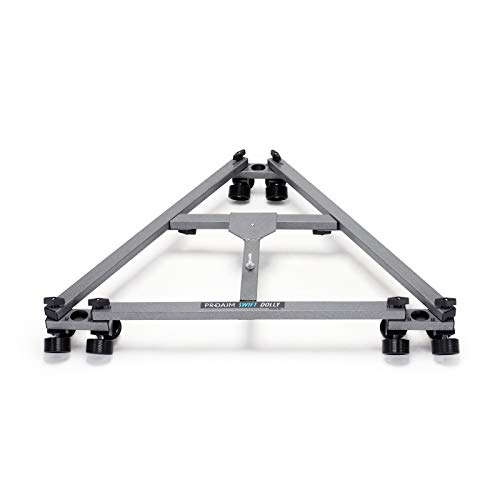
- Supports up to 159 kg / 350 lb payload
- Track-based movement for smooth straight-line shots
- Built for documentaries, interviews, and studio use
Best For: Large documentary rigs needing stable track motion
Long-Reach Motorized Slider

- 48-inch carbon fiber rail for longer moves
- App control with tracking, panoramic, and time lapse modes
- Adjustable legs and multiple screw ports for setup flexibility
Best For: Documentary shooters wanting a longer motorized slider
Pro Rail Pick
Fotodiox SlideCam 800-32" Video Slider

- Ball-bearing rail for smooth movement
- Supports horizontal or vertical shooting
- Includes adjustable legs and carrying case
Best For: Documentary shooters needing a stable manual slider for heavier camera setups
Motion Control Choice
GVM 48" Motorized Carbon Fiber Slider
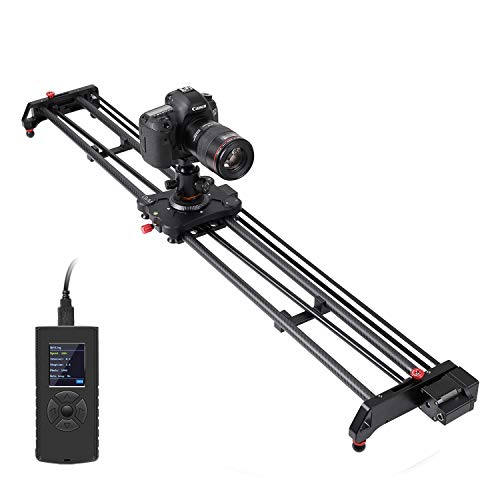
- Automatic round-trip and time-lapse functions
- Carbon fiber rail with adjustable feet
- Includes battery, remote, and bag
Best For: Filmmakers needing programmable motion for documentary B-roll and time lapse
Compact Travel Pick
NEEWER CS1M 16in Carbon Fiber Slider

- Lightweight 16-inch carbon fiber rail
- Smooth 4-bearing slide with adjustable legs
- Includes ball head, phone, and action mounts
Best For: Solo shooters and travel crews with light documentary rigs
Motorized Creative Control
GVM 32" Motorized Wireless Camera Slider

- 6 shooting modes for tracking, panoramic, time-lapse, and video
- Bluetooth app control for precise motion settings
- Carbon fiber build with portable carry bag
Best For: Documentary shooters who want programmable motion in a travel-friendly slider
Portable Manual Track
Zecti 24" Carbon Fiber Camera Slider

- Lightweight 24-inch manual slider for travel
- Precision bearings and double carbon fiber rails
- Adjustable legs, rubber feet, and bubble level
Best For: Traveling documentary shooters who want a compact manual slider
App-Controlled Precision
NEEWER 31.5" Motorized Camera Slider

- App control plus optional 2.4G remote support
- Silent stepper motor for smooth, noiseless movement
- 4400mAh battery and carbon fiber build
Best For: Documentary creators needing silent, repeatable motion with battery power
Motorized Precision Slider – NEEWER 31.5" Carbon Fiber ER1
If you want camera slider systems for documentaries that can handle controlled motion without adding much bulk, this NEEWER motorized slider is built for flexible run-and-gun use. Its carbon fiber rail, app control, and support for video and time lapse modes make it a practical option for documentary B-roll, interviews, and simple motion inserts.
Best For: Documentary shooters who want a compact motorized slider for smooth interview moves, B-roll, and time lapse work.
Pros:
- App control with manual, video, and time lapse modes for repeatable motion.
- Silent stepper motor helps keep camera movement quiet during recorded takes.
- Carbon fiber build keeps the slider lightweight while staying rugged for field work.
- Supports horizontal, 45° tilt, and panorama-style setup options for more creative framing.
Cons:
- Maximum load drops to 5.5 lb when tilted up 45°.
- Minor shake may occur in macro photography use.
- 2.4G remote control is mentioned as not included.
For documentary crews balancing portability and controlled movement, this slider offers a strong mix of quiet operation and app-based precision. It is better suited to compact rigs than heavy cinema builds, but it covers many common documentary movement needs well.
Pro Cinema Rail System – MOVMAX Slider Elite 0.9m
For documentary productions that need a more professional track solution, this MOVMAX system is aimed at high-precision motion with quiet operation. Among camera slider systems for documentaries, it stands out for its rail design, silent pulley system, and support for larger mounting standards like 100mm, 150mm, and Mitchell.
Best For: Professional documentary crews using heavier camera setups and larger mounting standards.
Pros:
- High-precision rails are designed for smooth, controlled camera movement.
- Silent pulley system helps reduce noise during recorded scenes.
- Tracking carriage supports 100mm, 150mm, or Mitchell mounts.
- Rail lengths range from 2.95 feet to 6.89 feet for different production needs.
Cons:
- More specialized than entry-level sliders.
- Primarily geared toward professional camera setups.
- Best fit depends on matching the rail length to your workflow.
This is a strong choice when documentary work calls for serious support hardware and precise, repeatable movement. It is less of a compact travel slider and more of a production-grade rail system for crews that need compatibility with larger rigs.
Heavy-Duty Track Dolly – PROAIM Swift Camera Track Dolly
If your documentary workflow needs track-based motion for heavier setups, this PROAIM dolly is built for serious payloads and stable straight-line movement. As one of the more robust camera slider systems for documentaries, it is designed for smooth tracking shots, reveal shots, and follow shots in film and video production.
Best For: Documentary productions that need a heavy-duty dolly for large camera rigs and crew-supported setups.
Pros:
- Supports up to 159 kg / 350 lb, making it suitable for substantial rigs and equipment.
- Track-based design is aimed at smooth straight-line camera movement.
- 28″ central distance configuration is built to enhance balance and stability.
- Designed for films, commercials, interviews, studio work, and documentaries.
Cons:
- Heavier and more production-oriented than compact slider systems.
- Best suited to crews that can work with track-based gear.
- Not the most portable option for lightweight field setups.
For documentary teams that prioritize load capacity and stable motion over portability, this dolly is a practical pro-level tool. It makes sense when the shot list calls for dependable tracking movement with larger camera packages.
Long-Reach Motorized Slider – GVM 48" Carbon Fiber Slider
For crews looking at camera slider systems for documentaries, this GVM 48-inch motorized slider offers a longer rail for wider establishing moves and controlled motion. Its app control, carbon fiber construction, and multiple shooting modes make it a useful fit for documentary B-roll, follow shots, and time lapse work.
Best For: Documentary filmmakers who want a longer motorized slider with app-based control and multiple motion modes.
Pros:
- 48-inch carbon fiber rail provides extra length for more noticeable camera travel.
- Supports tracking, panoramic shooting, time lapse, and video capture.
- App control lets you manage motion from a smartphone or tablet.
- Includes multiple screw ports and adjustable legs for flexible setup options.
Cons:
- Maximum weight recommendation is 20 lb.
- Battery average life is listed at 2 hours.
- More feature-rich than a basic manual slider, which may add setup complexity.
This model is a good fit when you want longer, more deliberate movement without moving to a full dolly system. It balances portability and control well for documentary-style shooting, especially when app-driven operation is useful on set.
Pro Rail Pick – Fotodiox SlideCam 800-32" Video Slider
If you need camera slider systems for documentaries that prioritize steadiness and simple setup, the Fotodiox Pro SlideCam 800-32″ is built around a smooth ball-bearing rail and a sturdy aluminum platform. It can be used horizontally or vertically, and the adjustable legs help it sit securely on a tripod or flat surface.
Best For: Documentary shooters who want a stable, full-featured manual slider for heavier camera setups.
Pros:
- Ball-bearing slide mechanism for smooth movement
- Works horizontally or vertically with a bubble level for alignment
- Includes removable adjustable legs with non-skid rubber feet
- Multiple 1/4-20 and 3/8″ mounting points for flexible setup
Cons:
- Manual operation only, with no motorized motion options
- 32-inch rail may be limiting for longer tracking moves
- Heavier-duty design may be more than needed for very light rigs
Overall, this is a practical choice if you want a compact slider that still feels professional and stable on set. The carrying case and quick assembly make it easier to bring along for run-and-gun documentary work.
Motion Control Choice – GVM 48" Motorized Carbon Fiber Slider
For camera slider systems for documentaries where repeatable motion matters, the GVM Great Video Maker 48″ motorized slider adds automatic round-trip movement, time-lapse support, and panoramic shooting modes. The carbon fiber rail and adjustable feet are aimed at smooth, stable operation, while the included battery and accessories help it get into use quickly.
Best For: Filmmakers who want motorized, programmable movement for documentary B-roll, time lapse, and panoramic shots.
Pros:
- Motorized control with adjustable start/end points and speed
- Supports auto loop, time lapse, panoramic shooting, and video capture
- Carbon fiber build with multiple mounting ports
- Includes battery, remote, cables, and carrying bag
Cons:
- More complex than a simple manual slider
- Motorized setup may be unnecessary for quick handheld-style documentary work
- Longer 48-inch rail takes more room to transport and use
This is a strong pick when you need controlled motion rather than just a smooth slide. It is especially useful for documentary shooters who want to repeat moves or create polished establishing shots.
Compact Travel Pick – NEEWER CS1M 16in Carbon Fiber Slider
If you want camera slider systems for documentaries in a small, travel-friendly package, the NEEWER CS1M keeps things lightweight without giving up useful mounting flexibility. Its 16-inch carbon fiber rail, adjustable legs, and included ball head make it easy to position for horizontal, vertical, or 45-degree shooting.
Best For: Solo shooters and travel-focused documentary crews needing a compact slider for light camera rigs.
Pros:
- Lightweight carbon fiber and aluminum alloy construction
- 4 bearings for smooth, noiseless sliding
- Adjustable legs and bubble level for balance on uneven surfaces
- Includes ball head, phone clamp, action camera mount, and carrying bag
Cons:
- Lower payload limits than larger sliders
- 16-inch rail is best for shorter moves
- Compact size may be less suitable for heavier documentary cameras
As a portable option, this slider fits well when you need quick setup and a small footprint. It is especially appealing if your documentary kit includes a phone, action camera, or lighter mirrorless rig.
Motorized Creative Control – GVM 32" Motorized Wireless Camera Slider
If you’re comparing camera slider systems for documentaries, this GVM motorized slider is built for controlled motion, repeatable moves, and flexible setup. Its app-based 6-in-1 shooting modes make it easier to plan tracking shots, panoramas, time-lapse work, and video moves without constantly resetting the rig.
Best For: Documentary shooters who want app-controlled, programmable slider moves with a portable carbon fiber build.
Pros:
- 6 shooting modes, including Tracking, Panoramic, Time-lapse, and Video
- Bluetooth app control for setting start/end points, speed, dwell time, and pauses
- Carbon fiber construction helps keep motion smooth and vibration low
- Multiple 1/4-inch and 3/8-inch mounting ports support vertical, horizontal, and 45-degree setups
Cons:
- Motorized operation adds complexity compared with a simple manual slider
- Best suited to users comfortable managing motion settings in an app
- Designed around camera use, so accessory compatibility should be checked for your setup
This is a practical choice if your documentary workflow depends on repeatable motion and quick location setup. The lightweight carbon fiber body and included carry bag make it easier to move between shoots while still keeping the focus on controlled cinematic movement.
Portable Manual Track – Zecti 24" Carbon Fiber Camera Slider
For documentary crews looking at camera slider systems for documentaries on a tighter budget or lighter kit, this Zecti manual slider focuses on quiet, portable movement. It uses a double interior carbon fiber rail system with precision bearings to help deliver smoother shots, while the compact 24-inch size makes it easy to pack for travel.
Best For: Shooters who need a lightweight manual slider for travel-friendly documentary setups.
Pros:
- 24-inch portable size and lightweight 654g build
- Four precision bearings and double carbon fiber rails for smoother, quieter movement
- Multiple 1/4-inch and 3/8-inch mounting points for flexible positioning
- Adjustable legs, non-skid feet, and bubble level help with setup on different surfaces
Cons:
- Manual operation means it won’t provide automated motion control
- Notes mention it may need slight screw adjustment if movement feels noisy or stiff
- Shorter rail length may limit the amount of travel compared with larger sliders
This slider makes sense if you want a compact motion tool that fits easily into a backpack or luggage. It’s not the most advanced option, but for simple documentary moves and mobile production, it keeps the kit small and manageable.
App-Controlled Precision – NEEWER 31.5" Motorized Camera Slider
Among camera slider systems for documentaries, this NEEWER motorized slider is geared toward controlled, repeatable camera movement with app and remote options. It offers video mode, manual mode, and time-lapse support, plus a silent stepper motor that helps keep motion discreet during long interview or location shoots.
Best For: Documentary creators who want a silent, app-controlled slider with battery power for longer shoots.
Pros:
- App control plus optional 2.4G remote support for flexible operation
- Silent stepper motor is designed for smooth, noiseless movement
- 4400mAh battery and USB-C power option support extended filming sessions
- Carbon fiber body with 4 roller bearings adds stability and anti-shake performance
Cons:
- Charger is not included with the battery
- Remote control is mentioned as optional and not included
- Maximum load drops when the slider is tilted, so angled setups need attention
If your documentary work needs precise motion without drawing attention to the camera move, this model is a strong fit. The combination of app control, battery operation, and multiple shooting angles makes it useful for both planned movement and run-and-gun production.
How We Picked the Best Camera Slider Systems for Documentaries
We prioritized real-world documentary needs: portability, build quality, smooth travel, motorized control, and ease of use on location. For Camera Slider Systems for Documentaries, the best choices are the ones that work reliably in interviews, b-roll setups, and fast-moving production days.
We also looked for practical features like app control, battery options, carbon fiber construction, stable mounting, and support for common camera payloads.
Quick Comparison
Motorized sliders are a strong fit for repeatable motion, time-lapse, and solo operation. Manual sliders are often lighter, simpler, and better when you want fewer setup steps. Longer rails can create more dramatic movement, while shorter systems are easier to pack and quicker to deploy.
Key Buying Factors for Camera Slider Systems for Documentaries
Length and Portability
Shorter sliders are easier to carry and set up in tight locations. Longer rails offer more usable travel for cinematic pushes and reveals, but they can be harder to transport.
Motorized Vs. Manual
Motorized models help maintain consistent speed for interviews, product inserts, and motion control shots. Manual sliders are a good choice if you want lower weight, fewer batteries, and simpler operation.
Stability and Payload
Documentary work often uses mid-size cameras, lenses, and audio accessories. Choose a slider with enough load capacity and a rigid rail system so movement stays smooth and vibration stays low.
Control Options
App control, programmable moves, and round-trip automation can save time when you are working alone. If you shoot quickly or frequently change positions, intuitive controls matter more than advanced features you may not use.
Power and Field Readiness
Battery life, charging convenience, and compatibility with common power sources are important for location work. A system that runs longer and packs efficiently is usually easier to live with on documentary sets.
Who Should Buy Which Camera Slider Systems for Documentaries?
Choose a compact manual slider if you need lightweight gear for travel, handheld-style b-roll, or small crews. Pick a motorized slider if you want repeatable moves, time-lapse capability, or smoother solo operation. Go with a longer, more robust setup if you regularly shoot interviews, sit-down scenes, or controlled cinematic sequences. For fast-paced documentary production, the best option is usually the one that balances smooth motion with the least setup friction.
