Clean voiceover recordings start with a controlled room, but permanent acoustic treatment is not always practical. The best acoustic curtains for voiceover can soften reflections, cover noisy openings, and add useful blackout or thermal insulation.
This roundup compares ten curtain and sound-dampening blanket options in different sizes and formats, from heavy-duty door barriers to full-width studio dividers. Use the guide below to match construction, coverage, and mounting style to your recording setup.
Best 10 Acoustic Curtains for Voiceover Picks for 2026
Best Overall
Moondream DecibelControl Soundproof Curtain

- Three-layer blackout, thermal, and acoustic design
- Stated noise reduction of up to 10 decibels
- One 55-by-84-inch dry-clean-only panel
Best For: Home voiceover spaces needing sound reduction, blackout, and insulation
Best Large-Format Barrier

- Extra-large 96-by-80-inch coverage
- Grommets and loops allow flexible hanging
- Notes caution that insulation is limited
Best For: Temporary partitions, doors, and broad studio openings
Best Two-Panel Value
NICETOWN Noise Reducing Blackout Curtains
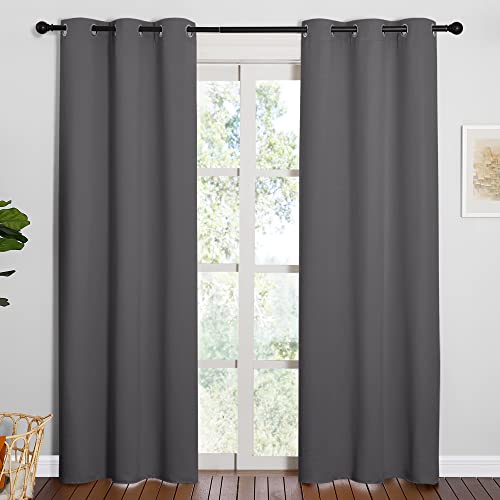
- Two 42-by-84-inch blackout panels
- Triple-weave fabric reduces noise and blocks light
- Machine washable with 1.6-inch grommets
Best For: Standard windows in home voiceover rooms
Best Door Coverage
Acoustic Sound Dampening Door Blanket

- Covers doors up to about 37.5 by 86.6 inches
- Cotton and oxford fabric soften echoes
- Hook-and-loop or hook mounting options
Best For: Doorways and entryways in shared or home recording spaces
Balanced Room Control
NICETOWN Felt-Lined Blackout Curtains

- Detachable felt liner supports sound reduction
- Two panels cover 104 inches total width
- Blackout and thermal insulation add studio comfort
Best For: Home voiceover rooms needing light and temperature control
Wide Studio Coverage
VEVOR Sound Dampening Blankets

- Large blankets cover doors, windows, and walls
- Three layers help reduce echoes and reflections
- Grommets and straps support flexible installation
Best For: Broad, temporary coverage in studios or recording spaces
Best Home-Office Acoustic Curtain
JaneTech Velvet-Backed Curtain

- Dense multilayer design helps soften noise and reflections
- Soft velvet backing blends with home décor
- Useful for offices, podcasts, and temporary recording areas
Best For: Home voiceover spaces and stylish room-divider setups
Best Heavy-Duty Voiceover Blanket
48 x 80-Inch Sound Dampening Blanket

- Large coverage for doors, windows, and walls
- Helps reduce echo and reverb for recording
- Includes grommets, hooks, and mounting screws
Best For: Temporary voiceover booths and multipurpose studio treatment
Best Mass-Loaded Acoustic Barrier
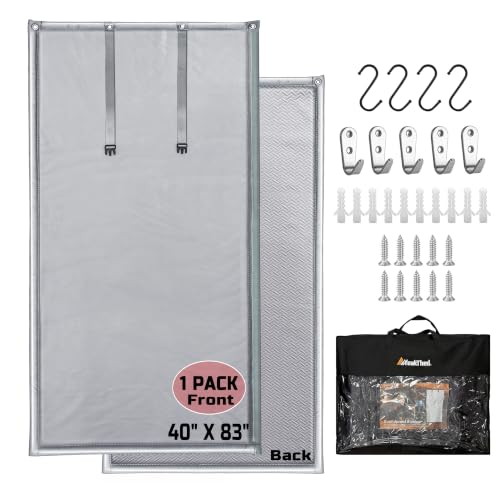
- Dense vinyl core helps dampen noise and reverberation
- Blackout design supports distraction-free recording
- Portable, reinforced, and suitable for doors or windows
Best For: Noise-sensitive recording spaces and temporary setups
Best Overall – Moondream DecibelControl Soundproof Curtain
For shoppers seeking acoustic curtains for voiceover, the Moondream DecibelControl combines blackout coverage, thermal insulation, and stated noise reduction in one lined panel. Its three-layer construction and 55-by-84-inch size make it a practical option for a home-office recording setup, though it is designed to reduce—not eliminate—sound.
Best For: Home voiceover spaces that also need blackout and temperature control.
Pros:
- Patented three-layer design combines sound reduction, thermal insulation, and blackout coverage.
- Manufacturer states noise reduction of up to 10 decibels and reduced room reverberation.
- Grommet top fits rods up to 1.2 inches and the curtain is made in Europe.
- Solid beige styling suits a home office or living space.
Cons:
- Only one 55-by-84-inch panel is included.
- Dry-clean-only care adds maintenance.
- It is not water resistant.
This is the most purpose-built curtain in the group for a voiceover room because it explicitly targets acoustic control while adding useful blackout and thermal features. Plan for additional acoustic treatment if you need stronger isolation.
Best Large-Format Barrier – VEVOR Sound Dampening Blanket
The VEVOR Sound Dampening Blanket is a large, portable hanging barrier that can cover doors, furniture, or studio openings. For acoustic curtains for voiceover, its 96-by-80-inch format and grommets offer flexible coverage, but the supplied notes specifically caution that it provides limited sound insulation and is mainly a protective barrier.
Best For: Large openings, temporary partitions, and portable studio coverage.
Pros:
- Extra-large 96-by-80-inch size covers broad areas.
- Metal grommets and loops support hanging as a studio curtain or blackout barrier.
- Polyester woven fabric has water-resistant construction and sealed edges.
- Folds for storage and portability.
Cons:
- Notes state that sound insulation is limited.
- Requires a dry environment and prompt air-drying if wet.
- At 8.8 pounds, it may need sturdy hanging hardware.
Choose this blanket when coverage and flexibility matter more than a purpose-built acoustic treatment. It can help create a physical barrier around a recording area, but it should not be treated as complete soundproofing.
Best Two-Panel Value – NICETOWN Noise Reducing Blackout Curtains
NICETOWN’s two-panel set is a straightforward window-treatment option for acoustic curtains for voiceover. The triple-weave polyester fabric is described as noise reducing and blackout, while the two 42-by-84-inch panels provide more conventional window coverage than a studio blanket.
Best For: Voiceover rooms with standard windows that need light and temperature control.
Pros:
- Includes two 42-by-84-inch blackout panels.
- Triple-weave fabric is designed to reduce noise and block 85% to 99% of light and UV rays.
- Helps insulate against summer heat and winter chill.
- Machine washable in cold water and compatible with standard rods through 1.6-inch grommets.
Cons:
- The panels are described as noise reducing, not fully soundproof.
- They are unlined.
- Light-blocking performance can vary, with darker colors noted as more effective.
This set is a practical pick for controlling window reflections, glare, and some household noise without making the room look like a studio. For serious isolation, pair it with other room-treatment measures.
Best Door Coverage – Acoustic Sound Dampening Door Blanket
This door blanket targets one of the most common weak points in a recording space: the doorway. Measuring about 37.5 by 86.6 inches, it uses oxford fabric and cotton to soften echoes, block light, reduce drafts, and add privacy, making it a useful supplement when acoustic curtains for voiceover do not cover the door.
Best For: Interior doors, entryways, and shared-space recording areas.
Pros:
- Designed for full door coverage at approximately 37.5 by 86.6 inches.
- Oxford fabric and cotton help absorb sound and soften echoes.
- Hook-and-loop strips allow tool-free mounting, with hooks available for stronger support.
- Also helps block light, drafts, and unwanted visibility.
Cons:
- Its door-specific dimensions are less suitable for broad windows or walls.
- Adhesive hook-and-loop mounting may require supplemental hooks for heavier support.
- At 8.86 pounds, installation needs a secure attachment point.
For voiceover rooms where door gaps contribute to distractions or echo, this is a focused and flexible add-on. It works best as part of a broader treatment plan rather than as a standalone soundproofing solution.
Balanced Room Control – NICETOWN Felt-Lined Blackout Curtains
For acoustic curtains for voiceover, the NICETOWN panels offer a practical combination of noise reduction, blackout coverage, and thermal insulation. Their detachable felt liner can help reduce reflections and surrounding noise, although these curtains are not noise-canceling.
Best For: Home voiceover spaces that also need strong light blocking, privacy, and temperature control.
Pros:
- Three-layer construction includes a detachable felt liner for added sound absorption.
- Two 52-by-84-inch panels provide 104 inches of total width.
- 100% blackout construction helps eliminate sunlight and glare during recording.
- Thermal insulation can help moderate heat and cold.
Cons:
- Noise reduction is not the same as soundproofing or noise cancellation.
- The heavy curtains require a strong rod with center support.
- The felt liner should be removed before washing.
The removable liner and blackout fabric make this a versatile choice for a bedroom or home office converted into a recording area. Hang the panels with generous folds for better dampening, while keeping expectations realistic about external noise control.
Heavy-Duty Sealing – JaneTech Acoustic Soundproof Curtain
For acoustic curtains for voiceover, the JaneTech curtain is built as a dense, heavy-duty barrier for doors, patio entrances, or large windows. Its five-layer construction combines acoustic felt, insulation, and waterproof fabric, while side Velcro helps limit gaps around the opening.
Best For: Voiceover setups needing a substantial door or window covering with flexible mounting options.
Pros:
- Five-layer construction is designed for noise reduction, blackout, and thermal insulation.
- Side hook-and-loop seals help reduce sound, light, and draft leakage.
- Includes grommets, S-hooks, and screw-fixed J-hooks for multiple installation methods.
- Large 82.6-by-47.2-inch format suits doors, patio entrances, and large windows.
Cons:
- At 19.36 pounds, it may need sturdy mounting hardware and support.
- Its single-panel format may not cover wider openings without additional panels.
- The supplied notes do not specify a washable-care method.
This is the most barrier-oriented option of the three, especially where edge gaps around a door or window are a concern. Its weight and mounting requirements are worth planning for before using it in a voiceover room.
Wide Studio Coverage – VEVOR Sound Dampening Blankets
For acoustic curtains for voiceover, the VEVOR sound dampening blankets provide broad coverage for windows, doors, walls, or temporary recording spaces. The three-layer polyester and recycled-cotton design can absorb echoes and reduce reflections, but the manufacturer notes that insulation is limited and primarily barrier-based.
Best For: Studios or temporary voiceover spaces that need wide, flexible coverage and light blocking.
Pros:
- Two large 96-by-80-inch blankets cover substantial areas with fewer seams.
- Three-layer construction helps absorb indoor echoes and sound reflections.
- Grommets and woven straps allow hanging from hooks, screws, or curtain rods.
- Dense black material blocks light for a dimmer recording environment.
Cons:
- Provides limited sound insulation rather than full soundproofing.
- Must be kept dry to avoid odors or material damage.
- The blankets are heavy, with the product weighing about 18.5 pounds.
Choose these blankets when coverage and setup flexibility matter more than a finished-curtain appearance. Their large format is useful for treating broad surfaces, while their stated limitations make them better for echo control and partial noise reduction than isolation from loud external sounds.
Best Home-Office Acoustic Curtain – JaneTech Velvet-Backed Curtain
For shoppers seeking acoustic curtains for voiceover, the JaneTech curtain offers a softer, décor-friendly option for home offices, podcast setups, and temporary recording areas. Its dense multilayer construction and velvet backing are designed to reduce unwanted noise and soften reflections.
Best For: Home voiceover spaces, bedrooms, offices, podcast setups, and room-divider applications.
Pros:
- Soft velvet backing provides a more refined alternative to tarp-style materials.
- Can be used across windows, doors, walls, or open areas.
- Includes mounting accessories for quicker setup.
- Neutral linen-beige styling suits a range of interiors.
Cons:
- The listed 70.9 x 39.4-inch size may offer limited coverage for larger openings.
- Only one curtain panel is included.
- The manufacturer warranty is listed as seven days.
This is a practical choice when appearance and flexible placement matter alongside sound dampening. Measure your intended opening carefully before buying, especially for a full voiceover booth or wall treatment.
Best Heavy-Duty Voiceover Blanket – 48 x 80-Inch Sound Dampening Blanket
This sound dampening blanket is a versatile alternative to traditional acoustic curtains for voiceover. Its high-density construction is intended to reduce echo, reverb, and unwanted noise while covering windows, doors, walls, or temporary booth areas.
Best For: Voiceover recording, podcasts, streaming, home studios, and temporary acoustic or blackout treatment.
Pros:
- Large 48 x 80-inch coverage suits doors, windows, and wall sections.
- High-density material helps reduce echo, reverb, and unwanted noise.
- Five metal grommets and reinforced stitching support repeated hanging.
- Includes five hooks and five mounting screws.
Cons:
- Its blanket-style construction may look less decorative than a conventional curtain.
- At roughly 4.8 pounds in the product description, it needs secure mounting.
- Coverage is limited to one 48 x 80-inch blanket.
Choose this model if coverage and multipurpose use are more important than a polished curtain appearance. It can also function as a blackout barrier, room divider, equipment cover, or moving blanket.
Best Mass-Loaded Acoustic Barrier – Gray 40 x 83-Inch Curtain
For acoustic curtains for voiceover in spaces exposed to outside noise, this gray barrier combines a mass-loaded vinyl core with a polyester felt exterior. It is designed to dampen noise and reverberation while also blocking light around doors or windows.
Best For: Recording studios, home offices, doors, windows, and portable or temporary sound-control setups.
Pros:
- Mass-loaded vinyl core provides a dense sound-barrier construction.
- Blackout capability can reduce visual distractions during recording.
- Reinforced grommets allow hanging from doors, windows, pipes, or temporary rails.
- Weather-resistant, portable design supports indoor and outdoor applications.
Cons:
- The 40 x 83-inch size may not cover wide windows or full walls.
- At 8.12 pounds, it may require sturdy support.
- The industrial gray appearance may be less suited to decorative rooms.
This is the strongest fit of the three for buyers prioritizing dense barrier construction and portability. Its reinforced edges and industrial stitching make it suitable for setups that are frequently moved or handled.
How We Picked the Best Acoustic Curtains for Voiceover
We focused on products that can realistically improve a home voiceover environment without requiring permanent construction. The selection includes curtains and blankets with sound-dampening materials, blackout coverage, grommets, or thermal layers. We also considered dimensions, mounting flexibility, door and window compatibility, and whether each option is practical for temporary or semi-permanent use.
It is important to set expectations: curtains generally absorb or soften some reflected sound, but they do not provide the same isolation as a properly built wall, door seal, or vocal booth. Their value is greatest when reducing room echo and limiting sound entering through large, uncovered openings.
Quick Comparison
| Best for | Look for | Useful features |
|---|---|---|
| Windows and narrow openings | Exact width and sufficient drop | Blackout fabric, thermal backing |
| Doors | Near-full door coverage | Grommets, heavy blanket construction |
| Large room dividers | Wide panels or multiple blankets | Overlapping edges, reinforced mounting |
| Portable recording | Manageable weight and easy setup | Grommets, removable hardware |
Key Buying Factors for Acoustic Curtains for Voiceover
Coverage and Fit
Measure the opening first, then allow extra width so the material can form folds and overlap the edges. For doors, check both height and handle clearance. A curtain that leaves gaps will be less useful than a slightly oversized panel.
Material and Construction
Heavier, multilayer products typically offer better sound absorption and light blocking than thin decorative curtains. Look for dense felt, quilted layers, velvet backing, or thermal insulation. Reinforced grommets and strong stitching matter when a panel is moved frequently.
Mounting and Portability
Grommets work with curtain rods, hooks, and some portable stands, while blanket-style products may need additional hardware. Confirm that your rod or track can safely support the product’s weight. If you record in different rooms, prioritize a setup that can be installed and removed without damaging the wall.
Acoustic Expectations
Use these products to reduce flutter echo and reflections, especially around windows, doors, and hard surfaces. For outside traffic, loud appliances, or adjacent-room voices, combine curtains with door seals, rugs, furniture, and microphone placement changes.
Who Should Buy Which Acoustic Curtains for Voiceover?
Choose a blackout or thermal curtain if your main problem is a window, daylight, or temperature variation alongside room reflections. A heavy sound-dampening blanket is often more suitable for a door, temporary booth, or portable setup. Wide divider curtains make sense when you need to section off part of a room, while smaller acoustic panels are better for targeted openings.
For most home voiceover users, prioritize full coverage, dense construction, and secure mounting over appearance alone. If your room is especially live, use the selected curtain near the microphone’s strongest reflection points and pair it with soft furnishings elsewhere. Always check the listed dimensions and mounting requirements before ordering, since product sizes and included hardware can vary.
