The right dolly can turn a static studio shot into a controlled, repeatable camera move. Whether you need a compact skater platform, a motorized slider, or a heavy-duty cart, the best choice depends on your camera weight, floor surface, and production style.
We’ve gathered 10 camera dollies for studio production to help you compare mobility, load capacity, control options, storage, and setup convenience before you buy.
Best 10 Camera Dollies for Studio Production Picks for 2026
Professional Track Dolly
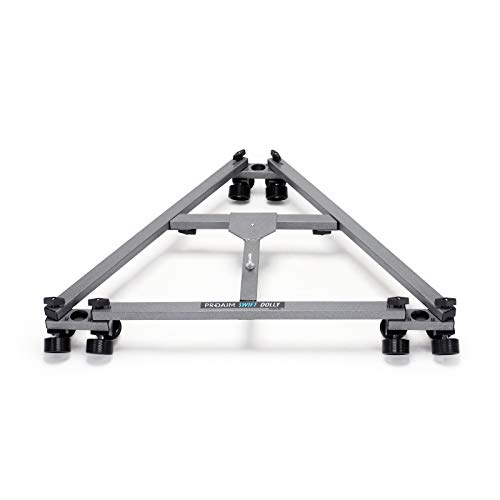
- Handles up to 159 kg (350 lb)
- Designed for smooth track-based movement
- 28-inch central distance supports stability
Best For: Heavy camera rigs and professional studio tracking shots
Low-Level Shooting Dolly
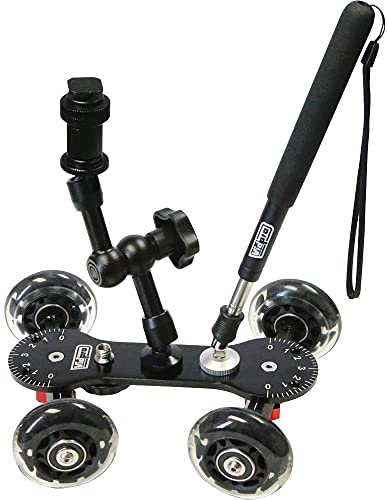
- Supports cameras and gear up to 25 pounds
- Adjustable axles enable curves and 360-degree pans
- Seven mounting points add rigging flexibility
Best For: Lightweight DSLR and camcorder tracking shots
Mobile Production Cart

- Carries up to 440 pounds (200 kg)
- Three shelves provide storage and workspace
- Folds tool-free and rolls on 9-inch swivel casters
Best For: Moving and organizing heavy production equipment on set
Tripod Wheel Dolly

- Supports tripod setups up to 33 pounds
- Adjustable leg mounts fit many tripod sizes
- Folds into a portable carrying configuration
Best For: Lightweight tripod-based camera and lighting mobility
Best Heavy-Duty Gear Hauler
Digitalfoto Video Production Camera Cart

- 660-pound stated load capacity
- Four solid wheels for gear mobility
- Alloy-steel construction
Best For: Large studio and stage equipment transport
Best Motorized Motion Option
NEEWER DL400 Camera Slider Dolly

- App-controlled motorized movement
- Quiet dual motors below 30 dB
- 6.6-pound load limit and five speeds
Best For: Lightweight DSLR or mirrorless motion shots
Best Tripod Dolly for Studios
Benro DL08 Heavy-Duty Tripod Dolly

- Adjustable mounts for video tripods
- Locking rubber-tread wheels
- Folding design for storage and travel
Best For: Tripod-based studio and on-location setups
Heavy-Duty Studio Base

- Supports rigs up to 33 pounds
- Locking rubber wheels aid stable static shots
- Folds flat and includes a carry bag
Best For: Full-size tripods and heavier studio video setups
Tabletop Tracking Pick
NEEWER Scaled Camera Table Dolly

- 22-pound load capacity for flat-surface shots
- Rods create straight, curved, or circular paths
- Multiple 1/4-inch and 3/8-inch mounting options
Best For: Tabletop product videos and manual tracking moves
Professional Track Dolly – Proaim Swift
For camera dollies for studio production, the Proaim Swift is built for substantial professional rigs and controlled track-based movement. Its 159 kg payload capacity and 28-inch central distance make it a strong option for demanding straight-line shots and larger setups.
Best For: Film crews, studio productions, commercials, interviews, and other projects requiring heavy-duty tracking movement.
Pros:
- Supports up to 159 kg (350 lb), including substantial camera rigs and production equipment.
- Designed for smooth, controlled tracking, reveal, and follow shots.
- Durable construction for frequent indoor or outdoor production use.
- Includes a 1-year warranty and folds to a more manageable size for transport.
Cons:
- Its professional-duty design may be more than needed for lightweight camera setups.
- At 15.4 pounds, it is less portable than compact skater dollies.
- It is intended for track-based movement rather than general-purpose equipment transport.
The Swift is a practical choice when stability, payload capacity, and repeatable cinematic movement matter more than minimal size. It suits production teams that need a dedicated dolly for serious studio and location work.
Low-Level Shooting Dolly – Vidpro SK-22
The Vidpro SK-22 is a compact choice among camera dollies for studio production, especially when low-angle tracking and panning are priorities. Its adjustable axles, rubber wheels, and multiple mounting points support flexible DSLR and camcorder setups.
Best For: DSLR and camcorder operators creating low-level shots, straight tracks, curves, pans, or 360-degree movements.
Pros:
- CNC-machined aluminum chassis with smooth rubber wheels and stainless steel bearings.
- Adjustable axles support straight lines, broad curves, and full 360-degree circles.
- Seven 1/4-inch-20 mounting points accommodate cameras, extension arms, and ball joints.
- Includes a 27-inch extendable handle and articulated magic arm.
Cons:
- Its 25-pound capacity limits it to lighter camera and recording setups.
- Designed for low-level work rather than elevated or large professional rigs.
- Manual axle adjustment requires setup before changing movement paths.
The SK-22 offers useful movement control in a small, approachable package. It is a sensible fit for creators who need varied low-angle motion without the size or capacity of a full production dolly.
Mobile Production Cart – TARION TitanRig Cart Basic
The TARION TitanRig is a mobile workstation rather than a camera-motion dolly, but it can complement camera dollies for studio production by transporting cameras, monitors, lighting kits, and accessories. Its three shelves, 440-pound capacity, and swivel wheels are aimed at busy production teams.
Best For: Digital technicians, gaffers, broadcasters, and production teams needing mobile equipment storage and a work surface.
Pros:
- Supports up to 440 pounds (200 kg) of equipment.
- Three-tray layout provides storage plus a padded top work surface.
- 9-inch flat-free PU swivel casters include foot brakes and vibration damping.
- Folds without tools and includes interfaces and clamps for custom rigging.
Cons:
- It is a transport and workstation cart, not a dolly for smooth camera tracking shots.
- Its 41.7-pound net weight is substantial for frequent carrying.
- The large footprint may be less convenient in small studio spaces.
The TitanRig is best viewed as production support equipment. It can reduce trips across a set and keep gear organized, but a dedicated camera dolly is still needed for moving-camera shots.
Tripod Wheel Dolly – NEEWER NW-600
The NEEWER NW-600 is a compact tripod dolly for camera dollies for studio production when you want to add mobility to an existing tripod. Adjustable leg mounts, quiet 2-inch rubber wheels, and a 33-pound limit make it suited to lighter camera and lighting setups.
Best For: DSLR, camcorder, tripod, and compact lighting setups that need portable rolling movement.
Pros:
- Transforms a compatible tripod into a movable setup.
- Adjustable legs extend from 10.8 to 15.7 inches and lock into position.
- 2-inch rubber wheels are designed for quiet movement.
- Folds for storage and includes a carrying bag and comfortable handle.
Cons:
- Its 33-pound weight limit is unsuitable for heavy professional rigs.
- Performance depends on compatibility with the tripod leg size and design.
- It provides tripod mobility rather than a dedicated track for repeatable dolly shots.
The NW-600 is a convenient entry-level mobility solution when you already own a tripod. Its compact, portable design works well for lighter equipment, while larger productions may need a dedicated tracking system.
Best Heavy-Duty Gear Hauler – Digitalfoto Video Production Camera Cart
For studio production teams comparing camera dollies for studio production, the DF DIGITALFOTO Video Production Camera Cart is built more for transporting equipment than for camera movement shots. Its alloy-steel frame, four solid wheels, and stated 660-pound capacity make it suited to moving substantial gear around a stage or studio.
Best For: Filmmakers, photographers, directors, and studio crews who need a high-capacity cart for storing and carrying production equipment.
Pros:
- Supports up to 660 pounds according to the supplied specifications.
- Four solid wheels provide a straightforward mobility setup.
- Alloy-steel construction is appropriate for demanding gear-transport duties.
Cons:
- This is a production cart rather than a motorized camera slider for programmed camera moves.
- The supplied notes do not specify wheel locks, folding storage, or detailed dimensions.
Choose this model when payload and gear organization matter more than compact cinematic dolly movement. It is a practical studio transport option for large production kits.
Best Motorized Motion Option – NEEWER DL400 Camera Slider Dolly
For creators seeking camera dollies for studio production with repeatable movement, the NEEWER DL400 adds app control, dual motors, and selectable speeds. Its non-slip wheels and quiet operation are useful for controlled studio shots, while the 6.6-pound load limit keeps it aimed at lighter camera setups.
Best For: DSLR and mirrorless filmmakers making time-lapse, live-video, or manually controlled tracking shots with compatible camera equipment.
Pros:
- NEEWER app enables wireless manual, live-video, and time-lapse control.
- Ultra-quiet dual motors operate below 30 dB according to the supplied notes.
- Includes an NP-F750 battery with up to five hours of runtime and USB-C charging.
- Offers five speeds plus 30-degree manual left-right movement.
Cons:
- Maximum load is 6.6 pounds, limiting heavier studio rigs.
- A camera shutter cable is required separately for time-lapse photography.
- The supplied guidance cautions against starting at the fastest speed uphill.
The DL400 is the most feature-focused choice here for automated motion. Its app and speed controls add flexibility, but buyers should verify their camera, lens, and accessory weight stays within the stated limit.
Best Tripod Dolly for Studios – Benro DL08 Heavy-Duty Tripod Dolly
For camera dollies for studio production that need to move a tripod rather than carry loose gear, the Benro DL08 provides adjustable leg mounts and locking rubber wheels. Its folding design also makes it practical for mobile crews, interview setups, livestreams, and other productions that require quick repositioning.
Best For: Video shooters using compatible tripods for interviews, broadcast work, livestreams, and indoor studio or on-location production.
Pros:
- Extendable leg brackets fit a wide range of video tripods.
- Rubber-tread wheels are designed for smooth movement across floors.
- Individual wheel locks help secure the dolly during shooting.
- Folding construction supports storage and transport.
Cons:
- Listed weight limit is 6.6 pounds, so heavier video rigs may not be suitable.
- It is designed for tripod mobility, not motorized or programmed camera movement.
- The supplied specifications do not indicate water resistance.
The DL08 is a sensible tripod-mobility solution when stability and portability are priorities. Adjustable mounts and wheel locks make it especially useful for repositioning a compatible tripod between takes.
Wireless Motorized Pick – NEEWER 3-Wheels Wireless Video Camera Dolly
For camera dollies for studio production, the NEEWER DL100 offers repeatable motorized movement in a compact format. Its remote control provides three speeds, direction changes, and pause control, while adjustable wheel angles support straight or circular routes.
Best For: Compact cameras, smartphones, and action cameras that need controlled tabletop or floor-level motion.
Pros:
- Wireless remote controls speed, direction, and pausing from up to 6 meters.
- Three selectable speeds range from 1.4 to 3.0 cm/s.
- Adjustable wheels support straight-line and circular movement.
- Built-in 1800mAh battery provides up to six hours of service time.
Cons:
- Its 6.6-pound maximum load limits use with heavier studio rigs.
- The dolly is not water resistant.
- Accessories such as smartphone holders and action-camera adapters are not included.
The DL100 is a practical choice when hands-free, repeatable movement matters more than carrying a full-size camera setup. Confirm your camera and mounting accessories are compatible before buying.
Heavy-Duty Studio Base – Acuvar Camera Tripod Dolly
Among camera dollies for studio production, the Acuvar Camera Tripod Dolly is designed for rolling a full-size tripod and heavier video setup. Its rubber wheels, metal bearings, adjustable leg mounts, and wheel locks support both tracking moves and stable static shots.
Best For: Studio and on-location setups using full-size tripods, fluid heads, lighting, and accessories.
Pros:
- Supports camera rigs up to 33 pounds.
- Rubber wheels and precision metal bearings provide quiet, fluid movement.
- One-step wheel locks help stabilize the tripod for static filming.
- Folds flat and includes a carry bag for transport.
Cons:
- It is intended for tripod-based setups rather than direct camera mounting.
- The product is not water resistant.
- The manufacturer warranty is limited to 90 days.
The Acuvar is the strongest fit here for conventional tripod dolly work, especially when load capacity and quick wheel locking are priorities. Its adjustable clamps help accommodate different full-size tripod leg spreads.
Tabletop Tracking Pick – NEEWER Scaled Camera Table Dolly
For camera dollies for studio production on tables or floors, this NEEWER scaled dolly provides a manual platform for smooth tracking shots. Its adjustable aluminum rods can create straight paths, curves, or complete circles, while the marked disc helps guide direction.
Best For: Tabletop product videos, subject-following shots, and creative circular moves with cameras up to 22 pounds.
Pros:
- Supports loads up to 22 pounds.
- Adjustable rods enable straight, curved, and circular paths.
- Rotatable rubber wheels and fluid roller bearings support quiet movement.
- Offers 1/4-inch and 3/8-inch mounting threads plus four 1/4-inch holes.
Cons:
- It is designed for flat surfaces such as tables or floors.
- Movement is manually guided rather than motorized.
- It is not water resistant.
The NEEWER table dolly suits creators who want flexible, low-angle tracking without a motorized system. Its broad mounting options also make it useful with a camera, ball head, or articulating arm.
How We Picked the Best Camera Dollies for Studio Production
We compared these models by focusing on the factors that matter during real studio work: supported equipment weight, wheel or track design, movement control, stability, portability, setup time, and compatibility with cameras, tripods, sliders, and accessories. The selection includes compact skater dollies for low-angle shots, tripod dollies for repositioning, motorized systems for repeatable movement, and production carts for transporting equipment.
Because studio floors and shooting styles vary, no single dolly is ideal for every crew. A lightweight tabletop design may be perfect for product videos but unsuitable for a cinema camera, while a large cart may offer useful storage without providing the precise camera movement of a track system.
Quick Comparison
| Dolly type | Best for | Main advantage | Watch for |
|---|---|---|---|
| Skater dolly | Low-angle and tabletop shots | Compact, simple movement | Limited camera height and load capacity |
| Tripod dolly | Moving a mounted tripod | Fast repositioning | Not designed for precise tracking shots |
| Motorized dolly or slider | Repeatable product and video moves | Controlled speed and automation | Requires power, setup, and alignment |
| Track dolly system | Professional cinematic movement | Stable, smooth travel | Needs floor space and track setup |
| Production cart | Gear transport and studio workflow | Storage and mobility | Primarily a workstation, not a camera mover |
Key Buying Factors for Camera Dollies for Studio Production
Camera and Accessory Capacity
Check the rated load before adding a cinema camera, lens, matte box, monitor, follow-focus system, or other accessories. Stay below the maximum capacity rather than operating at the limit, especially when the dolly will move over joints or uneven surfaces.
Movement Style and Control
Choose wheels or a tripod base for quick repositioning, a skater platform for compact manual moves, or a track and motorized slider when smooth, repeatable travel matters. Wireless or app control can help with repeat takes, but manual systems are often faster to deploy.
Floor Compatibility and Stability
Rubber wheels are generally suitable for finished studio floors, but wheel size, locking mechanisms, and surface condition affect performance. Look for secure wheel locks and adjustable mounts when stability is more important than speed.
Portability and Storage
Folding legs, removable components, and a carry bag make a dolly easier to move between sets. Larger carts may be worthwhile if they also organize batteries, lenses, lighting gear, and monitors.
Who Should Buy Which Camera Dollies for Studio Production?
- Choose a skater dolly for tabletop filming, low-level product shots, and compact camera setups.
- Choose a tripod dolly if you mainly need to roll a mounted video tripod around a studio.
- Choose a motorized slider for repeatable movement, product photography, social content, and unattended camera moves.
- Choose a track dolly system for larger cameras and deliberate cinematic shots that require smooth linear travel.
- Choose a production cart when your priority is transporting and organizing equipment rather than moving the camera during a shot.
Before ordering, verify the load rating, mounting thread, included wheels or tracks, power requirements, folded dimensions, and return policy. Matching the dolly to your camera package and studio floor will produce better results than choosing solely by price.
