Camera movement can make interviews feel more polished, intentional, and cinematic without distracting from the subject. The right slider helps you add subtle motion, clean parallax, and repeatable moves that are easy to control.
In this roundup, we focus on camera slider systems for interviews that balance smooth operation, portability, payload support, and dependable control for real production workflows.
Best 10 Camera Slider Systems for Interviews Picks for 2026
Compact Motion Tool
iFootage Shark Slider PICO PRO, 15.8" Motorized Slider

- Whisper-quiet brushless motor for cleaner audio
- Supports DJI Pocket, Action cameras, phones, and compact cameras
- Up to 8 programmable points with app control
Best For: Solo interviews and compact creator kits
Mid-Length Controlled Slides
NEEWER 31.5" Carbon Fiber Motorized Slider

- 31.5-inch rail for wider interview moves
- Silent stepper motor for quiet operation
- App control plus 2.4G remote support
Best For: Interview shoots needing a longer, quiet slider
Advanced Interview Motion
IFOOTAGE Shark Nano II 660 26" Slider

- 360° pan and dual-axis motorized control
- AI face/object tracking for solo interviews
- Silent under 20dB with up to 4 preset points
Best For: Pro interview shoots and tracked solo setups
Long-Reach Interview Slider
NEEWER 47.2" Carbon Fiber Motorized Slider

- 47.2-inch rail gives the longest slide
- Silent stepper motor for quiet interview movement
- App control with manual, video, and time-lapse modes
Best For: Wide interview reveals and longer camera moves
Compact Motorized Pick
IFOOTAGE Shark Slider Pico Motorized Mini Slider 15.7"

- Motorized 2-axis slider for smooth motion
- Supports phones, pocket cams, action cams, and cameras up to 2.4 lb
- Compact 15.7-inch rail for portable interview setups
Best For: Solo creators needing a lightweight motorized slider for interview b-roll
Long-Travel Motion Option
GVM 48" Carbon Fiber Motorized Camera Slider
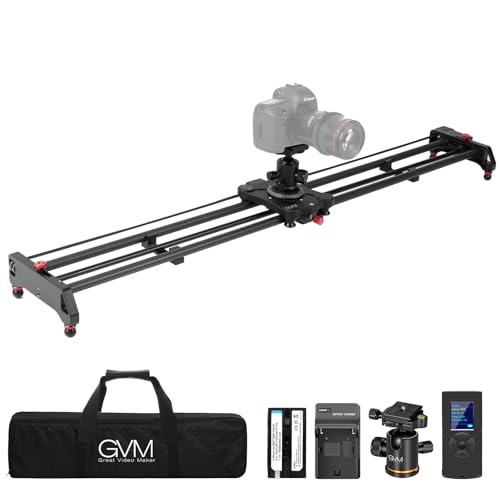
- 48-inch carbon fiber rail for extended moves
- Three modes: tracking, horizontal, and 120° panorama
- Remote control for speed, endpoints, dwell, pause, and loop settings
Best For: Interview productions needing long travel and programmable motion
Lightweight Manual Kit
NEEWER 16in Carbon Fiber Camera Slider CS1M

- 16-inch carbon fiber rail with 4 smooth bearings
- Includes ball head, phone clamp, and action camera mount
- Adjustable legs help level shots on uneven surfaces
Best For: Lightweight interview and b-roll setups that need portable manual motion
Motorized Round-Trip Creator
GVM 48" Motorized Slider with Battery
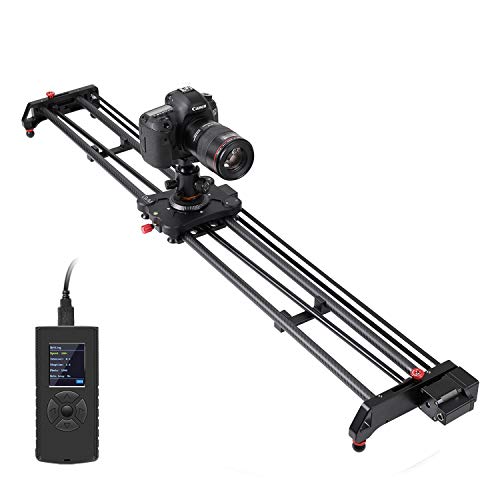
- 48-inch carbon fiber motorized slider
- Round trip, time lapse, and panoramic modes
- Includes battery, controller, cables, and bag
Best For: Interview shooters who want versatile motorized motion
App-Control Motion Rig
GVM 48" Carbon Fiber App Slider

- iOS and Android app control
- Carbon fiber rail with adjustable legs
- Supports tracking, panoramic, and time lapse
Best For: Solo interview shooters who want app-based motion control
Compact Interview Slider
GVM 27" Aluminum Motorized Slider

- 27-inch compact rail for small sets
- Time-lapse, video, and auto round trip modes
- Aluminum alloy build with tripod support
Best For: Smaller interview setups with limited space
Compact Motion Tool – iFootage Shark Slider PICO PRO, 15.8" Motorized Slider
If you need camera slider systems for interviews that stay quiet and compact, the iFootage Shark Slider PICO PRO is built for small crews and solo setups. Its whisper-quiet brushless motor helps keep audio clean, while the short 15.8-inch travel is easier to place in tight interview spaces than a full-length rail.
Best For: Solo interview setups, compact cameras, smartphones, and DJI Pocket creators who want controlled motion in a small footprint.
Pros:
- Whisper-quiet motor supports cleaner interview audio.
- Works with DJI Pocket 3/4, Action 5/6, smartphones, and compact cameras.
- Quick-mark system and app support up to 8 programmable points.
- 5000mAh battery offers up to 7 hours of operation.
Cons:
- Shorter 15.8-inch range limits wider slides.
- 3.3 lb payload is best suited to lighter rigs.
- Advanced 3rd-axis expansion depends on compatible add-ons.
Overall, this is a practical pick when you want smooth movement without complicating a small interview setup. It favors portability, quiet operation, and simple control over heavy-duty reach.
Mid-Length Controlled Slides – NEEWER 31.5" Carbon Fiber Motorized Slider
For camera slider systems for interviews where you want more framing range, this NEEWER 31.5-inch motorized slider gives you enough travel for reveal shots, side-to-side composition changes, and restrained motion during talking-head scenes. The carbon fiber rail and silent stepper motor are aimed at smooth, quiet movement that fits interview production.
Best For: Interview shoots, product videos, and creators who want a longer slide without moving to a bulky cinema rig.
Pros:
- 31.5-inch travel offers more framing flexibility than compact sliders.
- Silent stepper motor helps keep movement unobtrusive.
- App control and 2.4G remote support manual, video, and time-lapse modes.
- 4400mAh battery supports hours of continuous shooting.
Cons:
- 2.4G remote is not included.
- Macro use may show minor shake, per the product notes.
- Best payload is lower when tilted up 45°.
This model is a strong middle-ground option if your interviews need smoother visual movement and a bit more distance between start and end positions. It balances portability, quiet operation, and useful control features for everyday production.
Advanced Interview Motion – IFOOTAGE Shark Nano II 660 26" Slider
If you are comparing camera slider systems for interviews and need more than a basic left-to-right move, the IFOOTAGE Shark Nano II 660 brings multi-axis control and AI tracking into a relatively compact 26-inch design. Its zero-jitter motion, silent operation, and multi-target modes make it well suited to interview work where repeatable, polished movement matters.
Best For: Higher-end interview productions, solo host setups, and multi-person scenes that benefit from tracking and programmed moves.
Pros:
- 360° pan and dual-axis motorized control add creative flexibility.
- AI tracking can follow faces or objects automatically in the app.
- Whisper-quiet under 20dB, helping preserve spoken audio.
- Up to 4 preset points and 7kg horizontal payload support more complex setups.
Cons:
- DJI gimbal integration needs a separate adapter and compatible gimbal.
- Powering the full setup via USB-C PD 60W requires the right supply.
- It is more feature-rich than many simple interview sliders.
For interview creators who want motion that feels closer to a multi-camera production, this slider stands out. It combines quiet hardware with intelligent tracking and waypoint control, so you can focus on performance rather than constantly riding the camera.
Long-Reach Interview Slider – NEEWER 47.2" Carbon Fiber Motorized Slider
When camera slider systems for interviews need extra travel for wider reveals or more noticeable movement, this NEEWER 47.2-inch motorized slider gives you the longest reach in this group. The carbon fiber build, silent stepper motor, and app-based controls make it suitable for quiet interview work where you want the camera move to stay smooth and controlled.
Best For: Interviews, product demos, and shoots that need the longest slide and a lightweight carbon fiber rail.
Pros:
- 47.2-inch travel provides the most framing range here.
- Silent motor keeps motion discreet during dialogue scenes.
- App control supports manual, video, and time-lapse modes.
- Carbon fiber construction keeps it rugged yet lighter for travel.
Cons:
- 2.4G remote is not included.
- Like the shorter NEEWER option, it can show minor shake in macro use.
- Its longer size may be less convenient in cramped rooms.
This is the best fit if your interview style benefits from a more obvious slide or if you want more room to compose wide-to-tight moves. It delivers the longest motion path in the lineup while keeping the basic workflow straightforward.
Compact Motorized Pick – IFOOTAGE Shark Slider Pico Motorized Mini Slider 15.7"
If you need camera slider systems for interviews that are easy to pack and quick to deploy, the IFOOTAGE Shark Slider Pico is built for small, controlled motion. It works with smartphones, DJI Osmo Pocket 3/4, action cameras, and cameras up to 2.4 lb, making it a practical option when you want smooth interview b-roll without hauling a full-size rig.
Best For: Solo creators and interview setups using phones, pocket cameras, or lightweight cameras.
Pros:
- Motorized 2-axis movement helps create polished, cinematic motion.
- Compatible with phones, action cameras, DJI Osmo Pocket 3/4, and cameras up to 2.4 lb.
- 15.7-inch size keeps the slider compact for small sets and travel.
- Image stabilization support adds confidence for smoother footage.
Cons:
- 2.4 lb payload limits heavier camera and lens combinations.
- Short rail length is better for subtle moves than long tracking shots.
- Best suited to lightweight gear rather than full cinema builds.
Overall, this is a strong pick if your interview workflow values portability, simple setup, and smooth motion over maximum load capacity or long travel.
Long-Travel Motion Option – GVM 48" Carbon Fiber Motorized Camera Slider
For interview productions that need broader framing changes, this GVM model stands out among camera slider systems for interviews because of its 48-inch rail and multiple motion modes. It supports tracking, horizontal movement, 120° panoramic shooting, manual and electric operation, and both video and time-lapse use, so it can handle more ambitious interview cutaways and reveal shots.
Best For: Interview crews that want long slider travel and programmable motion options.
Pros:
- 48-inch carbon fiber rail provides extended sliding distance.
- Three shooting modes include tracking, horizontal, and 120° panoramic movement.
- Remote control lets you set speed, endpoints, dwell time, pause time, and loop settings.
- Includes multiple shutter cables plus an extension cable for broader camera compatibility.
Cons:
- Larger 120 cm rail is less convenient for tight locations or quick pack-downs.
- At 5.42 kg, it is heavier than compact travel sliders.
- Designed for cameras, so it is not the most flexible option for phone-first workflows.
If your interviews benefit from deliberate motion and repeatable camera moves, this slider offers the most control of the three picks here.
Lightweight Manual Kit – NEEWER 16in Carbon Fiber Camera Slider CS1M
If your priority is a compact and flexible tool for camera slider systems for interviews, the NEEWER CS1M is a strong manual option. Its 16-inch carbon fiber rail, adjustable legs, and included ball head, phone clamp, and action camera mount make it useful for interview b-roll, overhead-style adjustments, and light kit setups that need quiet, smooth motion.
Best For: Creators who want a lightweight manual slider with broad accessory support.
Pros:
- Carbon fiber and aluminum alloy build keeps it light at 615 g.
- 4 bearings deliver smooth, noiseless sliding along the 16-inch rail.
- Adjustable legs and multiple mounting threads improve positioning flexibility.
- Includes ball head, phone clamp, and action camera mount for versatile use.
Cons:
- Manual operation means no motorized automation or repeatable programmed moves.
- 4.4 lb horizontal load is fine for light rigs, not heavier interview cameras.
- Short rail length limits dramatic move distance.
For interview work where portability, low noise, and accessory flexibility matter more than automation, this slider is an easy kit to build around.
Motorized Round-Trip Creator – GVM 48" Motorized Slider with Battery
If you need camera slider systems for interviews that can also handle motion-heavy shots, this 48-inch GVM model gives you a lot of control in one package. It supports round-trip movement, time lapse, panoramic shooting, and manual or electric modes, while the carbon fiber build and adjustable feet help keep motion smooth and stable.
Best For: Interview shooters who also want a longer motorized slider for tracking shots, time lapse, and panoramic work.
Pros:
- 48-inch carbon fiber rail with stable carriage assembly
- Supports round trip, time lapse, panoramic shooting, and manual/electric modes
- Multiple 1/4″ and 3/8″ screw ports for tripod compatibility
- Includes battery, controller, cables, charger, and carrying bag
Cons:
- Maximum weight recommendation is 5 kg
- Not water resistant
- Longer rail may be more than some interview setups need
For creators who want a motorized slider that can move beyond basic interview framing, this GVM offers flexible motion controls and a complete kit. The tradeoff is that its larger footprint and lower weight limit make it best suited to lighter camera builds.
App-Control Motion Rig – GVM 48" Carbon Fiber App Slider
Among camera slider systems for interviews, this GVM model stands out if you want app-based control instead of relying only on a wired controller. The 48-inch carbon fiber rail supports tracking, panoramic, time lapse, and video capture, and the adjustable legs plus carry bag make it easier to level and transport for location work.
Best For: Interview setups that benefit from smartphone/tablet control and a longer carbon fiber slider.
Pros:
- APP control via iOS or Android device
- Carbon fiber build with adjustable legs for leveling
- Supports tracking, panoramic shooting, time lapse, and video capture
- Multiple 1/4″ and 3/8″ screw ports for flexible mounting
Cons:
- Maximum weight recommendation is 20 pounds
- Not water resistant
- Battery average life is listed at 2 hours
This is a practical choice if you want remote motion control for interview shots and a rail long enough for smoother framing changes. The app control is the key differentiator here, especially for solo operators who want to tweak movement without touching the slider.
Compact Interview Slider – GVM 27" Aluminum Motorized Slider
If your priority is camera slider systems for interviews in tighter spaces, this 27-inch GVM motorized slider is the most compact option in the group. It supports time-lapse, video shooting, and auto round trip shooting, and its aluminum alloy build, non-slip feet, and tripod compatibility make it a straightforward fit for interview-style camera movement.
Best For: Smaller interview setups that need a compact motorized slider with simple shooting modes.
Pros:
- Compact 27-inch rail for smaller shooting areas
- Supports time-lapse, video shooting, and auto round trip shooting
- Aluminum alloy construction with smooth motion
- Works on the ground or with a tripod, with multiple screw holes
Cons:
- Maximum weight recommendation is 2.5 kg
- Shorter rail limits movement compared with 48-inch models
- Not water resistant
This model makes sense when interview work calls for controlled, subtle movement rather than long travel. It is the easiest of the three to fit into a small set, though its lighter load limit means you should keep camera builds modest.
How We Picked the Best Camera Slider Systems for Interviews
We prioritized smooth tracking, stable build quality, usable travel length, and control options that fit interview work. For Camera Slider Systems for Interviews, consistency matters more than flashy specs, so we looked for models that can deliver controlled motion, repeatable shots, and practical setup time on set.
We also considered portability, power options, app or remote control, and whether the slider is better suited to compact mirrorless rigs or heavier DSLR and cinema-style setups.
Quick Comparison
Short sliders are easier to place in tight interview spaces and work well for subtle push-ins. Longer rails give you more flexibility for wider framing changes and more noticeable motion, but they also need more room and usually more careful support. Motorized models are ideal when you need repeatable moves, while manual sliders can be a better fit if you want simple operation and fewer batteries to manage.
Key Buying Factors for Camera Slider Systems for Interviews
Travel Length
Choose a shorter slider for close quarters, single-subject interviews, and small studio tables. Choose a longer one if you regularly want slower reveals, wider side-to-side motion, or the ability to keep movement subtle over a longer path.
Motorized Vs. Manual
Motorized sliders are especially useful for interviews because they make it easier to repeat takes and keep motion perfectly consistent. Manual sliders are lighter and simpler, but they require more attention from the operator and can be less repeatable.
Load Capacity and Rig Size
Match the slider to your camera, lens, monitor, and accessories. A system that feels fine with a lightweight camera may struggle once you add a heavier lens or audio gear. If you shoot with larger rigs, prioritize stability and headroom over compact size.
Control Features
App control, remotes, and programmable moves are valuable when you want to start and stop motion without touching the camera setup. For interviews, this helps reduce vibration and keeps the shot looking polished.
Power and Runtime
Long interview sessions call for reliable battery life or flexible external power. Time-lapse capability can be useful, but smooth real-time motion should be the main focus for interview applications.
Who Should Buy Which Camera Slider Systems for Interviews?
If you shoot solo, a compact motorized model with app or remote control is often the easiest way to get professional-looking motion. If you work in a studio or controlled interview space, a longer carbon-fiber slider can offer more versatility and stability. If portability is the top priority, a smaller slider is usually the smarter choice. If you want the most repeatable and polished results, motorized Camera Slider Systems for Interviews are typically the best investment.
