Last updated on October 1st, 2026
If your TV’s audio outputs don’t match your stereo amplifier or powered speakers, a DAC can bridge the gap. But the right choice depends less on headline resolution figures than on the connections your equipment actually supports.
These 10 options range from basic optical-to-RCA converters to HDMI ARC extractors, desktop DACs, and streaming preamps. Here’s how to choose one without paying for features your setup can’t use.
Best 10 Dac for Home Theater Picks for 2026
Best for Balanced Stereo Systems

- HDMI ARC, Bluetooth, USB, optical, and coaxial inputs
- Balanced XLR and RCA outputs
- Remote, OLED display, and 12V triggers
Best For: TV-based stereo systems with balanced amplifiers
Best Compact DAC with Sub-Out

- Optical, coaxial, and USB-C inputs
- RCA output and sub-out
- Requires an amplifier or powered speakers
Best For: Compact stereo setups with a subwoofer connection
Best for Headphones and Tone Control

- USB, optical, and coaxial inputs
- RCA and 3.5mm headphone outputs
- Adjustable bass and treble
Best For: Stereo TV listening with occasional headphone use
Best for TV ARC Audio Extraction

- Connects to a TV's ARC or eARC-labeled port
- Simultaneous digital and analog outputs
- PCM/LPCM only; no Dolby or DTS decoding
Best For: ARC-enabled TVs feeding older stereo equipment
Simple TV Audio Fix
PROZOR 192kHz Optical and Coaxial DAC
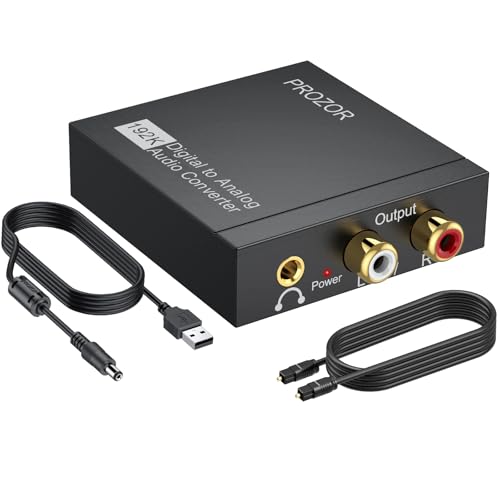
- Optical or coaxial PCM input
- Simultaneous RCA and 3.5mm output
- Two-channel audio up to 24-bit/192kHz
Best For: TV-to-stereo analog connections
Multi-Source Control Hub

- Optical input and USB DAC interface
- Bluetooth 5.3 plus phono and RCA inputs
- EQ and subwoofer-oriented outputs
Best For: Multi-source stereo home audio
Metal-Housed Stereo Converter

- Optical or coaxial to analog stereo
- RCA and 3.5mm outputs
- Metal housing; optical cable included
Best For: Console or disc-player stereo hookups
Best for TV and Streaming
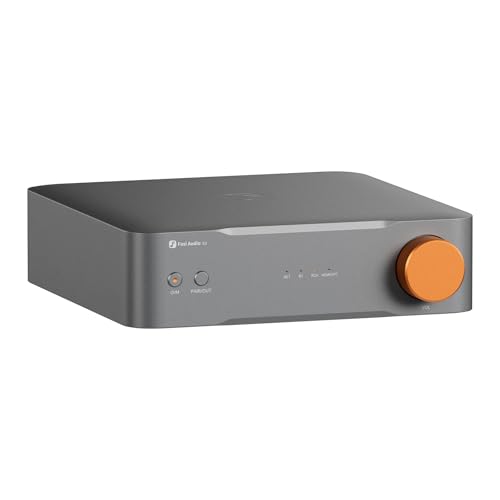
- HDMI eARC and dedicated sub out
- Wi-Fi streaming and 10-band EQ
- Balanced XLR outputs
Best For: TV-connected 2.1 systems with external amplification
Best for DAC Chip Choice

- Switchable ESS and AKM DAC chips
- Optical, coaxial, and USB inputs
- Remote and dual OLED displays
Best For: S/PDIF or USB sources feeding analog audio gear
Best for Headphones and Speakers

- Balanced and 6.35 mm headphone outputs
- USB, S/PDIF, and Bluetooth inputs
- Preamp mode and 10-band PEQ
Best For: Desktop movie listening through headphones or active speakers
Best for Balanced Stereo Systems – Fosi Audio ZD3 DAC Preamp
If you want a dac for home theater that connects a TV to a two-channel amplifier, the Fosi Audio ZD3 offers HDMI ARC alongside optical, coaxial, USB, and Bluetooth inputs. Its balanced XLR and RCA outputs give you flexibility when building a stereo system.
Best For: TV-based stereo setups that need HDMI ARC and balanced outputs.
Pros:
- HDMI ARC input simplifies connection to a compatible TV.
- XLR and RCA outputs accommodate different stereo amplifiers.
- Remote, OLED display, preamp bypass, and 12V trigger connections add control options.
Cons:
- Two-channel output is not a substitute for multichannel surround decoding.
- No headphone output is listed.
The ZD3 is the most connectivity-focused option here for a TV-to-stereo system, particularly if your amplifier accepts balanced XLR. Choose it for flexible source switching, not for discrete surround channels.
Best Compact DAC with Sub-Out – Fosi Audio Q6 Mini
The Fosi Audio Q6 Mini is a compact dac for home theater use when your TV or streamer has optical or coaxial output and your sound system uses a stereo amplifier or powered speakers. It also accepts USB-C from compatible digital sources.
Best For: Small stereo setups that need RCA output plus a subwoofer connection.
Pros:
- Optical, coaxial, and USB-C inputs cover common digital sources.
- RCA and sub-out connections offer straightforward stereo-system integration.
- Compact aluminum enclosure saves space.
Cons:
- No HDMI ARC or Bluetooth input is listed.
- Cannot drive headphones or passive speakers directly.
Pick the Q6 if your source already provides a suitable digital output and you have amplification in place. Its sub-out is useful for system planning, but it remains a two-channel DAC rather than a surround processor.
Best for Headphones and Tone Control – Fosi Audio Q4
For a straightforward dac for home theater listening through stereo speakers or headphones, the Fosi Audio Q4 takes USB, optical, or coaxial audio and provides RCA and 3.5mm outputs. Front-panel bass and treble controls let you adjust the sound without changing your source settings.
Best For: Simple TV or desktop audio setups that alternate between headphones and stereo amplification.
Pros:
- Optical and coaxial inputs work with compatible TV and disc-player outputs.
- Built-in headphone amp supports headphones rated from 16 to 200 ohms.
- Bass and treble knobs allow direct sound adjustment.
Cons:
- No HDMI ARC input is listed.
- RCA and headphone outputs do not provide discrete surround sound.
The Q4 makes sense when easy hookup and hands-on tone controls matter more than extensive connectivity. Check that your TV or other source has a compatible digital output before buying.
Best for TV ARC Audio Extraction – HDMI ARC Audio Extractor DAC
This dac for home theater setups is primarily a way to route audio from a TV’s HDMI ARC or eARC-labeled port to older stereo equipment. It offers analog RCA and 3.5mm outputs, along with optical and coaxial connections, but requires the source audio to be set to PCM or LPCM.
Best For: Connecting an ARC-enabled TV to equipment that lacks an HDMI ARC input.
Pros:
- Accepts audio from a TV’s labeled HDMI ARC or eARC port.
- Optical, coaxial, RCA, and 3.5mm outputs can operate simultaneously.
- Includes an HDMI cable, optical cable, power adapter, and other hookup accessories.
Cons:
- Does not decode Dolby, DTS, or other surround formats; set audio to PCM or LPCM.
- ARC operation requires a TV port labeled ARC or eARC.
This extractor addresses a specific compatibility gap, not surround-sound processing. Confirm your TV’s ARC port and PCM output setting before choosing it for an existing stereo system.
Simple TV Audio Fix – PROZOR 192kHz Optical and Coaxial DAC
If you need a dac for home theater to connect a TV’s digital audio output to an analog stereo system, this PROZOR converter handles optical or coaxial PCM input and sends audio to RCA and 3.5mm outputs simultaneously.
Best For: Connecting a TV, game console, or disc player to a stereo amplifier or other analog audio device.
Pros:
- Accepts optical and coaxial digital inputs.
- Provides simultaneous RCA and 3.5mm analog outputs.
- Supports two-channel PCM up to 24-bit/192kHz.
Cons:
- Does not decode 5.1-channel audio; set the source to PCM or LPCM.
- Requires a certified 5V 1A power adapter, which is not included.
This is a straightforward stereo conversion option, but check your TV’s audio-format and volume settings before buying: optical volume may not respond directly to the TV remote.
For shoppers considering a dac for home theater who also need to manage several music sources, the Dynasty ProAudio PX2 goes beyond a basic converter. It combines an optical TV input and USB DAC interface with Bluetooth 5.3, analog inputs, and preamp controls.
Best For: A stereo home audio setup that mixes TV sound, computer audio, streaming, and a turntable.
Pros:
- Includes optical, USB DAC, Bluetooth 5.3, four RCA line inputs, and a phono input.
- Offers three-band EQ and a low-cut crossover for subwoofer integration.
- Provides stereo, crossover, mono subwoofer, and headphone outputs.
Cons:
- Its 17-inch-wide chassis takes more space than a small standalone DAC.
- The supplied specifications describe stereo PCM, not surround-sound decoding.
Choose the PX2 when input flexibility and sound controls matter more than a compact optical-to-RCA adapter. It is a stereo preamp with digital inputs, not a stated replacement for a surround decoder.
This compact dac for home theater converts optical or coaxial PCM audio from a console or disc player into analog RCA and 3.5mm stereo output. Its metal housing makes it a practical alternative to plastic-bodied converters for a crowded equipment shelf.
Best For: Connecting a PCM-capable game console or Blu-ray player to an analog stereo input.
Pros:
- Outputs through RCA and 3.5mm simultaneously.
- Supports sampling rates up to 192kHz and 24-bit incoming SPDIF audio.
- Includes an optical cable and USB power cable.
Cons:
- Does not support Dolby 5.1 decoding; the source must output PCM.
- Needs a certified 5V 1A wall charger for power.
The AU511 suits a simple digital-to-stereo connection rather than a surround setup. Before troubleshooting noise or silence, verify the source’s PCM setting and use stable wall power.
Best for TV and Streaming – Fosi Audio S3
If you want a DAC for home theater that also handles everyday music streaming, the Fosi Audio S3 brings HDMI eARC, a dedicated subwoofer output, and network playback into one compact DAC/preamp.
Best For: A TV-connected 2.1 setup with an external amplifier or active speakers.
Pros:
- HDMI eARC and subwoofer output suit a TV-based 2.1 system.
- Wi-Fi 6 supports AirPlay 2, Spotify Connect, TIDAL Connect, Google Cast, and other streaming options.
- XLR balanced outputs, optical output, and app-based 10-band EQ add setup flexibility.
Cons:
- Needs an external amplifier or active speakers; it is a preamp, not a speaker amplifier.
- The supplied notes recommend a firmware upgrade to access additional features.
The S3 is the most TV-focused option here. Choose it when eARC, streaming, and a subwoofer connection matter more than a built-in headphone amplifier.
Best for DAC Chip Choice – Douk Audio Q11
The Douk Audio Q11 is a DAC for home theater buyers who already have a source with optical or coaxial digital output and want to feed an analog-input audio system. Its distinguishing feature is a switch between ESS9038Q2M and AK4493 DAC chips.
Best For: A simple digital-to-analog connection with selectable DAC chips and remote volume control.
Pros:
- Optical, coaxial, and PC-USB inputs accommodate several digital sources.
- Two sets each of RCA and AUX outputs provide analog connection options.
- Dual OLED displays show sampling rate, volume, and selected chip status.
Cons:
- No HDMI eARC input is listed for direct TV eARC hookup.
- Optical and coaxial inputs do not support DSD; the listed DSD256 support is through PC-USB.
The Q11 makes sense if your existing equipment already uses S/PDIF or USB. Check your TV’s output and your amplifier’s analog inputs before choosing it over an eARC-equipped model.
Best for Headphones and Speakers – TOPPING DX5 II
For a desk-based DAC for home theater listening, the TOPPING DX5 II pairs digital inputs with a powerful headphone amplifier and a preamp mode for active speakers or an external amplifier. It is better suited to a desktop viewing setup than a direct HDMI eARC TV connection.
Best For: Headphone-focused movie and music listening with optional active-speaker control.
Pros:
- 4.4 mm balanced and 6.35 mm headphone outputs support different headphone connections.
- USB, optical, coaxial, and Bluetooth 5.1 inputs offer several source options.
- 10-band PEQ, preamp mode, and 12V trigger in/out help integrate a desktop system.
Cons:
- No HDMI eARC input or dedicated subwoofer output is listed.
- Its headphone-first design may be more than a basic TV-to-amplifier conversion setup needs.
Pick the DX5 II when headphone performance and desktop flexibility are priorities. For a TV-centered 2.1 system, an eARC-equipped DAC/preamp offers a more direct fit.
How We Picked the Best Dac for Home Theater
We focused on practical ways to get digital audio from a TV, streamer, game console, or media player into analog stereo equipment. The selection covers optical and coaxial converters, an HDMI ARC extractor, USB desktop DACs, and preamps with broader input and output options. We also considered whether a device is better suited to a fixed-volume amplifier, powered speakers, or a system that needs volume control at the DAC. Specifications alone cannot establish audible superiority, so verify the connections and controls that matter for your setup.
Quick Comparison: Which Type Fits Your Setup?
For a TV with an optical output and a stereo receiver with RCA inputs, a basic optical-to-RCA converter such as the PROZOR or the listed 192kHz optical adapter is the simplest route. If your TV primarily offers HDMI ARC, consider the HDMI ARC audio extractor instead—but confirm that its output format and control behavior suit your TV. For a desktop system that also handles TV audio, the Fosi Audio Q4, ZD3, or Douk Audio Q11 offer different combinations of digital inputs and analog outputs. The Fosi Audio S3 adds streaming-oriented features; the Dynasty ProAudio PX2 emphasizes multiple sources. The Fosi Audio Q6 and TOPPING DX5 II make more sense when USB playback or headphones are important parts of the system.
Key Buying Factors for a Dac for Home Theater
Match the Digital Input First
Check the output on your actual TV or source: optical, coaxial, USB, and HDMI ARC are not interchangeable. A USB DAC intended for a computer may not accept audio from a TV’s USB port. Likewise, an HDMI ARC extractor is not necessarily a general-purpose HDMI input switch. Confirm supported connections in the current product documentation before ordering.
Check Audio Formats and Channel Count
Most conventional stereo DACs expect two-channel PCM, not Dolby Digital or DTS bitstreams. If you hear silence through an optical converter, set the TV’s digital audio output to PCM or stereo. These products are for feeding analog stereo equipment; they do not replace an AV receiver or surround processor for discrete multichannel playback.
Plan for Volume and Outputs
Choose RCA for typical stereo amps and powered speakers, or consider balanced outputs only if the next component supports them. A DAC with adjustable output can help when speakers lack convenient volume control, but check how its remote, front-panel control, and TV-volume behavior work. HDMI ARC does not automatically guarantee seamless volume control through every extractor and TV combination. Headphone jacks, Bluetooth, streaming, and subwoofer outputs are useful only if your system needs them.
Who Should Buy Which Dac for Home Theater?
Buy a basic optical converter for a low-cost connection to an existing stereo amp. Choose an ARC extractor when HDMI ARC is the available TV audio path. Step up to a multi-input DAC or preamp if you switch between a TV, computer, and other sources; prioritize the specific inputs, outputs, and volume controls you will use. Pick a headphone-focused DAC when private listening is equally important. If you need true surround sound, look for an AV receiver or processor rather than a two-channel Dac for Home Theater.
