Floor-to-ceiling bass traps are one of the most effective ways to control low-frequency buildup in small and medium rooms. They help reduce boomy corners, smoother bass response, and make your monitors or home theater sound more accurate.
Below, we’ve narrowed the field to 10 strong options for different room sizes, mounting styles, and budgets so you can choose the right treatment with confidence.
Best 10 Floor to Ceiling Bass Traps Picks for 2026
Stackable Corner Solution
Foroomaco Delta Bass Traps for Vertical Corners

- Stackable for floor to ceiling corner columns
- Deep open-cell foam for corner buildup
- Two-pack makes modular treatment easier
Best For: Studios and home theaters needing scalable vertical corner treatment
Broadband Corner Panel
ATS Acoustics Full Range Bass Trap Panel

- 24 x 48 x 4 panel mounts across a corner
- NRC 1.28 for strong damping
- Mineral wool core with frame-backed construction
Best For: Users wanting a broadband corner panel with easy installation
Ceiling Corner Pack
Foroomaco Triangular Pyramid Bass Traps

- Made for trihedral ceiling corners
- 12-inch depth helps reduce buildup
- 4-pack covers multiple upper corners
Best For: Rooms needing targeted bass control in ceiling corners
Flush-Mount Corner Absorber
ATS Acoustics Tri Corner Bass Trap

- Flush-mounts to 90-degree room corners
- Fiberglass core with NRC 1.05
- Magnetic mounting for easy relocation
Best For: Small AV rooms and home theaters needing discreet corner absorption
Compact Corner Foam Kit
8 Pack Black Bass Traps Corner Studio Foam

- Targets low-frequency standing waves in corners.
- Can be mounted from floor to ceiling.
- High-density foam with fire-retardant performance.
Best For: Budget corner treatment in small studios and home theaters
Pro Grade Corner Panel
ATS Acoustics Low Frequency Bass Trap
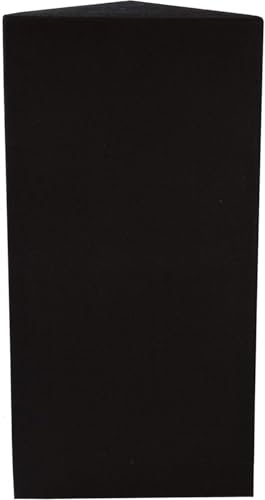
- NRC 1.40 for effective low-frequency absorption.
- Solid wood frame with included mounting hardware.
- Made in the USA with textured jute fabric.
Best For: Serious studio and home theater corner treatment
Value Foam Corner Set
12 Pack 3x3 Bass Traps Acoustic Foam

- Targets low and mid frequencies in corners.
- Works with adhesive or double-sided tape.
- Fire-retardant, eco-friendly polyurethane foam.
Best For: Compact DIY acoustic treatment on a budget
Corner Ceiling Diffusion Trap
Triangle-TRI White Acoustic Foam
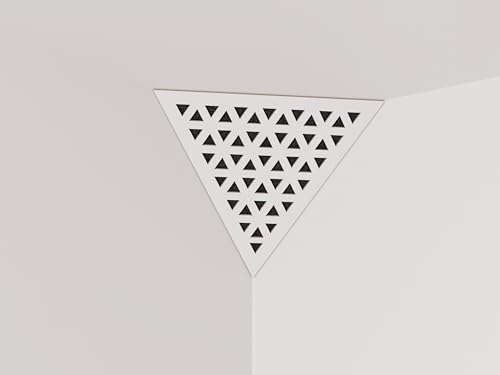
- Absorption and diffusion in a corner-mounted design
- NRC 0.57 with low-frequency focus
- 2-pack for studios, theaters, and offices
Best For: Rooms needing corner bass control plus some diffusion
Freestanding Stackable Bass Trap

- Stackable to cover corners from floor to ceiling
- Freestanding design needs no adhesive or brackets
- Hybrid felt and foam construction for low frequencies
Best For: Renters and rooms that need movable corner treatment
Decorative Corner Ceiling Trap
Triangle SCIFI 2-Pack Nut Finish

- Absorption and diffusion for upper corner placement
- NRC 0.59 with mid and low-frequency focus
- Nut finish offers a more decorative look
Best For: Visible room corners that need acoustic control and style
Stackable Corner Solution – Foroomaco Delta Bass Traps for Vertical Corners
For floor to ceiling bass traps, this stackable corner option is designed to build a deeper treatment column in vertical wall corners where low-frequency buildup often collects. The large open-cell foam body adds more porous depth than a standard panel, and the flat top and bottom make it easier to stack multiple units for taller coverage.
Best For: Studios and home theaters that need modular, stackable corner treatment for vertical wall corners.
Pros:
- Stackable design supports partial-height or floor-to-ceiling corner treatment.
- Deep 16.5 x 15.8 x 12 in foam body adds substantial porous depth.
- Helps reduce boomy corner buildup for clearer bass monitoring.
- Two-pack format makes targeted treatment easier to scale.
Cons:
- Targets vertical wall corners rather than ceiling corners.
- Multiple packs are needed for full-height coverage.
This is a practical modular choice if your priority is building a continuous corner column instead of using a single fixed-size absorber. It works especially well when paired with ceiling-corner traps and reflection-point panels.
Broadband Corner Panel – ATS Acoustics Full Range Bass Trap Panel
If you want floor to ceiling bass traps with a more panel-like format, this 24″ x 48″ x 4″ corner-mounted absorber is built for broad sound damping across the full range. Its open-back frame and mineral wool core are designed to let sound pass through and be absorbed, helping reduce boominess, echo, and reverberation in the room.
Best For: Buyers who want a broadband corner panel for wall-to-corner mounting in studios or home theaters.
Pros:
- Recommended to be mounted across a corner for effective bass control.
- NRC of 1.28 indicates strong sound damping performance.
- Full range absorption helps reduce boominess, echo, and reverberation.
- Includes mounting template and hardware for easier installation.
Cons:
- Fixed 24″ x 48″ panel size may not suit every corner layout.
- Less modular than stackable foam corner pieces for custom height coverage.
This is a strong option if you want a more traditional acoustic panel approach with serious absorption credentials. It is especially useful when corner placement matters but you also want a finished, frame-backed look.
Ceiling Corner Pack – Foroomaco Triangular Pyramid Bass Traps
For floor to ceiling bass traps that focus on upper corners, this 4-pack is shaped for trihedral ceiling corners where low-frequency buildup commonly happens. The 16.5-inch triangular face and 12-inch depth give it more porous treatment depth than standard foam panels, making it a useful ceiling-corner companion to vertical corner traps.
Best For: Studios, podcast rooms, and home theaters that need targeted ceiling-corner bass control.
Pros:
- Purpose-built for trihedral ceiling corners.
- Deep open-cell foam helps tackle boomy upper-corner buildup.
- 4-pack covers multiple ceiling corners while preserving floor space.
- Pairs well with vertical Delta traps for a fuller room system.
Cons:
- Designed for ceiling corners, not vertical wall corners.
- Foam construction is less rigid than framed absorber panels.
This pack makes sense when your ceiling corners are the main problem and you want a clean way to add absorption without using floor space. It is most effective as part of a layered corner-treatment plan.
Flush-Mount Corner Absorber – ATS Acoustics Tri Corner Bass Trap
For floor to ceiling bass traps in a cleaner, low-profile format, this tri-corner absorber is designed to flush mount to 90-degree room corners where walls and ceiling meet. Its fiberglass core, fabric wrap, and 2-inch depth make it a broadband sound damper aimed at reducing boominess in home theaters and smaller AV rooms.
Best For: Home theaters and small AV production rooms that want a discreet corner-mounted absorber.
Pros:
- Flush-mount design works at room corners where walls and ceiling meet.
- Fiberglass core offers broadband absorption with NRC 1.05.
- Magnetic mounting system makes installation and relocation easier.
- Fire-rated fabric and construction suit more demanding environments.
Cons:
- 2-inch depth is shallower than deeper super-chunk style traps.
- Single-unit format may require multiple pieces for larger coverage.
This is a good fit if you want corner treatment that stays visually subtle while still targeting room buildup. It leans more toward a refined installed look than a bulky foam solution.
Compact Corner Foam Kit – 8 Pack Black Bass Traps Corner Studio Foam
If you’re shopping for floor to ceiling bass traps on a budget, this 8-pack corner foam kit is built for simple low-frequency treatment in studios, home theaters, and other small rooms. The manufacturer says the traps are designed to sit in corners and can be mounted from the bottom up to the ceiling for stronger bass absorption.
Best For: Small studios, home theaters, and DIY users who want an affordable corner bass trap setup.
Pros:
- Designed to absorb low-frequency standing waves and improve clarity.
- Can be installed from the bottom of a corner up to the ceiling.
- High-density polyurethane foam with fire-retardant performance noted.
- Compressed packaging expands after 24-48 hours for easier shipping.
Cons:
- Adhesive or spray glue is not included.
- Foam treatment is best suited to corner placement rather than large-scale coverage.
This is a practical pick if you want a straightforward corner solution that follows the basic bass-trap placement strategy. It won’t replace a full pro treatment plan, but it gives you an easy way to target low-end buildup.
Pro Grade Corner Panel – ATS Acoustics Low Frequency Bass Trap
ATS Acoustics Corner Bass Trap, Low Frequency Range, NRC 1.40, 24" x 48" x 13" (Black)
Check Price On AmazonFor buyers who want floor to ceiling bass traps with a more finished look, this ATS Acoustics panel is a heavier-duty corner absorber made for low-frequency control. It’s built to be positioned in room corners, where it helps reduce reverb and echo while absorbing bass and reflecting higher frequencies.
Best For: Recording rooms, control rooms, and home theaters that need a more substantial corner bass trap.
Pros:
- Rated NRC 1.40 for strong sound absorption.
- Designed for corner placement to control low-range frequencies.
- Solid wood internal frame helps protect edges and corners.
- Includes mounting hardware and template for easier installation.
Cons:
- Heavier and larger than foam options at 41 pounds.
- More of a permanent room treatment than a flexible, portable fix.
This is the most studio-like option in the group if you want a durable bass trap that looks finished and is made for serious corner placement. It’s a strong choice when low-frequency control matters more than low cost or portability.
Value Foam Corner Set – 12 Pack 3×3 Bass Traps Acoustic Foam
If you need floor to ceiling bass traps for a smaller room, this 12-pack foam set is aimed at low- and mid-frequency absorption in corners. The product notes recommend pairing it with sound-dampening panels to help reduce reverb, flutter echoes, and unwanted sound buildup.
Best For: Small rooms, podcast spaces, and DIY acoustic upgrades where easy foam corner treatment is the priority.
Pros:
- High-density polyurethane foam designed for low/mid-frequency absorption.
- Can be installed with spray adhesive or 3M double-sided tape.
- Fire-retardant and eco-friendly material stated in the notes.
- Returns to shape after 24-48 hours of ventilation.
Cons:
- Adhesive and tape are not included.
- Best results are described as part of a larger acoustic treatment setup.
This set makes sense when you want a simple foam-based corner solution without moving up to heavy framed panels. It’s a practical starting point for taming low-end issues in compact rooms.
Corner Ceiling Diffusion Trap – Triangle-TRI White Acoustic Foam
If you want floor to ceiling bass traps behavior from a corner-mounted design, this 2-pack gives you an absorptive and diffusive option for taming low-end buildup, slap echo, and other intrusive noise. The triangular format is sized for upper corners and is suited to rooms where you want acoustic treatment without a plain foam-only look.
Best For: Recording studios, home theaters, music rooms, and conference spaces that need corner low-frequency control plus some diffusion.
Pros:
- Absorption and diffusion in one corner-mounted panel.
- Rated for low frequencies with an overall NRC of 0.57.
- Covers a broad scattering range from 63Hz to 1000Hz.
- Suitable for studios, theaters, offices, and rehearsal rooms.
Cons:
- Designed for corner mounting, not freestanding use.
- Sold as a 2-unit set, so larger rooms may need multiple packs.
- Fire class is Euroclass E, which may matter for some installations.
This is a practical pick if you want a corner treatment that does more than absorb. The HDF-and-foam build adds diffusion, which can help keep a room from sounding overly dead while still addressing low-end reflections.
Freestanding Stackable Bass Trap – TroyStudio Felt Foam 2-Pack
For buyers comparing floor to ceiling bass traps that do not require permanent mounting, this stackable corner absorber is built to sit in place and be added vertically as needed. Its felt-and-foam hybrid design targets low frequencies while also adding some high-frequency diffusion, making it a flexible option for home studio and media room treatment.
Best For: Renters, home studio owners, and theater setups that want a freestanding corner solution with easy repositioning.
Pros:
- Stackable design helps cover corners from floor to ceiling.
- Freestanding and movable, with no brackets or adhesive needed.
- Hybrid felt and foam build targets deeper low frequencies.
- Also diffuses some high frequencies for a more balanced result.
Cons:
- Requires assembly of the foam core into the felt shell.
- Smaller footprint than many fixed corner traps.
- Not a mounted architectural treatment.
This is the most renter-friendly option in the group if you want a corner bass trap you can move and stack. It trades permanent installation for flexibility, which makes sense for temporary studios, podcasts, or rooms that change often.
Decorative Corner Ceiling Trap – Triangle SCIFI 2-Pack Nut Finish
If your goal is floor to ceiling bass traps coverage in the upper corners, this 2-pack is designed for wall-to-ceiling placement with a more decorative finish than plain foam. It combines absorption and diffusion, targets mid and low frequencies, and includes adhesive tape for installation with construction adhesive recommended for best fastening.
Best For: Home theaters, recording spaces, offices, and multipurpose rooms where appearance and corner acoustic control both matter.
Pros:
- Combination of absorption and diffusion for corner treatment.
- Designed for upper wall-to-ceiling corner installation.
- NRC of 0.59 with a stated power dissipation range of 160 Hz to 5,000 Hz.
- Decorative nut color and HDF construction suit visible spaces.
Cons:
- Sold as a set of two, so larger rooms may need more.
- Best fastening uses construction adhesive, not just tape.
- Corner-mounted use may limit placement flexibility.
This model is a good fit if you want a cleaner visual finish without giving up corner acoustic treatment. It is aimed at rooms where the trap will be seen, installed high in the corner, and expected to help with both low-end and midrange control.
How We Picked These Floor to Ceiling Bass Traps
We focused on products that are actually suited to corner and ceiling-corner low-frequency control, with an emphasis on usable dimensions, installation flexibility, and materials that can absorb more than just high frequencies. Because Floor to Ceiling Bass Traps are often placed where pressure builds most, we favored designs with enough depth and coverage to make a meaningful difference.
We also considered whether each option fits a studio, media room, or multipurpose space, since the best choice depends on room size, mounting location, and how permanent you want the treatment to be.
Quick Comparison
Broadly, the list splits into a few categories: rigid fiberglass or mineral-wool style panels for stronger broadband absorption, foam corner traps for lighter-duty and easier installation, and stackable or triangular corner designs for continuous vertical coverage. If you want the most effective low-end control, deeper and denser options usually win. If you need something fast and simple, foam-based corner pieces are easier to place but typically less effective below the low mids.
Key Buying Factors for Floor to Ceiling Bass Traps
Depth and Coverage
Deeper traps generally work better on lower frequencies. For true Floor to Ceiling Bass Traps, look for tall or stackable designs that can cover the full vertical corner rather than just a small section.
Material and Density
Rigid fiberglass, acoustic mineral wool, and dense hybrid constructions usually outperform lightweight foam for bass control. Foam can still help with flutter and some midbass issues, but it is usually not the strongest option for serious low-end treatment.
Corner Placement
Room corners and ceiling corners are the highest-priority locations because bass pressure tends to accumulate there. Products made specifically for corners are usually more practical than flat panels when your goal is low-frequency smoothing.
Installation Style
Check whether the product is freestanding, stackable, adhesive-backed, or requires mounting hardware. Permanent solutions often deliver better coverage, while modular pieces are easier to move as your setup changes.
Room Size and Use Case
Smaller rooms usually benefit most from targeted corner treatment, while larger rooms may need multiple traps to get a noticeable result. Recording spaces, control rooms, and home theaters all benefit differently, so match the product to your goal.
Who Should Buy Which Floor to Ceiling Bass Traps?
If you want the strongest low-frequency improvement, choose the deepest and densest traps in the roundup and prioritize full corner coverage. If you rent or need a simpler setup, stackable or foam corner options may be the better compromise. For home studios with uneven bass, a mix of vertical corner and ceiling-corner treatment is often the smartest path.
For most buyers, the best strategy is to treat the most problematic corners first, then expand coverage if bass response still feels uneven. That approach gives you the most value from Floor to Ceiling Bass Traps without overbuying treatment you may not need.
