Last updated on October 24th, 2026
A front-firing subwoofer can add weight to movie effects and music without demanding a complicated speaker setup. The right choice depends less on the biggest wattage claim and more on your room, placement, and listening habits.
These 10 options span compact 10-inch models and larger 12-inch choices. Use the buying guide below to narrow the field before checking the specifications and current price of your favorites.
Best 10 Front Firing Subwoofer Picks for 2026
High-Output Home Theater Pick
Klipsch Synergy Black Label Sub-120

- 12-inch front-firing woofer
- 200W continuous, 400W dynamic
- Large cabinet; cables not included
Best For: Home theaters with space for a large 12-inch subwoofer
Receiver-Friendly 12-Inch Pick

- 12-inch copper-spun woofer
- Line/LFE receiver inputs
- Crossover and phase controls
Best For: Music and movie systems using an AV receiver
Auto-Power Convenience Pick

- 10-inch long-throw driver
- Ported MDF cabinet
- Signal-sensing auto power
Best For: Movie and music setups prioritizing automatic power control
Compact Klipsch Pick

- 10-inch front-firing woofer
- 150W continuous, 300W peak
- RCA inputs and phase control
Best For: Receiver setups with limited placement width
12-Inch Home Theater Pick

- 12-inch front-firing TCP woofer
- All-digital amplifier; specified 400-watt maximum
- Crossover, phase, and Line/LFE connections
Best For: Home theater setups wanting a 12-inch powered subwoofer
Flexible Connection Pick
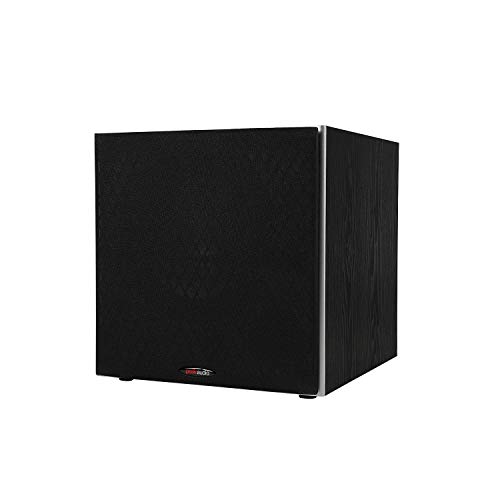
- 10-inch woofer for small-to-mid-size rooms
- 50-watt RMS amplifier; up to 100 watts
- Line-level and speaker-level connections
Best For: Existing systems needing flexible wired hookups
10-Inch Klipsch Pick

- 10-inch front-firing TCP woofer
- All-digital amplifier; specified 300-watt maximum
- Low-pass crossover, phase, and Line/LFE inputs
Best For: Home theater buyers wanting a 10-inch Klipsch model
Deep-Bass Pick
Klipsch R-120SW 12-Inch Subwoofer

- 12-inch spun-copper woofer
- 200W continuous, 400W peak
- 29–120 Hz specified range
Best For: Home theaters needing a 12-inch wired sub with published bass specs
Compact Theater Pick
Klipsch Synergy Black Label Sub-100

- 10-inch front-firing driver
- 150W continuous, 300W dynamic
- Connection wires not included
Best For: Wired receiver-based theaters with space for a 10-inch sub
Flexible Setup Pick
Klipsch Synergy Black Label SUB-120 Bundle

- 12-inch front-firing woofer
- 200W continuous, 400W dynamic
- Crossover and phase controls
Best For: Receiver-based theaters needing adjustable 12-inch bass
High-Output Home Theater Pick – Klipsch Synergy Black Label Sub-120
The Klipsch Synergy Black Label Sub-120 is a front firing subwoofer for buyers who have room for a large cabinet and want a 12-inch driver. Its digital amplifier is rated at 200 watts continuous and 400 watts dynamic power.
Best For: Home theater setups with floor space for a substantial 12-inch subwoofer.
Pros:
- 12-inch spun-copper front-firing Cerametallic woofer.
- 200 watts continuous and 400 watts dynamic power.
- Removable grille and a finish designed to blend with home decor.
Cons:
- At 21.3 inches high and 23.7 inches deep, it needs considerable space.
- Connection wires are not included.
This is the larger-format choice if cabinet size is less important than a 12-inch driver and the stated power ratings. Check your available floor space and plan to supply the needed connection cable.
Receiver-Friendly 12-Inch Pick – Klipsch R-12SW
The Klipsch R-12SW is a front firing subwoofer built around a 12-inch copper-spun woofer and an all-digital amplifier rated at 400 watts of dynamic power. Its Line/LFE inputs make it a practical match for many AV receivers.
Best For: Music and movie systems needing a 12-inch subwoofer with receiver-friendly inputs.
Pros:
- 12-inch front-firing copper-spun woofer.
- Low-pass crossover and phase controls help with system setup.
- Line/LFE inputs accommodate most receivers.
Cons:
- The 20-by-20-inch footprint calls for floor-space planning.
- Wired connectivity only; no wireless connection is listed.
Choose this model if connection and adjustment options matter alongside a 12-inch driver. Measure your placement area first, particularly if the subwoofer will sit beside a media cabinet.
Auto-Power Convenience Pick – Fluance DB10
Fluance DB10 10-inch Low Frequency Ported Front Firing Powered Subwoofer for Home Theater & Music
Check Price On AmazonThe Fluance DB10 is a front firing subwoofer with a 10-inch long-throw driver and a ported MDF cabinet. Its signal-sensing auto power-on feature is handy if you would rather not switch the subwoofer on and off manually.
Best For: Movie and music listeners who want a 10-inch powered subwoofer with automatic power control.
Pros:
- 10-inch long-throw front-firing driver.
- Ported MDF cabinet designed for low-frequency output.
- Automatically powers on or off based on the audio signal.
Cons:
- Wired connectivity only; no wireless audio connection is listed.
- Its listed 15.7-inch depth still needs placement space.
The DB10 stands out for its auto-power feature rather than driver size. Consider it when everyday convenience and a ported 10-inch design are higher priorities than a 12-inch woofer.
Compact Klipsch Pick – Klipsch R-100SW
The Klipsch R-100SW is a front firing subwoofer with a 10-inch spun-copper IMG woofer in a cabinet measuring 14.5 inches deep by 12.5 inches wide by 16.4 inches high. Its all-digital amplifier is rated at 150 watts continuous and 300 watts peak.
Best For: Receiver-based setups seeking a smaller Klipsch cabinet with bass adjustment controls.
Pros:
- 10-inch front-firing spun-copper IMG woofer.
- Volume, low-pass crossover, and 0/180-degree phase controls.
- Line-level and LFE RCA inputs, plus auto power-on.
Cons:
- Its 10-inch driver is smaller than the 12-inch Klipsch models listed here.
- Wired RCA connection only; no wireless connection is listed.
The R-100SW offers useful setup controls in a narrower cabinet than the larger Klipsch options here. It is a sensible one to compare when placement width is limited but you still want RCA receiver inputs.
12-Inch Home Theater Pick – Klipsch Reference R-121SW
If you want a front firing subwoofer with a 12-inch driver for home theater, the Klipsch Reference R-121SW pairs a spun-copper TCP woofer with an all-digital amplifier. Its front-facing driver gives you flexibility when choosing a spot in the room.
Best For: Home theater setups that need a 12-inch powered subwoofer with adjustable bass integration.
Pros:
- 12-inch spun-copper TCP woofer and up to 400 watts of specified output.
- Low-pass crossover and phase controls help blend bass with other speakers.
- Line/LFE inputs support connection to an AV receiver.
Cons:
- At 19.7 inches deep and 34.2 pounds, it needs a substantial floor space allowance.
- Subwoofer connection is wired.
Choose this model if driver size and setup controls matter more to you than a compact footprint. Check your available depth before buying.
The Polk Audio PSW10 is a front firing subwoofer option for small-to-mid-size rooms, with a 10-inch Dynamic Balance woofer and a directed port. Its mix of line-level and speaker-level connections makes it worth considering when upgrading an existing system.
Best For: Smaller home theater or music setups needing multiple wired connection options.
Pros:
- 10-inch woofer with a built-in 50-watt RMS amplifier and up to 100 watts of specified power.
- Line-level inputs plus speaker-level inputs and outputs offer hookup flexibility.
- Variable 80–160 Hz crossover and a phase toggle aid system matching.
Cons:
- Its specified maximum power is lower than that of the two Klipsch models here.
- The 17-inch cabinet depth still requires planning despite its compact-design positioning.
The PSW10 is a practical choice when connection flexibility is the priority. Its power rating makes it a more measured pick than the higher-rated models in this list.
The Klipsch Reference R-101SW is a front firing subwoofer for buyers who want the brand’s spun-copper TCP driver in a 10-inch size. An all-digital amplifier and wired Line/LFE inputs round out its home theater-focused design.
Best For: Home theater buyers seeking a 10-inch Klipsch subwoofer with bass-blending controls.
Pros:
- Front-firing 10-inch TCP woofer allows flexible room placement.
- All-digital amplifier has a specified maximum output of 300 watts.
- Low-pass crossover and phase controls help integrate it with other speakers.
Cons:
- At 19.7 inches deep, it is not especially shallow for a 10-inch model.
- Subwoofer connectivity is wired, despite the listing’s unspecified wireless-technology field.
This is the 10-inch alternative to the larger R-121SW for shoppers who want similar control features. Measure for its cabinet depth rather than assuming the smaller driver means a small enclosure.
Deep-Bass Pick – Klipsch R-120SW 12-Inch Subwoofer
If you want a front firing subwoofer for a wired home theater, the Klipsch R-120SW pairs a 12-inch spun-copper woofer with a 200-watt amplifier. Its rear-firing port is worth considering when you choose a spot for it.
Best For: Home theater buyers who want a 12-inch subwoofer with published low-frequency and output specifications.
Pros:
- 12-inch front-facing, high-excursion spun-copper woofer.
- Rated at 200 watts continuous and 400 watts peak.
- Specified frequency range of 29–120 Hz, ±3 dB.
Cons:
- Rear-firing port should be considered during placement.
- Uses a wired RCA connection rather than a wireless subwoofer link.
The R-120SW is the choice here for shoppers prioritizing stated bass-range specifications. Measure your available floor space against its 19.2-inch depth before ordering.
Compact Theater Pick – Klipsch Synergy Black Label Sub-100
The Klipsch Sub-100 is a front firing subwoofer for an AV receiver-based theater setup. Its 10-inch driver and 14-by-12.5-by-15.7-inch cabinet offer a smaller option than the 12-inch models in this roundup.
Best For: Buyers building a wired home theater who prefer a 10-inch subwoofer.
Pros:
- 10-inch front-firing spun-copper driver.
- All-digital amplifier rated at 150 watts continuous and 300 watts dynamic power.
- Removable grille offers a choice of appearance.
Cons:
- Requires an AV receiver, processor, or preamp.
- Connection wires are not included.
Choose the Sub-100 if its smaller cabinet suits your room and you already have the equipment to connect it. Budget for the necessary cable separately.
Flexible Setup Pick – Klipsch Synergy Black Label SUB-120 Bundle
Klipsch SUB-120-BLACK Synergy Black Label Subwoofer Speaker with 3 Year Amber Protection Plan (2020)
Check Price On AmazonFor a front firing subwoofer with setup controls, this Klipsch SUB-120 bundle combines a 12-inch driver with a low-pass crossover, phase control, and Line/LFE inputs. Check the listed bundle protection terms before buying, as the supplied title and contents describe different plan lengths.
Best For: Home theater buyers who want a 12-inch wired subwoofer with crossover and phase adjustments.
Pros:
- 12-inch front-firing spun-copper woofer.
- All-digital amplifier rated at 200 watts continuous and 400 watts dynamic power.
- Low-pass crossover, phase control, and Line/LFE inputs support receiver integration.
Cons:
- Wired RCA connectivity only; no wireless connection is listed.
- Protection-plan duration is inconsistent between the supplied title and bundle contents.
The SUB-120 stands out for its stated connection and adjustment options. Confirm both the protection-plan details and cabinet dimensions with the seller before checkout.
How We Picked the Best Front Firing Subwoofer
We focused on the selected powered models’ practical differences: driver size, stated amplifier power, cabinet footprint, connection options, and controls where specified. We also considered whether a model is better suited to a compact music system or a larger home theater. These are shopping criteria, not claims that every product was measured or auditioned side by side. Check each listing for exact specifications; similarly named Klipsch models and bundles are not necessarily identical.
Quick Comparison: 10-Inch Vs. 12-Inch Choices
The Polk Audio PSW10, Fluance DB10, Klipsch R-100SW, R-101SW, and Synergy Sub-100 give shoppers several 10-inch starting points. The Klipsch R-12SW, R-120SW, and Synergy Sub-120 are 12-inch alternatives worth considering when you have more floor space and want greater bass potential. The other Klipsch Reference listing needs a model-number check before comparing specifications. The SUB-120-BLACK package includes a protection plan, so compare its total cost and coverage with a standalone subwoofer purchase.
Driver size is a useful shortcut, not a performance ranking. Cabinet design, amplifier capability, tuning, and your room can matter just as much.
Key Buying Factors for a Front-Firing Subwoofer
Room Size and Placement
A 10-inch model is a sensible first look for a small or moderate room; a 12-inch model may offer more headroom for loud movies or a larger space. Measure the cabinet and leave room for cables and ventilation. A front-facing driver does not eliminate the effects of nearby walls and corners: placement can strengthen bass but also make it boomy. Plan to try more than one position if possible.
Connections and Controls
For an AV receiver, confirm the subwoofer accepts the receiver’s subwoofer or LFE output. If you use a stereo amplifier without that output, verify the exact inputs you need before buying. Adjustable volume and crossover controls help blend the sub with your main speakers; a phase adjustment can also help at the listening position. Do not assume every similarly branded model has the same rear-panel connections.
Power and Value
Compare continuous or RMS power separately from peak or dynamic ratings. A larger peak number alone does not tell you how loud or deep a subwoofer will sound in your room. Factor in cabinet size, seller terms, warranty, and whether a bundled protection plan provides value beyond the manufacturer’s coverage.
Who Should Buy Which Front Firing Subwoofer?
Start with a compact 10-inch option if space and moderate listening levels are your priorities. Look at the 12-inch choices if movie impact, a bigger room, or extra output headroom matters more. Choose by verified model number and connections first, then compare price; if two listings appear to show the same subwoofer, check what the bundle actually adds before paying extra.
