Choosing the right mixing headphones can make every edit, balance decision, and EQ move more reliable. Planar magnetic models are especially appealing for their fast transient response, low distortion, and detailed imaging.
Below, we’ve organized 10 strong options for different studio needs, from open-back reference picks to closed-back choices for tracking and shared spaces.
Best 10 Planar Magnetic Headphones for Mixing Picks for 2026
Reference Flagship

- 106 mm planar drivers with Fazor elements
- Open-back reference tuning for studio work
- Includes case plus 4-pin XLR and adapters
Best For: Engineers wanting a flagship open-back reference headphone
Wide-Stage Detail
HIFIMAN Arya Stealth for Studio
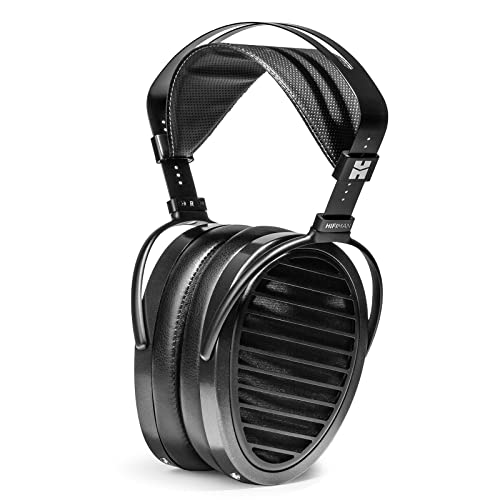
- Stealth magnets aim to reduce diffraction and distortion
- Nanometer diaphragm for detailed planar response
- Open-back design with detachable 3.5mm cable
Best For: Mixers who want a spacious, revealing open-back planar headphone
Modern Mix Reference
Audeze MM-520 Studio Headphones
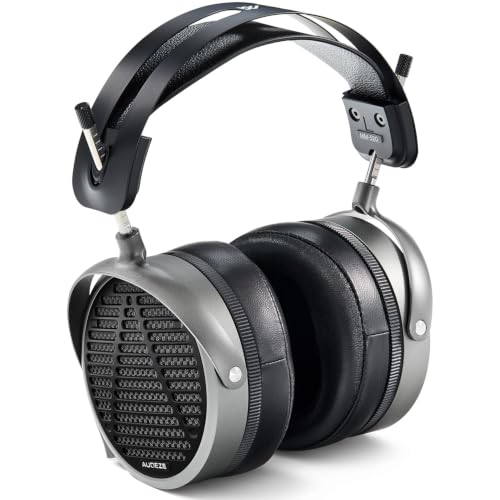
- Built with Manny Marroquin for mixing and mastering
- 90mm planar drivers with SLAM acoustic tech
- Open-back design with magnetic memory foam pads
Best For: Mix engineers seeking a modern open-back studio reference
Isolation Pick
Monolith M1060C Closed-Back Planar

- Closed-back planar design for sound isolation
- Redesigned driver with symmetrical magnet structure
- Large earpads and padded headband for comfort
Best For: Mixers working in noisy rooms who need isolation
Studio Reference Open-Back

- Wide open-back soundstage with precise localization
- Uncolored full-spectrum response for honest monitoring
- Includes mixing and producing ear pads for comfort
Best For: Mix engineers wanting a spacious open-back reference headphone
Closed-Back Planar Pick

- Fully closed-back planar magnetic headphone with 57.5mm driver
- Fast transients with tight, abundant bass
- Passive noise cancelling and lightweight comfort
Best For: DJs, gamers, and musicians needing isolation with planar sound
Premium Isolation Flagship
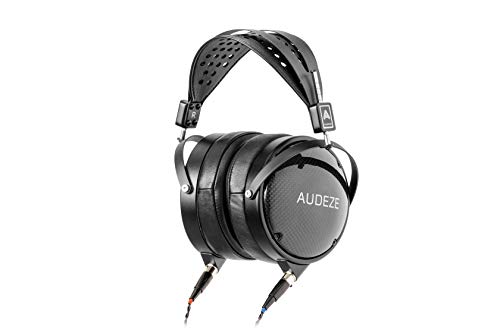
- 100mm planar drivers with Fazor Elements
- Neutral, transparent sound with strong detail retrieval
- Closed-back design increases isolation and reduces ambient noise
Best For: Engineers and audiophiles who want a premium isolated planar headphone
Reference Choice
AKG K812PRO Open-Back Reference Headphones

- 53 mm transducers for detailed reference sound
- 1.5 Tesla magnet system for accurate imaging
- Open-cup design for mixing and mastering
Best For: Mixing, mastering, and critical listening
Value Planar Pick
Monolith M1060 Planar Magnetic Headphones

- 106 mm planar magnetic driver
- Open-back soundstage for studio work
- Large earpads for long-session comfort
Best For: Studio listeners wanting spacious planar sound
Lightweight Reference Bundle
Audio-Technica ATH-R50X Open-Back Bundle

- Fully open-back design with wide soundstage
- Featherlight 199 g build for long sessions
- Bundle includes case, stand, and cables
Best For: Long mixing sessions and reference listening
Reference Flagship – Audeze LCD-X for Mixing
If you want planar magnetic headphones for mixing that lean hard into reference-grade detail, the Audeze LCD-X is built for that job. It’s an open-back professional model with 106 mm planar drivers, low 20 ohm impedance, and a tuning aimed at recording, mixing, and mastering work.
Best For: Engineers and producers who want a high-end open-back reference headphone for critical mix decisions.
Pros:
- Large 106 mm planar magnetic drivers with Fazor elements and double-sided magnetic arrays.
- Wide 12Hz–20kHz response extended out to 50kHz for detailed listening.
- Comfort-focused 2021 ear pad redesign with ergonomic over-ear fit.
- Includes carry case and multiple adapters for studio use.
Cons:
- Open-back design offers no isolation for noisy rooms.
- Wired-only setup may be less convenient outside the studio.
- More of a serious reference tool than a casual listening headphone.
The LCD-X is the most overtly studio-focused option here, and its specs and positioning match that role closely. For mixers who want a proven planar magnetic headphone with a clear professional pedigree, it stands out as a top-tier reference choice.
Wide-Stage Detail – HIFIMAN Arya Stealth for Studio
The HIFIMAN Arya Stealth is a strong fit if you’re comparing planar magnetic headphones for mixing and want a spacious, highly resolving open-back design. Its stealth magnets are designed to reduce wave interference, while the nanometer-thickness diaphragm aims for accurate, full-range output.
Best For: Mixers who prioritize openness, imaging, and a lightweight open-back planar presentation.
Pros:
- Stealth magnet design is intended to reduce diffraction turbulence and distortion.
- Nanometer-thickness diaphragm supports accurate planar driver performance.
- Open-back window shade system and asymmetrical ear cups support a natural fit and soundstage.
- Detachable 3.5mm connectors make cable swapping easy.
Cons:
- No isolation, so it’s not suited to loud tracking spaces.
- At 430 grams, it may feel substantial over long sessions.
- Wired-only design keeps it strictly tied to studio playback gear.
The Arya Stealth is appealing for engineers who value air, separation, and a revealing presentation over isolation. If your workflow benefits from an expansive open-back planar monitor, this is a compelling studio-oriented choice.
Modern Mix Reference – Audeze MM-520 Studio Headphones
The Audeze MM-520 is purpose-built for planar magnetic headphones for mixing, with a clear focus on recording, mixing, mastering, and critical listening. It uses open-back planar drivers and Audeze’s SLAM acoustic technology to support accurate bass, natural mids, and useful spatial detail.
Best For: Mix engineers who want a modern open-back reference headphone tuned for professional monitoring.
Pros:
- Developed with Grammy-winning engineer Manny Marroquin for studio monitoring.
- 90mm planar drivers with Ultra-Thin Uniforce diaphragms and Fazor waveguides.
- SLAM acoustic technology targets bass accuracy and low-frequency extension.
- Memory foam earpads with magnetic attachment help long-session comfort and maintenance.
Cons:
- Open-back construction does not provide isolation.
- Wired connectivity limits it to a studio-style setup.
- In the product details, ear placement is listed inconsistently, so buyers should verify fit expectations.
The MM-520 looks like a thoughtful update for serious monitoring work, combining modern planar hardware with a design explicitly aimed at mix translation. For engineers who want a current professional reference, it is one of the most targeted options in this group.
Isolation Pick – Monolith M1060C Closed-Back Planar
If you need planar magnetic headphones for mixing in a less-than-quiet space, the Monolith M1060C stands out for its closed-back design and sound isolation. It uses a redesigned planar driver with a symmetrical magnet structure to improve efficiency in a closed enclosure.
Best For: Mixers who need isolation and a closed-back planar option for working outside an ideal studio environment.
Pros:
- Closed-back design helps keep outside noise out and music in.
- Redesigned planar driver is built for better efficiency in a closed enclosure.
- Large faux-leather earpads and padded headband support longer sessions.
- Retractable cable and included wood carrying case add convenience.
Cons:
- Frequency response is listed as 20 Hz–20,000 Hz, narrower than some open-back rivals.
- At 3.9 pounds, it is very heavy on paper.
- Closed-back tuning is less spacious than open-back studio headphones.
The M1060C is the most practical choice here when isolation matters more than openness. For mixing in shared rooms, home studios, or other imperfect environments, its closed-back planar design is the key advantage.
Studio Reference Open-Back – Sennheiser HD 490 PRO
If you’re shopping for planar magnetic headphones for mixing, the Sennheiser HD 490 PRO is a strong open-back reference option for getting a truthful picture of your session. Its uncolored response, wide soundstage, and low-distortion open-frame design are built for honest monitoring rather than hype.
Best For: Mix engineers and producers who want open-back headphones with wide imaging and a neutral, detailed presentation.
Pros:
- Open-back architecture with an extremely wide, dimensional soundstage and precise localization
- Uncolored 5 Hz to 36 kHz response for honest full-spectrum monitoring
- Two ear pad sets for producing or mixing to help reduce fatigue and pinpoint frequencies
- Detachable cable with left/right jacks and noise-reducing cable coil structure
Cons:
- Open-back design offers no isolation, so it is not ideal for loud tracking spaces
- Uses dynamic drivers rather than planar magnetic drivers
- Best suited to studio use, not portable listening
For mix decisions, this model leans into accuracy, separation, and comfort over long sessions. If you want a transparent open-back headphone for editing and balancing, the HD 490 PRO is built around that workflow.
Closed-Back Planar Pick – Kiwi Ears Serene
For buyers comparing planar magnetic headphones for mixing in a closed-back format, the Kiwi Ears Serene is tuned for a fast, detailed presentation with more isolation than an open-back studio model. Its planar magnetic driver, passive noise cancelling, and bass-tilted tuning make it a practical choice when you need focus and a quieter listening space.
Best For: Producers, DJs, and musicians who want a closed-back planar headphone with strong isolation and quick transients.
Pros:
- Fully closed-back planar magnetic design with a custom 57.5mm driver
- Fast transients and tight, abundant bass that stays consistent at different volumes
- Passive noise cancelling from memory foam pads and a tuned refractory filter
- Lightweight build with adjustable clamp and 125° cup pivot for comfort
Cons:
- Bass-tilted tuning may not suit users seeking a strictly neutral response
- Closed-back design narrows the feel compared with open-back alternatives
- Focused more on studio and casual listening than traditional mixing neutrality
The Serene is a good fit if you want planar magnetic speed in a more isolating headphone. It should appeal most to users who value comfort, quiet, and a lively low end while working.
Premium Isolation Flagship – Audeze LCD-XC
If you want planar magnetic headphones for mixing with strong isolation, the Audeze LCD-XC is a high-end closed-back option aimed at critical listening. Its 100mm planar drivers, Fazor Elements, and neutral, transparent voicing are designed to reveal detail while keeping ambient noise down.
Best For: Recording engineers, musicians, and audiophiles who need a detailed closed-back planar headphone with serious isolation.
Pros:
- 100mm planar magnetic drivers with Fazor Elements for realistic imaging and phase response
- Neutral, transparent sound that reveals fine detail in recordings
- Closed-back design provides increased isolation and reduced ambient noise
- Low 20 ohm impedance and hand-crafted build quality
Cons:
- Heavy at 4 pounds, so it is not the lightest option for long wear
- High-end design and premium materials may put it outside budget-friendly territory
- Closed-back tuning trades some openness for isolation
The LCD-XC is built for users who need detailed monitoring in a quieter, more controlled headphone. If isolation and transparency are top priorities, it stands out as the most premium choice here.
Reference Choice – AKG K812PRO Open-Back Reference Headphones
If you want planar magnetic headphones for mixing-level detail, the AKG K812PRO is a reference-minded open-back option built for accurate balance, precise imaging, and critical listening. Its 53 mm transducers and 1.5 Tesla magnet system are aimed at revealing small mix decisions without adding obvious color.
Best For: Mixing, mastering, and detailed studio listening where accuracy matters more than hype.
Pros:
- 53 mm transducers are designed for high headroom and dynamic range.
- 1.5 Tesla magnet system supports highly accurate imaging.
- Open-cup design and broad frequency range suit critical listening.
- Includes a premium stand and 3 m cable in the box.
Cons:
- Wired-only design may not suit casual mobile use as well as wireless models.
- Open-back construction is not ideal if you need isolation.
For mix work, the K812PRO stands out as a precision tool rather than a bass-forward consumer headphone. It is aimed squarely at users who value accurate, natural sound and strong imaging for making decisions in the studio.
Value Planar Pick – Monolith M1060 Planar Magnetic Headphones
The Monolith M1060 is one of the more straightforward planar magnetic headphones for mixing if you want an open-back, studio-friendly design with a large 106 mm driver. Its planar magnetic driver, 50 ohm impedance, and open-back presentation are positioned for a spacious, holographic listening experience during professional use.
Best For: Studio and professional listening sessions where open-back spaciousness and comfort matter.
Pros:
- 106 mm planar magnetic driver for a distinct planar-style presentation.
- Open-back design creates a more holographic listening experience.
- Large earpads are built for extended comfort.
- 50 ohm impedance keeps it approachable for wired studio setups.
Cons:
- Open-back design offers no isolation.
- Wired connectivity limits portability for on-the-go use.
The M1060 is a practical pick when you want planar magnetic performance without chasing a premium price tier. It focuses on comfort, openness, and a rugged studio-ready build, which makes it easy to consider for long sessions.
Lightweight Reference Bundle – Audio-Technica ATH-R50X Open-Back Bundle
The Audio-Technica ATH-R50X is a lightweight open-back reference option for anyone comparing planar magnetic headphones for mixing alternatives that prioritize clarity and comfort. Its fully open-back design is built for wide soundstage performance, fast transient response, and accurate midrange, making it a practical tool for long studio sessions.
Best For: Engineers and creators who want a featherlight open-back reference headset with bundled accessories.
Pros:
- Fully open-back design supports a wide, realistic soundstage.
- Fast transient response helps with detailed audio work.
- Featherlight 199 g build is comfortable for long sessions.
- Bundle includes case, stand, cables, and polishing cloth.
Cons:
- Open-back design is not suited for noisy environments.
- Not a closed, isolating headphone for tracking use.
As a reference headphone bundle, the ATH-R50X is especially appealing if comfort and accessory value matter alongside sound quality. It focuses on balanced, open presentation rather than extra isolation or heavy bass emphasis.
How We Picked the Best Planar Magnetic Headphones for Mixing
We focused on Planar Magnetic Headphones for Mixing and closely related reference models that prioritize accuracy over hype. The shortlist emphasizes neutral tuning, controlled bass, resolving mids, stable imaging, build quality, and long-session comfort. We also considered practicality, including open-back versus closed-back design, cable options, weight, and whether a model is better suited to critical mixing, editing, or hybrid studio use.
Quick Comparison: Open-Back Vs. Closed-Back
Open-back models usually offer a wider, more natural stereo presentation and are often the better choice for mix balance, panning, and reverb decisions. Closed-back models can be useful when you need isolation, want to reduce bleed during tracking, or work in noisy environments. If your goal is pure mix translation, open-back is typically the safer starting point. If you need versatility, a closed-back planar can be a smart secondary tool.
Key Buying Factors for Planar Magnetic Headphones for Mixing
Neutrality and Detail
Look for a frequency response that stays even through the mids and treble, with bass that is extended but not exaggerated. For mixing, you want to hear problems clearly without the headphone adding its own flavor.
Comfort and Weight
Planar designs can be heavier than many dynamic headphones, so headband support, clamp force, and pad quality matter a lot for long sessions.
Open-Back or Closed-Back
Open-back is generally preferred for critical stereo work. Closed-back is better for isolation, vocal tracking, and situations where headphone bleed is a concern.
Power Requirements
Some Planar Magnetic Headphones for Mixing need a strong interface output or headphone amp to sound their best. Check impedance, sensitivity, and how much clean power your setup can provide.
Build and Serviceability
Detachable cables, replaceable pads, and durable yokes are worth paying attention to, especially for daily studio use.
Who Should Buy Which Planar Magnetic Headphones for Mixing?
If you want the most reference-focused option for primary mixing decisions, choose a top-tier open-back planar or studio reference model. If you need a more affordable entry point, a value-oriented planar can still deliver strong detail and separation. If you often record in the same room or need isolation, a closed-back model makes more sense. For engineers who split time between mixing, mastering, and editing, the best choice is usually the model that combines neutral tuning, comfort, and enough power efficiency to integrate cleanly with your current gear.
In short, the best Planar Magnetic Headphones for Mixing are the ones that help you make consistent decisions quickly, comfortably, and with the least amount of guesswork.
