Choosing the right pedalboard can make setup faster, reduce cable clutter, and keep your effects chain stable from rehearsal to stage. The best options balance size, portability, mounting flexibility, and power management.
Below, we compare 10 of the best professional instrument pedalboards for 2026, with picks that suit touring players, weekend giggers, and players building a compact, efficient rig.
Best 10 Professional Instrument Pedalboards Picks for 2026
Studio-Ready Aluminum Board
Fender Professional Pedal Board with Case, Medium
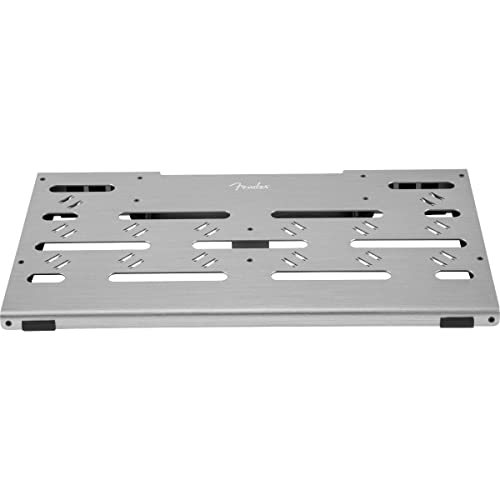
- Low-profile anodized aluminum chassis
- Universal power-supply mounting bracket
- Includes soft case for transport
Best For: Guitarists who want a compact, gig-ready board with easy carrying
Road-Case Compact Board
Pedaltrain Metro 24 HC with Hard Case

- 24 x 8 inch aluminum-alloy board
- Heavy-duty hard case included
- Angled frame design with cable accessories
Best For: Traveling players who want a compact board with stronger case protection
Clip-On Cable-Managed Board
GUITTO GPB-02 Medium Pedalboard

- Clip-on design avoids adhesive
- Built-in cable routing channels
- Includes heavy-duty carry bag
Best For: Players who want a clean, non-adhesive setup with easy cable management
Tour-Case Performance Board
Pedaltrain Classic 1 TC with Tour Case

- 22 x 12.5 inch aluminum-alloy board
- Tour-grade flight case included
- Built for frequent travel and gigs
Best For: Players who want a sturdy board with maximum-case-style protection
Powered Noise-Control Board
Donner Guitar Pedal Board with Built-in Power Supply

- Built-in power supply for clean, quiet power
- Individual short-circuit protection on each channel
- Lightweight aluminum-alloy board at 5.99 pounds
Best For: Players who want a compact powered board with simple, quiet pedal power
Expandable Compact Board
D'Addario XPND Core Pedalboard, Small Single Row

- Compact, lightweight aluminum base for touring
- Expandable with a separate expansion kit
- Cable management and pre-applied loop Velcro included
Best For: Guitarists who want a small, lightweight board with clean cable routing and future expandability
Angled Carry-Ready Board
22" x 12.5" Aluminum Alloy Guitar Pedal Board with Power Supply Tray

- Large 22 x 12.5 inch layout with angled access
- Under-board tray fits a large isolated power supply
- Includes carry bag, shoulder strap, and mounting accessories
Best For: Players who want a larger, angled pedalboard with room for an under-board power supply
Ultra-Light Travel Pick
Ghost Fire SPL-04 Aluminum Pedalboard

- 1.76 lb aluminum alloy build
- Fits about 8-10 pedals
- Carry bag with cable pocket
Best For: Traveling players who want a lightweight compact board
Power Tray Value Pick

- Steel board with angled layout
- Under-board tray fits larger power supplies
- Includes bag, strap, and Velcro
Best For: Players who want organized power-supply placement
Powered Expanded Pick
Vangoa PD-XL Powered Pedalboard

- Built-in isolated 12-output power supply
- 21 x 6.5 extended aluminum frame
- Backpack-style gig bag included
Best For: Musicians who want an all-in-one powered setup
Studio-Ready Aluminum Board – Fender Professional Pedal Board with Case, Medium
For players comparing professional instrument pedalboards, this Fender medium board keeps the focus on a low-profile aluminum chassis and a tidy, transportable setup. The precision-machined anodized-aluminum build and included soft case make it a practical choice if you want a clean pedal layout without extra bulk.
Best For: Guitarists who want a lightweight, low-profile board with a soft case for regular gigging.
Pros:
- Low-profile precision-machined anodized-aluminum chassis
- Universal mounting bracket fits most popular pedal power supplies
- Included soft case adds convenience for transport and storage
- Medium size offers a balanced footprint at 24 x 12.8 inches
Cons:
- Soft case is less protective than a hard or tour case
- Medium size may be limiting for larger pedal rigs
The Fender approach is straightforward: durable aluminum construction, simple power-supply compatibility, and an easy carry solution. If you want a professional-looking board that stays compact and organized, this is a solid fit.
Road-Case Compact Board – Pedaltrain Metro 24 HC with Hard Case
Among professional instrument pedalboards, the Pedaltrain Metro 24 HC stands out for its compact 24 x 8 inch aluminum-alloy frame and heavy-duty hard case. The angled frame design and included adhesive material and zip ties point to a setup built for organized pedals and dependable transport.
Best For: Players who need a compact board with a hard case for frequent travel.
Pros:
- 24 x 8 inch aluminum-alloy pedalboard offers a compact footprint
- Heavy-duty hard case adds stronger travel protection
- Angled frame design supports a practical pedal layout
- Includes adhesive material and zip ties for mounting and cable control
Cons:
- Compact size may not suit larger multi-pedal rigs
- Hard case adds bulk compared with a soft bag
This is a strong pick if protection and portability matter more than maximum board size. It keeps the footprint manageable while still giving you a more rugged case for rehearsals, gigs, and transit.
Clip-On Cable-Managed Board – GUITTO GPB-02 Medium Pedalboard
If you want professional instrument pedalboards without relying on adhesive pads, the GUITTO GPB-02 Medium offers a clip-on mounting system and built-in cable routing channels. Its aluminum-alloy construction and carry bag make it a practical option for players who want a clean setup that is easy to change and transport.
Best For: Musicians who prefer a non-adhesive board with organized cable routing and fast setup changes.
Pros:
- Clip-on design with adjustable fixture blocks avoids adhesive
- Built-in cable routing channels help keep wiring hidden and organized
- Aluminum alloy construction is built for durability and frequent travel
- Includes a heavy-duty carry bag for rehearsals and gigs
Cons:
- At 11.44 pounds, it is not the lightest option in the group
- Medium size may still be tight for larger pedal collections
This board is a smart choice if you want a tidy, non-destructive pedal mounting system. It leans into convenience and clean cable management, which is useful for players who change rigs often.
Tour-Case Performance Board – Pedaltrain Classic 1 TC with Tour Case
For buyers focused on professional instrument pedalboards, the Pedaltrain Classic 1 TC emphasizes a 22 x 12.5 inch aluminum-alloy board paired with a tour-grade flight case. That combination makes it a straightforward option when you want a pedalboard that is built around stronger protection for travel.
Best For: Guitarists who need a sturdy board with a tour case for frequent transport.
Pros:
- Aluminum-alloy pedalboard provides a durable platform
- Tour-grade flight case offers serious travel protection
- 22 x 12.5 inch size gives a practical mid-size footprint
- Well-suited to regular gigging and transit
Cons:
- Tour case adds more weight and bulk than a soft bag
- Limited supplied details leave fewer setup specifics to compare
This model is all about protection and reliability on the road. If your priority is keeping pedals secure in transit, the tour case makes this a strong, no-nonsense option.
Powered Noise-Control Board – Donner Guitar Pedal Board with Built-in Power Supply
For professional instrument pedalboards, this Donner unit is built for players who want an all-in-one setup with cleaner cabling and quieter power. Its built-in power supply is designed to reduce noise interference, while the aluminum-alloy body keeps the board lightweight enough for regular transport.
Best For: Players who want a compact powered board with simple, quiet pedal power.
Pros:
- Built-in power supply helps deliver clean, quiet power
- Each channel includes individual short-circuit protection
- Aluminum-alloy construction keeps weight reasonable at 5.99 pounds
- Compact 19 x 12 inch footprint suits smaller rigs
Cons:
- Fixed 19 x 12 x 1.8 inch size may feel tight for larger pedal collections
- Power connections are limited to barrel center-positive and USB types
This is a practical option if your priority is reducing power clutter and keeping your board tidy. It focuses on the essentials: built-in power, protection, and a manageable size for players who need a straightforward stage-ready layout.
Expandable Compact Board – D'Addario XPND Core Pedalboard, Small Single Row
Among professional instrument pedalboards, the D’Addario XPND Core is aimed at players who want a compact base that stays organized and can grow later. It uses a lightweight aluminum frame, pre-applied loop Velcro, and an integrated cable management system to keep the setup neat.
Best For: Guitarists who want a small, lightweight board with clean cable routing and future expandability.
Pros:
- Compact and lightweight aluminum frame is built for touring use
- Expandable design lets you add length with an expansion kit
- Integrated cable management helps keep wires secure and out of sight
- Pre-applied loop Velcro supports quick pedal swaps
Cons:
- Small single-row format may not suit larger pedal counts
- Expansion kit is sold separately
- Battery-powered listing does not indicate built-in pedal power
This board makes sense if you want a tidy, stage-ready layout without committing to a large footprint right away. It leans hard into portability and organization, with the option to scale up when your rig grows.
Angled Carry-Ready Board – 22" x 12.5" Aluminum Alloy Guitar Pedal Board with Power Supply Tray
If you need professional instrument pedalboards with room for a larger isolated power supply, this 22 x 12.5 inch aluminum-alloy model is built around practical stage use. The angled platform improves pedal access, and the under-board tray helps keep the power supply tucked away to save space.
Best For: Players who want a larger, angled pedalboard with room for an under-board power supply.
Pros:
- Large 22 x 12.5 inch board provides more layout space
- Under-board tray fits a large isolated power supply
- Angled design gives easier access to effect pedals
- Includes carry bag, shoulder strap, Velcro tapes, and Velcro straps
Cons:
- Heavier than the smallest option once the carry bag is included
- Aluminum and steel build is sturdy but less minimal than ultra-light boards
This board is a solid fit for players who want more surface area and better cable/power organization in one package. The included transport bag and mounting accessories make it especially convenient for moving from gig to gig.
Ultra-Light Travel Pick – Ghost Fire SPL-04 Aluminum Pedalboard
If you’re comparing professional instrument pedalboards for portability, the Ghost Fire SPL-04 stands out for its very light aluminum build and travel-friendly carry bag. It’s sized to fit a compact multi-pedal setup while still leaving room underneath and around the board for practical cable and storage needs.
Best For: Players who want a lightweight, easy-to-carry board for small to mid-size pedal rigs.
Pros:
- Weighs only 1.76 lb for easy transport.
- Holds about 8-10 effects pedals with a large bottom space.
- Includes a carry bag with internal strap and outer cable pocket.
- Patented foldable foot stand adds a helpful playing angle.
Cons:
- Compact size may be tight for larger rigs.
- No built-in power supply tray is listed.
The SPL-04 is a strong choice if your priority is keeping a pedalboard light, organized, and simple to move between home, rehearsal, and gigs.
Power Tray Value Pick – 18×11.8 Pedal Board with Tray
For professional instrument pedalboards that keep a rig tidy, this 18″ x 11.8″ steel board offers a practical layout with an integrated tray underneath for a power supply. The angled design makes foot access easier, while the included bag and mounting accessories help simplify setup and transport.
Best For: Guitarists who want a sturdy board with a dedicated place for a larger power supply.
Pros:
- Large 18″ x 11.8″ surface can mount up to 10 standard pedals in most cases.
- Under-board tray fits a power supply up to 11.8 x 4 x 1.89 inches.
- 8-degree angle improves pedal access.
- Includes carry bag, shoulder strap, Velcro tapes, and Velcro strap.
Cons:
- At 4.5 lb, it’s heavier than some aluminum boards.
- Steel construction may not appeal to players prioritizing ultra-light travel.
This is a practical pick if you want a sturdier, more organized board setup without giving up portability entirely.
Powered Expanded Pick – Vangoa PD-XL Powered Pedalboard
If you want professional instrument pedalboards with built-in power, the Vangoa PD-XL is designed to handle both clean distribution and a compact, travel-ready setup. Its extended aluminum frame gives you more room than a small board, while the integrated isolated supply reduces the need to carry separate power gear.
Best For: Players who want an all-in-one powered board for gigs, rehearsals, or studio use.
Pros:
- Built-in isolated power supply with 12 outputs.
- Selectable 9V/12V/18V outputs at 500mA each.
- Extended 21″ x 6.5″ size fits about 7-10 pedals.
- Lightweight aluminum build with foldable legs and a backpack-style gig bag.
Cons:
- Narrower width may limit wider pedal layouts.
- Weight and size may still be more than ultra-minimal boards.
For players who want power, protection, and portability in one package, the PD-XL is the most self-contained option in this group.
How We Picked These Professional Instrument Pedalboards
We focused on board size, construction, transport convenience, and how well each option supports real-world pedal layouts. For Professional Instrument Pedalboards, the most important factors are sturdy materials, practical cable routing, and enough room for power supplies, patching, and expression pedals without forcing awkward placement.
We also considered whether a board includes a case or bag, whether it supports clean mounting of a power supply, and whether the design suits quick setup at gigs or more permanent studio use.
Quick Comparison
Smaller boards are best for minimalist rigs, fly dates, and players using only a few core effects. Medium and extended boards work better for full-stage setups, stereo rigs, and players who need room for multiple stompboxes plus a power solution. Powered boards add convenience, while non-powered boards usually offer more flexibility if you already own a supply.
Key Buying Factors for Professional Instrument Pedalboards
Size and Layout
Measure your largest pedals first, then add space for patch cables and a power unit. A board that looks big enough on paper can feel cramped once angled plugs and side-mounted jacks are included.
Power Management
If you use isolated power, confirm the board has a tray, mounting area, or integrated supply that fits your setup. Professional Instrument Pedalboards should make power routing neat, not force cables to cross the playing surface.
Portability and Protection
A hard case is usually the safest choice for frequent travel and touring. Carry bags are lighter and easier for local gigs, but they offer less impact protection.
Build Material and Weight
Aluminum boards are popular because they are light, durable, and easy to move. Heavier steel designs can feel more rigid, but they may be less convenient for players who load in and out often.
Who Should Buy Which Professional Instrument Pedalboards?
Choose a compact board if you run a simple signal chain and value fast setup. Go with a medium or wide board if you need room for more pedals, switching, or pedalboard-mounted power. If you gig often, prioritize a model with a case, strong fasteners, and reliable cable management. Players building their first serious rig may prefer a powered board for convenience, while experienced users with custom supplies may want a non-powered board with more open layout options.
In short, the best choice depends on how many pedals you use, how often you travel, and whether you want the board to handle power as well as organization.
