Cleaning large, exterior, or hard-to-reach windows can be slow, awkward, and risky. The latest robotic window cleaners use suction, edge detection, spray systems, and safety tethers to handle much of the work for you.
We compared 10 notable models across suction power, navigation, cleaning coverage, station design, safety systems, and overall practicality so you can choose the right fit for your windows and routine.
Best 10 Robotic Window Cleaners Picks for 2026
Premium Dual-Stage Pick
HUTT 10 Premium Round-Square Robot

- Round wet-lift pad plus square dry-polishing pad
- 6500Pa suction and constant 55N pressure
- 30-minute UPS protection with 220kg safety rope
Best For: Edge-focused cleaning and polished-looking glass
Most Powerful Suction

- 10,000Pa suction with 10-stage protection
- Triple-spray wet wiping for everyday messes
- TruEdge 2.0 and six cleaning modes
Best For: Large, high, or hard-to-reach windows
Best Compact Option
Tosima W5 Adaptive-Suction Robot
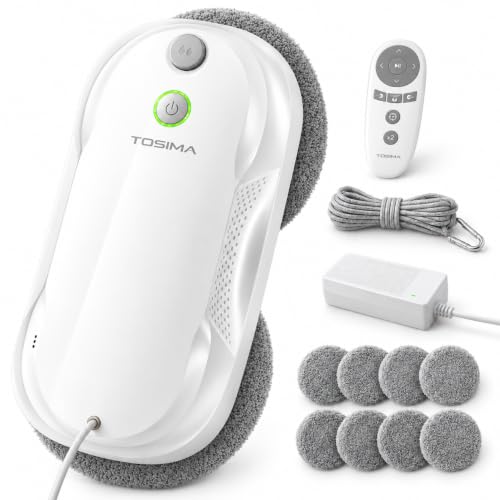
- Compact design for apartments and smaller homes
- Adaptive suction up to 6400Pa
- Dual spray, remote control, and 25-minute backup
Best For: Convenient everyday cleaning in space-conscious homes
Best Value Feature Set

- Four-nozzle dual-spray system
- Six modes with manual remote control
- 25-minute backup battery and safety monitoring
Best For: Customizable cleaning of windows, mirrors, and glass doors
Best High-Window Coverage

- 6400Pa variable suction with UPS protection
- Round body and dual-spray cleaning system
- Works on glass, mirrors, skylights, and tile walls
Best For: Tall and hard-to-reach windows
Best Portable Pick

- Up to 110 minutes in battery mode
- Three-nozzle wide-angle water spray
- 6-in-1 station with 12-stage protection
Best For: Portable cleaning and homes with hard-to-reach glass
Best Budget-Style Option
Automatic Dual-Spray Window Cleaner

- 3000Pa suction with edge detection
- Dual spray and 50 ml water tank
- Includes safety rope and 10 microfiber cloths
Best For: Routine cleaning of suitable flat glass surfaces
Best Edge-Cleaning Pick

- TruEdge scrubber spins up to 200 RPM
- 80 ml tank with triple spray nozzles
- Up to 110 minutes with dual power modes
Best For: Large windows and more thorough edge coverage
Premium Dual-Stage Pick – HUTT 10 Premium Round-Square Robot
For shoppers comparing robotic window cleaners, the HUTT 10 Premium stands out with a certified round-square dual-stage cleaning system. Its wet-lifting round pad and dry polishing square pad are designed to improve edge reach, corner coverage, and streak reduction.
Best For: Homeowners who want a feature-rich robot for windows, mirrors, shower doors, and sliding doors, including smaller glass surfaces.
Pros:
- Dual-stage wet cleaning and dry polishing system.
- Up to 6500Pa suction with constant 55N pressure.
- NAVI 7.0 mapping and 14 sensors support efficient, edge-aware cleaning.
- Includes a 220kg safety rope and up to 30 minutes of UPS adhesion protection.
Cons:
- Purified water is recommended, and cleaning liquid is not included.
- Tracks and pads need to stay appropriately clean and dry to maintain traction.
- Operation is rated at up to 65dB.
The HUTT is a strong all-around option when edge coverage and finish quality matter. Its two-pad approach adds versatility, though getting the best results requires careful pad preparation and water use.
Most Powerful Suction – ECOVACS WINBOT W2S PRO
The ECOVACS WINBOT W2S PRO is one of the most advanced robotic window cleaners in this lineup, pairing 10,000Pa suction with triple-spray wet wiping. Its route planning and edge-focused design are suited to large or difficult-to-reach glass.
Best For: Users cleaning floor-to-ceiling windows or other challenging glass surfaces who want strong suction, multiple cleaning modes, and app control.
Pros:
- 10,000Pa suction with a 10-stage safety system.
- Triple-spray nozzles help loosen dust, pollen, spots, and fingerprints.
- TruEdge 2.0 uses edge brushes and felt bristles for closer frame cleaning.
- Six cleaning modes and WIN-SLAM 4.0 path planning support flexible coverage.
Cons:
- It is a corded electric device, so power access is required during use.
- The safety tether must be attached and the manual followed.
- Its round form may provide less corner access than a square-bodied design.
Choose the WINBOT W2S PRO if suction strength, wet wiping, and smart route planning are top priorities. It offers broad functionality, but users should still plan around cord management and tether setup.
Best Compact Option – Tosima W5 Adaptive-Suction Robot
The Tosima W5 is a compact choice among robotic window cleaners, making it easier to handle and store in apartments, condos, and smaller homes. It combines adaptive suction, dual spray, intelligent navigation, and remote control for straightforward operation.
Best For: Apartment dwellers and homeowners who want a lightweight, space-conscious window robot with automatic spraying and simple controls.
Pros:
- Compact design is convenient to handle and store.
- Adaptive suction reaches up to 6400Pa and adjusts to the surface.
- Dual-spiral cleaning and dual spray help address dust, fingerprints, and stains.
- Includes a 220kg safety rope and up to 25 minutes of emergency battery protection.
Cons:
- Its battery backup is rated for up to 25 minutes, shorter than some alternatives.
- Remote control is the primary listed control method.
- The supplied cleaning path width is 6 inches.
The W5 balances useful cleaning features with a smaller footprint. It is a practical fit where storage and ease of handling matter more than the strongest suction or longest backup time.
Best Value Feature Set – WA9C Pro Multi-Mode Robot
The WA9C Pro offers a practical feature set for shoppers seeking robotic window cleaners with adjustable spray and remote control. Its four-nozzle system, multiple path modes, and safety monitoring are designed for routine cleaning of windows, mirrors, and glass doors.
Best For: Users who want configurable spray levels, manual spot cleaning, and several navigation patterns in a compact window-cleaning robot.
Pros:
- Four precision nozzles provide broad, even water coverage.
- Six cleaning modes include N-shape, Z-shape, and manual operation.
- Air-pressure monitoring and a drop sensor support secure glass adhesion.
- Includes a 25-minute backup battery, safety rope, replacement nozzles, and four mops.
Cons:
- Listed suction ranges from 2600 to 3200Pa, lower than the other models here.
- The safety rope must be anchored securely for overhead work.
- It is listed at 6 pounds, making it heavier than some competing options.
The WA9C Pro is appealing when control and included accessories are more important than maximum suction. Its adjustable spray and manual mode can help target problem areas, while the lower suction rating makes proper safety setup especially important.
Best High-Window Coverage – X6 Window Cleaning Robot
The X6 is a practical choice among robotic window cleaners for homes and offices with tall, wide, or hard-to-reach glass. Its 6400Pa variable suction, dual-spray system, edge detection, and round design are intended to cover glass, mirrors, skylights, and tile walls with less ladder work.
Best For: High windows, floor-to-ceiling glass, skylights, mirrors, and tile walls.
Pros:
- 6400Pa variable suction and a heavy-duty safety cable rated for at least 150 pounds.
- Dual spray nozzles help wet glass evenly, while the round body is designed to reduce corner blind spots.
- AI navigation, edge detection, remote control, and a UPS function provide convenient operation and power-loss protection.
- Includes a 12-month warranty and is rated to clean a 3.3-square-meter window in about seven minutes.
Cons:
- The 85 ml water capacity may require refilling for larger cleaning jobs.
- At 63 dB, it may be noticeable during operation.
- The supplied guidance recommends moderate water use and replacing dirty pads to avoid smears.
Choose the X6 when safety features, broad surface compatibility, and strong suction matter more than a fully automated pad-washing station. It is especially suited to routine maintenance of difficult-to-reach residential or office windows.
Best Fully Automated Station – ECOVACS WINBOT W3 OMNI
The ECOVACS WINBOT W3 OMNI stands out among robotic window cleaners for its automatic cleaning station, which washes the mop pads after use. Its app control, WIN-SLAM 5.0 navigation, triple-nozzle spray, and edge-cleaning technology make it a premium option for routine care of large glass surfaces.
Best For: Large windows, glass doors, high-rise windows, and users who want automated mop washing.
Pros:
- Automatic station washes the wiping pads with 16 high-pressure nozzles in about one minute.
- WIN-SLAM 5.0 supports dynamic obstacle avoidance and Fast, Intensive, and Zone cleaning modes.
- TruEdge technology actively cleans toward edges and corners, with automatic scrubber retraction.
- Triple spray nozzles provide wide-angle coverage to help loosen dirt on large glass panels.
Cons:
- It is designed for glass surfaces and listed for indoor use.
- Its 12.22 kg listed weight makes it less convenient to move than smaller units.
- App control may be less straightforward for shoppers who prefer a physical remote.
The W3 OMNI is the strongest fit when minimizing hands-on maintenance is the priority. Its self-cleaning station and edge-focused design add convenience for frequent cleaning, particularly across larger indoor glass areas.
Best Budget-Friendly Remote Control – HCR-10 Window Cleaning Robot
The HCR-10 is a straightforward option among robotic window cleaners for shoppers who want automatic water spraying and remote operation without a more complex station. Its 5600Pa suction, double spiral cleaning head, path planning, and safety rope support cleaning windows, class doors, and tiles.
Best For: Smooth windows, tile surfaces, class doors, and users who prefer remote control.
Pros:
- 5600Pa suction supports automatic or manual water-spraying modes.
- Three cleaning modes provide automatic path planning and manual directional control.
- Double spiral cleaning heads and ultra-fine fiber cloths are designed for deeper cleaning without scratching.
- Includes a 300-pound-capacity safety rope, remote, water container, 10 cleaning pads, and four cleaning rings.
Cons:
- The 30 ml water capacity is relatively small for extended cleaning sessions.
- Its rectangular form factor may be less suited to edges than a round design.
- It has a listed 30-minute battery life and is intended for smooth surfaces.
The HCR-10 makes sense for buyers seeking core robotic cleaning functions, a substantial safety rope, and included replacement supplies. Consider it for smaller or occasional jobs where remote control is preferable to app-based operation.
Best Portable Pick – ECOVACS WINBOT W2 PRO Omni
The ECOVACS WINBOT W2 PRO Omni is a versatile choice among robotic window cleaners, especially for homes where portability and flexible power matter. It can run on battery for up to 110 minutes or stay plugged in for continuous cleaning, while its three-nozzle spray system and WIN-SLAM 4.0 path planning support more systematic coverage.
Best For: Rooms without convenient outlets, large glass areas, and users who want a portable station with integrated controls, charging, storage, and safety features.
Pros:
- Battery mode provides up to 110 minutes of cleaning, while plugged-in mode supports extended sessions.
- Three wide-angle spray nozzles work with the wet cloth to distribute cleaning solution across the glass.
- WIN-SLAM 4.0 supports organized routes, edge detection, and cleaning across framed, frameless, small, and floor-to-ceiling windows.
- The 6-in-1 multifunction station combines control, charging, stabilization, storage, and portability.
Cons:
- The unit is designed for indoor window cleaning and requires suitable glass surfaces.
- The extensive station and safety features may be more than needed for occasional, small-window cleaning.
Choose the W2 PRO Omni if you value flexible charging and an all-in-one setup. Its 12-stage protection system and intelligent navigation make it a strong option for tackling varied indoor glass areas with less manual repositioning.
Best Budget-Style Option – Automatic Dual-Spray Window Cleaner
This automatic window cleaner is a practical option among robotic window cleaners for smooth glass surfaces when you are comfortable with a corded setup. Its dual spray system, edge detection, 3000Pa suction, and remote control are designed for windows, glass doors, mirrors, and compatible skylights.
Best For: Users cleaning suitable flat glass who want dual water spray, remote operation, and a corded robot with emergency battery backup.
Pros:
- Dual atomizing nozzles and a 50 ml water tank help spread moisture across the glass.
- Three cleaning paths, edge detection, and a pressure sensor support coverage on frameless windows.
- 3000Pa suction, a safety rope, and a 20-minute UPS backup provide layered fall protection.
- Includes 10 microfiber cloths and supports remote control operation.
Cons:
- The robot must remain plugged in; the UPS battery is for emergency holding rather than cordless cleaning.
- It is not recommended for curved glass, thick trim, raised decorative elements, or horizontal surfaces.
- Heavy grime, dried mud, paint, oil, or bird droppings should be pre-cleaned manually.
This model makes the most sense for routine maintenance on compatible smooth glass. Follow the two-pass cleaning recommendation, use the safety rope every time, and pre-clean stubborn stains to help maintain suction.
Best Edge-Cleaning Pick – ECOVACS WINBOT W2S Omni
The ECOVACS WINBOT W2S Omni stands out among robotic window cleaners for its focus on edges and corners. TruEdge technology, four-sided frame detection, triple wide-angle spray, and WIN-SLAM 4.0 route planning are paired with a portable 6-in-1 station for organized cleaning across compatible framed, frameless, and tilted flat-glass windows.
Best For: Larger or hard-to-reach windows where edge coverage, longer sessions, and convenient room-to-room transport are priorities.
Pros:
- TruEdge technology lowers the edge scrubber near frames and spins at up to 200 RPM to address buildup along edges and corners.
- Advanced frame detection supports cleaning along all four sides of the window.
- Three spray nozzles and the enlarged 80 ml tank support longer cleaning sessions with fewer refills.
- Dual power modes offer up to 110 minutes of cordless cleaning or extended operation on AC power.
Cons:
- Performance depends on using compatible flat-glass surfaces and following the product’s safety requirements.
- The feature-rich station may be unnecessary for shoppers seeking a simple cleaner for a few small windows.
The W2S Omni is a compelling choice when edge work is a major concern. Its combination of edge scrubbing, organized navigation, larger water capacity, and portable station is aimed at reducing the amount of follow-up wiping required.
How We Picked These Robotic Window Cleaners
We focused on the features that matter most during real window cleaning: dependable glass adhesion, consistent movement, edge handling, water distribution, safety backup, and ease of setup. Models with stronger suction ratings may offer more holding power, but suction alone does not guarantee better cleaning. Navigation, pad contact, spray control, and the robot’s ability to avoid frames or obstacles are equally important.
We also considered whether each unit is suited to interior glass, exterior windows, tiles, doors, or larger panes. Multifunction stations, charging capability, automatic cleaning features, and portable designs can add convenience, particularly for frequent users.
Quick Comparison
| Feature | What to look for | Why it matters |
|---|---|---|
| Suction | About 3,000Pa to 10,000Pa ratings | Supports adhesion, especially on smooth vertical glass |
| Spray system | Single, dual, or multi-nozzle designs | Helps loosen marks and distribute cleaner |
| Navigation | Edge detection and intelligent path planning | Improves coverage and reduces missed areas |
| Safety | Tether, backup power, and alerts | Reduces the risk of drops during use |
| Station | Charging, washing, or drying functions | Can simplify repeated cleaning sessions |
Key Buying Factors for Robotic Window Cleaners
Glass Compatibility and Surface Limits
Check the manufacturer’s requirements before buying. Most units are intended for smooth, relatively flat glass, while some also support tiles or doors. They may perform poorly on heavily textured, frosted, wet, cracked, or unusually narrow surfaces. Confirm the minimum window dimensions and whether the robot can work on framed glass.
Suction, Pads, and Cleaning Performance
Higher advertised suction can provide a useful margin, but washable microfiber pads and effective pressure against the glass often have a greater effect on results. Look for replacement pad availability and clear instructions for applying cleaning solution. Excess liquid can reduce traction or leave streaks, so controlled spraying is preferable to oversaturation.
Navigation and Convenience
Edge detection, route planning, remote controls, and app connectivity can make a robot easier to supervise. A multifunction station may be worthwhile if you clean frequently, while a compact portable model may be better for occasional use or multiple locations.
Safety Provisions
Use the supplied safety tether every time, even when suction appears strong. Battery backup, audible alerts, automatic return functions, and reliable frame detection are valuable safeguards. These devices still require supervision, particularly outdoors, on unfamiliar surfaces, or near open windows.
Who Should Buy Which Robotic Window Cleaners?
Choose a high-suction model if you regularly clean large exterior panes or want additional adhesion confidence. A dual- or multi-spray unit is a practical choice for dusty glass and frequent maintenance. Models with advanced navigation are best for broad windows where complete, orderly coverage matters.
Consider a station-equipped ECOVACS model if you prioritize charging, storage, or more automated maintenance. A simpler 3,000Pa-to-6,400Pa cleaner may suit apartments, interior windows, tiles, and occasional use at a lower level of complexity. Regardless of model, measure your windows, verify surface compatibility, keep pads clean, and supervise every cleaning cycle.
