Great video can still fail if the audio sounds thin, noisy, or distant. A good shotgun microphone for filmmaking helps you capture cleaner dialogue, tighter focus, and more usable production sound right at the camera.
Below, we’ve rounded up 10 strong options for different rigs, budgets, and recording setups so you can pick the right mic without guessing.
Best 10 Shotgun Microphone for Filmmaking Picks for 2026
Premium On-Camera Choice
RØDE VideoMic Pro+ for Filmmaking

- On-camera shotgun with high-pass filter, boost, pad, and safety channel
- Automatic power and multiple power options improve shoot flexibility
- Rycote Lyre suspension helps reduce handling noise
Best For: Run-and-gun filmmakers and DSLR content creators
Pro XLR Workhorse
Sennheiser MKE 600 with Shock Mount

- Highly directive shotgun mic for camcorders and video DSLRs
- Switchable low-cut filter and low battery indicator add utility
- Runs on phantom power or battery and includes a shockmount
Best For: Camera rigs and filmmakers using XLR connections
Compact Mobile-Friendly Pick
Sennheiser MKE 400 for Cameras
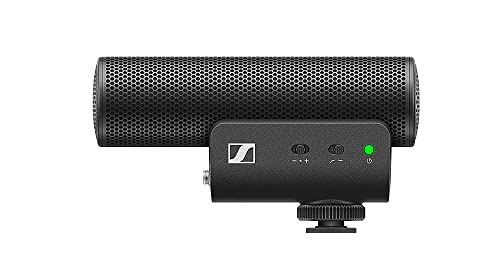
- Super-cardioid on-camera shotgun for DSLR, mirrorless, and mobile use
- Built-in wind protection, suspension mount, and low-cut filter
- TRS/TRRS connectors and headphone output support monitoring
Best For: Creators needing a compact mic for cameras and smartphones
Best Lightweight Boom Option
Rode NTG-1 Shotgun Condenser Microphone

- 105g body helps reduce boom fatigue
- Supercardioid pattern for focused dialogue capture
- 80Hz high-pass filter cuts low-end rumble
Best For: Lightweight boom recording on film and video shoots
Best Tiny On-Camera Mic
RØDE VideoMicro II Ultra-Compact Shotgun Mic

- 80mm long and 39g for easy portability
- Directional pickup focuses on your subject
- Helix mount helps reduce handling noise
Best For: Compact on-camera audio for cameras and mobile devices
Best Control-Heavy Budget Pick
COMICA VM20 Shotgun Microphone with OLED Display

- OLED screen shows battery and power status
- 75Hz/150Hz low-cut filters reduce unwanted noise
- Rechargeable battery lasts up to 60 hours
Best For: Creators who want onboard controls and wide device compatibility
Compact Hybrid Creator Pick

- Ultra-light 60g on-camera shotgun mic
- 3.5mm camera output plus USB-C output
- Includes HELIX mount and windshield
Best For: Creators who want one compact mic for camera and USB workflows
Pro XLR Interview Choice
BOYA BY-BM6060 XLR Shotgun Mic

- XLR shotgun mic with 24-48V phantom power support
- Runs on one AA battery if needed
- Includes shock mount and both foam and fur windscreens
Best For: Interview, documentary, and ENG/EFP shooters with XLR rigs
Budget Universal Starter
Movo VXR10 Universal Shotgun Mic

- Universal 3.5mm shotgun mic for many devices
- No battery required and includes shock absorption
- Comes with windscreen, case, and TRS/TRRS cables
Best For: Budget creators needing a simple, directional starter mic
Premium On-Camera Choice – RØDE VideoMic Pro+ for Filmmaking
If you want a shotgun microphone for filmmaking that stays practical on fast-moving shoots, the RØDE VideoMic Pro+ is built for on-camera use with a compact shotgun design and digital switching. Its high-pass filter, high-frequency boost, pad, and safety channel give you more control at the source, while the included suspension system helps keep handling noise in check.
Best For: Run-and-gun filmmakers, DSLR users, and content creators who want flexible on-camera audio with quick power options.
Pros:
- Automatic power function turns the mic off when unplugged from the camera.
- Can run from the included LB-1 rechargeable battery, 2 x AA batteries, or Micro USB power.
- Rycote Lyre suspension system is included for reduced handling noise.
- Digital switching adds source-level control to reduce post-production time.
Cons:
- Uses a 3.5 mm jack connection rather than XLR.
- Designed for camera mounting, so it is less suited to boom-pole workflows.
This is a strong choice if you want a feature-rich on-camera microphone with practical power flexibility and built-in controls. It suits filmmakers who prioritize convenience without giving up tools for shaping the recorded signal.
Pro XLR Workhorse – Sennheiser MKE 600 with Shock Mount
Sennheiser MKE 600 Shotgun Microphone with Auray Universal Shock Mount and Windshield, XLR
Check Price On AmazonThe Sennheiser MKE 600 is a practical shotgun microphone for filmmaking when you want a highly directive XLR option for camcorders or video DSLRs. It offers a switchable low-cut filter, phantom or battery power, and a low battery indicator, making it a straightforward tool for camera-based production setups.
Best For: Filmmakers using camcorders or XLR-based camera rigs who want a compact, directional mic with flexible powering.
Pros:
- Highly directive design in a compact size for focused pickup.
- Switchable low-cut filter helps manage unwanted low-end noise.
- Can be powered by phantom power or battery.
- Includes a shockmount for camera shoe mounting.
Cons:
- XLR connectivity may require compatible inputs or adapters.
- Does not include the same on-mic digital controls found on some camera mics.
If your filmmaking setup already leans toward XLR gear, this mic keeps things simple and directional. It is a solid pick for users who want a compact shotgun with dependable core features rather than extra onboard processing.
Dual-Power Budget Classic – RØDE NTG-2 for Film Audio
The RØDE NTG-2 is a straightforward shotgun microphone for filmmaking if you need a dual-powered condenser with a supercardioid pattern. It runs on phantom power or a single AA battery and includes a high-pass filter, giving you a versatile option for film, video, and voice-over work.
Best For: Filmmakers who want a lightweight shotgun mic with battery or phantom-power flexibility.
Pros:
- Dual power support works with P48 phantom power or a single AA battery.
- Highly directional supercardioid pickup pattern helps isolate the source.
- Built-in 80Hz high-pass filter can reduce low-frequency rumble.
- Lightweight metal construction is easy to handle on set.
Cons:
- Requires an XLR-style setup for use with powered audio gear.
- Does not include the on-camera convenience features found on newer compact mics.
This is a reliable, no-frills option for shooters who value flexibility and directionality over extra onboard features. It remains a sensible choice for production work where clean isolation and simple power options matter most.
Compact Mobile-Friendly Pick – Sennheiser MKE 400 for Cameras
The Sennheiser MKE 400 is a compact shotgun microphone for filmmaking when you want isolated in-camera audio with simple, flexible connectivity. Its super-cardioid pickup, internal suspension mount, built-in low-cut filter, and headphone output make it a practical fit for DSLR, mirrorless, and mobile setups.
Best For: Creators who shoot with cameras or phones and want a compact directional mic with monitoring.
Pros:
- Highly directional super-cardioid design helps isolate speech and on-camera sound.
- Integrated wind protection and internal suspension mount help reduce handling noise.
- 3-step sensitivity switch and built-in low-cut filter add control.
- Includes interchangeable TRS and TRRS connectors plus a headphone output jack.
Cons:
- Battery-powered design means you need to manage AAA battery use.
- Compact on-camera format is less suited to boom-style placement.
For creators who want one mic to cover cameras and mobile devices, the MKE 400 is especially convenient. It focuses on practical features that help you monitor and shape audio without complicating a small rig.
Best Lightweight Boom Option – Rode NTG-1 Shotgun Condenser Microphone
If you need a shotgun microphone for filmmaking that stays light on a boom and still delivers clean dialogue, the Rode NTG-1 is built for that job. Its full-frequency, low-noise condenser design makes it a solid fit for film, video, television, and broadcast recording.
Best For: Boom operators and filmmakers who want a lightweight, wired shotgun mic for dialogue capture.
Pros:
- Very light at 105g, which helps reduce fatigue on long shoots
- Supercardioid pickup and transparent sound suit filmmaking and voice-over work
- 80Hz high-pass filter helps cut traffic rumble and other low-end noise
- Includes a foam windshield for basic wind and plosive reduction
Cons:
- Wired XLR setup may be less convenient for quick run-and-gun use
- Only a foam windshield is included; a furry windcover is sold separately
Overall, the NTG-1 is a practical choice when weight and clarity matter more than built-in extras. It is especially appealing if you want a straightforward boom mic for production audio with a simple, pro-style signal path.
Best Tiny On-Camera Mic – RØDE VideoMicro II Ultra-Compact Shotgun Mic
The RØDE VideoMicro II is a shotgun microphone for filmmaking when you want better camera audio without adding much size or weight. Its highly directional pickup, ultra-compact body, and included isolation mount make it a strong fit for simple on-camera setups.
Best For: Creators who want a tiny on-camera shotgun mic for cameras or mobile devices.
Pros:
- Extremely compact at 80mm long and 39g for easy travel and packing
- Directional pickup helps isolate your subject from surrounding noise
- Helix isolation mount reduces knocks, bumps, and handling noise
- Includes built-in shoe mount and cable management for a tidy rig
Cons:
- 3.5mm jack connection is more basic than XLR-style pro audio setups
- Designed for on-camera use, so it is less suited to longer boom placements
If you want a minimal setup that still improves video audio, the VideoMicro II keeps things simple. It is a smart pick for shooters who value portability and a clean, lightweight rig over advanced controls.
Best Control-Heavy Budget Pick – COMICA VM20 Shotgun Microphone with OLED Display
The COMICA VM20 is a shotgun microphone for filmmaking that adds extra control features for creators who want more than a basic plug-in mic. With an OLED battery display, switchable low-cut filters, and adjustable gain, it is designed for flexible shooting in a variety of setups.
Best For: Filmmakers and content creators who want onboard controls, rechargeable power, and broad compatibility.
Pros:
- OLED screen shows battery status and real-time power monitoring
- 75Hz and 150Hz low-cut filters help reduce hum and wind-related noise
- Stepless gain control lets you fine-tune recording level
- Rechargeable battery supports long runtime and can be used while charging
Cons:
- 3.5mm connection is less direct for pro XLR-based production workflows
- Best suited to devices listed in its compatibility range rather than every camera setup
The VM20 stands out if you want more control at the mic itself without moving up to a larger system. It offers a practical mix of portability, monitoring, and noise-reduction tools for video recording and field use.
Compact Hybrid Creator Pick – RØDE VideoMic GO II Helix
If you want a shotgun microphone for filmmaking that stays simple without feeling basic, the RØDE VideoMic GO II Helix is a strong on-camera option. It is ultra-lightweight, uses a super-cardioid pickup pattern, and gives you both a 3.5mm output for cameras and a USB-C output for phones, tablets, or computers.
Best For: Filmmakers and creators who need one compact mic for camera and USB recording setups.
Pros:
- Very lightweight at just 60g, so it adds minimal bulk on-camera.
- Dual-output design supports both camera use and direct USB recording.
- No battery required and no complicated switches to manage.
- Includes HELIX isolation mount and windshield for handling and wind noise reduction.
Cons:
- It is an on-camera mic, so it is best suited to closer-range recording.
- Advanced features require RØDE software to unlock.
For streamlined filmmaking setups, this model stands out because it is easy to carry, easy to power, and easy to adapt across devices. It is especially appealing if you want a simple mic that can move from camera work to USB-based content creation.
Pro XLR Interview Choice – BOYA BY-BM6060 XLR Shotgun Mic
The BOYA BY-BM6060 is a shotgun microphone for filmmaking built for video production, broadcast, interviews, and documentary-style recording. Its super-cardioid pattern and XLR output make it a practical choice when you need a more traditional pro audio setup with phantom power support.
Best For: Camera crews and filmmakers who want an XLR shotgun mic for interviews, ENG/EFP, and outdoor shoots.
Pros:
- XLR connection supports 24-48V phantom power for professional rigs.
- Can also run on one AA battery when phantom power is not available.
- Includes a shock mount, fur windshield, and foam windshield.
- Super-cardioid design is aimed at focused pickup for production use.
Cons:
- Requires XLR-compatible gear for the main use case.
- Heavier than compact on-camera consumer mics at 230g.
If your filmmaking workflow already centers on cameras, mixers, or recorders with XLR input, this BOYA model offers the most production-oriented feature set in the group. It is especially well matched to interviews and outdoor field recording where accessories and power flexibility matter.
Budget Universal Starter – Movo VXR10 Universal Shotgun Mic
The Movo VXR10 is a universal shotgun microphone for filmmaking that covers a lot of devices without adding much weight or complexity. It connects over 3.5mm, uses a directional pickup, and is designed for creators who want an affordable external mic for cameras, phones, and everyday video work.
Best For: Budget-minded creators who want a simple directional mic for vlogging, interviews, and mobile filmmaking.
Pros:
- Works with a wide range of devices, including cameras, smartphones, tablets, and laptops.
- No battery required, keeping setup quick and simple.
- Built-in shock mount helps reduce bumps and handling noise.
- Includes windscreen, carrying case, and both TRS/TRRS cables.
Cons:
- Smartphones may need an adapter for USB-C or Lightning connections.
- Some cameras do not support external mics, so compatibility should be checked first.
This is the most flexible entry-level pick here for creators who want a plug-and-record solution. It is a sensible choice if you are building a basic filmmaking kit and need directional audio without paying for a more specialized pro setup.
How We Picked the Best Shotgun Microphone for Filmmaking
We focused on microphones that make sense for real filmmaking use: clear voice pickup, practical mounting options, dependable off-axis rejection, and compatibility with common cameras and recorders. We also considered power requirements, included accessories, and whether each model suits run-and-gun shooting, interviews, or more controlled productions.
Quick Comparison
In general, compact on-camera models are the easiest choice for small DSLR, mirrorless, and mobile rigs. XLR shotgun microphones are better when you need cleaner signal routing, longer cable runs, and more control on set. If you want a lightweight all-in-one solution, look at camera-powered options; if you are building a more serious audio chain, choose a microphone that works with phantom power or multi-power setups.
Key Buying Factors for a Shotgun Microphone for Filmmaking
Pickup Pattern and Directivity
Most shotgun mics use a supercardioid or lobar-style pattern to emphasize the subject in front of the camera while reducing room noise. For filmmaking, that matters most when the mic is mounted on-camera or just out of frame.
Power and Connection Type
Check whether your camera needs 3.5mm TRS, TRRS, USB, or XLR. A Shotgun Microphone for Filmmaking should match your workflow now and leave room to grow later. XLR usually offers more professional flexibility, while 3.5mm and USB are simpler for smaller setups.
Size, Weight, and Mounting
Smaller microphones are easier to balance on lightweight rigs and gimbals. Larger shotguns may offer more features or better reach, but they can also add bulk and require a more stable shock mount.
Noise Handling and Accessories
Look for shock mounts, wind protection, and useful filters if you shoot outdoors or in unpredictable environments. Built-in high-pass filters, pads, and safety channels can help, but they do not replace proper placement and wind control.
Who Should Buy Which Shotgun Microphone for Filmmaking?
If you want the simplest upgrade for a mirrorless or DSLR setup, choose an ultra-compact on-camera model. If you shoot interviews, indie films, or location work and want more serious audio control, an XLR shotgun is the better long-term investment. Creators who move between camera, phone, and USB recording should prioritize versatile connectivity over maximum size or range.
For most buyers, the best choice is the mic that fits your recording chain, not the one with the longest spec sheet. Match the connector, power source, and form factor to your actual shoots, and you’ll get better results fast.
