Smart telescopes make it easier to capture the night sky without a steep learning curve. For nature enthusiasts, they can turn a backyard session or remote getaway into a simple, rewarding experience.
This roundup highlights the best smart telescopes for nature enthusiasts in 2026, with an eye on portability, automation, image quality, and real-world usability.
Best 10 Smart Telescopes for Nature Enthusiasts Picks for 2026
Pocketable Go-To Imaging Pick
DWARFLAB Dwarf Mini Smart Telescope

- 1.85 lb compact design for easy carry.
- App control with built-in sky atlas.
- Auto GOTO, EQ mode, and 90-second exposures.
Best For: Travel, camping, and beginner-friendly sky imaging
Ultra-Portable All-in-One Option
ZWO Seestar S30 Pro Smart Telescope
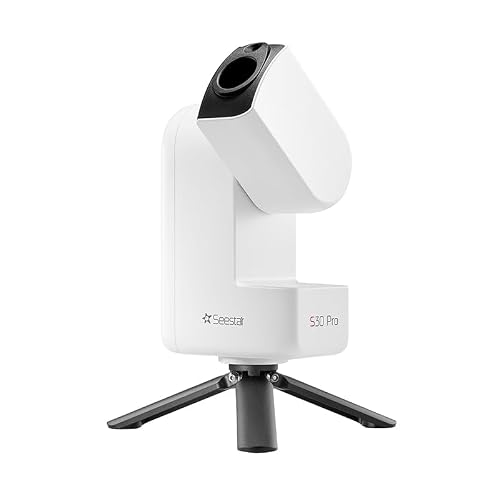
- App-guided auto tracking and object finding.
- 4K UHD imaging with dual-camera system.
- 128GB storage plus anti-dew protection.
Best For: Beginner-friendly sky imaging and daytime telephoto shots
Deep-Sky App-Controlled Choice
UNISTELLAR Equinox 2 Smart Telescope

- 114 mm aperture with f/4 optics.
- RAW/FITS export for advanced processing.
- Up to 11 hours of battery life.
Best For: Deeper-sky observing and app-only control
Premium Home Observatory Pick
Celestron Origin Intelligent Home Observatory

- 6-inch RASA optics with fast f/2.2 design.
- AI stacking and real-time processing.
- StarSense setup gets you observing in minutes.
Best For: Permanent, high-end automated astroimaging at home
Portable Day-and-Night Pick
DWARFLAB Dwarf 3 Smart Telescope

- 3 lb body is easy to pack for trips
- Dual lens setup works for wildlife and stars
- App-based tracking and cloud processing simplify use
Best For: Hikers and travelers who want one compact scope for nature and night sky shots
Immersive Premium Observer
Odyssey PRO UNISTELLAR Smart Telescope

- Eyepiece plus app control offers an immersive viewing style
- Automatic alignment and GoTo speed up setup
- RAW/FITS export and citizen-science tools add advanced value
Best For: Users who want a premium smart telescope with an eyepiece and advanced imaging options
Long-Session Stargazing Choice
Vaonis Vespera 3 Smart Telescope

- 11-hour battery and 115 GB storage support long outings
- Automatic stacking and multi-night capture reduce effort
- CovalENS mosaic mode delivers wide astrophotography frames
Best For: Beginners and families planning long, easy astrophotography sessions
Portable Birdwatching Smart Scope
Smart Telescope Portable Digital Electronic Telescopes Refractor Telescope
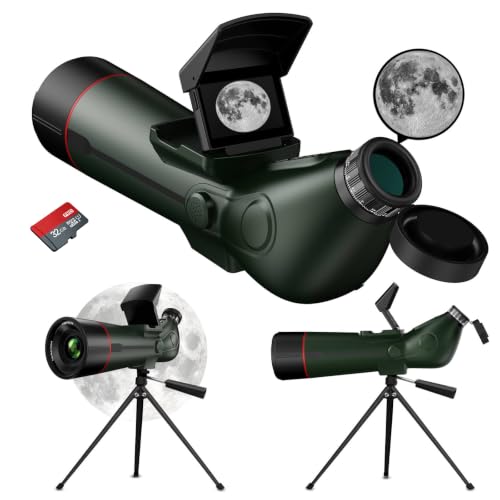
- 360° rotating tripod and carry case included
- Manual focus with IR and night-mode adjustments
- Rugged build with glare-reducing sun hood
Best For: Birdwatchers and hikers who want a portable smart scope for stable wildlife viewing.
Easy App-Controlled Astronomy Pick
ZWO Seestar S30 Pro Smart Telescope, App-Controlled Astrophotography
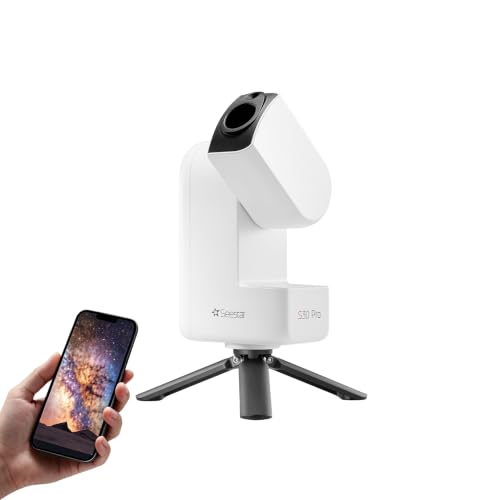
- App-guided GOTO tracking and one-tap imaging
- Apochromatic optics plus light pollution filters
- Portable 3.64 lb design with anti-dew protection
Best For: Beginners who want a compact, app-controlled smart telescope for astronomy and occasional nature viewing.
Premium Deep-Sky Smart Observatory

- 12.5 MP sensor with 50 MP mosaic output
- BalENS enhancement and master dark calibration
- Includes hard case, tripod, and 11-hour battery
Best For: Advanced astrophotographers who want high-resolution deep-sky imaging with full app control and manual settings.
Pocketable Go-To Imaging Pick – DWARFLAB Dwarf Mini Smart Telescope
If you want one of the most compact smart telescopes for nature enthusiasts who also like casual stargazing, the DWARFLAB Dwarf Mini is built for grab-and-go use. Its lightweight body, app-based setup, and auto GOTO make it easy to take on hikes, camping trips, or quick dark-sky outings without a complicated learning curve.
Best For: Backpack-friendly observing and beginner-friendly sky imaging on the move.
Pros:
- Very portable at 1.85 lb, with a compact all-in-one design.
- App control and built-in sky atlas simplify finding targets quickly.
- Auto GOTO, 360° pivot, and EQ mode add flexibility for imaging.
- Up to 90-second exposures and a light pollution filter help capture fainter detail.
Cons:
- Uses a 30 mm objective, so it is not aimed at large-aperture viewing.
- Best suited to app-led imaging rather than traditional eyepiece observing.
Overall, this is a smart choice if portability matters more than size and you want an easy way to capture the night sky from travel-friendly locations.
Ultra-Portable All-in-One Option – ZWO Seestar S30 Pro Smart Telescope
Among smart telescopes for nature enthusiasts, the Seestar S30 Pro stands out as an easy portable option for quick sky sessions and daytime telephoto use. The app-guided setup, automatic tracking, and built-in image processing features make it especially appealing if you want strong results without spending time on manual alignment or complex astrophotography workflows.
Best For: Easy smartphone-controlled imaging for beginners who want one device for sky and daytime use.
Pros:
- Automatic object finding and tracking through the app.
- Built-in dual-camera system with 4K UHD imaging support.
- 128GB storage, anti-dew protection, and up to 6 hours of battery life.
- Light pollution filter and smart imaging modes help simplify capture.
Cons:
- Not suitable for viewing planets, according to the supplied notes.
- Requires a smartphone or tablet to use the Seestar app.
For users who want a compact, highly automated telescope that is easy to take on trips, this model is a practical all-in-one imaging tool.
Deep-Sky App-Controlled Choice – UNISTELLAR Equinox 2 Smart Telescope
If you are comparing smart telescopes for nature enthusiasts who want deeper sky detail, the UNISTELLAR Equinox 2 offers a larger 114 mm aperture and app-only operation. It is designed for quick startup, precise GoTo targeting, and detailed image capture, while the RAW/FITS export support makes it a stronger fit for users who want more room to process their observations later.
Best For: App-only observing with deeper-sky performance and serious data export options.
Pros:
- 114 mm aperture and f/4 optics support richer deep-sky views.
- Automatic alignment and motorized Alt-Az mount enable fast setup.
- RAW/FITS export and a large object database suit advanced users.
- Up to 11 hours of battery life supports longer observing sessions.
Cons:
- No eyepiece, so all viewing is through a phone or tablet.
- Larger and heavier than ultra-compact smart telescope options.
This is a strong pick if you want a more capable imaging-oriented telescope and do not mind giving up traditional eyepiece viewing.
Premium Home Observatory Pick – Celestron Origin Intelligent Home Observatory
The Celestron Origin is aimed at buyers who want a more advanced smart telescope experience for nature enthusiasts and serious sky watchers alike. Its 6-inch RASA optical design, automated GoTo mount, and real-time AI processing are built for fast setup and bright, detailed astroimaging delivered straight to your phone or tablet.
Best For: A high-end, fully automated home observatory for easy, high-brightness astroimaging.
Pros:
- Large 6-inch RASA optical design with fast f/2.2 focal ratio.
- AI-powered real-time stacking and processing reduce user effort.
- StarSense-based automated setup gets you observing in about two minutes.
- iOS and Android app control makes operation straightforward.
Cons:
- At 42 pounds, it is far less portable than the smaller smart telescopes here.
- Designed as a home observatory rather than a grab-and-go field scope.
In practical terms, this is the most ambitious option in the group and makes the most sense if you want a permanent, automated setup with minimal hands-on work.
Portable Day-and-Night Pick – DWARFLAB Dwarf 3 Smart Telescope
If you want smart telescopes for nature enthusiasts that can handle both wildlife and night skies, the Dwarf 3 is built around versatility. Its dual-lens design lets you use telephoto framing for animals and landscapes, while the wide-angle lens helps capture Milky Way scenes and star trails. At just 3 lb, it is easy to pack for hikes, travel, or spontaneous observing sessions.
Best For: Hikers, travelers, and beginners who want one compact device for wildlife, landscapes, and astrophotography.
Pros:
- Very portable 3 lb design fits easily in a standard backpack.
- Dual imaging system covers daytime wildlife and nighttime astronomy.
- 4K auto-tracking helps keep stars and moving subjects framed.
- Cloud-powered processing through the app simplifies image finishing.
Cons:
- Smaller 35 mm objective lens than larger premium smart telescopes.
- Best results depend on using the app and its processing workflow.
Overall, the Dwarf 3 is a strong grab-and-go choice if you want a lightweight smart scope that can follow you from trail views to stargazing. It leans more toward portability and convenience than pure aperture size, which is exactly why it stands out for outdoorsy users.
Immersive Premium Observer – Odyssey PRO UNISTELLAR Smart Telescope
For nature enthusiasts who also want a serious smart telescope experience, the Odyssey PRO blends automatic setup with an eyepiece for more immersive observing. It powers on and gets you observing in under 2 minutes, with motorized GoTo, autofocus, and app control handling the heavy lifting. The 85 mm optics and included tripod make it a more substantial all-in-one system for home or dark-sky use.
Best For: Observers who want an eyepiece-based smart telescope with advanced imaging features and no-fuss setup.
Pros:
- Automatic alignment and GoTo make setup fast and simple.
- UNISTELLAR eyepiece technology adds a more traditional viewing feel.
- RAW/FITS export supports advanced post-processing.
- Large object catalog and citizen-science features add depth for serious users.
Cons:
- Heavier and less travel-friendly than ultra-compact smart telescopes.
- Battery life is rated up to 5 hours, which may limit long sessions.
In practical terms, the Odyssey PRO is best when you want convenience without giving up a richer observing experience. It is especially appealing if you value both app-guided imaging and the ability to look through an eyepiece.
Long-Session Stargazing Choice – Vaonis Vespera 3 Smart Telescope
The Vespera 3 is a smart telescope for nature enthusiasts who want long, low-effort observing sessions with strong astrophotography features. It automates alignment, tracking, focusing, and stacking through the Singularity app, while the 11-hour battery and 115 GB storage support extended nights outdoors. Its optics and CovalENS mosaic mode are geared toward sharp, wide captures of nebulae and star clusters.
Best For: Beginners and families who want an easy, long-lasting smart telescope for extended stargazing and astrophotography.
Pros:
- 11-hour battery and 115 GB storage support longer sessions.
- Automatic multi-night capture preserves stacking progress night after night.
- CovalENS can create wide mosaics up to 24 MP.
- Auto anti-fog, dew shield, and included tripod help with outdoor use.
Cons:
- Weighs 11 pounds, so it is less compact than ultra-portable models.
- Designed mainly around smartphone app control rather than eyepiece viewing.
As a roundup pick, the Vespera 3 stands out for users who want a simple path to deep, polished sky images with minimal setup. Its long battery life and automatic multi-night workflow make it a strong fit for patient observers who value convenience.
Portable Birdwatching Smart Scope – Smart Telescope Portable Digital Electronic Telescopes Refractor Telescope
If you want smart telescopes for nature enthusiasts that can handle birdwatching, hiking, and casual astro use, this portable refractor keeps things simple with a manual focus setup, a 360° rotating desktop tripod, and a carry case. It’s built more like a rugged spotting scope with smart-camera features, so it favors stable viewing and practical field use over flashy automation.
Best For: Birdwatchers and hikers who want a portable smart scope for stable wildlife viewing and basic astrophotography.
Pros:
- Includes a 360° rotating tripod and carrying case for field use
- Rubber sheath and retractable sun hood help with glare and durability
- 45-degree angled eyepiece and eyepiece diopter adjustment improve viewing comfort
- Manual scene controls include IR levels, adaptive night mode, ISO, exposure, and contrast
Cons:
- Manual focusing and parameter adjustment take more practice than app-driven smart scopes
- Wet hands can make the touch buttons less responsive
- Not intended for solar viewing; the notes warn not to look directly at the sun
For buyers who want a versatile nature-first setup, this model is appealing because it focuses on portability, stability, and adjustable viewing rather than full automation. It’s a solid fit if your priority is observing wildlife from the trail or campsite and you still want some imaging capability.
Easy App-Controlled Astronomy Pick – ZWO Seestar S30 Pro Smart Telescope, App-Controlled Astrophotography
Among smart telescopes for nature enthusiasts, the Seestar S30 Pro stands out for how little setup it needs. Power it on, connect the app, and let automatic GOTO targeting, tracking, and one-tap imaging handle the observing session, whether you’re chasing the Milky Way or using it for travel-friendly birdwatching and landscapes.
Best For: Beginners who want a compact, app-controlled smart telescope for astronomy and occasional nature viewing.
Pros:
- Automatic GOTO targeting and tracking make it easy for first-time users
- Apochromatic optics and light pollution filters help improve image clarity in cities
- One-tap modes support Milky Way, star trails, planets, galaxies, and mosaic imaging
- Portable 3.64 lb design with anti-dew protection suits camping and outdoor trips
Cons:
- Deep-sky imaging requires the device to stay stationary for stable tracking
- Smaller 30 mm objective lens may limit light-gathering versus larger instruments
- Best results depend on using the app and following software settings carefully
This is a strong pick if you want a smart telescope that removes most of the learning curve. It’s especially practical for users who value portability and app guidance more than hands-on manual control.
Premium Deep-Sky Smart Observatory – Vaonis Vespera Pro 2
If you’re comparing smart telescopes for nature enthusiasts but also want serious deep-sky performance, the Vespera Pro 2 is clearly built for advanced imaging workflows. It combines a 12.5 MP square sensor, 50 MP mosaic output, full manual control, and app-based automation, so it suits users who want both convenience and fine-tuning.
Best For: Advanced astrophotographers who want high-resolution deep-sky imaging with full app control and manual settings.
Pros:
- 12.5 MP square sensor and flat-field apochromatic optics are designed for sharp deep-sky detail
- BalENS signal enhancement and master dark auto calibration help improve faint-target imaging
- 50 MP mosaic mode and automatic multi-night capture support large projects
- Includes hard case, aluminium tripod, 11-hour battery, and 225 GB storage
Cons:
- At 11 lb, it’s much heavier than travel-first smart telescopes
- Premium feature set is more than casual observers usually need
- Designed primarily for advanced astrophotography rather than quick grab-and-go viewing
This model makes sense if you want a top-tier smart telescope and are willing to trade portability for performance. It’s the most capable choice here for users who want to build long-term imaging projects and use manual controls when needed.
How We Picked These Smart Telescopes for Nature Enthusiasts
We focused on models that reduce setup friction while still delivering dependable viewing and imaging. The best Smart Telescopes for Nature Enthusiasts should be easy to carry, quick to align, and controlled through a smooth app experience. We also weighed battery life, storage, auto-tracking, sensor quality, and whether the design is practical for travel, backyard use, or darker observing locations.
Quick Comparison
Use the list above to narrow by use case: ultra-portable models are best for hikers and casual observers, mid-size all-in-one systems balance convenience and performance, and higher-end options suit buyers who want more advanced imaging control. If you want the simplest path to first light, choose a fully automated model with strong app guidance. If you want more creative control, look for manual settings, larger sensors, and longer focal-length flexibility.
Key Buying Factors for Smart Telescopes for Nature Enthusiasts
Portability and Setup
Weight, carrying case options, and battery operation matter more than many buyers expect. If you plan to observe from campsites, trailheads, or multiple viewing spots, prioritize compact gear that can be deployed in minutes.
Tracking and Automation
Auto-targeting, plate solving, live stacking, and motorized tracking can make the difference between frustration and a great session. These features are especially valuable for beginners and anyone who wants fast results with minimal manual adjustment.
Image Quality and Sensor Size
Larger sensors, higher-resolution output, and better stacking performance generally improve detail and low-light capture. If your priority is sharing sharp images of the sky, this is a key spec to compare.
Storage, Battery, and Connectivity
Internal storage, app stability, Wi-Fi performance, and battery runtime all affect real-world convenience. A capable smart telescope should keep a session moving without constant phone management or external accessories.
Who Should Buy Which Smart Telescopes for Nature Enthusiasts?
Choose a compact, lightweight model if portability is your top concern. Pick a mid-range all-in-one system if you want the best balance of ease and image quality. Go for an advanced telescope with manual controls if you enjoy experimenting and want more creative control over your captures. For most buyers, the best Smart Telescopes for Nature Enthusiasts are the ones that make observing effortless enough that you’ll use them often.
