Ultrawide displays can transform flight simulation by widening your cockpit view, reducing bezel breaks, and making instruments easier to scan at a glance. For sim pilots, the right monitor can improve both immersion and control.
Below, we focus on the best ultrawide gaming monitors for flight simulation based on resolution, refresh rate, curvature, panel quality, and overall value for cockpit-style gameplay.
Best 10 Ultrawide Gaming Monitors for Flight Simulation Picks for 2026
High-Speed Curved Pick
SANSUI 34-Inch Curved Gaming Monitor UWQHD 3440 x 1440P 200Hz Ultrawide

- 34-inch 3440 x 1440 ultrawide with 1500R curve
- Up to 200Hz refresh rate and 1ms response time
- HDMI 2.1, DP 1.4, VRR, and eye-comfort features
Best For: Pilots who want maximum motion smoothness and a feature-rich ultrawide.
Premium Immersive Choice
Alienware 34 Curved Gaming Monitor AW3425DWM

- 34-inch WQHD ultrawide with a 1500R curve
- 180Hz refresh rate, 1ms response time, FreeSync Premium
- DCI-P3 95% and DisplayHDR 400
Best For: Buyers who want a premium ultrawide with strong motion clarity and color.
Work-and-Play Ultrawide
LG 34U60ZB-B 34-inch UltraWide WQHD 120Hz HDR10 Curved Monitor

- 3440 x 1440 ultrawide with a subtle 1800R curve
- 120Hz refresh rate with 5ms response time
- LG Switch, Reader Mode, and height/tilt adjustability
Best For: Sim pilots who want a versatile ultrawide for both gaming and productivity.
Feature-Rich Performance Pick
ASUS TUF Gaming VG34VQL1B 34 Inch 1440p 165Hz Ultrawide HDR Gaming Monitor

- 34-inch 3440 x 1440 curved ultrawide panel
- 165Hz refresh rate and 1ms MPRT response time
- FreeSync Premium, DisplayHDR 400, and USB hub
Best For: Buyers who want a balanced high-refresh ultrawide with strong connectivity.
Ultra-Smooth Wide-Screen Pick
SANSUI 34 Inch 240Hz UWQHD Curved Gaming Monitor

- 240Hz refresh and 1ms MRPT for smooth motion
- 3440×1440 21:9 curved ultrawide panel
- HDMI 2.1, DP 1.4, HDR400, and AI display features
Best For: Sim players who want high refresh performance and a feature-packed ultrawide
Most Immersive Curve
Samsung Odyssey G5 34' Ultra-Wide Monitor

- 1000R curve for a very immersive view
- 165Hz with 1ms MPRT and FreeSync Premium
- Ultrawide WQHD format suits cockpit layouts
Best For: Buyers who want an immersive curved screen for long sim sessions
Best Balanced Value
KTC 34 Inch 180Hz UWQHD Curved Monitor
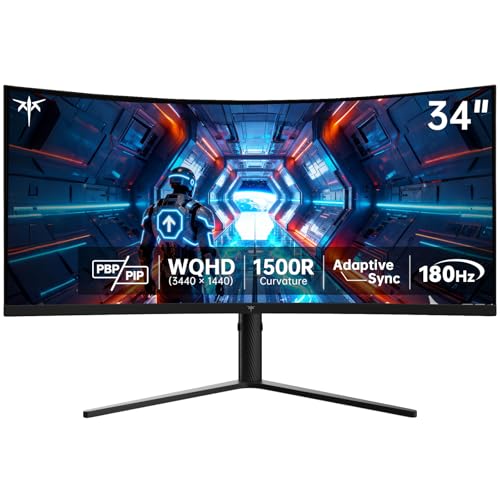
- 3440×1440 ultrawide with 1500R curvature
- 180Hz refresh plus adaptive sync support
- Height, tilt, swivel, and pivot adjustments
Best For: Sim and gaming buyers who want a versatile ultrawide with strong ergonomics
Best Budget Pick
Sceptre 34-Inch Curved Ultrawide WQHD

- 3440 x 1440 WQHD resolution
- 21:9 ultrawide for cockpit-style views
- Up to 180Hz with 1ms response time
Best For: Budget-minded sim pilots wanting a spacious ultrawide
Best Premium Choice

- 240Hz refresh rate with 1ms response time
- 3440 x 1440 ultrawide with HDR 400
- USB-C, DisplayPort, and HDMI connectivity
Best For: High-end sim rigs that want speed and vivid color
Best High-Refresh Value

- 240Hz refresh rate with 1ms response time
- 3440 x 1440 curved 21:9 screen
- 100% sRGB with Blue-Light Shift
Best For: Value-focused sim setups that still want 240Hz
High-Speed Curved Pick – SANSUI 34-Inch Curved Gaming Monitor UWQHD 3440 x 1440P 200Hz Ultrawide
If you want ultrawide gaming monitors for flight simulation with strong motion handling and lots of screen space, this SANSUI 34-inch model is built to deliver exactly that. Its 3440 x 1440 resolution, 21:9 aspect ratio, 1500R curve, and up to 200Hz refresh rate make it a compelling option for cockpit-style views, instrument layouts, and smoother panning across the virtual horizon.
Best For: Sim pilots who want a high-refresh 34-inch ultrawide with extra gaming features and HDMI 2.1 support.
Pros:
- 3440 x 1440 UWQHD resolution on a 34-inch 21:9 curved panel gives you wide cockpit visibility.
- Up to 200Hz refresh rate and 1ms response time help keep motion looking smooth.
- Includes VRR support with HDMI 2.1, plus DP 1.4 and two HDMI 2.1 ports.
- AI Blue Light Reduction, anti-flicker, and anti-glare features help with longer sessions.
Cons:
- Fast VA panel behavior may not suit everyone who prefers IPS-style color/angle traits.
- No built-in speakers are listed.
- The stand only offers tilt adjustment.
This is the most aggressive refresh-rate option in the group, so it stands out if fluid camera movement matters as much as image width. For flight sim use, the combination of ultrawide resolution and high Hz is the main draw.
Premium Immersive Choice – Alienware 34 Curved Gaming Monitor AW3425DWM
For ultrawide gaming monitors for flight simulation, this Alienware 34-inch display focuses on a clean mix of immersion and reliable performance. The WQHD ultrawide panel, 1500R curve, 180Hz refresh rate, and 1ms gray-to-gray response time make it well suited to long cockpit sessions where smooth camera movement and clear detail both matter.
Best For: Sim flyers who want a premium-feeling 34-inch ultrawide with strong motion clarity and HDR support.
Pros:
- WQHD ultrawide resolution with a 34-inch 1500R curved panel suits cockpit-style viewing.
- 180Hz refresh rate and 1ms response time support smooth, responsive motion.
- AMD FreeSync Premium and VESA AdaptiveSync help reduce tearing.
- DCI-P3 95% color coverage and VESA DisplayHDR 400 add visual punch.
Cons:
- It does not list the higher 200Hz rate found on some competing options.
- No USB hub or extra device connectivity is highlighted in the notes.
- The panel is optimized for gaming, so it may be more monitor than simulation-specific toolset.
This is a strong all-around ultrawide if you want a polished display with good color and adaptive sync rather than the absolute highest refresh rate. It should feel balanced for flight sim use, especially if you value a premium build and straightforward performance.
Work-and-Play Ultrawide – LG 34U60ZB-B 34-inch UltraWide WQHD 120Hz HDR10 Curved Monitor
If your priority is ultrawide gaming monitors for flight simulation that also work well for everyday use, the LG 34U60ZB-B takes a more balanced approach. Its 3440 x 1440 21:9 panel, 1800R curve, and 120Hz refresh rate give you the wide view and smoothness needed for sim flying without pushing into the more aggressive gaming-first spec sheet of higher-refresh models.
Best For: Sim pilots who also want a cleaner productivity monitor with comfortable viewing and simple connectivity.
Pros:
- 3440 x 1440 UltraWide WQHD resolution provides plenty of room for cockpit panels and windows.
- 120Hz refresh rate keeps motion smooth for gaming and streaming.
- Up to 99% sRGB and HDR10 offer balanced color support.
- LG Switch, split layouts, Reader Mode, and height/tilt adjustment add day-to-day flexibility.
Cons:
- 120Hz is lower than the faster gaming-focused displays in this roundup.
- 5ms response time is not as quick as 1ms alternatives.
- The 1800R curve is subtler than the 1500R screens here.
This LG makes sense if you want an ultrawide that handles flight sim well but is still easy to live with for work and browsing. It trades some raw speed for a more versatile desk-friendly setup.
Feature-Rich Performance Pick – ASUS TUF Gaming VG34VQL1B 34 Inch 1440p 165Hz Ultrawide HDR Gaming Monitor
Among ultrawide gaming monitors for flight simulation, the ASUS TUF Gaming VG34VQL1B is a practical high-performance choice with a strong feature set. It uses a 34-inch 3440 x 1440 1500R curved panel, 165Hz refresh rate, and 1ms MPRT response time, giving you the speed and screen width that can make cockpit views and horizon sweeps feel fluid.
Best For: Flight sim players who want a well-rounded ultrawide with fast response, adaptive sync, and plenty of ports.
Pros:
- 34-inch WQHD 3440 x 1440 curved panel is a good fit for wide-field simulation viewing.
- 165Hz refresh rate and 1ms MPRT response time support smooth gameplay.
- FreeSync Premium and DisplayHDR 400 add adaptive sync and HDR support.
- Includes DisplayPort 1.4 x2, HDMI x2, USB hub ports, and a height-adjustable stand.
Cons:
- 165Hz is below the 200Hz peak of the fastest option in this roundup.
- The notes emphasize gaming performance more than sim-specific features.
- HDR performance is certified at DisplayHDR 400, not a higher tier.
This ASUS lands in a sweet spot for most buyers: fast enough for smooth motion, wide enough for immersive cockpit layouts, and flexible enough to connect several devices. It is a strong all-around pick if you want performance without giving up practical ergonomics.
Ultra-Smooth Wide-Screen Pick – SANSUI 34 Inch 240Hz UWQHD Curved Gaming Monitor
If you want ultrawide gaming monitors for flight simulation, this SANSUI 34-inch curved display leans hard into smooth motion and a wide 21:9 view. The 3440×1440 UWQHD resolution gives you extra cockpit space, while the 240Hz refresh rate and MRPT 1ms response time are built for fluid panning and quick scene changes.
Best For: Sim players who want very high refresh performance, HDMI 2.1 support, and a feature-rich ultrawide for fast-moving games as well as flight sims.
Pros:
- 240Hz refresh rate with 1ms MRPT for very smooth motion.
- 3440×1440 ultrawide 21:9 panel increases cockpit visibility.
- HDR400, AI PQ enhancement, and AI Bluelight features add extra versatility.
- HDMI 2.1 and DP 1.4 inputs provide flexible connectivity.
Cons:
- Supports up to 2K 240Hz over HDMI 2.1, not full 3440×1440 at that rate.
- No built-in speakers.
- Curved VA tuning may be more gaming-focused than color-critical work.
For flight simulation, this monitor stands out if you care most about speed, immersive width, and practical gaming extras. Its high refresh ceiling is more aggressive than many sim setups need, but that also makes it a strong all-around ultrawide when you play other genres too.
Most Immersive Curve – Samsung Odyssey G5 34' Ultra-Wide Monitor
For ultrawide gaming monitors for flight simulation, the Samsung Odyssey G5 is all about immersion. Its 1000R curve is designed to wrap around your view, and the WQHD ultrawide resolution gives you the wider cockpit layout and peripheral space that sim pilots usually want.
Best For: Buyers who prioritize a deeply curved, immersive screen for long simulation sessions and want a proven mainstream ultrawide option.
Pros:
- 1000R curvature creates a strong wraparound viewing experience.
- 3440-type WQHD ultrawide format suits cockpit-style sim layouts.
- 165Hz refresh rate and 1ms MPRT help reduce blur.
- FreeSync Premium and HDR10 add smoothness and better image handling.
Cons:
- Lower refresh rate than 180Hz and 240Hz rivals.
- No specific ergonomic adjustability details are listed in the supplied notes.
- VA panel tuning may favor contrast and immersion over top-end brightness specs.
The Odyssey G5 is a straightforward recommendation if immersion matters more than chasing the highest refresh rate. For flight sim use, the 1000R curve is the standout feature, making the display feel especially enveloping during long sessions.
Best Balanced Value – KTC 34 Inch 180Hz UWQHD Curved Monitor
If you’re shopping ultrawide gaming monitors for flight simulation and want a balanced mix of features, the KTC H34S5 is easy to justify. It pairs a 3440×1440 21:9 panel with a 1500R curve, giving you a wide cockpit view without going as aggressive as some tighter-curved rivals.
Best For: Sim and gaming buyers who want a well-rounded ultrawide with strong ergonomics, solid refresh rate, and useful multitasking features.
Pros:
- 3440×1440 ultrawide resolution with a 1500R curve.
- 180Hz refresh and adaptive sync for smooth gameplay.
- Strong ergonomics: height, tilt, swivel, and pivot adjustments.
- Picture-in-picture, picture-by-picture, and 3-year warranty add practicality.
Cons:
- 180Hz is lower than the SANSUI’s 240Hz spec.
- HDMI 2.0 is limited to 100Hz at 3440×1440.
- Brightness is listed at 300 cd/m², which may not be enough for every bright-room setup.
The KTC is the most balanced pick here because it combines a strong resolution, useful curvature, and better ergonomics than many basic ultrawides. For flight simulation, that makes it a flexible choice if you also want a monitor that handles everyday use and multitasking well.
Best Budget Pick – Sceptre 34-Inch Curved Ultrawide WQHD
If you want ultrawide gaming monitors for flight simulation without spending a fortune, this Sceptre 34-inch curved model covers the essentials well. The 3440 x 1440 WQHD panel gives you the extra horizontal space that helps cockpit views, instruments, and scenery feel more open, while the 1500R curve adds a more enveloping desktop setup.
Best For: Sim pilots who want a roomy 34-inch ultrawide with strong resolution and a straightforward feature set.
Pros:
- 3440 x 1440 WQHD resolution for detailed visuals and more usable screen space
- 21:9 ultrawide format is ideal for spreading out cockpit instruments and scenery
- 1ms response time helps keep motion looking crisp
- Up to 180Hz refresh rate for smooth general gaming performance
Cons:
- Built-in speakers are included, but audio-focused buyers may still prefer separate speakers or headphones
- Feature set is more basic than premium ultrawide gaming monitors
This is a practical pick if your priority is wide, sharp flight-sim viewing rather than extras. The combination of 3440 x 1440 resolution and ultrawide format makes it a solid entry point for immersive cockpit-style gaming.
Best Premium Choice – LG 34G630A-B UltraGear 240Hz
For ultrawide gaming monitors for flight simulation with a faster, more premium feel, the LG 34G630A-B stands out with its 240Hz panel and 3440 x 1440 resolution. The 21:9 screen gives you extra horizontal room for flight instruments, maps, and overlays, while the narrow-bezel design keeps the focus on the image.
Best For: Flight sim players who want a high-refresh ultrawide with premium features and flexible connectivity.
Pros:
- 240Hz refresh rate for very smooth motion
- 1ms response time helps reduce ghosting
- 3440 x 1440 ultrawide panel provides extra horizontal workspace
- DisplayHDR 400 and up to 95% DCI-P3 for vivid color and stronger HDR impact
Cons:
- Premium feature set may be more than some flight-sim setups need
- Built-in speakers are present, but they are still secondary to the display itself
This LG is the strongest all-around option here if you value speed, color, and connectivity. Its USB-C, DisplayPort, and HDMI support also make it easier to fit into a tidy multi-device cockpit setup.
Best High-Refresh Value – Sceptre 34-Inch Prime 240Hz
This Sceptre 34-inch model is a strong value option among ultrawide gaming monitors for flight simulation if you want high refresh without moving into premium pricing territory. Its 3440 x 1440 curved panel, 240Hz refresh rate, and 1ms response time make it a compelling fit for smooth, wide-field cockpit views.
Best For: Buyers who want a fast 34-inch ultrawide with simple connectivity and strong color coverage.
Pros:
- 240Hz refresh rate for very smooth gameplay
- 1ms response time with blur reduction for crisp motion
- 3440 x 1440 ultrawide resolution enhances cockpit visibility
- 100% sRGB color gamut for more accurate-looking visuals
Cons:
- Built-in speakers are convenient, but external audio may still be better
- Feature list is focused on fundamentals rather than premium extras
If you want a fast ultrawide that keeps the essentials front and center, this is an easy monitor to consider. It pairs the wide 21:9 format with high refresh and basic comfort features like Blue-Light Shift for long sim sessions.
How We Picked the Best Ultrawide Gaming Monitors for Flight Simulation
We prioritized 34-inch ultrawide models with 3440 x 1440 resolution, strong refresh rates, and low-latency gaming features that matter in flight simulation. We also looked at curvature, color coverage, adaptive sync support, and practical extras like VESA mounting and built-in speakers.
For Ultrawide Gaming Monitors for Flight Simulation, the best choice is usually one that balances image clarity and smoothness rather than chasing the highest refresh rate alone.
Quick Comparison
Most buyers will be choosing between a few main profiles: value-focused 144Hz to 180Hz monitors, premium 200Hz to 240Hz models for maximum fluidity, and curved screens with stronger immersion for cockpit use. If you fly slower-paced civilian sims, clarity and panel quality may matter more than extreme refresh rates.
Key Buying Factors for Ultrawide Gaming Monitors for Flight Simulation
Resolution and Screen Size
3440 x 1440 is the sweet spot for most sim setups because it gives you more horizontal space without making text and cockpit gauges too small. A 34-inch panel is large enough for immersion while still fitting most desks.
Curvature
Curved panels help keep the edge of the display within your natural field of view. For flight sim, 1500R to 1800R usually feels comfortable, while 1000R can create a more dramatic wraparound effect.
Refresh Rate and Response Time
Higher refresh rates are useful for smooth panning, approach landings, and fast jet flying. Still, don’t overlook response time and motion handling, especially if you use head tracking or fly combat sims.
Sync Support and Connectivity
FreeSync Premium, VESA AdaptiveSync, and multiple DisplayPort inputs help reduce tearing and simplify setup across PCs and sim rigs. Check that your graphics card can comfortably drive 3440 x 1440 at your target frame rate.
Panel Quality and Extras
Look for solid brightness, good contrast, and color coverage if you also use the monitor for editing or everyday work. Built-in speakers are convenient, but serious sim setups usually benefit from separate audio.
Who Should Buy Which Ultrawide Gaming Monitors for Flight Simulation?
If you want the most balanced all-around choice, look for a 34-inch 3440 x 1440 ultrawide with 165Hz to 180Hz and adaptive sync. If you prioritize the smoothest possible motion, step up to a 200Hz or 240Hz model. If immersion matters most, choose the curved monitor with the strongest wraparound feel and the best viewing comfort for long sessions.
For most buyers, the best Ultrawide Gaming Monitors for Flight Simulation are the ones that make the cockpit feel expansive without sacrificing sharpness, stability, or everyday usability.
