Choosing the right monitors can make vocal edits, EQ moves, and balance decisions much easier. The best studio monitors for mixing vocals should sound honest, reveal midrange detail, and stay clear at low-to-moderate listening levels.
Below, we focus on practical picks for home studios, project rooms, and desktop setups—so you can match the right monitor size and feature set to your space and workflow.
Best 9 Studio Monitors for Mixing Vocals Picks for 2026
Best for Wide Sweet Spot
JBL 305P MkII 5" Powered Studio Monitors

- Wide imaging helps with vocal placement and panning.
- Boundary EQ and HF Trim improve room matching.
- Compact powered design with XLR/TRS connectivity.
Best For: Home studios and vocal mixers who want a clear, adjustable nearfield monitor with a broad listening area.
Best for Revealing Vocal Mixes

- Detailed highs expose vocal sibilance and compression issues
- DSP filters help adapt the monitor to tricky rooms
- Flexible analog inputs fit common home studio setups
Best For: Producers and vocal editors who want a clear, revealing nearfield monitor for mix decisions.
Best for Clean Vocal Translation
PreSonus Eris E5 5.25-inch Monitors
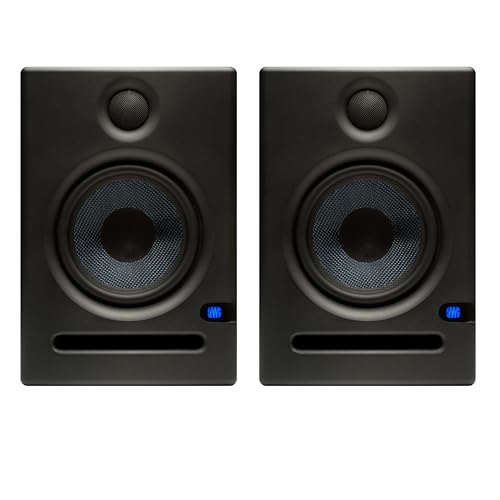
- Smooth silk-dome tweeter for less harsh vocal top end
- 5.25-inch woofer with front port for controlled bass
- Room-tuning controls and multiple input options
Best For: Home and project studios that need clear, balanced vocal monitoring with easy setup.
Best for Flat, Honest Mixing
Yamaha HS5 Powered Studio Monitors

- Uncolored, accurate sound for vocal mixing
- Compact nearfield design for small studios
- XLR/TRS inputs for flexible connectivity
Best For: Mix engineers and home producers who want an honest monitor pair for vocal work.
Best for Easy Setup
PreSonus Eris E7 XT Studio Monitor

- Wide sweet spot for easier vocal monitoring
- Tuning controls help match your room
- Strong low-end and bundled software value
Best For: Home studios needing clear vocal detail and flexible room tuning.
Best for Tiny Desks
IK Multimedia iLoud Micro Monitors

- Ultra-compact reference monitors for small spaces
- DSP tuning helps with desktop and free-field placement
- Clear mids and flexible inputs suit vocal mixing
Best For: Home producers and travelers mixing vocals on a tight desk setup.
Best Value for Balanced Inputs
Edifier MR3 Powered Studio Monitors

- Balanced TRS input supports cleaner monitoring
- Compact powered design fits small desks
- Built-in headphone output adds workflow flexibility
Best For: Home studios and bedroom producers who want affordable monitors with balanced connections.
Best for Desktop Flexibility
Mackie CR3.5 Creative Reference Monitors

- Tone knob for quick sound shaping
- Location switch for desk or shelf placement
- Compact and easy to connect
Best For: Small studios, desktop creators, and users who want flexible nearfield speakers.
Best for Small Desks
PreSonus Eris 3.5 Studio Monitors

- Compact nearfield design suits tight desktop setups
- Clear, accurate sound helps with vocal editing and balance
- Flexible inputs and room tuning make setup easy
Best For: Bedroom producers and small-room mixers who need a compact, budget-friendly reference.
Best for Wide Sweet Spot – JBL 305P MkII 5" Powered Studio Monitors
If you want studio monitors for mixing vocals that give you a spacious listening area and honest detail, the JBL 305P MkII is a strong fit. Its Image Control Waveguide helps keep the stereo image stable, while the room-adjustment controls make it easier to get reliable results in less-than-perfect spaces.
Best For: Home studios, content creators, and vocal mixers who want clear imaging and flexible tuning in a compact powered monitor.
Pros:
- Wide sweet spot makes it easier to hear vocal placement and panning decisions.
- Boundary EQ and HF Trim help adapt the monitors to different room setups.
- Bi-amped design with a 5-inch woofer delivers solid clarity and controlled bass.
- XLR/TRS inputs support common audio interfaces and studio gear.
Cons:
- 5-inch size limits low-end depth compared with larger monitors.
- Best performance still depends on basic room treatment and placement.
For studio monitors for mixing vocals, the JBL 305P MkII stands out as a practical, mix-friendly option with enough detail to catch problems without making the sound overly flattering. It’s a smart choice if you want a balanced nearfield monitor that can handle vocals, podcasts, and general production work.
Best for Revealing Vocal Mixes – ADAM Audio T5V Studio Monitor
The ADAM Audio T5V is a smart pick if you want studio monitors for mixing vocals with extra detail in the highs and a clear, honest midrange. Its U-ART tweeter and HPS waveguide help expose sibilance, compression, and EQ issues so you can make cleaner mix decisions.
Best For: Producers, home-recording musicians, and podcasters who want an affordable nearfield monitor that makes vocal edits and balance checks more precise.
Pros:
- Detailed top end helps reveal vocal harshness, breath noise, and mic issues
- Rear-port design and DSP filters make it easier to adapt to different rooms
- Flexible analog inputs work well with common audio interfaces and setups
Cons:
- Single monitor listing means you must buy a pair for stereo mixing
- Not ideal for deep low-end decisions without adding a subwoofer
For studio monitors for mixing vocals, the T5V stands out as a practical, detail-focused option that favors clarity over hype. If you need an honest monitor to hear what your vocal chain is really doing, this one is easy to recommend.
Best for Clean Vocal Translation – PreSonus Eris E5 5.25-inch Monitors
If you want studio monitors for mixing vocals that stay balanced and don’t hype the top end, the PreSonus Eris E5 pair is a practical nearfield choice. The 5.25-inch woofer, silk-dome tweeter, and front port are aimed at giving you a clear, controlled picture of vocal tone in a small project studio.
Best For: Home recordists and small-studio mixers who want affordable monitors with clear mids, smooth highs, and useful tuning controls.
Pros:
- Silk-dome tweeter helps keep vocal sibilance and harshness in check
- 5.25-inch woofer and front-firing port deliver solid low-end for nearfield use
- Balanced XLR, 1/4-inch, and RCA inputs make setup flexible
- Acoustic tuning controls help tailor the sound to your room
Cons:
- Not ideal for larger rooms or very loud mixing sessions
- Low end is good for the size, but not subwoofer-level deep
For studio monitors for mixing vocals, the Eris E5 stands out as a straightforward, mix-friendly option that prioritizes clarity over hype. It’s a sensible pick if you need monitors that help vocals sit naturally without making the top end sound overly bright.
Best for Flat, Honest Mixing – Yamaha HS5 Powered Studio Monitors
If you want studio monitors for mixing vocals that favor accuracy over hype, the Yamaha HS5 is a dependable nearfield pair. The 5-inch woofer and 1-inch tweeter deliver a clean, revealing sound that helps you catch muddiness, harshness, and balance issues fast.
Best For: Producers and home-studio users who need a compact, truthful monitor set for vocal editing, mixing, and reference listening.
Pros:
- Very flat, uncolored response for critical vocal decisions
- Compact size fits smaller desks and treated home studios
- XLR and TRS inputs support balanced or unbalanced connections
- Bi-amped design provides solid clarity for the size
Cons:
- 5-inch woofers won’t deliver deep low-end thump
- Best results come with a proper room setup and positioning
For studio monitors for mixing vocals, the HS5 stands out if your priority is translation and detail rather than boosted bass or gloss. It’s a practical choice for hearing what’s really in the mix so you can make cleaner vocal moves.
Best for Easy Setup – PreSonus Eris E7 XT Studio Monitor
PreSonus Eris E7 XT 2-Way Active Studio Monitor with EBM Waveguide (Pack of 1)
Check Price On AmazonIf you want studio monitors for mixing vocals that make it easier to hear placement, reverb tails, and EQ moves, the PreSonus Eris E7 XT is a strong fit. Its EBM waveguide helps create a wide listening area, while the tuning controls let you adapt the sound to your room.
Best For: Home studios and project rooms that need clear vocal detail, solid imaging, and flexible room tuning.
Pros:
- Wide 100° x 60° waveguide gives a generous sweet spot and stable stereo image
- 6.55-inch woven composite woofer delivers reassuring low-end extension for vocal mixes
- Acoustic controls help compensate for room placement and boundary effects
- Included Studio One Prime and plug-in suite add strong bundled value
Cons:
- Single monitor listing means you must buy a pair for stereo monitoring
- Larger cabinet may feel big for very tight desk setups
Overall, this is a practical choice if you want studio monitors for mixing vocals with a forgiving sweet spot and enough adjustment to sound consistent in a real room. It is especially appealing for mixers who want detail without overcomplicating setup.
Best for Tiny Desks – IK Multimedia iLoud Micro Monitors
If you need studio monitors for mixing vocals in a cramped home setup, the IK Multimedia iLoud Micro Monitor is a smart compact pick. It aims for a surprisingly neutral response, with DSP tuning that helps adapt the sound to desktop or free-field placement so you can make clearer EQ and level decisions without taking up much space.
Best For: Home producers, travelers, and anyone mixing vocals on a small desk who wants accurate monitoring in a portable format.
Pros:
- Very small footprint with true reference-style sound
- DSP EQ and position compensation help in tight room setups
- Clear mids and controlled bass make vocal work easier
- Bluetooth plus RCA and 1/8" inputs add flexible connectivity
Cons:
- Limited low-end extension compared with larger monitors
- Not ideal if you need high SPL for bigger rooms
- Best suited to nearfield listening rather than wide studio coverage
For producers who prioritize space and portability, these are among the most practical studio monitors for mixing vocals at a desk. They won’t replace larger monitors for full-range mixing, but for vocal editing, songwriting, and small-room reference checks, they deliver a focused and trustworthy sound.
Best Value for Balanced Inputs – Edifier MR3 Powered Studio Monitors
The Edifier MR3 is a practical pick if you want studio monitors for mixing vocals without moving up to a more expensive interface-heavy setup. With balanced TRS, RCA, AUX, Bluetooth 5.4, and a headphone output, it gives home producers a flexible desktop monitor that can handle editing, tracking, and everyday listening.
Best For: Home studios, bedroom vocal mixing, and buyers who want balanced connectivity in an affordable powered monitor.
Pros:
- Balanced TRS input helps support cleaner signal paths for mixing
- Compact powered design suits small desks and home studios
- Multiple inputs make it easy to connect PCs, interfaces, and media devices
- Headphone output adds a convenient nearfield workflow option
Cons:
- Not ideal for larger rooms or very loud monitoring needs
- Bluetooth is handy, but wired playback is the better choice for critical mixing
For creators building a budget-conscious monitoring setup, the MR3 offers a lot of connectivity and enough flexibility to serve as studio monitors for mixing vocals in a small room. It is a smart value choice if you want a straightforward, powered pair that can move between creative work and casual listening.
Best for Desktop Flexibility – Mackie CR3.5 Creative Reference Monitors
Mackie’s CR3.5 is a practical pick if you want compact desktop speakers that can still pull double duty for music playback, gaming, and entry-level studio work. For buyers comparing studio monitors for mixing vocals, the adjustable tone control and location switch make these easy to tailor to your room and listening distance.
Best For: Home studios, desktop setups, and creators who want compact monitors with simple sound-shaping controls.
Pros:
- Tone knob lets you keep the sound flat or add extra bass and treble
- Location switch helps optimize desktop or bookshelf placement
- Multiple inputs support interfaces, PCs, consoles, and more
- Compact 3.5″ design fits easily on small desks
Cons:
- 3.5″ drivers are limited for deep low-end monitoring without a sub
- Not the most neutral option for critical mix decisions
- Best suited to small rooms and nearfield use
Overall, the CR3.5 is more about versatility than ultra-accurate mixing, but that can still be useful when you need affordable studio monitors for mixing vocals in a compact workspace. If you want a flexible desktop monitor with easy controls and broad connectivity, it’s an appealing everyday choice.
Best for Small Desks – PreSonus Eris 3.5 Studio Monitors
If you need compact studio monitors for mixing vocals, the PreSonus Eris 3.5 is a practical nearfield option that fits easily on a desk while still giving you a clear, honest reference. It’s aimed at home studios, desktop production setups, and everyday listening where accuracy matters more than maximum output.
Best For: Bedroom producers, desktop setups, and anyone mixing vocals in a small room who wants a compact monitor with solid clarity.
Pros:
- Compact footprint works well on crowded desks and small studio spaces
- Clear, accurate top end helps reveal vocal detail and sibilance
- Balanced TRS, RCA, and front aux inputs make setup flexible
- Rear tuning controls help tailor the sound to your room
Cons:
- 3.5-inch drivers won’t deliver deep bass or room-shaking volume
- Not ideal for larger rooms or bass-heavy mixing work
Overall, the Eris 3.5 is a smart entry-level pick if you want studio monitors for mixing vocals without giving up desk space. It won’t replace larger monitors, but for close-range work it offers a useful, honest reference with easy connectivity and straightforward tuning.
How We Picked the Best Studio Monitors for Mixing Vocals
For this roundup, we prioritized speakers that help expose vocal problems like harshness, sibilance, masking, and reverb buildup. That means looking closely at midrange clarity, stereo imaging, transient detail, and how well each model fits common room sizes and budgets.
We also considered practical factors such as front- or rear-port design, connectivity, desktop friendliness, and whether a monitor is better suited to close-up nearfield use or a larger workspace.
Quick Comparison
In general, 3.5-inch and 5-inch monitors are the easiest fit for small rooms and desks, while 5.25-inch to 7-inch models usually offer fuller low-end and more headroom. Compact speakers are convenient, but larger cabinets often give a more complete picture when balancing vocals against bass and kick.
Key Buying Factors for Studio Monitors for Mixing Vocals
Midrange Accuracy
Vocals live in the midrange, so this is the most important area to judge. Look for monitors that keep voices forward enough to hear detail without making them sound artificially bright or thick.
Room Size and Listening Distance
Smaller monitors make sense on compact desks and in untreated rooms, while larger drivers can overwhelm a tight space if they sit too close to walls. Nearfield placement usually works best for vocal mixing.
Bass Extension and Control
You do not need huge bass to mix vocals, but you do need bass that stays controlled. If low-end is exaggerated, it can throw off compression and EQ decisions on the vocal track.
Connectivity and Workflow
Balanced inputs are ideal for cleaner signal flow, especially if you use an audio interface. Extra features like tone controls, EQ switches, Bluetooth, or desktop correction can help, but they should support accuracy rather than replace it.
Who Should Buy Which Studio Monitors for Mixing Vocals?
If you want the most affordable setup, compact monitors are a smart starting point for editing, rough mixing, and bedroom studios. If you need a more serious vocal mixing tool, step up to 5-inch or 5.25-inch models for better balance between detail and low-end response. Producers working in larger rooms or wanting more mixing confidence may prefer bigger nearfield options with stronger output and wider image depth.
For the most reliable results, choose the model that matches your room first, then your budget. The best choice is the one that helps you hear vocal problems quickly and make decisions that translate outside your studio.
