Choosing the right soundproofing material for walls depends on the problem you want to solve: reduce outside noise, cut vibration, or tame echo inside a room.
Below, you’ll find options that range from heavy-duty mass-loaded vinyl to acoustic foam and panels, so you can match performance, budget, and installation style.
Best 10 Soundproofing Material for Walls Picks for 2026
Acoustic Treatment Panels
12in High-Density Acoustic Wall Panels

- Dense polyester panels reduce echo and reflections
- Self-adhesive backing for easy wall install
- 45° chamfers support DIY decorative layouts
Best For: Reducing echo and refining acoustics in small to medium rooms
Large-Area Sound Barrier
Soundsulate 1 lb MLV Roll, 100 sq ft

- 1 lb/sqft roll with STC 27 rating
- Blocks voices, music, street, and engine noise
- 100 sq ft coverage for larger wall projects
Best For: Covering large wall areas with dense airborne-noise blocking
Adhesive Acoustic Foam
Kaqiluo High-Density Self-Adhesive Foam
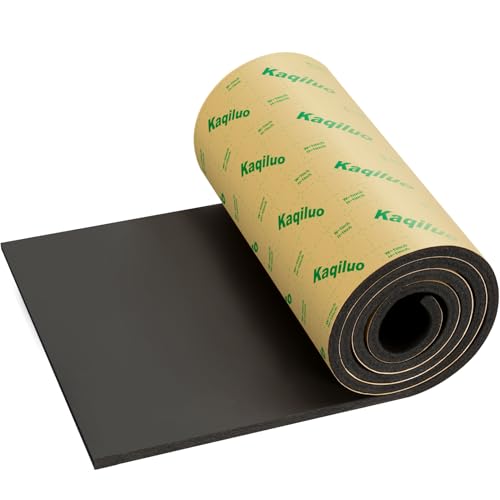
- 50kg/m³ closed-cell foam helps reduce reflections
- Full-back adhesive makes wall install simple
- Fire-resistant and waterproof construction
Best For: Quick acoustic treatment with easy peel-and-stick installation
Peel-and-Stick Acoustic Panels
18-Pack Self-Adhesive 12x12 Panels

- Self-adhesive backing for fast installation
- Polyester fiber helps absorb sound and reduce echo
- Good for walls, doors, windows, and ceilings
Best For: Quick acoustic upgrades in bedrooms, offices, and similar rooms
Textured Foam Panels
1.5-Inch Egg-Crate Acoustic Foam

- Egg-crate design increases surface area for absorption
- 1.5-inch polyurethane foam for DIY indoor use
- Fire-retardant and non-toxic per product notes
Best For: DIY acoustic treatment where echo control is the main goal
Pyramid Foam Echo Control

- High NRC for echo control
- 2-inch flame-retardant foam
- 24 sq ft coverage per pack
Best For: Echo reduction in studios and media rooms
Self-Adhesive Dense Foam Sheets

- 2-inch high-density sponge construction
- Self-adhesive backing for easy install
- Designed for echo and noise dampening
Best For: Quick DIY treatment for small rooms and gaming setups
Dense Wall Barrier – TroyStudio 1 lb/sqft MLV Sheet
If you need soundproofing material for walls that adds mass without taking up much space, this TroyStudio MLV sheet is built for that job. Its 1 lb/sqft density and flexible 1/8-inch profile make it useful as part of a wall sound control setup, especially where space is limited and you want a cuttable barrier that can be sealed at the seams.
Best For: Adding dense, flexible sound-blocking mass to walls, ceilings, and other hard-to-seal surfaces.
Pros:
- 1 lb/sqft mass-loaded vinyl helps block airborne noise by adding density.
- Flexible, thin sheet is easier to fit on walls, doors, ceilings, and similar surfaces.
- Waterproof, flame retardant, and cuttable for DIY installation.
- Nonwoven backing is made for adhesive application, with nails or screws also possible.
Cons:
- Only covers 8 square feet, so larger wall jobs will require multiple sheets.
- Best performance depends on careful sealing of seams and joints.
- Designed to add mass, not to stop impact noise or vibration on its own.
This is a practical choice when your priority is compact, high-density barrier material rather than decorative treatment. It fits well into a layered soundproofing plan for walls, but it works best when installed with sealed edges and proper coverage.
Acoustic Treatment Panels – 12in High-Density Acoustic Wall Panels
These 12-inch acoustic panels are a good pick if you want soundproofing material for walls that focuses on reducing echo and improving room acoustics. Made from 100% polyester with extra thickness and density, they are aimed at spaces where speech, music, and general clarity matter more than heavy barrier-style blocking.
Best For: Reducing echo and refining acoustics in studios, gaming rooms, offices, and home theaters.
Pros:
- High-density polyester construction is odorless and flame retardant.
- Thicker and denser than traditional acoustic panels for better sound absorption.
- Self-adhesive backing makes installation simple and tool-free.
- 45° chamfers and modular design support custom DIY wall patterns.
Cons:
- Coverage is about 7.6 square feet per 8-pack, so larger rooms need multiple sets.
- These are acoustic treatment panels, not a mass barrier for blocking outside noise.
- Best results depend on covering enough of the wall surface.
For buyers who want cleaner sound and a more finished look, this set is more about absorption than heavy sound blocking. It is a smart wall upgrade for echo-prone rooms where easy installation and decorative flexibility matter.
Large-Area Sound Barrier – Soundsulate 1 lb MLV Roll, 100 sq ft
When you need soundproofing material for walls with strong blocking performance, this Soundsulate mass loaded vinyl roll is built as a dense barrier layer. With a 1 lb/sqft rating and STC 27, it is designed to help block airborne noise like voices, music, street noise, and engine noise when fully covering the target surface.
Best For: Covering larger wall areas where dense airborne-noise blocking is the main goal.
Pros:
- 1 lb/sqft MLV with a proven STC rating of 27.
- Effective against airborne sounds such as voices, music, street noise, and engine noise.
- Large 4′ x 25′ roll covers 100 square feet for bigger projects.
- Non-toxic, durable, flexible, and easy to cut to size.
Cons:
- Very heavy at 100 pounds, so handling and installation take effort.
- Must fully cover the surface with no gaps to perform well.
- Not intended to stop vibrations or impact sounds like footsteps from above.
This roll makes sense for wall projects where coverage and density matter more than convenience. It is a strong option for layered construction, but it needs careful installation and is best used as part of a broader soundproofing plan.
Adhesive Acoustic Foam – Kaqiluo High-Density Self-Adhesive Foam
This Kaqiluo closed-cell foam is a practical soundproofing material for walls when you want easier installation and a lightweight acoustic layer. It is designed to reduce noise, flutter echoes, reverberation, and reflections, while the high-density foam and full-back adhesive make it simple to apply to many surfaces.
Best For: Quick wall and interior-surface acoustic treatment with self-adhesive installation.
Pros:
- High-density foam layer is rated at 50kg/m³ for better noise reduction.
- Self-adhesive backing covers the entire rear for easy install.
- Fire-resistant, water-resistant, and waterproof closed-cell construction.
- Can be cut into custom shapes for different spaces and uses.
Cons:
- Coverage is limited to 5.8 square feet, so it is not ideal for large walls.
- More suited to reducing reflections than blocking heavy outside noise.
- At 0.4 inches thick, it is a lighter treatment rather than a mass barrier.
For buyers who want a simple adhesive foam solution, this product is best viewed as an acoustic treatment layer. It is useful for improving sound quality and managing reflections, but it is not a substitute for heavier wall-blocking materials.
Dense Barrier Sheet – Heavy 1/8-Inch MLV for Walls & Doors
If you need soundproofing material for walls that adds real mass, this mass loaded vinyl sheet is built for the job. It is dense at 1.16 lb/sq ft and flexible enough to cut and fit around narrow wall sections, doors, ducts, and equipment enclosures, but it is not acoustic foam and will not absorb room echo on its own.
Best For: Narrow wall sections, doors, ducts, pipe wraps, and other small projects that need added density to help reduce sound transmission.
Pros:
- Heavy 1.16 lb/sq ft density helps add blocking mass to surfaces.
- Flexible sheet can be trimmed with scissors or a utility knife.
- Useful for walls, doors, panels, pipes, ducts, and enclosures.
- 1 ft wide format is practical for narrow or detailed areas.
Cons:
- Does not eliminate all noise or absorb echo by itself.
- Full walls, floors, or overhead areas usually need multiple rolls.
- Heavy material requires secure fastening or adhesive support.
This is a strong pick when your priority is adding mass rather than softening reflections. For broader noise control, the product notes recommend pairing it with drywall, insulation, or acoustic panels.
Peel-and-Stick Acoustic Panels – 18-Pack Self-Adhesive 12×12 Panels
For buyers looking for soundproofing material for walls that is quick to install, these self-adhesive acoustic panels are a practical option. Made from polyester fiber with a porous structure, they are designed to absorb sound waves, reduce reflection and echo, and improve clarity in spaces like offices, bedrooms, and recording areas.
Best For: Easy peel-and-stick acoustic treatment for walls, doors, windows, and ceilings in home or office spaces.
Pros:
- Self-adhesive backing eliminates the need for extra tape or spray adhesive.
- Polyester fiber construction is designed to absorb sound and reduce echo.
- Suitable for walls, doors, windows, and ceilings.
- Removal note: heat with a hair dryer to help prevent wall damage.
Cons:
- Focused more on sound absorption than blocking through-wall noise.
- Best results come from installing the panels as a full set.
- Black 12×12 square format may not suit every room style.
This is a convenient choice if you want fast acoustic improvement without extra tools. It is better suited to reducing reflections and improving sound quality than to heavy-duty sound blocking.
Textured Foam Panels – 1.5-Inch Egg-Crate Acoustic Foam
If you want soundproofing material for walls with an easy DIY format, these egg-crate acoustic foam panels are designed to improve sound absorption in indoor spaces. The 1.5-inch thickness and textured surface are intended to increase surface area for sound interaction, while the polyurethane build is advertised as fire-retardant and non-toxic for indoor use.
Best For: DIY acoustic treatment for walls, doors, and other indoor spaces where sound absorption matters more than mass-loaded blocking.
Pros:
- Egg-crate shape is designed to increase surface area for sound interaction.
- 1.5-inch thickness offers a balanced DIY foam profile.
- Fire-retardant and non-toxic according to the product notes.
- Can be used on walls and doors for indoor sound treatment.
Cons:
- Foam is aimed at absorption, not heavy sound blocking.
- Vacuum-sealed panels need time to regain shape after unpacking.
- Included installation manual is described as a universal version.
This is a solid option when the goal is to tame reflections and improve room acoustics rather than stop all noise transfer. The 1.5-inch profile makes it more substantial than thin foam, but it still fits the classic acoustic-panel use case.
Dual-Layer Self-Adhesive Panels – TONOR Thickened Acoustic Wall Panels
If you want soundproofing material for walls that also doubles as wall decor, these TONOR panels are built around a thick, dual-layer polyester design. They focus on dispersing echo and reducing noise while offering a peel-and-stick install that suits bedrooms, studios, and home theaters.
Best For: Buyers who want decorative wall-mounted acoustic panels with easy installation and broad room coverage.
Pros:
- Dual-layer, 0.72-inch thick construction for improved absorption
- Self-adhesive backing for peel-and-stick installation
- Classic stripe pattern works as functional wall decor
- High-density polyester fiber material is safe to touch and breathe around
Cons:
- Sold as a 4-pack, so coverage may be limited for larger rooms
- Primarily targets echo and noise reduction rather than full isolation
- White finish may not suit every room design
Overall, this is a practical choice if you need an easy-to-install wall treatment that improves room acoustics while keeping a clean look. The reinforced corners and two-year warranty add a little extra confidence for a home setup.
Pyramid Foam Echo Control – 2" Thick Acoustic Foam Panels
For soundproofing material for walls that is aimed at echo control rather than blocking outside noise, these pyramid foam panels are a straightforward studio-style option. The 2-inch thickness, high-density foam, and flame-retardant certification make them a solid fit for rooms where cleaner sound matters most.
Best For: Reducing echo in home studios, podcast rooms, gaming spaces, and home theaters.
Pros:
- High NRC design helps absorb sound waves and reduce reverberation
- 2-inch thick, high-density polyurethane foam construction
- Pyramid shape increases surface area for diffusion and absorption
- Flame-retardant certified for added safety
Cons:
- Not intended for full soundproofing or external noise isolation
- Requires adhesive or nano tape, which is not included
- Foam panels are best for acoustic treatment, not heavy-duty wall blocking
If your main goal is to tame reflections and improve recording clarity, these panels fit the job well. The 24-square-foot coverage also makes it easier to build out a compact treatment plan without overbuying.
Self-Adhesive Dense Foam Sheets – Black Sound Proof Foam Panels
If you need soundproofing material for walls that installs quickly, these black self-adhesive foam panels are designed for simple peel-and-stick placement. Their 2-inch high-density sponge build focuses on dampening echo and balancing sound, while the foam-bonded backing aims to keep them in place over time.
Best For: Fast DIY acoustic treatment in gaming rooms, offices, and home theaters.
Pros:
- 2-inch thick, high-density 2.50 lb/ft³ foam for sound dampening
- Upgraded adhesive backing for a secure hold
- Quick expansion after unpacking for easier setup
- Non-toxic foam with added heat-insulation benefit
Cons:
- 12-pack coverage is limited at 12 sq. ft.
- Best for echo reduction, not true sound isolation
- Black finish may be more utilitarian than decorative for some rooms
This is a good pick when convenience matters most and you want a tidy wall-mounted acoustic fix. It suits smaller projects well, especially if you need a low-fuss option that can be trimmed to fit.
How We Picked the Best Soundproofing Material for Walls
We focused on materials that address real wall-noise issues in different ways, including mass for blocking sound transmission, density for damping vibration, and surface texture for improving room acoustics. We also prioritized products that are practical for DIY use, available in usable coverage sizes, and suited to common spaces like bedrooms, offices, studios, and shared walls.
Because no single solution solves every noise problem, the best Soundproofing Material for Walls depends on whether you need sound blocking, echo reduction, or a combination of both.
Quick Comparison
Mass-loaded vinyl is the strongest choice for blocking sound through a wall. Acoustic foam and wall panels are better for reducing echo and improving clarity inside the room. Self-adhesive panels and foam can be easier to install, while heavier barriers usually offer better noise control but require more effort and a cleaner surface.
Key Buying Factors for Soundproofing Material for Walls
Noise Blocking Vs. Echo Control
If sound is traveling through the wall, look for dense, heavy materials such as MLV or thick layered panels. If the room sounds hollow or reflective, acoustic foam or decorative wall panels may be enough.
Thickness and Density
For wall soundproofing, density matters more than looks. Heavier materials generally do a better job of resisting vibration and lowering transmission. Thicker foam is useful for absorption, but it will not replace a true barrier when blocking loud neighbors or appliances.
Installation Method
Peel-and-stick products are easier for renters and quick projects, while vinyl sheets and larger barrier materials may need trimming, adhesive, or more careful mounting. Check whether the surface must be smooth, clean, and dry before installation.
Coverage and Fit
Measure the wall area before buying. Partial coverage can improve a small section, but consistent coverage usually gives better results, especially on shared walls or around known noise leaks.
Who Should Buy Which Soundproofing Material for Walls?
Choose mass-loaded vinyl if your priority is blocking noise from outside the room or between adjoining spaces. Choose acoustic panels or foam if your main goal is reducing echo, improving speech clarity, or making a room sound less bare. Choose self-adhesive foam or panel sets if you want a faster DIY install with a lighter, more decorative finish. For the best results, combine a barrier material for blocking with an absorbent surface treatment for reflection control.
