If you want simple, transparent volume control without adding unnecessary circuitry, a compact passive preamp can be an excellent fit. These small units are especially useful for desktop systems, powered speakers, DACs, and other short-run audio setups.
Below, we focus on the most practical options for 2026, with an eye toward sound quality, connector flexibility, and the real-world convenience buyers actually need.
Best 10 Compact Passive Preamp Picks for 2026
Compact RCA Passive Controller
Nobsound High Precision Passive Preamp

- Fully passive with no gain
- ALPS A50K smooth volume control
- Compact aluminum RCA design
Best For: Simple RCA systems needing transparent volume control
Ultra Compact Phono Preamp
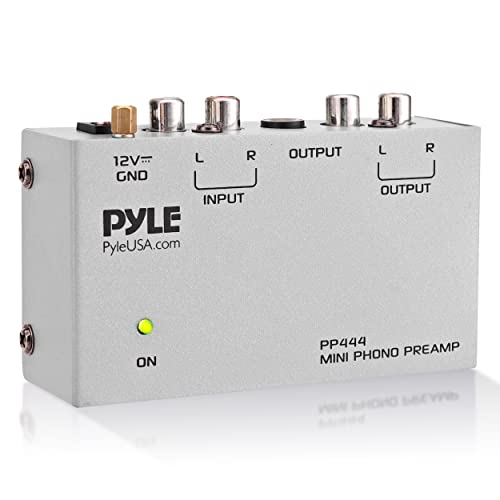
- Tiny phono preamp with RCA I/O
- Low-noise operation on 12V DC power
- Also compatible with mic and guitar use
Best For: Small turntable setups needing a basic phono stage
Compact Multi-Input Passive Preamp
Bellari PP532 Passive Preamplifier
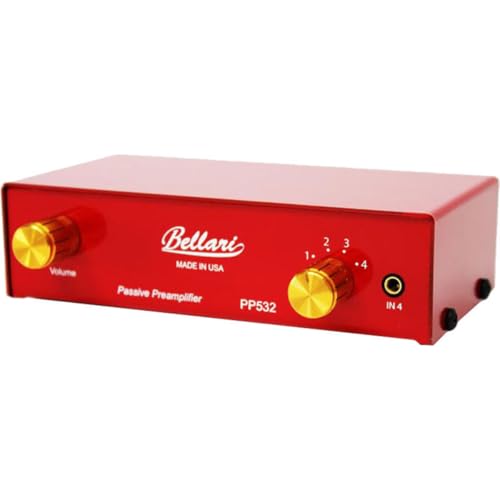
- Passive design for distortion-free sound
- 4 RCA stereo inputs plus 3.5mm input
- Compact steel chassis
Best For: Multi-source systems that need a small passive switcher
Balanced Passive XLR Controller
Nobsound XLR Variable Audio Attenuator

- Zero-gain passive XLR attenuation
- ALPS RK27 quad-gang potentiometer
- Compact aluminum enclosure
Best For: Balanced audio setups needing precise passive level control
Phono Signal Converter
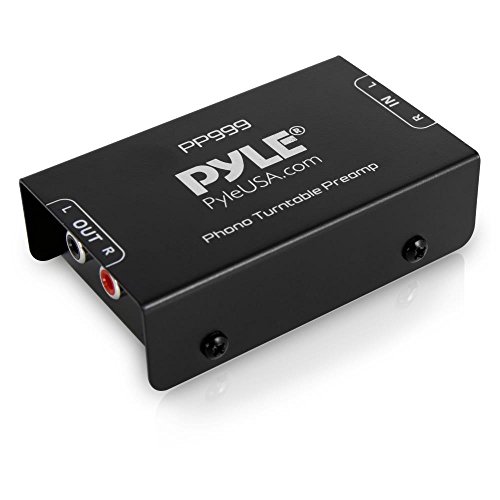
- Converts phono to line level
- Low-noise op-amp design
- RCA in/out with ground connection
Best For: Turntables feeding standard speakers, computers, or receivers
Balanced Volume Control

- True passive design with no gain
- Balanced or single-ended modes
- ALPS 09 pot and XLR/RCA inputs
Best For: Active monitors needing compact volume control
Vinyl Line-Level Converter

- Converts phono to line level
- RCA input with TRS output
- Includes 12V adapter and warranty
Best For: Vinyl playback setups needing easy phono conversion
Compact passive switcher
FV2 RCA Switch Box with Volume Control

- Passive design needs no power supply
- 2-in-1-out RCA source switching
- A10K volume control for fine adjustment
Best For: Small setups needing RCA source selection and volume control
Compact phono stage
Mini Turntable Preamp with RCA/TRS Output

- Converts phono signal to line level
- Low-noise op amps for clearer sound
- Includes 12V adapter and RCA/TRS outputs
Best For: Turntable users needing a small powered phono preamp
Premium passive selector
FV2PRO RCA Selector with ALPS RK27

- ALPS RK27 A10K potentiometer
- Passive no-gain design needs no power
- 2-in-1-out RCA switching
Best For: Users wanting a passive RCA switch with a premium volume control
Compact RCA Passive Controller – Nobsound High Precision Passive Preamp
If you want a compact passive preamp for a simple, transparent volume control path, this Nobsound unit keeps the signal chain minimal. With no built-in gain and only RCA input/output, it suits high-output sources like DACs, CD players, PC sound cards, active speakers, and power amps that already have plenty of gain.
Best For: Listeners who want a small, no-frills passive volume controller for clean RCA-based systems.
Pros:
- Fully passive design with no built-in gain or external power
- ALPS A50K dual potentiometer for smooth volume adjustment
- Compact CNC-machined aluminum alloy chassis
- Gold-plated RCA connectors for durable signal connections
Cons:
- RCA-only layout limits connection flexibility
- Best suited to sources with strong output and amps with high gain
This is a straightforward choice if your priority is preserving the source signal and keeping the hardware footprint small. It is best viewed as a precision attenuator rather than an all-purpose preamp.
Ultra Compact Phono Preamp – Pyle PP444 Mini Preamp
This compact passive preamp-style roundup pick is actually a phono preamp, and it is aimed at turning table-level sources into usable line-level audio for a basic stereo setup. The Pyle PP444 keeps things small and simple with RCA input/output, low-noise operation, and a 12-volt DC power adapter.
Best For: Turntable users and budget-minded buyers who need a tiny phono preamp with RCA connections.
Pros:
- Ultra-compact enclosure for easy placement near a turntable or receiver
- Low-noise operation for basic record playback
- RCA input and output for standard stereo hookups
- Also listed as compatible with microphone and guitar use
Cons:
- Requires powered operation, so it is not a passive design
- Plastic enclosure is less substantial than metal alternatives
For buyers focused on size and simplicity, this is an inexpensive way to get a turntable into a receiver or amplifier. Just keep in mind that it is a phono preamp, not a true passive volume controller.
Compact Multi-Input Passive Preamp – Bellari PP532 Passive Preamplifier
If you need a compact passive preamp with more source flexibility, the Bellari PP532 is built around a distortion-free passive design in a steel chassis. It offers four stereo RCA input pairs plus a 3.5mm stereo input, making it a practical match for simple systems that switch between multiple devices.
Best For: Users who want a small passive selector and volume control with multiple input options.
Pros:
- Passive design for distortion-free sound
- Compact steel chassis with a smaller footprint
- Four sets of stereo RCA inputs plus one 3.5mm stereo input
- Simple surface-mount layout for straightforward placement
Cons:
- No powered gain stage for boosting weak sources
- Heavier than some ultra-light mini units
Compared with basic single-input passive boxes, this one stands out for source switching convenience. It is a sensible pick when you want a no-gain control unit that still handles several inputs cleanly.
Balanced Passive XLR Controller – Nobsound XLR Variable Audio Attenuator
For balanced systems, this compact passive preamp focuses on clean attenuation rather than added gain. The Nobsound XLR variable audio attenuator uses a passive circuit, ALPS RK27 potentiometer, and gold-plated XLR terminals to help match strong sources and amps without introducing powered circuitry.
Best For: Audiophiles and studio users who want balanced XLR volume control in a compact passive box.
Pros:
- Pure passive attenuation with zero-gain circuitry
- ALPS RK27 quad-gang potentiometer for smooth, balanced control
- Gold-plated XLR terminals and ENIG PCB for signal integrity
- Compact aluminum enclosure suited to racks or desks
Cons:
- XLR-only design is less universal than RCA models
- Built for attenuation, not amplification
This is the most specialized option here, and that is also its strength. If your setup is balanced and you want precise passive level control, it is designed for exactly that job.
Phono Signal Converter – Pyle Mini Turntable Preamp
If you need a compact passive preamp for a turntable-style setup, this Pyle unit is really a small phono preamp rather than a passive volume control. It converts phono signals to line level, uses low-noise op-amps, and is meant to sit close to the source to help reduce unwanted noise and interference.
Best For: Connecting a turntable to speakers, computers, laptops, or receivers that do not have a specialized phono input.
Pros:
- Converts phono signals to line level for modern audio gear.
- Low-noise operation with low-noise audio op-amps.
- Simple RCA input/output hookup with ground connection.
- Compact mini design for easy placement near the source.
Cons:
- Not a passive preamp; it has active circuitry.
- Designed for magnetic pickups at 3mV input sensitivity.
- Works best when placed close to the turntable to limit noise.
For vinyl systems that need phono-to-line conversion, this is a straightforward plug-and-play option. It focuses on compatibility and low-noise handling rather than tone shaping, making it a practical fix for basic turntable integration.
Balanced Volume Control – Nobsound Mini Passive Preamp
The Nobsound Mini is a true compact passive preamp for systems that only need volume control and signal routing. It has no amplifying circuit, so it does not alter the timbre, and it offers fully-balanced or single-ended mode selection with XLR and RCA connectivity.
Best For: Active monitor speaker setups that need a small, no-gain volume controller with balanced or single-ended options.
Pros:
- True passive design with no amplifying circuit.
- Selectable fully-balanced or single-ended audio mode.
- Uses ALPS 09 potentiometer and NEUTRIK XLR connectors.
- Compact size for desktop or studio use.
Cons:
- Does not provide amplification.
- Best suited to sources and speakers that already provide the needed level.
- Primarily aimed at active monitor speaker setups.
If you want a minimalist passive controller in a compact footprint, this model keeps the signal path simple. Its value is in flexible connectivity and level control, not added gain or coloration.
Vinyl Line-Level Converter – Low Noise Stereo Phono Preamp
This compact preamp is built for vinyl systems that need phono signal conversion, not passive attenuation. It turns phono into line level, uses low-noise circuitry, and includes RCA input with TRS output plus a 12V DC adapter for straightforward home audio setup.
Best For: Turntable owners who need a simple phono preamp for receivers, speakers, computers, or laptops.
Pros:
- Converts phono signals to line level for better compatibility.
- Low-noise audio operational amplifiers for cleaner playback.
- RCA input and TRS output for flexible connections.
- Includes a 12V DC adapter and a 1-year warranty.
Cons:
- Not meant for turntables with a built-in preamp.
- Active design, so it is not a passive preamp.
- Best performance depends on placing it close to the source.
For a compact phono stage, this is a practical no-fuss choice with the basics covered: line-level conversion, low-noise operation, and easy hookup. It is aimed at simplifying vinyl playback in everyday home audio systems.
Compact passive switcher – FV2 RCA Switch Box with Volume Control
If you want a compact passive preamp for simple source switching and level trimming, the FV2 keeps the setup straightforward. It offers 2-in-1-out RCA switching, a passive no-power design, and a high-precision A10K volume control for matching with power amplifiers, active speakers, and some monitor audio devices.
Best For: Listeners who want a small passive RCA selector with volume control and no power supply.
Pros:
- Passive design, so it does not need a power supply.
- 2-in-1-out RCA switch lets you select a source without unplugging cables.
- High-precision A10K potentiometer provides fine volume adjustment.
- Compact size at 3.46 x 2.95 x 1.5 inches.
Cons:
- No gain stage, so it is not meant to boost signal.
- Limited to RCA switching use cases.
Overall, the FV2 is a practical compact passive preamp option if your priority is clean switching and simple control rather than amplification. It fits best in systems where you already have compatible powered gear and just need an easy way to manage sources and volume.
Compact phono stage – Mini Turntable Preamp with RCA/TRS Output
This compact passive preamp keyword fit is a bit different here: this model is an active phono preamp designed to convert turntable phono signals to line level. It includes low-noise op amps, RCA input, RCA/TRS output, and a 12V DC adapter, making it a simple plug-and-play choice for vinyl playback with modern audio gear.
Best For: Turntable owners who need phono-to-line conversion with low-noise output options.
Pros:
- Converts phono signals to line level for modern equipment.
- Low-noise audio operational amplifiers help reduce hum and interference.
- RCA input plus RCA/TRS output adds connection flexibility.
- 12V DC adapter is included for plug-and-play setup.
Cons:
- Not a passive preamp; it requires external power.
- Designed specifically for turntable phono use, not source switching.
For vinyl systems, this is the practical pick when you need a small phono stage rather than a passive controller. It focuses on clear signal conversion and low-noise operation, which matters more here than passive switching features.
Premium passive selector – FV2PRO RCA Selector with ALPS RK27
If you are shopping for a compact passive preamp with a more premium feel, the FV2PRO adds an ALPS RK27 A10K potentiometer to its RCA switching and volume-adjustment layout. Like the other passive option here, it uses a no-gain design and does not need a power supply, so it works well with power amplifiers, active speakers, and some monitor audio devices.
Best For: Buyers who want a passive RCA selector with a higher-end volume knob.
Pros:
- ALPS RK27 A10K potentiometer for high-precision volume adjustment.
- Passive, no-gain design does not require a power supply.
- 2-in-1-out RCA switching avoids unplugging and replugging cables.
- Compatible with power amplifiers, active speakers, and some monitor audio devices.
Cons:
- No gain, so it will not increase signal level.
- RCA-only design limits it to simple analog setups.
Among compact passive preamp choices, the FV2PRO stands out for its ALPS RK27 control and straightforward signal routing. It is a solid fit if you want dependable passive switching with a more refined volume adjustment component.
How We Picked the Best Compact Passive Preamp
For this roundup, we prioritized Compact Passive Preamp models that make sense for everyday use: small footprints, straightforward controls, dependable connectors, and compatibility with common hi-fi and studio-style gear. We also favored designs that offer useful input/output flexibility, because that often matters more than extra features in a passive unit.
Since passive preamps do not add gain, the best choices are the ones that preserve signal integrity, avoid unnecessary noise, and match well with source levels and amplifier sensitivity.
Quick Comparison
In broad terms, the products here fall into a few groups. Some are pure volume controllers for line-level systems, others add switching for multiple sources, and a few are phono-capable models intended for turntable setups. Balanced XLR options are better suited to certain active monitors and pro-style gear, while RCA-based units remain the most common choice for home audio.
Key Buying Factors for a Compact Passive Preamp
1. Input and Output Type
Start with your existing equipment. RCA is standard for most consumer audio setups, while XLR or TRS may be better for balanced systems and active monitors. If your system mixes connector types, choose a model that matches both sides cleanly.
2. Source Level and System Matching
A Compact Passive Preamp works best when the source has enough output and the destination amp or powered speakers have good input sensitivity. If your system needs extra drive or tonal shaping, passive may not be the right approach.
3. Volume Control Quality
For many buyers, the knob is the whole point. Smooth, well-matched attenuation helps maintain channel balance at lower listening levels. Units that use known control parts are often preferred for finer adjustment and better consistency.
4. Switching and Routing Needs
If you use more than one source, look for A/B selectors or multiple input paths. That can make a Compact Passive Preamp more versatile without adding much size or complexity.
5. Noise and Build Practicality
Passive designs are valued for simplicity, but the enclosure, grounding, and connector quality still matter. A solid chassis and short signal path can help reduce interference and keep the setup tidy.
Who Should Buy Which Compact Passive Preamp?
If you want the cleanest, simplest desktop volume control, choose a basic RCA or balanced volume controller. If you run powered speakers or studio monitors, prioritize balanced input/output support. If your setup centers on vinyl, select a phono-capable model instead of a standard line-level controller. And if you regularly switch between sources, an A/B selector-style unit may be the most practical choice.
In short, the best Compact Passive Preamp is the one that matches your system’s connections, signal levels, and day-to-day listening habits.
