Choosing the right turntable mixer for scratching can make or break your feel, timing, and control. The best options deliver a sharp crossfader, responsive cut-in, and a layout that supports fast, confident movement.
In this roundup, we focus on mixers and scratch-friendly systems that suit different skill levels, budgets, and setups, so you can find the right match without sifting through generic DJ gear.
Best 10 Turntable Mixer for Scratching Picks for 2026
Flagship battle pick
Pioneer DJ DDJ-REV7 2-Channel Motorized Battle DJ Controller

- Motorized jog wheels for vinyl-like scratch feel
- Magvel Fader Pro for precise cutting
- Color displays show waveforms, BPM, and cue points
Best For: Pro scratch DJs and battle performers
Ultra-portable scratch deck
Numark PT01 Scratch Portable DJ Turntable

- Battery or AC power for scratch practice anywhere
- Adjustable Scratch Slide Switch for right- or left-handed use
- Built-in speaker plus RCA, headphone, and USB connectivity
Best For: Portablists and practice-minded scratch DJs
Compact 2-channel mixer
Behringer PRO MIXER NOX101 2-Channel DJ Mixer
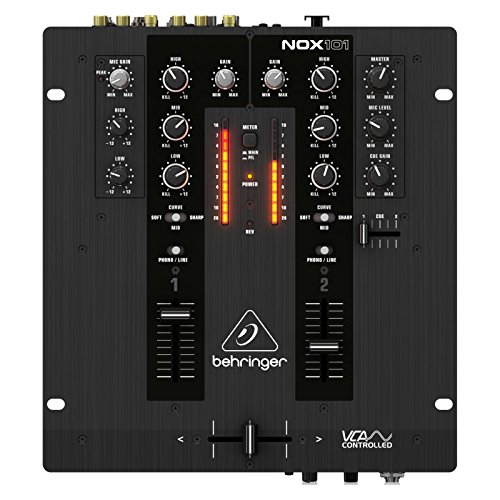
- Ultraglide crossfader for scratch-style cuts
- 3-band EQs with full-kill filters
- XLR, TRS, and RCA connectivity
Best For: DJs needing a straightforward scratch mixer
Portable practice deck
Numark PT01 Scratch Turntable with Carry Case
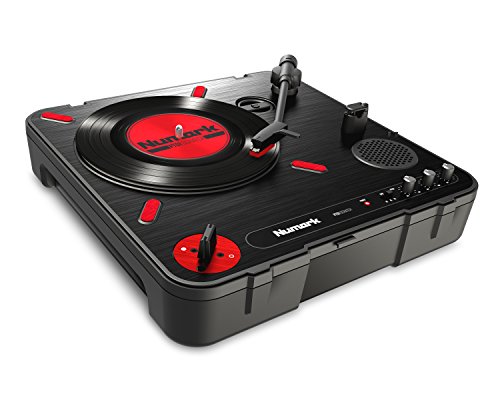
- Portable 33 1/3, 45, and 78 RPM playback
- Adjustable Scratch Slide Switch for scratching
- Includes carry case, cartridge, slip-mat, and dust cover
Best For: Travel-friendly scratch practice
Scratch-Ready Compact Pick
Gemini MXR-01BT 2-Channel Bluetooth DJ Mixer

- 40mm crossfader with curve adjust and reverse
- Bluetooth input for quick phone or tablet streaming
- All-metal compact build with mic and headphone controls
Best For: DJs wanting a simple, portable scratching mixer
Battle-Style Performance Pick
Numark Scratch 2-Channel DJ Scratch Mixer
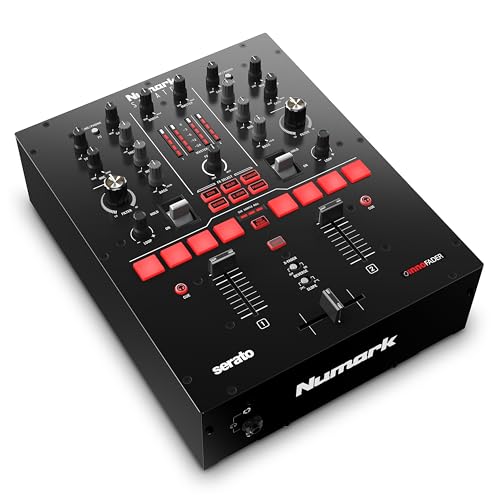
- InnoFader crossfader with reverse and slope control
- Serato DJ Pro included with DVS license support
- FX paddles and performance pads for hands-on mixing
Best For: Scratch DJs who want Serato and DVS support
Budget Portable Pick
Gemini MM1 Portable 2-Channel DJ Mixer

- Full-size crossfader in a tiny portable chassis
- All-metal build with RCA, mic, and headphone connections
- 2-band EQ and gain for basic mix control
Best For: Beginners wanting a durable, low-cost mixer for practice
Scratch-Ready Starter Mixer
Numark M2 2-Channel Scratch DJ Mixer

- Replaceable crossfader with reverse and slope controls
- 3-band EQ on both channels for scratch mixing
- Phono/line inputs plus mic input and rackmount support
Best For: Beginner and intermediate scratch DJs who want a simple 2-channel mixer
Ultra-Portable Bluetooth Scratch Mixer
Gemini MM1BT Portable 2-Channel DJ Mixer

- Bluetooth and RCA inputs for multiple sources
- 45mm crossfader with gain and 2-band EQ
- Compact metal build fits easily in a backpack
Best For: DJs who need a tiny, road-ready mixer for scratch practice
Multi-Deck Scratch Mixer
Numark M6 USB 4-Channel DJ Mixer

- Four channels for larger or hybrid setups
- Replaceable crossfader with slope controls
- USB audio interface for laptop mixing or recording
Best For: DJs who want a 4-channel mixer for scratch setups and hybrid workflows
Flagship battle pick – Pioneer DJ DDJ-REV7 2-Channel Motorized Battle DJ Controller
If you’re shopping for a turntable mixer for scratching and want a controller that feels close to vinyl, the Pioneer DJ DDJ-REV7 is built for that job. Its motorized jog wheels, Magvel Fader Pro, and on-jog color displays are aimed at scratch-focused routines where precision and fast feedback matter.
Best For: Pro scratch DJs and battle-style performers who want motorized platters and competition-ready control.
Pros:
- True motorized platters deliver an authentic vinyl-like scratching feel.
- Magvel Fader Pro is built for the precise cut feel battle DJs expect.
- On-jog color displays show waveforms, BPM, and cue points.
- Ships with Serato DJ Pro and deep pad and FX control.
Cons:
- It is a serious, pro-oriented unit rather than a simple entry-level setup.
- Two-channel layout may be limiting for DJs who want more decks.
For scratch DJs who want a modern battle controller with real motorized feel, this is the most performance-focused option in the group. It is especially strong when routines depend on tactile platter response and clear visual timing feedback.
Ultra-portable scratch deck – Numark PT01 Scratch Portable DJ Turntable
If you need a turntable mixer for scratching that you can actually carry anywhere, the Numark PT01 Scratch keeps the essentials in a compact, battery-capable design. It gives you 33 1/3, 45, and 78 RPM playback, a built-in speaker, and Numark’s adjustable Scratch Slide Switch for portable practice sessions.
Best For: Portablists and beginners who want a scratch turntable they can take anywhere.
Pros:
- Ultra-portable design with AC or battery power.
- Built-in adjustable Scratch Slide Switch works for right- and left-handed users.
- Built-in speaker lets you scratch without extra gear.
- RCA outputs, headphone out, and USB interface support practice and recording.
Cons:
- Battery operation requires 6 D batteries, which are not included.
- Built-in speaker is convenient, but external speakers are better for fuller sound.
This is a practical portable choice if your priority is scratch practice on the go rather than a full-size club setup. The included cartridge, slip-mat, and dust cover make it ready to use right away.
Compact 2-channel mixer – Behringer PRO MIXER NOX101 2-Channel DJ Mixer
For a simple turntable mixer for scratching, the Behringer PRO MIXER NOX101 focuses on core DJ mixer functions rather than extras. It offers two channels, a full VCA-controlled layout, an Ultraglide crossfader, and 3-band EQs with full-kill filters, which is the kind of control scratch DJs look for in a compact mixer.
Best For: DJs who want a straightforward 2-channel mixer with scratch-friendly crossfader control.
Pros:
- 2-channel layout keeps the mixer simple and focused.
- Ultraglide crossfader is designed for smooth cut performance.
- 3-band EQs with full-kill filters add useful mixing control.
- XLR, TRS, and RCA connectivity supports flexible hookups.
Cons:
- It is a basic mixer, so it lacks the advanced features of battle controllers.
- No built-in decks or turntable functions are included.
If you already have turntables and mainly need a dependable mixer for scratching, this is a clean, no-frills option. It makes the most sense as a focused mixer in a straightforward 2-deck setup.
Portable practice deck – Numark PT01 Scratch Turntable with Carry Case
The Numark PT01 Scratch is a portable turntable built around the basics scratch DJs actually use. With 33 1/3, 45, and 78 RPM playback, a built-in speaker, and the adjustable Scratch Slide Switch, it gives you a compact way to practice a turntable mixer for scratching setup wherever you are.
Best For: Portable scratch practice and travelers who want a self-contained turntable package.
Pros:
- Portable design with AC adapter or battery power.
- Scratch Slide Switch is adjustable and user-replaceable.
- Built-in speaker and RCA outputs support flexible listening.
- Includes cartridge, slip-mat, dust cover, and carry case.
Cons:
- Uses 6 D batteries for portable power, and they are not included.
- It is more of a practice deck than a full performance rig.
This version is a strong value if you want a complete portable scratch practice package with carrying accessories included. It keeps the setup simple while still covering playback, monitoring, and recording basics.
Scratch-Ready Compact Pick – Gemini MXR-01BT 2-Channel Bluetooth DJ Mixer
If you want a turntable mixer for scratching that stays simple but still gives you useful performance controls, the Gemini MXR-01BT is built around that job. It pairs a full-size 40mm crossfader with curve adjust and reverse switch, plus Bluetooth input for quick streaming when you need a flexible practice or gig setup.
Best For: DJs who want a compact, all-metal mixer for scratching practice, small gigs, and quick Bluetooth-equipped setups.
Pros:
- 40mm crossfader with curve control and reverse switch for scratch-focused mixing
- Bluetooth connectivity for easy streaming from a phone or tablet
- All-metal chassis with a small footprint for tight booths and mobile setups
- Dedicated mic volume/EQ and headphone level control
Cons:
- Only 2 channels, so it stays intentionally basic
- Not as feature-heavy as a DVS-focused battle mixer
Overall, this is a practical entry point if you want a straightforward turntable mixer for scratching without a bulky layout. Its strengths are the crossfader controls, compact build, and easy connectivity rather than advanced performance extras.
Battle-Style Performance Pick – Numark Scratch 2-Channel DJ Scratch Mixer
For buyers shopping for a turntable mixer for scratching, the Numark Scratch is the most performance-forward option here. It is built for Serato DJ Pro with DVS support and centers on an InnoFader crossfader, slope and reverse control, FX paddles, and performance pads for hands-on mixing.
Best For: DJs who want a Serato-ready scratch mixer with DVS support and battle-style performance controls.
Pros:
- InnoFader crossfader with reverse and slope control for scratch techniques
- Serato DJ Pro included with DVS license support
- FX paddles, filter knobs, and instant looping controls for performance use
- Balanced XLR output, booth output, and dual headphone cueing options
Cons:
- Requires compatible DVS media or software workflow to get the most from it
- More complex than a basic 2-channel mixer
This is the strongest pick if scratching is the main priority and you want software integration built in. It offers the most complete set of battle-ready controls in the group, though it is better suited to users who want a full Serato workflow.
Budget Portable Pick – Gemini MM1 Portable 2-Channel DJ Mixer
If you need a turntable mixer for scratching on a tighter budget, the Gemini MM1 keeps things compact and functional. It offers a full-size crossfader, 2-band EQ, gain control, and simple RCA and mic connectivity in a rugged metal body.
Best For: Beginners and budget-minded DJs who want a tiny, durable mixer for basic scratching and simple setups.
Pros:
- Full-size crossfader in a very compact, portable design
- All-metal body for road-ready durability
- 2-band EQ and gain controls for basic tone shaping
- RCA master and booth outputs plus mic and headphone jacks
Cons:
- More stripped down than performance-focused scratch mixers
- No advanced scratch-specific crossfader tuning features listed
The MM1 is best viewed as a compact starter mixer rather than a feature-packed battle unit. It covers the essentials well for practice and small setups, but serious scratch-focused users may want more crossfader adjustment and performance tools.
Scratch-Ready Starter Mixer – Numark M2 2-Channel Scratch DJ Mixer
If you want a straightforward turntable mixer for scratching, the Numark M2 focuses on the essentials: two channels, a replaceable crossfader, and 3-band EQ on each side. It’s a practical fit for DJs who need solid control for turntables, CD players, or media players without extra complexity.
Best For: Beginner and intermediate scratch DJs who want a simple, feature-packed 2-channel mixer for practice, parties, or small gigs.
Pros:
- Replaceable crossfader with reverse and slope controls for scratch-focused mixing
- 3-band EQ on both channels for shaping blends and cuts
- Two phono/line switchable inputs plus mic input for flexible setups
- Rack-mountable, compact design for portable use
Cons:
- Only 2 channels, so it won’t suit larger multi-deck setups
- Basic layout may be too minimal for DJs wanting advanced features
The M2 keeps the signal path and control set focused on scratch fundamentals, which makes it easy to learn on and quick to set up. If you want a dependable mixer that covers the basics well, it’s a strong value-oriented pick.
Ultra-Portable Bluetooth Scratch Mixer – Gemini MM1BT Portable 2-Channel DJ Mixer
The Gemini MM1BT is a compact turntable mixer for scratching when you want portability and flexible sources in one small unit. It combines Bluetooth streaming with RCA inputs, a crossfader, and gain/EQ control, making it handy for practice setups, small parties, or mobile DJ use.
Best For: DJs who need a tiny, road-ready mixer for scratch practice and quick setups with Bluetooth support.
Pros:
- Built-in Bluetooth input for wireless streaming alongside turntables or line gear
- 45mm crossfader for hands-on mixing control
- 2-band EQ and gain on each channel for basic sound shaping
- Very compact, backpack-friendly metal housing
Cons:
- Only 2 channels, so it’s limited for larger rigs
- 2-band EQ is simpler than mixers with 3-band tone control
- Compact size may feel minimal for DJs who prefer a larger surface
If portability matters as much as scratch control, the MM1BT stands out for its small footprint and flexible connectivity. It’s best viewed as a travel-friendly mixer for practice and lightweight performance needs rather than a full-size club deck.
Multi-Deck Scratch Mixer – Numark M6 USB 4-Channel DJ Mixer
For DJs who want a turntable mixer for scratching with more room to grow, the Numark M6 USB adds four channels and a replaceable crossfader to the usual scratch-mix essentials. It also includes 3-band EQ on every channel, plenty of input/output options, and USB connectivity for recording or laptop-based use.
Best For: DJs who want a 4-channel mixer for scratch setups, larger events, or hybrid laptop-and-turntable workflows.
Pros:
- Four channels give you more flexibility than a standard 2-channel scratch mixer
- Replaceable crossfader with slope controls for cut-heavy mixing
- 3-band EQ on each channel for broader tone control
- USB audio interface for mixing from a laptop or recording sets
Cons:
- Larger and more involved than simple two-channel mixers
- May be more mixer than needed for basic practice-only setups
The M6 USB is a smart step up if you want scratch-friendly controls but need additional channels for more complex setups. Its USB support also makes it a useful bridge between traditional turntables and digital workflows.
How We Picked the Best Turntable Mixer for Scratching
We prioritized scratch performance first: crossfader quality, channel layout, cue control, and overall responsiveness. We also looked at setup flexibility, portability, connectivity, and whether each unit makes sense for home practice, battle-style use, or mobile DJ work.
Quick Comparison
For pure scratching feel, motorized controllers and dedicated scratch mixers tend to offer the most direct performance. Portable turntables are better for practice and portability, while traditional 2-channel mixers are often the most affordable route if you already own decks. Multi-channel mixers are useful if you need more sources, but they are usually less focused on scratch-specific control.
Key Buying Factors for a Turntable Mixer for Scratching
Crossfader Quality
This is the most important factor. Look for a fast, durable crossfader with adjustable curve and cut-in, especially if you plan to do sharp crab scratches, transforms, or quick cuts. Replaceable faders are a strong plus.
Layout and Responsiveness
A clean front-panel layout with easy access to cueing, gain, and EQ controls helps you stay focused on timing. For a Turntable Mixer for Scratching, tight spacing and low-latency response matter more than extra features you may never use.
Setup Type
Decide whether you want a standalone mixer, a portable scratch turntable, or a controller-style all-in-one unit. Standalone mixers work best with existing turntables. Controllers are more compact and often include software integration. Portable turntables are ideal for practice on the go.
Connectivity and Expansion
Check for phono inputs, USB audio, Bluetooth, mic support, and DVS compatibility if those matter to your workflow. If you plan to build a full DJ rig over time, extra I/O can save you from replacing the mixer later.
Who Should Buy Which Turntable Mixer for Scratching?
Beginners and casual scratch DJs should look for simple, affordable mixers with a reliable crossfader and basic EQ. Intermediate users who want stronger performance should focus on scratch-oriented mixers with adjustable fader settings and better build quality. Advanced DJs and performers should consider battle-style controllers or premium mixers with proven faders, performance pads, and software integration.
If portability matters most, a compact battery-powered or carry-friendly option makes sense. If your priority is the best possible scratch feel, choose the most responsive Turntable Mixer for Scratching you can afford, then match it to your decks, software, and performance style.
