Small venues demand an amplifier that can deliver clear, controlled sound without overwhelming the room. The right combo amp balances usable volume, tonal flexibility, portability, and features that simplify setup.
We’ve selected 10 guitar amplifiers for small venues, covering electric, acoustic, modeling, practice, and busking needs. Use the guide below to narrow your choices by venue size, instrument, performance style, and budget.
Best 10 Guitar Amplifiers for Small Venues Picks for 2026
Versatile Stage Pick

- 50 watts with a 12-inch speaker
- 12 amp voicing options
- Five onboard effects sections
Best For: Players needing flexible tones for rehearsals and small-stage performances
Portable VOX Character

- 10-inch speaker and warm sound profile
- Built-in overdrive
- 3.5mm guitar and headphone connection
Best For: Mobile practice and compact, straightforward guitar setups
Flexible Effects Combo

- 30 watts with a custom 10-inch speaker
- Four clean and gain channels
- Built-in effects and headphone output
Best For: Players wanting varied gain sounds and practice-friendly features
Acoustic Singer Solution
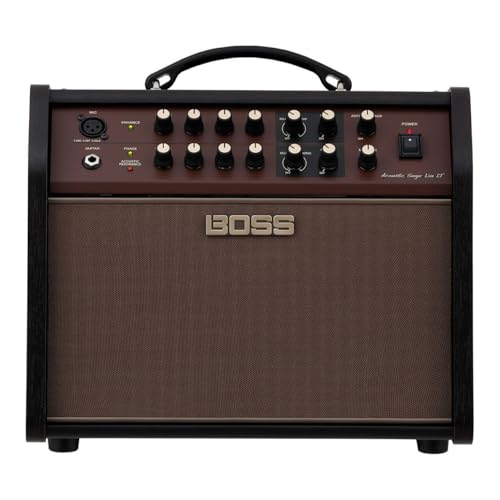
- 60-watt bi-amp design
- Separate guitar and microphone channels
- XLR DI and feedback-control features
Best For: Singer-guitarists playing acoustic sets in small venues
Compact High-Gain Pick

- 20 watts with an 8-inch speaker
- Two channels and high-gain preamp
- Aux input and cab-sim headphone output
Best For: Compact electric-guitar setups and rehearsals
Acoustic Performance Pick

- 60 watts with two channels
- Reverb, chorus, and Bluetooth connectivity
- D.I. output plus guitar and microphone inputs
Best For: Acoustic guitar and vocal performances
Effects-Focused Value Pick

- 25 watts with an 8-inch speaker
- Six built-in effect types
- USB, aux, and headphone connectivity
Best For: Practice, rehearsals, and effect-rich small gigs
Best Compact Practice Pick
Leo Jaymz 20W Guitar Amplifier
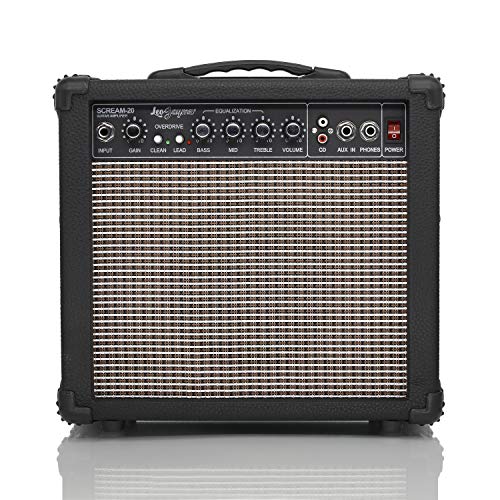
- 20W output with clean and crunch channels
- 6.5-inch speaker and three-band EQ
- AUX/CD input for audio playback
Best For: Portable practice and low-volume small-venue use
Best Beginner Modeling Pick

- 25W combo with an 8-inch speaker
- 30 presets and a simple color display
- USB and headphone output included
Best For: Beginners needing varied tones for practice and intimate gigs
Best Full-Feature Performance Pick

- 300W total rated stage power across dual channels
- Four inputs with EQ and built-in multi-effects
- Bluetooth, USB, recording, and line-out features
Best For: Buskers and small-venue acts using multiple microphones or instruments
Versatile Stage Pick – BOSS Katana-50 Gen 3
For guitar amplifiers for small venues, the BOSS Katana-50 Gen 3 offers a strong balance of live volume, tonal variety, and built-in effects. Its 50-watt output and custom 12-inch speaker provide a practical platform for performances and rehearsals.
Best For: Players who want broad amp voicing and effects options in a stage-ready combo.
Pros:
- 50 watts with a custom 12-inch speaker for clear, powerful sound
- Twelve amp voicing options, including the expressive Pushed character
- Five effects sections plus updated BOSS Tone Studio connectivity
Cons:
- Its larger 21-inch depth may be less convenient for tight transport spaces
- It requires corded power rather than battery operation
The Katana-50 Gen 3 is a flexible choice when one amplifier needs to cover clean, driven, and effect-heavy sounds without relying on a large pedalboard.
Portable VOX Character – VOX Mini Superbeetle 25W
The VOX MSB25 is a compact option among guitar amplifiers for small venues, with a 10-inch speaker, analog VOX-style circuit, and built-in overdrive. Its portable design and rechargeable-battery description make it especially appealing for mobile practice and informal performances.
Best For: Players who prioritize portability, warm VOX-style tones, and straightforward controls.
Pros:
- 10-inch speaker with a warm, rich sound profile
- Simple volume, tone, and gain controls with built-in overdrive
- 3.5mm connection supports guitar and headphone use
- Compact design suited to carrying in a gig bag or backpack
Cons:
- Its listed 25-watt model designation may offer less headroom than larger combos
- Three main controls provide less detailed shaping than multi-channel amps
This Mini Superbeetle is best suited to players who value convenience and recognizable VOX warmth over extensive switching or effects control.
Flexible Effects Combo – Marshall MG30GFX
The Marshall MG30GFX is a practical contender among guitar amplifiers for small venues, pairing a 30-watt output with a custom 10-inch speaker. Four channels, three-band EQ, digital effects, and an auxiliary input give it useful flexibility for rehearsals and smaller performances.
Best For: Guitarists who want multiple gain channels and onboard effects at a manageable combo size.
Pros:
- Four channels cover clean, crunch, and two overdrive voices
- Built-in chorus, phaser, flanger, delay, and octave effects
- Three-band EQ enables practical tonal adjustments
- Headphone output and MP3/line input support quiet practice and backing tracks
Cons:
- The 10-inch speaker may provide less low-end spread than a 12-inch design
- It is corded, so it is less convenient for locations without easy power access
With its familiar Marshall-style voicing and broad feature set, the MG30GFX makes sense for players who need one compact amp to handle practice, rehearsal, and small-room gigs.
Acoustic Singer Solution – BOSS Acoustic Singer Live LT
The BOSS Acoustic Singer Live LT is designed for guitarists who also sing and need a focused solution among guitar amplifiers for small venues. Its 60-watt bi-amp design, separate guitar and microphone channels, and feedback-control tools support acoustic performances.
Best For: Singer-guitarists performing acoustic sets in small venues.
Pros:
- Separate guitar and mic channels with independent three-band EQs
- 60-watt bi-amp design with a 6.5-inch woofer and dome tweeter
- Acoustic Resonance, vocal Enhance, and channel-specific effects
- XLR DI, aux input, and phones/recording output add connection flexibility
Cons:
- Its 6.5-inch woofer is more specialized than a typical electric-guitar combo speaker
- It is less suitable for players who only need a simple electric-guitar amp
The Acoustic Singer Live LT stands out when vocal clarity, acoustic tone shaping, and direct-output connectivity matter as much as amplification.
Compact High-Gain Pick – Orange Crush 20
For guitar amplifiers for small venues, the Orange Crush 20 offers a compact solid-state setup with 20 watts of output, an 8-inch speaker, and separate clean and dirty channels. Its three-band EQ and high-gain preamp make it practical for players who want straightforward control over their core tone.
Best For: Electric guitarists who want a compact amp for rehearsals, practice, and smaller amplified performances.
Pros:
- Two-channel design with a high-gain preamp
- Three-band EQ for practical tone shaping
- Aux input and cab-sim-loaded headphone output
- Compact 20-watt format with an 8-inch speaker
Cons:
- Single output channel quantity may limit routing flexibility
- Its 8-inch speaker is relatively compact for larger spaces
The Crush 20 is a focused choice when portability and simple channel switching matter more than extensive effects or connectivity. The headphone output also makes it more versatile for quiet practice.
Acoustic Performance Pick – Fishman Loudbox Mini BT
Among guitar amplifiers for small venues, the Fishman Loudbox Mini BT is geared toward acoustic performers who need a two-channel setup and useful source connectivity. It provides 60 watts, reverb and chorus, Bluetooth, and a D.I. output in a wood enclosure.
Best For: Acoustic guitarists, singer-songwriters, and small-venue performers using guitar, microphone, and auxiliary audio sources.
Pros:
- 60-watt output for a compact performance amplifier
- Two channels with guitar and microphone inputs
- Built-in reverb and chorus effects
- Bluetooth, auxiliary inputs, and D.I. output
Cons:
- At 24.3 pounds, it is less portable than smaller practice amps
- The 6.5-inch speaker is not as large as many traditional combo speakers
- Its feature set is more oriented toward acoustic and vocal setups than high-gain electric tones
The Loudbox Mini BT makes the most sense when a small performance requires more than a single guitar input. Its two-channel layout and D.I. output are especially useful for acoustic sets and amplified vocals.
Effects-Focused Value Pick – Fender Champion II 25
The Fender Champion II 25 is a versatile option for guitar amplifiers for small venues, offering 25 watts through an 8-inch speaker. Its built-in effects, auxiliary input, headphone output, and USB port make it suitable for players who want more functionality without a complicated multi-channel design.
Best For: Beginners, rehearsal players, and gigging guitarists who want built-in effects and flexible practice connectivity.
Pros:
- 25-watt output with an 8-inch Fender special design speaker
- Built-in reverb, delay/echo, chorus, tremolo, and Vibratone effects
- Auxiliary input, headphone output, and rear-panel USB port
- Two-year limited warranty
Cons:
- Single-channel design offers less channel flexibility
- Its 8-inch speaker is a compact choice for venue use
- Two-band EQ provides less tone-shaping control than a three-band design
The Champion II 25 is a practical middle ground for players who value onboard effects and modern connections. It can cover practice, rehearsals, and smaller amplified settings while keeping the controls approachable.
Best Compact Practice Pick – Leo Jaymz 20W Guitar Amplifier
For guitarists seeking guitar amplifiers for small venues, the Leo Jaymz DA-20 offers a straightforward 20-watt setup with clean and crunch channels. Its compact 6.5-inch speaker, three-band equalization, and AUX/CD input make it suitable for practice rooms, recording spaces, and small courtyard performances.
Best For: Players who want a simple, portable amp for practice and low-volume small-venue use.
Pros:
- Clean and crunch channels provide two core playing options.
- Three-band EQ supports basic tone shaping.
- AUX/CD input allows playback through the amp.
- Comfortable handle and leather-style surface support portability.
Cons:
- The 20-watt output and 6.5-inch speaker are best suited to modest spaces.
- It provides one output channel and a relatively basic feature set.
- The listed warranty description is only 30 days.
The DA-20 is a practical choice when portability and uncomplicated controls matter more than high-volume projection or extensive effects. It fits intimate performances and rehearsal-oriented setups better than larger, louder stages.
Best Beginner Modeling Pick – Fender Mustang LT25
The Fender Mustang LT25 is a versatile option among guitar amplifiers for small venues, combining 25 watts of output with an 8-inch speaker and digital modeling. Its color display and 30 preset sounds make it easy to explore different tones without assembling a separate effects setup.
Best For: Beginners and players who want varied preset tones for practice, rehearsal, and intimate gigs.
Pros:
- 30 preloaded presets cover a broad range of musical styles.
- The 1.8-inch color display and simple interface are beginner-friendly.
- An 8-inch Fender Special Design speaker supports fuller output than a smaller practice speaker.
- USB and headphone output add recording and quiet-practice flexibility.
Cons:
- The 25-watt combo is intended for smaller spaces rather than large stages.
- Digital modeling may be less appealing to players seeking a purely traditional amp design.
- At 15.2 pounds, it is less lightweight than the compact Leo Jaymz option.
The Mustang LT25 stands out for accessible tone variety and convenient practice features. It is a strong fit for small venues when the performance does not require substantial stage volume and preset flexibility is valuable.
Best Full-Feature Performance Pick – COOLMUSIC BP60D Plus
For performers who need more than a basic guitar combo, the COOLMUSIC BP60D Plus is a powerful choice among guitar amplifiers for small venues. It provides 300 watts of total rated stage power, four independent input channels, multi-effects, Bluetooth, recording connections, and a line output for broader live setups.
Best For: Acoustic performers, buskers, and small-venue acts needing multiple inputs, monitoring power, and built-in connectivity.
Pros:
- Four independent channels support microphones, acoustic guitar, electric guitar, and wind instruments.
- Separate three-band EQ controls and built-in chorus, delay, phaser, tremolo, reverb, and flanger expand tone-shaping options.
- Line out and stereo-link functionality support mixers, sound cards, or two-amp monitoring setups.
- Bluetooth, USB playback, headphone output, and wired or OTG recording add performance flexibility.
Cons:
- Its larger cabinet and 11.5 kg weight are less convenient for minimal setups.
- The extensive controls may be more than a single guitarist needs.
- The supplied specifications emphasize total rated stage power rather than a conventional single-channel guitar-combo format.
The BP60D Plus is best viewed as a compact performance and vocal-instrument system rather than a basic practice amp. Its channel count, effects, recording features, and high rated output make it the most capable option here for multi-source small-venue performances.
How We Picked the Best Guitar Amplifiers for Small Venues
We focused on amplifiers that suit intimate clubs, cafés, rehearsal rooms, small stages, and street performances. Our selection considers practical output, speaker size, clean headroom, onboard effects, channel flexibility, input options, portability, and ease of use. We also included both electric- and acoustic-focused models because the best choice depends heavily on your instrument and performance setup.
Power ratings are useful, but they do not tell the whole story. Speaker efficiency, cabinet design, voicing, and whether you are playing with a loud drummer can affect real-world volume just as much.
Quick Comparison
| What You Need | Best Type to Consider | Why It Matters |
|---|---|---|
| Flexible electric tones | Modeling combo | Offers multiple amp voices and effects in one unit. |
| Simple electric setup | Traditional solid-state combo | Provides straightforward controls and dependable operation. |
| Acoustic guitar and vocals | Acoustic amplifier | Usually includes cleaner voicing, multiple channels, and microphone inputs. |
| Portable or outdoor playing | Battery-capable or busking amp | Reduces dependence on outlets and supports mobile performances. |
Key Buying Factors for Guitar Amplifiers for Small Venues
Power and Headroom
For solo performances and quiet ensembles, roughly 20 to 50 watts can be sufficient, particularly when the amp is miked through a PA. If you need clean volume alongside a drummer, prioritize headroom and speaker efficiency rather than choosing by wattage alone.
Sound and Channel Design
Electric guitarists should look for useful clean and overdrive sounds, while acoustic players often benefit from separate guitar and microphone channels. Multiple channels are valuable when you sing, use a second instrument, or switch between tonal setups during a set.
Effects and Connectivity
Built-in reverb, delay, modulation, modeling, USB, auxiliary input, headphone output, and line-out connections can reduce the need for external gear. Check whether the output is suitable for a mixer or PA if the venue may require sound reinforcement.
Portability and Controls
Small venues often have limited stage space, so compact dimensions and manageable weight matter. Choose a layout you can adjust quickly under stage lighting, and consider protective construction if you regularly transport the amp.
Who Should Buy Which Guitar Amplifiers for Small Venues?
Choose the BOSS Katana-50 Gen 3 or Fender Mustang LT25 if you want broad electric-guitar tones and built-in effects for rehearsals and varied sets. The Vox MSB25 Mini Superbeetle, Marshall MG30GFX, Orange Crush 20, Fender Champion II 25, and Leo Jaymz 20W are better suited to players who prefer compact electric combos with accessible controls.
Acoustic guitarists who also sing should prioritize the BOSS Acoustic Singer Live LT or Fishman PRO-LBT-500, while performers who need a more mobile, multi-input setup should consider the Coolmusic BP60D Plus. Before buying, confirm the amp’s input configuration, output options, and expected stage volume so it fits both your instrument and the venue.
