Choosing the right guitar amplifier for recording can make home sessions easier, quieter, and more inspiring. The best option depends on your playing style, available space, recording setup, and whether you need real speaker tone or a flexible practice amp.
We selected 10 compact models covering electric and acoustic guitar, from straightforward beginner combos to portable amplifiers with built-in effects, Bluetooth, rechargeable batteries, and recording-friendly features.
Best 10 Guitar Amplifiers for Recording Picks for 2026
Best Portable Recording Amp

- USB-C OTG recording to phone or computer
- 14 amp models, nine effects, looper, and drums
- Lightweight, battery-powered design
Best For: Mobile practice, songwriting, and direct recording
Best Simple Practice Amp

- 10W solid-state amp with 6.5-inch speaker
- Clean and overdrive channels
- Headphone and auxiliary inputs
Best For: Beginner practice and basic home recording
Best Acoustic Recording Amp

- 20W stereo output with two 4-inch speakers
- USB-C OTG recording to phone or PC
- Separate guitar and microphone channels
Best For: Acoustic guitar and vocal recording
Best Compact Amp for Monitoring

- 12W solid-state design with 6-inch speaker
- CabSim output for recording and monitoring
- Dual gain controls and three-band EQ
Best For: Simple electric-guitar recording setups
Best Budget Practice Amp

- 10 watts with a six-inch speaker
- Built-in overdrive and tone controls
- Headphone jack and auxiliary input
Best For: Beginners, home practice, and basic recording
Best Controls for Small Recording Setups
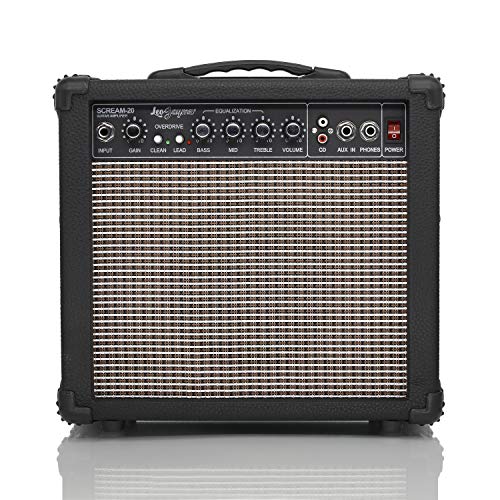
- 20 watts with clean and crunch channels
- Three-band equalization
- CD line and AUX inputs
Best For: Practice rooms and compact recording spaces
Best for Acoustic and Vocal Recording
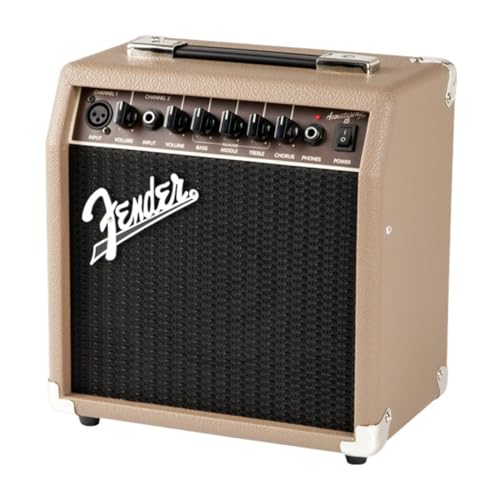
- Instrument and XLR microphone inputs
- 15-watt portable combo design
- Headphone output and line-out capability
Best For: Acoustic players and singer-songwriters
Power Practice Pick

- 20-watt solid-state output with 6.5-inch speaker
- Headphone and AUX inputs for flexible practice
- Portable 6.2-pound design with tone controls
Best For: Home recording setups, practice, and portable rehearsals
Ultra-Portable Pick

- Direct plug-in 5-watt practice design
- Four built-in effects plus Bluetooth backing tracks
- USB-C rechargeable battery with up to five hours
Best For: Travel practice, dorm rooms, and quick warm-ups
Rechargeable Recording Companion

- 10-watt analog design with clean and drive modes
- Headphone, AUX, and wireless audio connectivity
- USB-C battery rated for up to six hours
Best For: Portable practice and compact home recording setups
Best Portable Recording Amp – JOYO JAM Buddy II
The JOYO JAM Buddy II is a compact choice for guitar amplifiers for recording when portability and built-in effects matter. It combines a 10W stereo practice amp, multi-effects, Bluetooth playback, looping, and USB-C OTG recording in a lightweight, battery-powered unit.
Best For: Guitarists who want an all-in-one practice, songwriting, and mobile recording setup.
Pros:
- USB-C OTG connection supports direct recording to a phone or computer.
- Includes 14 amp models, nine effects, three channels, a tuner, drum patterns, and a 30-second looper.
- Compact 0.85 kg design offers up to five hours of playtime and Bluetooth backing-track playback.
Cons:
- The dual 2-inch speakers are better suited to practice and personal monitoring than high-volume performance.
- Battery charging takes about three hours.
For players who want recording features without assembling a separate pedalboard and interface, the JAM Buddy II offers unusually broad functionality in a small package. Its balanced output and line out also make it adaptable to mixers, PA systems, and other recording equipment.
Best Simple Practice Amp – Marshall MG10G
The Marshall MG10G is a straightforward option among guitar amplifiers for recording, especially for beginners who want familiar controls and a dedicated headphone output. Its 10W solid-state design pairs a 6.5-inch speaker with clean and overdrive channels, contour control, and an auxiliary input.
Best For: Beginners seeking a simple, corded practice amplifier for basic recording and headphone monitoring.
Pros:
- Clean and overdrive channels provide two core starting tones.
- Three-band EQ and contour control support basic tone shaping.
- Aux input and 3.5mm headphone output are useful for play-along practice and quieter monitoring.
Cons:
- It does not include built-in effects, Bluetooth, or a stated USB recording interface.
- The corded design is less portable than battery-powered alternatives.
The MG10G is best viewed as a dependable practice amp rather than an all-in-one recording solution. Its headphone jack and simple signal path can work well in a basic home setup, while more advanced direct-recording features will require additional equipment.
Best Acoustic Recording Amp – JOYO AC-20S
The JOYO AC-20S stands out among guitar amplifiers for recording by combining acoustic-focused stereo sound with USB-C OTG capture. Its two 4-inch speakers, guitar and microphone inputs, vocal reverb, Bluetooth 5.0, and rechargeable battery make it suited to acoustic performance and content creation.
Best For: Acoustic-electric guitarists, singer-songwriters, and creators recording guitar-and-vocal performances.
Pros:
- 20W stereo amplification is designed to provide spacious acoustic guitar sound.
- USB-C OTG supports direct recording to a phone or PC.
- Separate guitar and vocal channels include guitar EQ, chorus, delay, reverb, and vocal reverb.
Cons:
- The microphone input does not support phantom power.
- Bluetooth and AUX input cannot be used simultaneously.
- USB-C records audio but does not charge a connected phone.
For acoustic players who need both amplification and simple recording, the AC-20S offers a practical combination of stereo playback, vocal support, and direct USB-C capture. Keep in mind that very low-output passive pickups may need an external preamp.
Best Compact Amp for Monitoring – Orange Crush 12
The Orange Crush 12 is a compact, corded option among guitar amplifiers for recording and monitoring. It uses a 12W solid-state design with a 6-inch speaker, dual gain controls, three-band EQ, master volume, and a CabSim output for practice and recording applications.
Best For: Electric guitarists who want a compact amp with straightforward controls and a recording-friendly CabSim output.
Pros:
- CabSim output is specifically suited to practice, recording, and monitoring.
- Dual gain controls allow adjustment from cleaner sounds toward driven tones.
- Three-band EQ and master volume provide familiar, direct control.
Cons:
- It has one output channel and no stated USB, Bluetooth, or built-in effects.
- The amp requires corded power.
The Crush 12 is a focused choice for players who prefer an uncomplicated electric-guitar setup. Its CabSim output gives it an advantage for connecting to recording or monitoring equipment, while the compact cabinet keeps the practice rig manageable.
Best Budget Practice Amp – Fender Frontman 10G
For guitar amplifiers for recording, the Fender Frontman 10G is a compact solid-state option suited to basic home practice and simple recording setups. Its 10-watt output, six-inch speaker, built-in overdrive, and headphone jack provide useful flexibility at a beginner-friendly scale.
Best For: Beginners, home practice, and straightforward electric-guitar recording.
Pros:
- 10 watts with a six-inch Fender Special Design speaker.
- Gain, overdrive, volume, treble, and bass controls support varied tones.
- Closed-back construction is designed for a heavier bass response.
- Includes a headphone jack and auxiliary input for quieter practice and playback.
Cons:
- The six-inch speaker and 10-watt output are intended for practice rather than larger spaces.
- It uses a single channel and two-band equalization.
The Frontman 10G is a practical choice when you want simple controls and recognizable Fender construction without a large setup. Its headphone output also makes it convenient for late-night practice and basic recording work.
Best Controls for Small Recording Setups – Leo Jaymz 20W Amp
The Leo Jaymz DA-20 is one of the more flexible guitar amplifiers for recording when you need clean and crunch tones in a compact package. It combines 20 watts of output with three-band equalization, a CD line input, and a 6.5mm auxiliary input.
Best For: Practice rooms, small recording spaces, and players who want separate clean and distortion channels.
Pros:
- 20-watt output provides more power than many small practice amps.
- Clean and crunch channels offer two basic tonal directions.
- Three-band equalization gives added control over the sound.
- CD audio line and 6.5mm AUX input support accompanying playback.
Cons:
- The supplied warranty is listed as 30 days.
- It has a single six-and-a-half-inch speaker and one output channel.
- The notes specify a 110–130V, 50/60Hz input voltage.
With its higher wattage and three-band EQ, the DA-20 offers useful control for close-miked practice or small-room recording. It is best considered a compact, feature-oriented amp rather than a full-scale studio rig.
Best for Acoustic and Vocal Recording – Fender Acoustasonic 15
The Fender Acoustasonic 15 stands out among guitar amplifiers for recording because it accepts both an instrument and a microphone. Its 15-watt design, six-inch speaker with a supplementary whizzer cone, headphone output, and line-out capability make it a useful portable option for acoustic players and singer-songwriters.
Best For: Acoustic guitarists, singer-songwriters, and small acoustic recording or performance setups.
Pros:
- Dual front-panel inputs include a standard instrument jack and XLR microphone input.
- 15 watts in a portable solid-state combo design.
- Headphone output supports silent practice.
- Six-inch speaker includes a supplementary whizzer cone for expanded high-frequency response.
Cons:
- It is designed around acoustic guitar and microphone use rather than high-gain electric tones.
- The 13-pound weight is less compact than smaller practice amps.
- It has a single output channel.
The Acoustasonic 15 is a strong fit when recording involves both acoustic guitar and vocals. Its separate instrument and microphone inputs provide practical flexibility, while the headphone output keeps quiet practice available.
Power Practice Pick – CXLWZ 20W Guitar Amplifier
For guitarists seeking guitar amplifiers for recording and everyday practice, this 20-watt solid-state combo offers straightforward tone shaping and useful monitoring options. Its gain, bass, treble, and volume controls cover clean through driven sounds, while the headphone and AUX inputs make it practical for home sessions.
Best For: Home recording setups, practice, and portable rehearsals where flexible controls and headphone monitoring matter.
Pros:
- 20 watts with a 6.5-inch speaker for practice and small performance use
- Gain, bass, treble, and volume controls support varied tones
- Headphone and AUX inputs enable quiet practice and backing tracks
- Includes a noise-shielded 6.35mm cable and weighs 6.2 pounds
Cons:
- Corded electric power limits use away from an outlet
- It is larger and heavier than the mini rechargeable options
This is the most substantial option in the group, with a rugged portable cabinet and enough control range for players who want a conventional amp feel while recording or practicing.
Ultra-Portable Pick – JOYO JA-05G Mini Guitar Amp
The JOYO JA-05G is a compact choice among guitar amplifiers for recording when portability and quick setup take priority. It plugs directly into an electric guitar, includes four practice effects, and uses Bluetooth for playing backing tracks from a phone.
Best For: Travel practice, dorm rooms, warm-ups, and casual recording prep with minimal gear.
Pros:
- Extremely compact 5-watt design weighing about 140 grams
- Clean, overdrive, distortion, and reverb effects are built in
- Rechargeable USB-C battery provides up to about five hours of use
- Included plug extender accommodates more guitar jack layouts
Cons:
- No headphone jack for silent practice
- Bluetooth handles audio playback only and does not transmit guitar audio
- Five-watt output is intended primarily for practice rather than larger performances
Choose this model for convenience rather than studio connectivity. Its direct plug-in format and tiny battery-powered body make it easy to keep available for spontaneous practice.
Rechargeable Recording Companion – flatsons FBA-10 10W Mini Amp
For guitarists comparing guitar amplifiers for recording, the flatsons FBA-10 combines a 10-watt analog circuit with clean and drive modes, headphone monitoring, and wireless audio playback. Its compact rechargeable design suits mobile practice and simple recording environments.
Best For: Portable practice and home recording where silent monitoring, backing tracks, and extended battery life are useful.
Pros:
- Full analog technology with a stated 100Hz–20kHz frequency response
- Clean and drive modes plus gain and tone controls
- 3.5mm headphone and AUX inputs support quiet practice and external audio
- USB-C rechargeable battery provides up to six hours of playtime
Cons:
- Its 1.7-inch speaker is notably smaller than the 20-watt model’s speaker
- Wireless connectivity is designed for audio playback rather than guitar output
This is a well-rounded mobile option for players who want more flexibility than a basic mini amp. The headphone jack, AUX volume control, and longer claimed battery life are especially useful for focused practice and compact recording spaces.
How We Picked the Best Guitar Amplifiers for Recording
We focused on practical features that matter in bedrooms, rehearsal spaces, and small recording setups: usable tone controls, clean and overdriven sounds, speaker size, portability, headphone connectivity, auxiliary or Bluetooth playback, and any direct or OTG recording capability. We also considered whether each amp is best suited to electric guitar, acoustic guitar, or both.
Because compact amplifiers vary widely, this list includes simple practice combos alongside models with effects and wireless playback features. That gives beginners, casual players, and home-recording musicians several sensible starting points.
Quick Comparison
| Best For | What to Prioritize |
|---|---|
| Quiet home recording | Headphone output, low-watt operation, and usable volume control |
| Electric guitar practice | Clean and overdrive channels, gain control, and tone shaping |
| Acoustic guitar recording | Clean headroom, natural voicing, and microphone input support |
| Portable sessions | Rechargeable or battery power, compact construction, and Bluetooth |
| Experimenting with sounds | Built-in effects, amp models, and footswitch compatibility |
Key Buying Factors for Guitar Amplifiers for Recording
Recording and Headphone Options
A headphone output is valuable for late-night tracking, but it does not always provide the same character as a miked speaker. If you want to record directly into a phone or computer, look for a dedicated line, USB, or OTG output and confirm that it works with your device.
Power and Speaker Size
For a home studio, 5 to 20 watts is usually enough. Lower power makes it easier to control volume, while a larger speaker may produce fuller low end and more convincing clean tones. Small practice amps are convenient but can sound thinner at higher volumes.
Tone Shaping and Effects
At minimum, useful bass, middle, and treble controls help match the amp to your guitar and room. Built-in reverb, delay, chorus, or modeled amp voices can be helpful for quick demos, though a simpler signal path may be preferable when you already use pedals or software plugins.
Electric Versus Acoustic Use
Electric-guitar amps are designed to shape pickup signals and may intentionally add distortion. Acoustic amps generally emphasize clean, detailed reproduction and may include a microphone channel. Choose according to the instrument you plan to record most often.
Who Should Buy Which Guitar Amplifiers for Recording?
Beginners and budget shoppers: Choose a straightforward 10W to 20W combo with separate gain and tone controls. It will be easier to learn on and typically offers enough volume for practice.
Apartment players: Prioritize headphone connectivity, compact dimensions, and a responsive master volume. A small amp with built-in effects can reduce the need for additional gear.
Mobile musicians: Battery-powered or rechargeable models with Bluetooth are useful for backing tracks, songwriting, and recording away from an outlet.
Home-studio experimenters: Select an amp with amp models, multiple effects, footswitch support, or OTG recording if you want more sounds without assembling a large pedalboard.
Acoustic guitarists: Look for clean headroom, an acoustic-focused speaker response, and a dedicated microphone input when singing and playing through one compact setup.
