Basements can trap dust, musty odors, pet dander, and fine airborne particles more readily than upper floors. The right high-capacity air purifier can improve circulation and help make a large below-grade space feel fresher.
We compared 10 large-room models by stated coverage, CADR or airflow claims, filtration design, controls, noise features, and long-term maintenance considerations.
Best 10 High-Capacity Air Purifiers for Basements Picks for 2026
Best High-Capacity Pick
SIESEAN 3500 Sq. Ft. HEPA Air Purifier
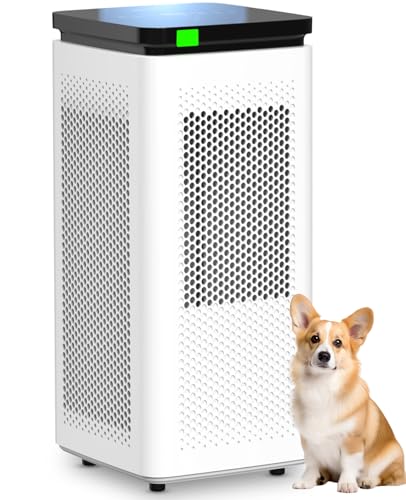
- Covers up to 3,500 sq. ft. with 235 CFM CADR
- H13 HEPA plus activated carbon filtration
- 30dB Sleep Mode and PM2.5 Auto Mode
Best For: Large basements and smoke- or odor-prone spaces
Best Smart Option
LEVOIT Vital 200S-P Large-Room Purifier

- AHAM-verified smoke, dust, and pollen CADR
- App control with air-quality monitoring
- Quiet operation rated as low as 27dB
Best For: Pet households and finished basements needing smart control
Best for Pet-Focused Filtration

- Dual three-stage filter cartridges
- Pet, ECO, Auto, and Sleep modes
- 22–24dB Sleep Mode with AQI display
Best For: Pet-friendly basements needing quiet, high-airflow filtration
Best Connected Deodorizing Pick
WINIX 5510 Smart HEPA Purifier

- Covers up to 1,882 sq. ft. in one hour
- True HEPA plus high-deodorization carbon
- Wi-Fi app, sensors, and Auto Mode
Best For: Finished basements needing odor control and remote monitoring
Best Balanced Pick

- Covers up to 1,000 sq. ft.
- Three-layer HEPA and carbon filtration
- Quiet automatic air-quality sensing
Best For: Medium-to-large basements needing quiet, low-effort filtration
Best Low-Maintenance Option
Nuwave Forever Smart Air Purifier

- Covers up to 2,002 sq. ft.
- Washable, reusable filter system
- Seven-stage filtration with ozone removal
Best For: Large basements where minimizing replacement-filter costs matters
Best for Oversized Spaces
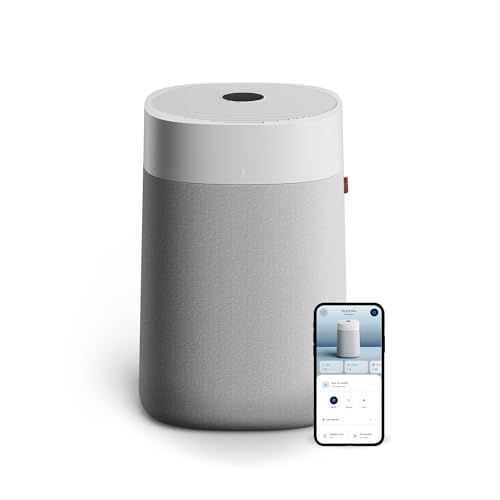
- Rated for up to 3,235 sq. ft.
- HEPASilent dual filtration
- App control and automatic fan adjustment
Best For: Very large or open-plan basements needing extensive coverage
Best Overall
PuroAir 400 for Large Basements
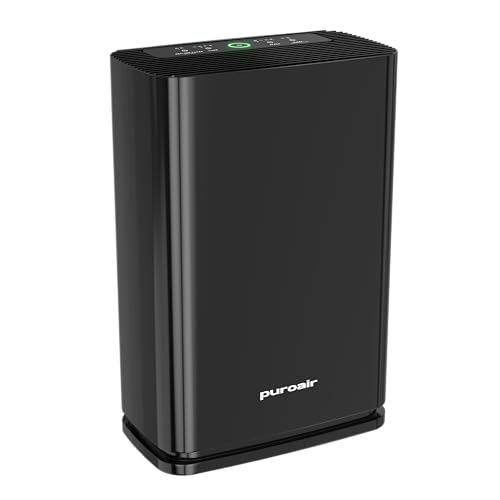
- Covers spaces up to 2,000 square feet
- Three-layer HEPA and activated-carbon filtration
- Automatic sensor, sleep mode, and two-year warranty
Best For: Large basements needing broad coverage and odor-focused filtration
Best Maximum Coverage
FreAire HAP605 for 2,600 Sq. Ft.
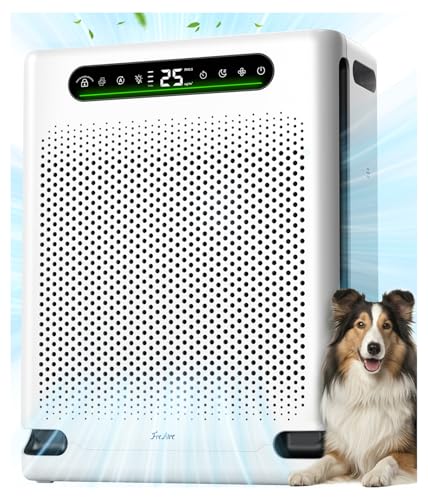
- Rated for spaces up to 2,600 square feet
- Triple intake draws air from three directions
- 20 dB Sleep Mode with washable pre-filter
Best For: Very large basements needing broad circulation and quiet operation
Best Pet-Friendly Value

- Covers areas up to 2,200 square feet
- Pet Mode targets pet hair and odors
- Washable pre-filter with PM2.5 display
Best For: Pet owners maintaining large basement living areas
Best High-Capacity Pick – SIESEAN 3500 Sq. Ft. HEPA Air Purifier
For shoppers comparing high-capacity air purifiers for basements, the SIESEAN stands out with a stated coverage area of up to 3,500 square feet, a 235 CFM CADR, and dual-sided airflow. Its H13 True HEPA and activated carbon filtration target particles, smoke, VOCs, and odors.
Best For: Large basements, open-concept homes, pet areas, and households dealing with smoke or odors.
Pros:
- Rated to cover up to 3,500 square feet with 235 CFM CADR.
- H13 True HEPA and activated carbon filtration address dust, dander, smoke, VOCs, and odors.
- 30dB Sleep Mode, PM2.5 display, Auto Mode, child lock, timer, and dimmer support everyday use.
- ENERGY STAR certified and independently certified by CARB, DOE, EPA, and UL, according to the supplied notes.
Cons:
- The recommended filter replacement interval is relatively frequent at three to four months, depending on conditions.
- Its large-room performance comes in a floor-standing design that may require more placement space.
With the highest stated coverage in this roundup and useful monitoring and safety controls, this is a strong choice when basement size and odor control are the main priorities.
Best Smart Option – LEVOIT Vital 200S-P Large-Room Purifier
The LEVOIT Vital 200S-P is a practical option for shoppers seeking high-capacity air purifiers for basements up to 1,875 square feet. It combines AHAM-verified CADR performance, a three-stage filter, app control, and a U-shaped inlet designed to help capture pet hair and odors.
Best For: Medium-to-large basements, allergy-sensitive households, and homes with pets that want app-based control.
Pros:
- AHAM-verified CADR ratings include 250 CFM for smoke, 254 CFM for dust, and 289 CFM for pollen.
- Three-stage filtration includes a washable pre-filter, efficient middle filter, and activated carbon filter.
- App control, an air-quality monitor, and Auto Mode make remote and automatic operation convenient.
- Quiet operation is rated as low as 27dB, with a dedicated sleep mode.
Cons:
- Its stated coverage is 1,875 square feet, substantially less than the largest model in this roundup.
- The supplied details do not specify a filter replacement interval.
This model offers a strong balance of verified airflow, quiet operation, and smart controls, making it especially appealing for a finished basement used as living space.
Best for Pet-Focused Filtration – KNKA APH4000 Air Purifier
The KNKA APH4000 is designed for shoppers considering high-capacity air purifiers for basements with pets, dust, or pollen concerns. Its dual intakes, dual three-stage filter cartridges, and pet mode emphasize high-airflow circulation, while the unit also provides AQI monitoring and energy-saving ECO operation.
Best For: Pet-friendly basements and homes where quiet nighttime operation and visible air-quality feedback matter.
Pros:
- AHAM-verified smoke/dust/PM2.5 CADR is 226 CFM, with a 244 CFM pollen CADR.
- Dual three-stage cartridges use washable pre-filters, high-efficiency filters, and activated carbon.
- PET Mode increases airflow, while ECO Mode is intended to save energy and extend filter life.
- Sleep Mode is rated at 22–24dB, and the AQI display shows real-time air-quality status.
Cons:
- The product details list a 350-square-foot floor area, while the marketing description states up to 1,695 square feet in one hour; shoppers should confirm the coverage convention before buying.
- Filters are recommended for replacement every three to six months and require genuine replacement cartridges.
Its dual-filter layout and dedicated pet setting make the APH4000 particularly compelling for basement owners focused on hair, dander, and odors, provided its coverage rating matches the room.
Best Connected Deodorizing Pick – WINIX 5510 Smart HEPA Purifier
The WINIX 5510 is a well-rounded choice among high-capacity air purifiers for basements, with stated coverage up to 1,882 square feet in one hour. Its True HEPA filter, high-deodorization carbon filter, air-quality sensor, and Wi-Fi app support suit basements affected by dust, pets, cooking odors, or smoke.
Best For: Large finished basements where odor reduction, automatic operation, and remote monitoring are useful.
Pros:
- Designed to clean up to 1,882 square feet in one hour, with smaller-room timing provided for faster cleaning.
- True HEPA captures stated airborne allergens, while the carbon filter targets VOCs and household odors.
- Built-in sensing adjusts fan speed in Auto Mode and displays air quality with LED indicators.
- Winix Smart App support, Alexa and Google Assistant compatibility, and 23.5dB low-speed operation add convenience.
Cons:
- The supplied notes do not specify a filter replacement schedule.
- At 65 watts, it has the highest listed wattage among the four products.
- The product includes PlasmaWave technology, which may not appeal to shoppers seeking a simpler filtration-only design.
The 5510 is a strong connected option for a basement where odors are as important as particles, especially if app control and automatic fan adjustment are priorities.
Best Balanced Pick – PuroAir 240
The PuroAir 240 is a practical choice among high-capacity air purifiers for basements, covering rooms up to 1,000 square feet in one hour. Its three-layer system combines a pre-filter, HEPA filter, and activated carbon to address dust, pollen, smoke, pet dander, and odors.
Best For: Medium-to-large basements where quiet, automatic operation and broad pollutant filtration matter.
Pros:
- Rated for spaces up to 1,000 square feet.
- Three-layer filtration includes HEPA and activated carbon.
- Particle sensor automatically increases power when pollution is detected.
- Quiet sleep mode, child lock, timer, and filter indicator add convenience.
Cons:
- Its stated coverage is lower than the other options in this roundup.
- Replacement filters are part of ongoing ownership.
The PuroAir 240 offers a well-rounded feature set for a typical basement, especially if you want automatic air-quality adjustment and quiet continuous cleaning in a compact 7.3-pound unit.
Best Low-Maintenance Option – Nuwave Forever Smart Air Purifier
For shoppers comparing high-capacity air purifiers for basements, the Nuwave Forever Smart stands out with coverage rated up to 2,002 square feet in one hour. Its washable, reusable filter system is designed to eliminate routine replacement-filter purchases while its seven-stage design targets particles, odors, chemicals, and ozone.
Best For: Large basements where washable filters and reduced long-term filter replacement are priorities.
Pros:
- Purifies areas up to 2,002 square feet.
- Washable and reusable filters avoid constant replacement purchases.
- Seven-stage filtration includes stainless-steel prefilters, Bio-Guard stages, and ozone removal.
- Intertek lab certified and CARB certified, according to the supplied specifications.
Cons:
- At 21.9 pounds, it is heavier than the other listed models.
- The 22.81-inch height may require more floor or shelf clearance.
The Nuwave is a strong fit for a sizable basement or utility area where ongoing filter costs and maintenance are concerns. Its larger, heavier cabinet is the tradeoff for the expanded coverage and reusable filtration system.
Best for Oversized Spaces – BLUEAIR Blue Pure 211i Max
The BLUEAIR Blue Pure 211i Max offers the broadest stated coverage among these high-capacity air purifiers for basements, with a rating of up to 3,235 square feet in one hour. Its HEPASilent dual-filtration system targets dust, smoke, pet dander, pollen, mold particles, and other airborne pollutants.
Best For: Very large basements, open areas, or connected spaces where high airflow and app-based monitoring are useful.
Pros:
- Rated to clean up to 3,235 square feet in one hour.
- HEPASilent filtration addresses smoke, dust, pollen, mold, and pet-related particles.
- Built-in sensors support automatic fan-speed adjustment.
- App control, air-quality monitoring, Alexa compatibility, and a washable pre-filter add flexibility.
Cons:
- Its 22.7-inch height and 14.4-inch depth require substantial floor space.
- It uses 46 watts, higher than the listed PuroAir 240.
- The supplied details identify the filter type as activated carbon, while the filtration system is described as HEPASilent.
The Blueair 211i Max is the coverage leader here and a compelling choice for expansive or open-plan basements. Choose it when room size, smart controls, and automatic adjustment outweigh the need for a smaller footprint.
Best Overall – PuroAir 400 for Large Basements
For shoppers comparing high-capacity air purifiers for basements, the PuroAir 400 offers coverage rated for spaces up to 2,000 square feet. Its three-layer filtration, automatic air-quality sensor, and activated carbon layer make it a practical option for basements affected by dust, smoke, odors, pet dander, or VOCs.
Best For: Large basements needing broad coverage, automatic adjustment, and odor-focused filtration.
Pros:
- Rated to clean rooms up to 2,000 square feet in one hour under stated testing conditions.
- Three-layer system combines a pre-filter, HEPA filter, and activated carbon.
- Particle sensor automatically increases power when polluted air is detected.
- Includes sleep mode, a 35 dB noise rating, and a two-year warranty.
Cons:
- Its stated coverage is lower than some larger-capacity options in this roundup.
- Uses push-button controls rather than touch controls or app control.
The PuroAir 400 is a strong all-around choice when dependable filtration and automatic operation matter more than maximum room-size coverage. Its carbon filtration is particularly useful for basements where everyday odors are a concern.
Best Maximum Coverage – FreAire HAP605 for 2,600 Sq. Ft.
The FreAire HAP605 stands out among high-capacity air purifiers for basements with a stated coverage area of up to 2,600 square feet. Its triple air intake is designed to draw air from the front and both sides, while Turbo Pet Mode and real-time PM2.5 monitoring add useful control for dusty or pet-heavy spaces.
Best For: Very large basements and homes that prioritize wide air intake, quiet nighttime operation, and visible air-quality readings.
Pros:
- Highest stated coverage in this selection, rated for up to 2,600 square feet.
- Triple air intake supports circulation from three directions.
- Washable pre-filter can be rinsed and dried for routine maintenance.
- Sleep Mode operates at 20 dB and turns off display lights after three seconds.
Cons:
- Main filter replacement is recommended every three to six months, depending on conditions.
- The one-year warranty is shorter than the PuroAir 400’s stated warranty.
- Genuine replacement filters are recommended for fit and airflow.
Choose the HAP605 when maximum stated coverage is the priority. Its washable pre-filter and quiet, dark Sleep Mode are practical advantages for a basement used as a bedroom, office, or family area.
Best Pet-Friendly Value – MOOKA PR1 for Large Basements
The MOOKA PR1 is a practical pick for shoppers seeking high-capacity air purifiers for basements with pets. It is rated for areas up to 2,200 square feet and combines a wider side-air inlet, four-stage filtration, Pet Mode, a washable pre-filter, and a PM2.5 display.
Best For: Pet owners who want large-area coverage, washable pre-filter maintenance, and dedicated odor and pet-hair handling.
Pros:
- Rated to cover spaces up to 2,200 square feet.
- Pet Mode increases purification for pet hair and urine odors.
- Washable pre-filter helps extend the life of the four-stage filtration system.
- Offers six fan modes, Auto Mode, a PM2.5 display, timer, and child lock.
Cons:
- Sleep mode is rated at 26 dB, not as quiet as the FreAire HAP605’s 20 dB rating.
- Replacement filters are recommended every three to six months.
- The air-quality sensor requires regular cleaning to maintain accurate detection.
The PR1 makes the most sense for a pet-friendly basement where hair, smells, and routine filter upkeep are central concerns. Its controls and washable pre-filter provide flexibility, while the 2,200-square-foot rating suits many large lower-level spaces.
How We Picked These High-Capacity Air Purifiers for Basements
We focused on models marketed for large rooms, since basement layouts often include open recreation areas, laundry zones, storage, or connected rooms. Coverage claims are useful for initial comparison, but they are not directly interchangeable: manufacturers may calculate them using different air-change assumptions. We also considered filtration, fan capacity, automatic controls, app support, odor management, noise, and filter replacement requirements.
Because basements can be humid and musty, an air purifier should complement—not replace—moisture control, ventilation, cleaning, and leak repair. None of these devices removes standing water or solves mold growth at its source.
Quick Comparison
| What to Compare | Why It Matters in a Basement |
|---|---|
| Room coverage and airflow | Higher-capacity models can circulate air more effectively across large or divided spaces. |
| True HEPA or HEPA-style filtration | Helps capture airborne dust, pollen, dander, and fine particles when the unit is properly sized and operated. |
| Activated carbon | May reduce some household odors, though carbon performance varies by amount and design. |
| Controls and sensors | Auto modes, PM2.5 displays, and apps make it easier to monitor and maintain air quality. |
| Filter maintenance | Replacement cost, availability, washable prefilters, and service intervals affect ownership cost. |
Key Buying Factors for High-Capacity Air Purifiers for Basements
Size for Real-World Airflow
Choose a unit with enough capacity for the basement’s actual footprint, not just the smallest room where it will sit. For multiple rooms, place the purifier in the central open area or use more than one unit if doors and walls restrict circulation.
Prioritize Effective Particle Filtration
A genuine HEPA filter is a strong choice for airborne particles. Look for a sealed design, a washable or replaceable prefilter, and clear replacement guidance. A high fan setting generally cleans air faster, while lower settings reduce noise.
Consider Humidity and Odors Separately
Air purifiers can capture particles and may help with odors, but they do not dehumidify. If the basement is damp, pair the purifier with a properly sized dehumidifier and keep relative humidity controlled. Persistent mold or sewage odors require source remediation.
Check Noise, Placement, and Operating Cost
Large fans can be audible at maximum speed. A sleep mode, adjustable fan, and reliable auto mode are valuable when the unit will run continuously. Confirm filter prices, expected replacement intervals, energy use, and whether the purifier needs clearance around its air intake and outlet.
Who Should Buy Which High-Capacity Air Purifiers for Basements?
Choose the highest-capacity option for a broad, open basement or a space with heavy dust and pet activity. A smart model is best for shoppers who want app scheduling, remote controls, or automated monitoring. A quieter model suits a finished basement used as a bedroom, office, or media room.
For smaller finished basements, a mid-capacity purifier may offer better value and lower operating costs than an oversized unit. Shoppers focused on long-term maintenance should compare washable-prefilter designs and unusual filter systems carefully, including replacement availability and warranty terms. If the primary concern is musty odor, select a model with meaningful carbon filtration, but address the moisture source first.
