Choosing among audio press boxes for professional studios can be challenging because “press box” may describe a dedicated media distribution unit, a passive splitter, or a compact mixer used for press feeds. The right option depends on how many outputs you need, what connectors your venue uses, and whether you require clean isolation or hands-on mixing.
This roundup compares 10 selected solutions across those use cases, from purpose-built distribution boxes to USB interfaces and powered mixers. Use the guide below to match your workflow, connection requirements, and recording or broadcast goals with the most suitable type of equipment.
Best 10 Audio Press Boxes for Professional Studios Picks for 2026
Reliable Press Distribution

- One XLR female input
- Eight isolated XLR male outputs
- Compact U.S.-made design
Best For: One-source press and studio distribution
Compact Studio Control

- Six-channel analog mixer
- 2x4 USB-C interface at 24-bit/192 kHz
- Bluetooth and GigFX+ effects
Best For: Streaming, podcasting, and small gigs
High-Count Signal Splitting

- 14 passive line-level outputs
- Trim pots for output adjustment
- XLR through for daisy chaining
Best For: Large passive line-level distribution systems
Eight-Channel Media Routing
MDS-108 Media Distribution Box

- Eight-channel media distribution
- Includes signal-processing functionality
- Made in the United States
Best For: Installed studio media distribution workflows
Studio Capture Interface

- Two-channel USB recording interface
- 24-bit/192 kHz capability with Midas preamps
- Direct monitoring and durable metal chassis
Best For: Small studio microphone and instrument recording
Signal Routing Hub
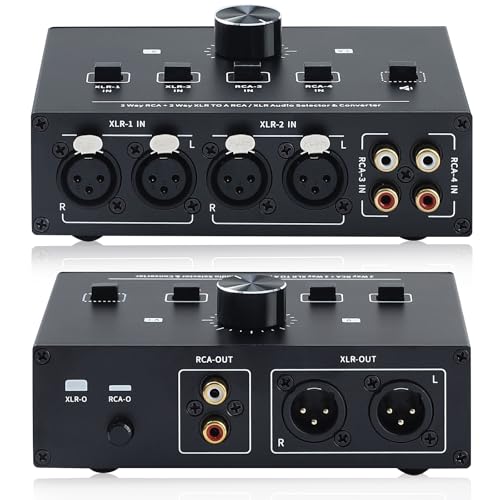
- Four inputs with XLR and RCA connectivity
- Passive operation needs no external power
- Volume control and one-key mute included
Best For: Switching and combining studio XLR/RCA sources
Portable Press PA

- Five-channel, 200-watt portable PA system
- Briefcase format supports quick setup
- Wireless microphone ready with multi-FX and feedback detection
Best For: Mobile press conferences and presentations
Best Value Interface
AudioBox 96 2-Channel USB Interface
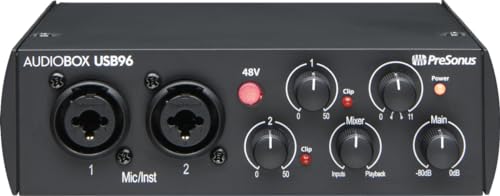
- Two Class-A mic preamps and 24-bit/96 kHz recording
- Bus-powered design with zero-latency monitoring
- Includes recording software and plug-ins after registration
Best For: Portable two-channel studio recording
Best for Flexible Mixing
Phenyx Pro PTX-15 4-Channel Mixer

- Four XLR/line combo inputs with independent channel controls
- 16 DSP effects and stereo graphic equalizer
- USB and Bluetooth support recording and streaming
Best For: Small studios and live mixing setups
Best Complete Studio Bundle
AudioBox USB 96 Recording Package

- Includes interface, monitors, microphone, and headphones
- 24-bit/96 kHz recording with Windows and macOS compatibility
- Comes with a perpetual Studio One Pro license
Best For: First-time studio builders needing a complete setup
Reliable Press Distribution – PB-8 1-In/8-Out Press Box
For straightforward audio press boxes for professional studios, the PB-8 provides one XLR female input and eight isolated XLR male outputs. Its compact design and U.S. origin make it a practical fit for distributing a single source to multiple destinations.
Best For: Studios, press events, and production setups that need one input distributed across eight isolated outputs.
Pros:
- Provides eight isolated XLR male outputs.
- Uses an XLR female input for standard professional connections.
- Compact 8 x 4 x 8-inch form factor.
- Made in the United States.
Cons:
- Limited to one input and eight outputs.
- Its cotton construction may not suit buyers seeking a metal enclosure.
The PB-8 is a focused option when dependable one-to-eight distribution matters more than mixing, effects, or digital connectivity.
Compact Studio Control – Mackie ProFX6v3+ USB Mixer
The Mackie ProFX6v3+ is a compact analog mixer with a 2×4 USB-C interface, making it a versatile choice for audio press boxes for professional studios that also need recording, streaming, or small-gig support. It combines Onyx preamps, Bluetooth, compression, and built-in effects in a six-channel format.
Best For: Streamers, podcasters, and small-gig setups needing analog mixing with USB-C recording and streaming.
Pros:
- Supports 24-bit/192 kHz recording or streaming.
- Offers standard mix, loopback, and dry-channel USB modes.
- Includes Bluetooth send and receive functionality.
- Provides 24 GigFX+ effects with 12 editable presets.
Cons:
- It is an analog mixer rather than a digital mixer with scene recall.
- The display shows Delay at every power-up by design.
- Its six-channel layout may be limiting for larger setups.
This is a strong multifunction choice for smaller professional workflows, especially when USB recording, phone audio, effects, and compact size are priorities.
High-Count Signal Splitting – Radial Exo-Pod Line Splitter
The Radial Exo-Pod is a passive line-level splitter designed for setups that need extensive signal distribution. Among audio press boxes for professional studios, its 14 outputs, trim pots, and XLR through connection make it suited to larger routing requirements without adding active processing.
Best For: Professional studios and production systems requiring passive distribution to multiple line-level destinations.
Pros:
- Provides 14 passive line-level outputs.
- Includes trim pots for output adjustment.
- Offers XLR through for daisy chaining.
- Uses a stainless-steel construction.
Cons:
- Designed for line-level splitting rather than microphone-input distribution.
- Its 13.35 x 5.65 x 3.45-inch size is larger than simpler splitters.
- Passive operation may not meet needs for active signal processing.
The Exo-Pod is best when output count and flexible passive routing outweigh the need for a compact, single-purpose press box.
Eight-Channel Media Routing – MDS-108 Media Distribution Box
The MDS-108 is an eight-channel media distribution box and signal processor for installations that need organized multi-channel handling. It is a specialized option among audio press boxes for professional studios, with an 18 x 6 x 18-inch footprint and U.S. manufacture listed in the supplied specifications.
Best For: Studio and recording-equipment setups that need an eight-channel media distribution box and signal processor.
Pros:
- Provides eight channels for media distribution.
- Combines distribution-box and signal-processor functions.
- Made in the United States.
- Offers a substantial 18 x 6 x 18-inch chassis.
Cons:
- The large chassis may require dedicated installation space.
- The supplied notes do not specify connector types or detailed processing features.
- Its intended workflow may be more specialized than a basic splitter.
The MDS-108 is worth considering for buyers who need an eight-channel distribution and processing unit, but connector and feature details should be confirmed before purchase.
Studio Capture Interface – UMC202HD USB Audio Interface
For audio press boxes for professional studios, the Behringer UMC202HD is a practical two-channel USB interface for recording microphones and instruments. It combines 24-bit/192 kHz capability, Midas mic preamps, phantom-power compatibility, and direct monitoring in a compact metal chassis.
Best For: Small studio recording setups needing two USB-connected microphone or instrument inputs.
Pros:
- Two-channel interface with up to 24-bit/192 kHz recording capability.
- Phantom-power compatibility supports suitable condenser microphones.
- Direct Monitor selection and a level-controlled headphone output help with tracking.
- Impact-resistant metal chassis is described as “built-like-a-tank.”
Cons:
- Provides two input channels, which may be limiting for larger press-box or multi-microphone sessions.
- USB connectivity requires a compatible computer or tablet setup.
This interface is a strong fit when a press recording workflow needs straightforward computer connectivity and reliable monitoring. Its two-channel format is best suited to focused interviews, voice capture, or small instrument sessions rather than larger productions.
Signal Routing Hub – 4-Way XLR RCA Audio Switcher
For audio press boxes for professional studios, this passive XLR/RCA switcher offers flexible signal routing without an external power supply. It provides four inputs, XLR and RCA output options, individual mechanical input controls, volume adjustment, and one-key muting for connected studio equipment.
Best For: Studios that need to switch or combine multiple standard XLR and RCA sources into selected outputs.
Pros:
- Supports two XLR and two RCA inputs with one XLR and one RCA output.
- Allows two to four channels of simultaneous input for basic mixing.
- Dedicated volume control and one-key mute simplify hands-on operation.
- Passive design requires no external power supply.
Cons:
- Does not support splitting two XLR inputs to one XLR output.
- Its passive design is intended for switching and basic mixing rather than advanced processing.
- The stated RCA split function applies to RCA input and RCA outputs, not XLR routing.
This switch box is useful when a studio needs convenient source selection while avoiding repeated cable changes. Verify the input-to-output routing limits before buying, especially if your press setup depends on XLR splitting.
Portable Press PA – EUROPORT PPA200 Powered Mixer
For audio press boxes for professional studios that also need presentation or event coverage, the Behringer EUROPORT PPA200 combines a five-channel powered mixer with a portable PA system. Its briefcase-style format, 200-watt output, wireless microphone readiness, and fast setup make it suited to mobile press conferences and spoken-word applications.
Best For: Mobile press conferences, presentations, meetings, and small events requiring an all-in-one amplified system.
Pros:
- Five-channel mixer with 2 x 100-watt output in a portable briefcase format.
- Designed for quick setup at press conferences, board meetings, and presentations.
- Wireless-ready for a compatible Behringer digital wireless microphone system.
- Includes a Klark Teknik multi-FX processor and FBQ feedback detection.
Cons:
- The wireless microphone system is not included.
- At 26.5 pounds, it is less convenient for lightweight studio installations.
- Its portable PA design may be more functionality than needed for a fixed recording-only press box.
The PPA200 makes the most sense when press audio must reach an audience directly, not just a recorder. It is a versatile mobile option for presentations and conferences, while dedicated studio users may prefer a smaller interface or routing box.
Best Value Interface – AudioBox 96 2-Channel USB Interface
For studios seeking audio press boxes for professional studios without unnecessary complexity, the PreSonus AudioBox 96 offers a compact 2-channel USB recording setup. It combines two Class-A mic preamps, instrument inputs, MIDI I/O, 24-bit/96 kHz recording, and zero-latency monitoring in a bus-powered design.
Best For: Personal studios, portable recording, and musicians who need a straightforward two-input interface.
Pros:
- Two Class-A mic preamps with global +48V phantom power for condenser microphones.
- Supports recording and playback up to 24-bit/96 kHz.
- USB bus power, balanced TRS outputs, and a high-powered headphone output suit mobile setups.
- Includes Studio One Artist, Ableton Live Lite, and the Studio Magic Plug-In suite after registration.
Cons:
- Only two input channels are available.
- Phantom power is global rather than independently switchable per channel.
The AudioBox 96 is a practical choice when reliable two-channel recording and portability matter more than extensive routing or mixing features.
Best for Flexible Mixing – Phenyx Pro PTX-15 4-Channel Mixer
The Phenyx Pro PTX-15 is a practical option for audio press boxes for professional studios that also need hands-on mixing, effects, and live connectivity. Its four mono XLR/line combo inputs, USB interface, Bluetooth streaming, and independent channel controls support studio, stage, DJ, and karaoke applications.
Best For: Small live setups, content production, karaoke, and studios needing multiple input controls and built-in effects.
Pros:
- Four mono XLR/line combo inputs connect microphones, instruments, and other audio sources.
- Independent gain, EQ, pan, AUX, EFX, solo, and fader controls provide hands-on mixing.
- Includes 16 DSP effects and a 5-band stereo graphic equalizer.
- USB connectivity and Bluetooth support recording, playback, and wireless streaming.
Cons:
- Corded power requires the included power adapter.
- It is a mixer-oriented solution rather than a compact bus-powered interface.
Choose the PTX-15 when flexible routing, onboard processing, and live-oriented control are more important than a minimal desktop recording footprint.
Best Complete Studio Bundle – AudioBox USB 96 Recording Package
For buyers building a complete setup around audio press boxes for professional studios, this PreSonus bundle pairs the AudioBox USB 96 with essential monitoring and recording equipment. The package includes a 2×2, 24-bit/96 kHz USB interface, Studio One Pro, Eris 3.5 monitors, an M7 MKII condenser microphone, and HD7 monitoring headphones.
Best For: New home studios and creators who want an interface, microphone, monitors, headphones, and software in one package.
Pros:
- Provides a complete recording chain with interface, microphone, monitors, and headphones.
- The AudioBox USB 96 supports 24-bit/96 kHz recording and works with Windows and macOS.
- Includes a perpetual Studio One Pro license for music production.
- Eris 3.5 monitors and HD7 headphones offer both speaker and headphone monitoring options.
Cons:
- The bundle is less compact and portable than an interface-only setup.
- The two-channel interface may not suit larger multi-microphone sessions.
This package is a convenient starting point for a complete studio, especially when purchasing the core recording and monitoring pieces separately would be less practical.
How We Picked These Audio Press Boxes for Professional Studios
We evaluated the selected products by looking at their likely role in a professional audio workflow: signal distribution, input and output capacity, connector compatibility, gain control, monitoring, portability, and computer integration. Dedicated press boxes and line-level splitters are strongest for sending one source to multiple recipients, while mixers and USB interfaces may suit studios that also need microphone preamps, recording, playback, or live sound control.
Because these products serve different purposes, the list is not a simple ranking by price. A purpose-built distribution box is generally a better press-feed tool than a basic recording interface, but an interface or mixer may be more useful when the same system must support production tasks before and after an event.
Quick Comparison
| Best For | Product Type | What to Check |
|---|---|---|
| Multiple media feeds | Press box or distribution box | Output count, balanced connections, isolation |
| Simple signal splitting | Passive line-level splitter | Source level, impedance, connector adapters |
| Recording and streaming | USB audio interface | Mic preamps, drivers, monitoring, sample rate |
| Live production control | Analog or powered mixer | Inputs, EQ, effects, USB, speaker support |
Key Buying Factors for Audio Press Boxes for Professional Studios
Output Count and Routing
Count every destination, including reporters, cameras, recorders, broadcast consoles, and backup devices. Choose a unit with enough outputs for the current setup and some expansion room. A mixer can provide flexible routing, but a dedicated media distribution box may be faster and simpler for repeatable press events.
Balanced Audio and Isolation
Balanced XLR connections are preferable for long cable runs and professional environments because they help reject interference. Electrical isolation can also reduce hum and ground-loop problems when several devices are connected. Passive splitters are convenient, but verify that the source can drive all connected destinations cleanly.
Gain, Monitoring, and Control
Determine whether you need only distribution or also level adjustment, headphone monitoring, equalization, effects, and mute control. Interfaces generally focus on clean computer recording, while mixers offer more immediate physical control. Avoid paying for features that will not be used in a fixed press-feed system.
Computer and System Compatibility
If the setup includes recording, streaming, or editing, check USB connectivity, operating-system support, driver requirements, and direct-monitoring options. Also confirm the included cables, power requirements, and whether adapters are needed for RCA, XLR, or other connections.
Who Should Buy Which Audio Press Boxes for Professional Studios?
Choose a dedicated press or media distribution box when your priority is sending one microphone or program feed to many professional outputs with minimal setup. Pick a passive line-level splitter for straightforward, compact routing where isolation and advanced controls are not essential. A USB interface is the better fit for studios recording interviews, podcasts, voiceovers, or instrument sources. Choose an analog or powered mixer when you need multiple inputs, live mixing, EQ, effects, or speaker operation in addition to press distribution.
Before buying, sketch the complete signal path from microphones or mixer output to every destination. Confirm connector types, balanced operation, output quantity, power needs, and whether the unit supports the signal level your equipment produces. That checklist will help you select the most dependable option rather than simply the product with the largest feature list.
