Choosing the right bass amp for a home studio is about more than raw power. You want useful tone shaping, quiet operation, headphone support, and a size that fits your room and workflow.
This roundup of the best bass amplifiers for home studios in 2026 focuses on practical options for practice, recording, and small-space playing without overbuying features you won’t use.
Best 10 Bass Amplifiers for Home Studios Picks for 2026
Compact Tube Head

- 12AX7 tube preamp for warm tone
- Headphone out with cab simulation
- Compressor, 3-band EQ, and FX loop
Best For: Players with a compatible cabinet who want silent practice and flexible tone control
Self-Contained Combo
Markbass Mini CMD 121P V 1x12 Combo

- 1x12 solid-state combo format
- Neodymium speaker for easier transport
- Flat, scooped, and FSW voicing options
Best For: Home studio players who want a simple, portable combo with clean control
Desktop Practice Amp
Boss Dual Cube Bass LX Stereo Practice Amp

- Ultra-portable stereo design
- Five preamp types plus onboard effects
- 15 memories for saved settings
Best For: Home practice and desktop players who want compact size and preset flexibility
Home Studio Combo
Ashdown Studio 10 60W 1x10 Bass Combo

- 60W 1x10 solid-state combo
- 5-band EQ with passive/active switch
- Headphone output for quiet practice
Best For: Players wanting a simple, control-rich combo for home studio practice
Starter Practice Pick
20W Portable Bass Amp for Home Practice

- 20W bass combo with 6.5" speaker
- 3-band EQ for simple tone shaping
- MP3 input and headphone out for practice
Best For: Beginners needing a compact home-practice bass amp
Compact Studio Companion

- 30W solid-state amp in a 1x8" format
- 3-band EQ plus line-mix control
- Headphone jack and line-in for practice
Best For: Home players wanting a compact studio-ready bass combo
Value Practice Bundle
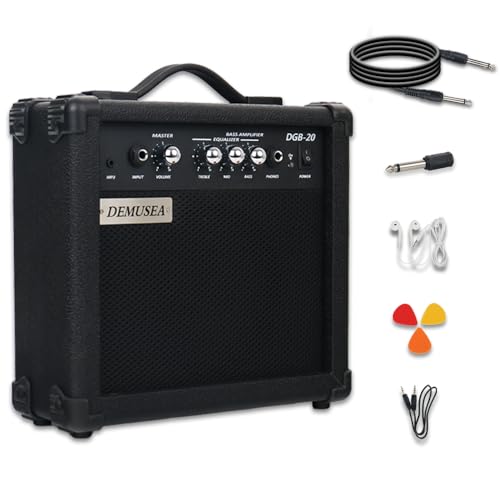
- 20W practice amp with 3-band EQ
- Headphone jack and aux input
- Includes cable, adapter, picks, aux cable, and earphone
Best For: Beginners who want a portable practice amp with extras
High-Power Home Studio Workhorse

- 1,000W Class-D power
- 12" TURBOSOUND speaker
- MOSFET preamp with compressor
Best For: Players wanting a powerful, full-featured home studio bass combo
Compact Practice Pick

- 10W home-practice output
- Headphone out and AUX in
- Battery-powered portable design
Best For: Beginners and small-space home practice
Recording-Friendly Home Studio Choice

- 30W compact combo
- Bluetooth 5.1 and OTG recording
- 3-band EQ with compressor
Best For: Home studio players who want recording and playback features
Compact Tube Head – JOYO BADASS 50W Bass Amp Head
If you want bass amplifiers for home studios that can do quiet practice and tracking-friendly tone shaping, the JOYO BADASS is a flexible amp head with a tube preamp, compressor, 3-band EQ, and FX loop. Just note that it is a head only, so you’ll need an external speaker cabinet for normal playback; headphone mode with cab simulation handles silent sessions.
Best For: Bass players who already have a compatible cab and want a compact, studio-friendly head for practice, headphones, and small gigs.
Pros:
- Genuine 12AX7 preamp tube for warm, punchy bass tone.
- Headphone output with cab simulation for silent practice.
- Built-in compressor, 3-band EQ, and FX loop for flexible shaping.
- Bluetooth streaming helps with backing tracks and practice material.
Cons:
- Requires an external 4Ω-or-higher speaker cabinet to produce sound.
- Not a combo amp, so it is less plug-and-play than a self-contained unit.
For home studio use, this is a smart option if you value headphone practice, simple onboard tools, and tube-style character over an all-in-one cabinet. Its portability and included footswitch make it easy to keep in a rehearsal or recording setup.
Self-Contained Combo – Markbass Mini CMD 121P V 1×12 Combo
Among bass amplifiers for home studios, the Markbass Mini CMD 121P V stands out as a straightforward 1×12 combo with a solid-state design and Markbass neodymium speaker. Its flat, scooped, and FSW voicing options, plus the bi-band limiter and piezo tweeter, give it a practical range for dialing in a clean monitoring sound.
Best For: Bassists who want a portable 1×12 combo for home studio playback, rehearsal, and straightforward tone shaping.
Pros:
- 1×12 combo format keeps setup simple and self-contained.
- Neodymium speaker helps with portability.
- Flat, scooped, and FSW options provide usable voicing choices.
- Bi-band limiter and piezo tweeter add practical control.
Cons:
- More focused on simple combo amp use than deep onboard features.
- Less compact than ultra-portable practice amps.
This is a good pick if you want a no-fuss bass combo that can live in a studio corner and still move easily when needed. It favors clean, functional operation over feature overload.
Desktop Practice Amp – Boss Dual Cube Bass LX Stereo Practice Amp
If you’re shopping bass amplifiers for home studios and need something tiny yet practical, the Boss Dual Cube Bass LX is an ultra-portable stereo amp with two 5-inch speakers and 10 watts of stereo power. It adds multiple preamp types, built-in effects, and memory slots, making it useful for quick tone setups and desk-friendly practice.
Best For: Players who want a very small bass amp for home practice, desktop use, and saved sound presets.
Pros:
- Ultra-portable size with stereo output and two custom 5-inch speakers.
- Five preamp types cover clean to rock-leaning tones.
- Built-in chorus, flanger, touch wah, delay, and reverb add versatility.
- 15 memory slots make it easy to store favorite settings.
Cons:
- 10-watt power is best suited to practice rather than louder sessions.
- Small 5-inch speakers limit low-end scale compared with larger combos.
This is a strong choice when desk footprint and convenience matter more than sheer volume. It gives you a lot of built-in sound-shaping tools in a very compact format.
Home Studio Combo – Ashdown Studio 10 60W 1×10 Bass Combo
For bass amplifiers for home studios, the Ashdown Studio 10 is a practical 1×10 combo with 60 watts, a solid-state design, and a 5-band EQ. It also includes a passive/active switch and a headphone output, so it works well as a compact practice amp with enough control for refining tones at home.
Best For: Bass players who want a straightforward home-studio combo with headphone practice and more EQ flexibility.
Pros:
- 60-watt 1×10 combo offers more output than small desktop practice amps.
- 5-band EQ gives detailed tone shaping.
- Passive/active switch supports different bass setups.
- Headphone output is useful for quiet practice.
Cons:
- Heavier than ultra-portable practice amps.
- Less feature-packed than models with onboard effects or memory presets.
This is a solid middle-ground option if you want a real combo amp for home use without going oversized. It combines useful control, headphone practice, and dependable solid-state simplicity.
Starter Practice Pick – 20W Portable Bass Amp for Home Practice
If you want bass amplifiers for home studios that keep things simple, this 20-watt combo is built for focused practice. It uses a 6.5″ speaker and a 3-band EQ to help you dial in low-end tone, while the MP3 input and headphone output make it easy to practice along with tracks or play quietly.
Best For: Beginners and home players who want a straightforward, portable bass amp for practice sessions and silent rehearsal.
Pros:
- 20 watts of dedicated bass power through a 6.5″ speaker
- Active bass, mid, and treble controls for shaping tone
- 3.5mm MP3 input for backing tracks
- 6.35mm headphone output for private practice
Cons:
- Compact format is aimed at practice rather than bigger-room use
- Simple control layout may feel basic for players wanting more features
This is a practical pick if you mainly need a no-nonsense home practice amp with useful connectivity and enough EQ flexibility to cover different tones.
Compact Studio Companion – 30W 1×8 Bass Combo
For bass amplifiers for home studios, this 30-watt combo offers a compact 1×8″ format with practical features for everyday playing. The 3-band EQ gives you basic tone control, while the headphone jack and line-in/line-mix options make it easy to practice quietly or connect external audio.
Best For: Players who want a small, solid-state bass combo with home-practice features and simple studio-friendly connectivity.
Pros:
- 30-watt solid-state combo in a compact 1×8″ design
- 3-band EQ for quick tone adjustment
- 1/8″ headphone jack for silent practice
- 1/8″ line in and line-mix control for playback support
Cons:
- Smaller speaker size may limit fullness compared with larger combos
- Connectivity is practical, but still fairly basic
This amp makes sense if you want a small home-studio companion that keeps the setup easy while still offering the essentials for practice and playback.
Value Practice Bundle – 20W Bass Amp with Accessories
This option fits bass amplifiers for home studios when you want a portable practice amp with a lot of included extras. It delivers 20 watts of bass power, uses a 3-band EQ for tone control, and includes a headphone jack plus aux input for silent practice and backing tracks.
Best For: Beginner to intermediate bassists who want a portable practice amp with accessories included.
Pros:
- 20W dedicated bass amp for daily practice
- 3-band equalizer for treble, mid, and bass adjustments
- Headphone jack for quiet late-night sessions
- Aux input for playing along with phone or MP3 tracks
Cons:
- Designed for bedroom practice and small jams, not larger venues
- Accessory bundle is useful, but the core amp remains a compact practice model
It stands out as a straightforward home practice choice if you value portability and want useful extras right out of the box.
High-Power Home Studio Workhorse – Bugera BXD12 1000W Bass Combo
If you want one of the more powerful bass amplifiers for home studios, the Bugera BXD12 brings serious headroom without giving up the feel of a more traditional amp. Its 12″ TURBOSOUND speaker, MOSFET preamp, and built-in compressor make it a strong fit for players who want a bigger, more polished tone while tracking or practicing at home.
Best For: Bassists who want a loud, full-featured combo for home studio playing, tone shaping, and dynamic control.
Pros:
- 1,000-watt Class-D design provides huge power and lightweight portability.
- 12″ TURBOSOUND speaker is built for strong bass output.
- MOSFET preamp is designed to deliver an authentic tube-amp-style feel.
- Built-in compressor helps smooth peaks and add sustain.
Cons:
- May be far more power than many home studio setups need.
- Bigger cabinet may take up more room than compact practice amps.
Overall, this is a feature-rich choice if your home studio needs both flexibility and substantial output. It is less about ultra-quiet practice and more about delivering a full, confident bass sound with modern convenience.
Compact Practice Pick – JOYO MA-10B Mini Bass Amp
For bass amplifiers for home studios where space and simplicity matter, the JOYO MA-10B is a compact practice combo that keeps things easy. Its 10 watts of power, headphone output, AUX input, and battery option make it a practical tool for quiet home sessions and casual jamming.
Best For: Beginners and home players who need a tiny, affordable practice amp with silent practice options.
Pros:
- 10-watt output is enough for comfortable home practice.
- Headphone jack supports silent playing.
- AUX input lets you jam along with external audio sources.
- Battery power and backpack-friendly size improve portability.
Cons:
- 5″ speaker and 10 watts are limited for bigger tones or volume needs.
- Simple feature set may not suit players wanting deeper tone control.
This is the most straightforward option in the group, built for easy everyday practice rather than recording complexity or stage volume. If your priority is a small bass amp that works well at home and can travel easily, it fits the job.
Recording-Friendly Home Studio Choice – JOYO Vibe Cube BA-30 Bass Amp
Among bass amplifiers for home studios, the JOYO Vibe Cube BA-30 stands out for players who want practice, playback, and recording tools in one compact combo. Its 30 watts, 3-band EQ with mid-frequency control, Bluetooth 5.1, OTG direct recording, and headphone output make it especially useful for modern home setups.
Best For: Home studio bassists who want direct recording, Bluetooth playback, and flexible tone shaping in a portable combo.
Pros:
- 30-watt output offers a step up from basic practice amps.
- 3-band EQ plus mid-frequency control helps fine-tune your tone.
- Bluetooth 5.1 is useful for backing tracks and casual streaming.
- OTG direct recording supports demos, livestreams, or phone/PC connection.
Cons:
- No internal battery, so it needs external power or a compatible power bank.
- 4″ speaker may not deliver the biggest low-end feel.
This model is a smart middle ground for players who want more than a basic practice amp without moving up to a large combo. It is especially appealing if recording and silent practice matter as much as playing volume.
How We Picked These Bass Amplifiers for Home Studios
We prioritized amps that make sense in real home setups: manageable output, flexible EQ, recording-friendly features, and portable designs. For Bass Amplifiers for Home Studios, the best choices balance tone, low-volume usability, and convenience features like headphone outs, aux input, Bluetooth, or direct recording.
Quick Comparison
As a group, these picks cover a wide range of needs. Mini practice amps are best for late-night playing and travel, small combos work well for apartment-friendly monitoring, and larger combo or head-style units are better if you want more headroom and a fuller low end. If you record often, look for line out, DI, or direct-recording support.
Key Buying Factors for Bass Amplifiers for Home Studios
Power and Volume Control
More watts do not always mean better results in a home studio. A 10- to 60-watt combo can be plenty for practice and close-mic recording, while higher-wattage models are useful if you want extra clean headroom or plan to use the amp beyond home use.
Speaker Size and Low-End Response
Speaker size affects how full and natural your bass sounds. Smaller 4-inch and 8-inch speakers are highly portable but may sound leaner. A 10-inch or 12-inch speaker typically delivers a more balanced low end for tracking and rehearsal.
Recording and Silent Practice Features
Headphone outputs, aux inputs, Bluetooth, and direct-recording connections are especially valuable in home studios. They let you practice quietly, play along with tracks, or capture a usable signal without pushing room volume too high.
Tone Shaping and Compression
A simple EQ is often enough, but onboard compression can help even out dynamics and make recordings easier to manage. If you play multiple styles, choose an amp with enough tonal control to move from clean, round tones to tighter, more defined sounds.
Who Should Buy Which Bass Amplifiers for Home Studios?
Choose a compact mini amp if you need something ultra-portable for desks, apartments, or travel. Pick a small combo if you want a better balance of tone and convenience for regular practice and home recording. Step up to a larger combo or head if you want more serious low-end authority, more headroom, or a unit that can also handle rehearsal-duty use.
For most players, the best bass amplifier is the one that fits the room first and the volume second. In a home studio, usability, quiet performance, and recording flexibility matter more than sheer output.
