Choosing the right audio testing tools for room acoustics can make it much easier to measure noise, check consistency, and spot problem areas in a room. Whether you are tuning a home theater, monitoring a classroom, or verifying a studio, the right meter helps you make better decisions.
This roundup focuses on practical sound level meters that balance accuracy, range, and ease of use for everyday acoustic testing.
Best 10 Audio Testing Tools for Room Acoustics Picks for 2026
Class 1 Precision Meter

- 30 to 130 dB range with 0.1 dB resolution
- RS 232/USB output and SD card logging support
- LCD backlight, data hold, and broad frequency coverage
Best For: Classrooms, auditoriums, and users who want logged measurements
Alarm-Ready SPL Tester
Digital Sound Level Meter with Temp Display

- 30 to 130 dBA range with ±1.5 dB precision
- A-weighted mode, max/min recording, and threshold alerts
- Backlit display with wind cover and storage pouch
Best For: Homes, offices, schools, and work sites needing a portable noise checker
Type 2 Calibrated Meter
SM-130DB Digital Decibel Meter
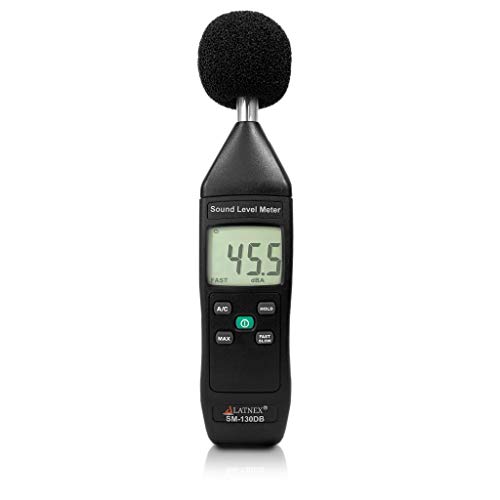
- Type 2 meter with calibration certificate
- 35 to 130 dB range and 0.1 dB resolution
- Includes 2-year warranty and technical support
Best For: Environmental and facility noise checks where calibration paperwork is useful
Sponge-Cover Noise Tester
Digital Sound Meter with Sponge Cover

- 30 to 130 dBA range for general monitoring
- Sponge ball cover helps reduce unwanted noise
- Lightweight handheld design for portable use
Best For: Home theaters, conference rooms, hotels, and basic indoor noise checks
Class 2 Noise Compliance Pick
SL-4011 Certified Decibel Meter

- 30 to 130 dB range with 0.1 dB resolution
- A/C weighting and fast/slow time modes
- Calibration certificate included
Best For: General room noise measurements and classroom or auditorium checks
Portable Budget Monitor
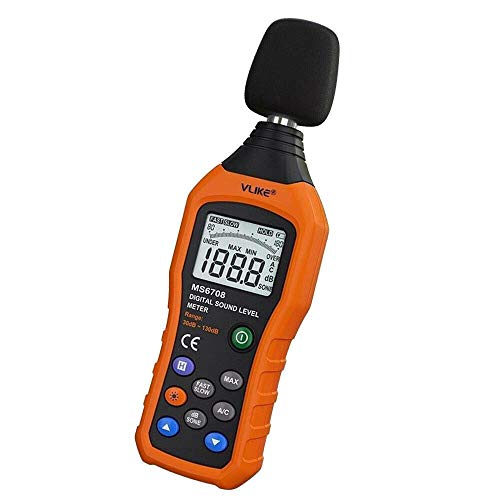
- 30 to 130 dB range with A/C mode
- Backlit, compact, anti-drop handheld design
- Max lock function but no onboard reporting
Best For: Quick, low-cost sound checks in everyday rooms
Calibration-Friendly Room Meter
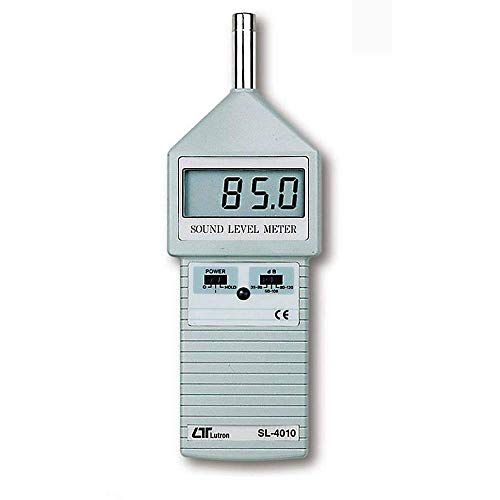
- Type 2 meter with A/C weighting
- AC/DC outputs for analyzers and recorders
- External calibration and factory certificate included
Best For: Room sound checks and setups that need external output connections
Portable SPL Meter for General Room Checks

- 30–130 dB range with ±1.5 dB accuracy
- Fast/slow response plus A/C weighting
- Backlit handheld meter with included batteries
Best For: Quick handheld noise checks in rooms, offices, and classrooms
Desktop Noise Monitor with Temp/Humidity

- Tracks noise, temperature, and humidity together
- Backlit LCD with adjustable brightness
- Rechargeable battery supports long daily use
Best For: Continuous monitoring in studios, classrooms, and home rooms
Compact Indoor SPL Meter for Everyday Checks

- 35–130 dB(A) range with ±1.5 dB accuracy
- MAX/MIN and data hold for quick comparison
- Backlit LCD with batteries and windscreen included
Best For: Affordable spot checks and basic noise tracking indoors
Class 1 Precision Meter – Class 1 Sound Level Meter
If you need audio testing tools for room acoustics that can also handle broader noise surveys, this Class 1 sound level meter offers a practical mix of range, resolution, and data handling. It measures from 30 to 130 dB with 0.1 dB resolution and includes an RS 232/USB output plus SD card support for logging measurements.
Best For: Classrooms, auditoriums, and users who want a higher-precision meter with PC and SD logging options.
Pros:
- Class 1 sound level meter with a 30 to 130 dB measuring range
- 0.1 dB resolution for fine-grained reading detail
- RS 232/USB PC interface and SD memory card support for data output
- LCD backlight and data hold make readings easier to capture
Cons:
- SD memory card is not included
- Requires 6 AA batteries or optional adapter input
- Primarily a sound level meter, so it is focused on loudness measurement rather than full acoustic analysis
For buyers comparing audio testing tools for room acoustics, this model stands out for its logged output and broad frequency coverage from 31.5 to 8,000 Hz. It is a solid pick when you want a dependable meter for classrooms, auditoriums, and similar spaces.
Alarm-Ready SPL Tester – Digital Sound Level Meter with Temp Display
For shoppers looking at audio testing tools for room acoustics, this handheld SPL tester is a simple way to monitor noise levels in everyday spaces. It measures from 30 to 130 dBA with 0.1 dB resolution, adds an A-weighted mode, and includes max/min recording plus threshold alerts for quick checks.
Best For: Homes, offices, schools, and work sites that need a compact meter with alerts and temperature readout.
Pros:
- 30 to 130 dBA range with ±1.5 dB precision and 0.1 dB resolution
- A-weighted mode for more natural ear-sensitive measurements
- Custom alerts, max/min record, and one-tap freeze function
- Backlit display plus wind cover and storage pouch included
Cons:
- Not designed for deeper acoustic analysis beyond sound level measurement
- Best suited to general monitoring rather than formal calibration workflows
- Compact size is convenient, but it may not replace more advanced lab-style equipment
This is a practical choice if you want a portable meter for fast spot checks, especially when temperature display and alert functions are useful. Its mix of convenience and basic monitoring features makes it easy to keep in a toolkit or bag.
Type 2 Calibrated Meter – SM-130DB Digital Decibel Meter
If you are comparing audio testing tools for room acoustics and general noise monitoring, this Type 2 decibel meter is built for dependable everyday use. It covers 35 to 130 dB, includes a calibration certificate, and uses a 1/2 inch electret condenser microphone with 0.1 dB resolution.
Best For: Environmental, office, classroom, and facility noise checks where a calibration certificate matters.
Pros:
- Type 2 meter with calibration certificate included
- 35 to 130 dB operating range with 0.1 dB resolution
- 1/2 inch electret condenser microphone for reliable measurement
- Includes technical support and a 2-year warranty
Cons:
- Requires a 9V battery, which is included but still battery-powered
- Lower starting range than some 30 dB meters
- Focused on sound level measurement rather than advanced room analysis
For buyers who want a straightforward meter with documented calibration, this model offers strong value for routine monitoring. It fits well in offices, classrooms, warehouses, and other spaces where consistent loudness readings are the main goal.
Sponge-Cover Noise Tester – Digital Sound Meter with Sponge Cover
As a basic option among audio testing tools for room acoustics, this handheld sound meter focuses on quick sound level checks in common indoor and industrial settings. It measures 30 to 130 dBA, uses an LCD readout, and includes a sponge ball cover to help filter unwanted noise for cleaner readings.
Best For: Home theaters, conference rooms, hotels, and other spaces needing a simple portable noise tester.
Pros:
- 30 to 130 dBA measuring range for general sound monitoring
- Sponge ball cover helps eliminate unwanted noise
- Lightweight handheld design for easy portability
- Useful for hotels, conference halls, hospitals, and similar spaces
Cons:
- No resolution, accuracy, or logging details are provided in the notes
- Less feature-rich than meters with alert, hold, or output functions
- Better suited to basic checks than more detailed testing workflows
This model is best viewed as a simple, portable noise tester for practical day-to-day use. If you mainly need a straightforward meter for room-level sound checks, it keeps the feature set focused and easy to use.
Class 2 Noise Compliance Pick – SL-4011 Certified Decibel Meter
If you’re comparing audio testing tools for room acoustics, the SL-4011 is a practical option for basic sound checks in classrooms, auditoriums, theaters, and similar spaces. It measures from 30 to 130 dB, offers A and C weighting, and includes fast/slow time weighting for routine monitoring.
Best For: General room noise measurements, classroom checks, and compliance-minded basic acoustic testing.
Pros:
- Class 2 sound level meter with IEC 61672-related features
- A and C weighting plus FAST and SLOW time response modes
- Large LCD, max hold, and warning indicators for easier field use
- AC/DC output supports system expansion
Cons:
- Focused on sound level measurement rather than full acoustic analysis
- Basic display and one-hand handheld design, not a data-logging setup
The SL-4011 is a straightforward choice if you need a certified meter for everyday room-level noise checks. Its calibration certificate and common weighting options make it better suited to practical verification than advanced studio measurement.
Portable Budget Monitor – VLIKE LCD Digital dB Meter
For shoppers looking at audio testing tools for room acoustics on a budget, this VLIKE meter covers the basics with a 30 to 130 dB range, A/C mode, and a compact handheld design. It is meant for real-time sound level checks in spaces like offices, schools, workshops, and residential environments.
Best For: Quick, low-cost sound level monitoring in everyday rooms and shared spaces.
Pros:
- 30 to 130 dB measuring scope with shifting function
- A/C mode and max locking function for simple readings
- Backlight helps with nighttime or low-light use
- Compact, anti-drop handheld body for portability
Cons:
- Batteries are not included
- Cannot keep or generate a report directly from the device
- Uses a more basic feature set than higher-end meters
This is a sensible pick if you mainly need a simple, portable meter for checking room noise without extra reporting features. It emphasizes convenience and durability over advanced measurement functions.
Calibration-Friendly Room Meter – SL-4010 Type 2 Sound Meter
If you want audio testing tools for room acoustics with more installation-friendly output options, the SL-4010 is built around a Type 2 sound level meter design. It measures 30 to 130 dB in both A and C weighting, includes external calibration, and provides AC/DC outputs for connection to analyzers or recorders.
Best For: Room sound checks, system testing, and setups that need output connections for external equipment.
Pros:
- Type 2 meter with A and C weighting across 30 to 130 dB
- External calibration VR and factory calibration certificate
- AC and DC outputs support analyzers, recorders, and other gear
- Max hold function and readable large LCD display
Cons:
- Requires a 9V adapter input rather than simple built-in power
- More focused on output and measurement than portable convenience
The SL-4010 stands out when your room-acoustics workflow benefits from external signal routing or calibration support. It is a practical step up from a basic handheld meter if you need to connect to other test equipment.
Portable SPL Meter for General Room Checks – PT6708 Sound Level Meter
If you need audio testing tools for room acoustics that can quickly flag excess noise, this PT6708 sound level meter is a straightforward option. It measures from 30 to 130 dB with ±1.5 dB accuracy, offers fast and slow response settings, and includes A/C weighting for different kinds of noise checks in classrooms, offices, workshops, and audio spaces.
Best For: Quick handheld noise checks in rooms, workplaces, and basic acoustic troubleshooting.
Pros:
- 30–130 dB range with 0.1 dB resolution and ±1.5 dB accuracy
- Fast and slow response modes for different measurement needs
- A and C weighting options for ambient noise and sound pressure checks
- Backlit display and included batteries make it ready to use
Cons:
- Does not save readings or generate reports directly
- Handheld design is better for spot checks than long-term monitoring
- Not a full acoustic analysis tool for detailed room tuning
This is a practical pick if your main goal is simple, repeatable sound level monitoring rather than advanced room acoustics analysis. It covers the basics well and stays easy to carry between spaces.
Desktop Noise Monitor with Temp/Humidity – Fafeicy Decibel Meter
For audio testing tools for room acoustics where you want constant visibility, this Fafeicy digital decibel meter works as a desktop or wall-hanging monitor. It shows noise, temperature, and humidity on a backlit LCD, so you can keep an eye on room conditions while tracking sound levels from 30 to 130 dBA.
Best For: Continuous room monitoring in studios, classrooms, and home spaces.
Pros:
- Displays noise, temperature, and humidity in real time
- Large backlit LCD with adjustable brightness for easier reading
- Rechargeable 2000mAh battery supports up to 24 hours of use
- Desktop placement and wall-hanging design reduce the need for handheld use
Cons:
- No stated data hold, max/min logging, or report export features
- Less portable than a pocket-style handheld meter
- Best suited to monitoring rather than detailed acoustic measurement
This model makes sense if you want a simple room monitor that stays in place and shows more than just decibels. It is especially useful when you care about both noise and general comfort conditions in the room.
Compact Indoor SPL Meter for Everyday Checks – K142 Decibel Meter
If you want audio testing tools for room acoustics that are simple to carry and quick to read, this K142 decibel meter is built for everyday indoor checks. It measures 35 to 130 dB(A) with ±1.5 dB accuracy, includes MAX/MIN and data hold functions, and uses a backlit LCD for checking room noise in homes, classrooms, offices, and workshops.
Best For: Affordable spot checks and basic noise tracking in indoor spaces.
Pros:
- 35–130 dB(A) range with ±1.5 dB accuracy
- MAX/MIN and data hold help capture and compare readings
- Backlit LCD and continuous mode support day or night use
- Includes batteries, manual, and foam windscreen for immediate setup
Cons:
- Focused on simple indoor measurements rather than advanced analysis
- No reporting or logging features mentioned
- Best for spot checks, not dedicated long-term room monitoring
This is a practical, low-friction option for anyone who just needs to check room noise without extra complexity. It offers the core features most buyers want for basic acoustic awareness.
How We Picked These Audio Testing Tools for Room Acoustics
We prioritized measurement range, stated accuracy, display readability, data hold or max/min functions, and suitability for common indoor testing scenarios. For Audio Testing Tools for Room Acoustics, consistency and usable readings matter more than flashy features, so we looked for meters that are simple to operate in homes, classrooms, studios, theaters, and worksites.
Quick Comparison
Most options here fall into the 30 to 130 dB range, which is broad enough for ambient room measurements, playback checks, and noise monitoring. Type 1 or Class 1 models generally suit tighter accuracy needs, while Type 2 or Class 2 meters are a better everyday fit for general room-acoustic checks.
Key Buying Factors for Audio Testing Tools for Room Acoustics
Accuracy and Calibration
If you need repeatable results, look for stated accuracy, certification, or a calibration certificate. That is especially important for studios, auditoriums, and compliance-minded environments.
Display and Data Features
A large LCD, backlight, max/min capture, and data hold make it easier to test in dim rooms or compare measurements over time. These features are useful when you are moving around a space and checking multiple listening positions.
Range and Weighting
Most buyers can work well with a 30 to 130 dB range. For indoor acoustic work, A-weighting is commonly used because it reflects human hearing more closely and is helpful when assessing room noise or playback levels.
Form Factor
Handheld meters are best for mobile checks, while wall-hanging or fixed-display units can work better for monitoring classrooms, studios, or continuous noise levels in one location.
Who Should Buy Which Audio Testing Tools for Room Acoustics?
Home theater users should favor easy-read meters with max/min and backlit displays for quick setup and level matching. Teachers and school staff may prefer straightforward, durable meters with alarms or wall-mount options for ongoing classroom monitoring. Studio owners and engineers should lean toward higher-accuracy or certified models for more reliable room checks. Facility managers and industrial users should look for broad-range, easy-to-read tools that can handle repeated spot checks across different spaces.
For most buyers, the best choice is the meter that matches your environment and reporting needs, not the one with the most features. The most useful Audio Testing Tools for Room Acoustics are the ones you can use quickly, read clearly, and trust from one measurement to the next.
