Bad weather does not have to end an outdoor shoot. The best camera rain covers help protect camera bodies, lenses, controls, and hands from rain while keeping essential controls accessible.
This roundup compares 10 options across disposable sleeves, multipacks, and larger covers for standard and telephoto lenses, so you can choose protection that matches your equipment and shooting style.
Best 10 Camera Rain Covers Picks for 2026
Best for Active Shooters
Durable Nylon Camera Rain Cover

- Waterproof nylon construction
- Hand sleeves and full-length zipper
- Fits lenses up to 8 inches
Best For: Sports, wildlife, travel, and event photography in wet or dusty conditions
Best Lightweight 2-Pack

- Compact and pocket-friendly
- Clear sleeve keeps controls visible
- Supports handheld or tripod use
Best For: Portable backup protection for digital and film cameras
Best Value Pack

- Four lightweight PE covers
- See-through access to controls
- Fits lenses up to 18 inches
Best For: DSLR photographers who want convenient spare covers
Best for Super-Telephoto Lenses
Think Tank Emergency Rain Cover

- Seam-sealed nylon construction
- Designed for 300–600mm f/4 lenses
- Tripod and monopod mountable
Best For: Wildlife and sports photographers using large telephoto setups
Best All-Around Protection
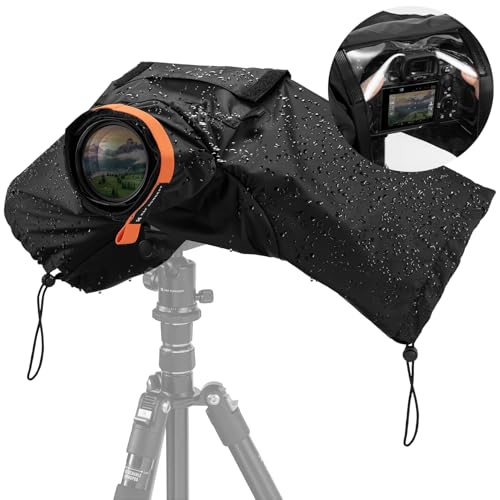
- Anti-fog TPU viewing window
- Waterproof zipper and material
- Secure grip for handheld or tripod use
Best For: Outdoor photographers wanting reusable protection and clear viewing
Best Multipack Value
Movo RC1 5-Pack Clear Rain Covers

- Five clear polyethylene covers
- Fits gear up to 18 inches long
- Drawstring closure for quick sealing
Best For: Photographers who want spare covers in multiple locations
Best for Long Lens Kits
Professional Camera Rain Cover

- Fits camera and lens setups under 13.38 inches
- Clear window supports touchscreen use
- Adjustable sleeves and waterproof zippers
Best For: Long-lens photographers shooting in harsh outdoor conditions
Best for Large DSLR Setups
JJC 18-Inch Camera Rain Cover Sleeves

- Fits lenses up to 18 inches long
- Clear PE design preserves visibility
- Two-pack supports outdoor backups
Best For: DSLR photographers using large lenses
Best Compact Two-Pack
Clear 11-Inch Camera Rain Covers

- Fits lenses up to 11 inches
- Clear sleeves with drawstring closures
- Folds compactly for camera bags
Best For: Portable protection for smaller camera setups
Best for Wildlife Photography
NEEWER Camouflage Nylon Rain Cover

- Fits setups below 200mm
- Reversible camouflage nylon design
- Lightweight with storage bag
Best For: Wildlife photographers using compatible telephoto setups
Best for Active Shooters – Durable Nylon Camera Rain Cover
For photographers who need camera rain covers that can stay in place during active shooting, the Altura Photo uses waterproof nylon rather than thin disposable plastic. Its hand sleeves, clear viewing panel, and adjustable fit provide practical access to camera controls in changing weather.
Best For: DSLR and mirrorless photographers shooting sports, wildlife, travel, or events in rain, snow, dust, or salt spray.
Pros:
- Durable waterproof nylon holds its shape during use.
- Two hand sleeves and a full-length double zipper provide access to controls and tripod mounting.
- Clear rear window keeps the LCD and viewfinder visible.
- Anti-slip interior rubber and exterior hook-and-loop strap help stabilize the cover.
Cons:
- Compatibility is best checked carefully because it is designed for lenses up to 8 inches.
- It is not recommended for smaller cameras with pancake lenses.
The Altura Photo is a strong choice when reusable construction and hands-on camera access matter more than the smallest possible emergency sleeve.
Best Lightweight 2-Pack – Clear OP/TECH Rainsleeve
The OP/TECH Rainsleeve is a compact option for photographers who want camera rain covers ready for sudden weather changes. This clear plastic sleeve supports handheld or tripod use while keeping the camera controls and viewfinder accessible.
Best For: Photographers seeking lightweight backup protection for digital or film cameras with lenses up to 18 inches long.
Pros:
- Compact design fits in a camera bag or pocket.
- Clear material keeps controls visible and operable.
- Drawstring lens opening provides a snug fit.
- Eyepiece opening accommodates most viewfinders.
Cons:
- Plastic construction is less substantial than a reusable nylon cover.
- Fit should be checked against the listed maximum dimensions.
With two sleeves included, the OP/TECH is a practical, low-bulk choice for keeping an extra layer of weather protection in your kit.
Best Value Pack – JJC Clear DSLR Rain Covers
For photographers who want several disposable-style camera rain covers on hand, the JJC four-pack uses see-through PE material for straightforward protection from rain, dust, and mud. The drawstring lens opening and tripod compatibility make it easy to deploy without removing the lens hood.
Best For: DSLR users who want lightweight spare covers for outdoor shoots and changing conditions.
Pros:
- Four covers provide convenient spares for repeated outdoor use.
- Completely see-through design allows access to controls and the viewfinder.
- Fits lenses up to 18 inches long and 7 inches wide.
- Works with a tripod and lens hood.
Cons:
- PE construction is lightweight rather than heavy-duty reusable nylon.
- The listed water-resistance rating is “Water Resistant,” so it may be less suited to extreme downpours.
The JJC pack is appealing when quantity, simple setup, and broad lens compatibility are more important than premium construction.
Best for Super-Telephoto Lenses – Think Tank Emergency Rain Cover
The Think Tank Emergency Rain Cover is designed for large DSLR and mirrorless setups using 300–600mm f/4 lenses. Among camera rain covers, its seam-sealed nylon construction, oversized viewing window, and tripod or monopod mounting make it suited to demanding downpours and dusty conditions.
Best For: Wildlife and sports photographers using long lenses between 27.6 inches in length and 5.1–7.9 inches in diameter.
Pros:
- Seam-sealed construction is designed for extreme rain and dusty conditions.
- Oversized window provides visibility of the LCD and controls.
- Mounts to a tripod or monopod.
- Compresses into an included carrying pouch.
Cons:
- Its large dimensions are intended for super-telephoto setups, not compact camera kits.
- It is a single cover rather than a multipack.
For long-lens photographers, the Think Tank offers purpose-built coverage and support features that smaller general-purpose sleeves may not provide.
Best All-Around Protection – K&F CONCEPT Camera Rain Cover
For photographers who want a reusable camera rain cover with thoughtful handling features, the K&F CONCEPT model combines weather protection with a clear anti-fog viewing window. It is designed for DSLR and mirrorless cameras with lenses and works for handheld or tripod shooting.
Best For: Outdoor photographers who prioritize clear viewing, secure handling, and convenient access to camera controls.
Pros:
- Waterproof material and zipper help protect against rain, snow, and unexpected weather.
- Dual-layer anti-fog TPU window provides a clear view in humid conditions.
- Adjustable straps, elastic bands, and textured grip help prevent slipping.
- Built-in carry loop keeps the cover easy to sling when not in use.
Cons:
- The listed 0.26 kg weight is higher than the lightweight disposable-cover alternatives.
- Specific maximum camera-and-lens dimensions are not provided in the supplied details.
This is a strong pick when you expect changing weather and want a more structured, reusable cover with an anti-fog window and tripod-friendly access.
Best Multipack Value – Movo RC1 5-Pack Clear Rain Covers
The Movo RC1 is a practical camera rain cover option for photographers who want backups on hand. This five-pack uses clear polyethylene covers with drawstring closures to shield a DSLR, lens, and tripod from rain, dust, and mud.
Best For: Photographers who want inexpensive, storable covers distributed across a car, office, or home.
Pros:
- Five covers provide convenient spares for different locations or unexpected weather.
- Fits a camera and lens up to 18 inches long and 7 inches wide.
- See-through material allows access to camera buttons and the viewfinder.
- Drawstring closures make the cover quick to seal and fold for storage.
Cons:
- Polyethylene construction is a simpler disposable-style solution rather than a structured reusable cover.
- The supplied details do not mention an anti-fog treatment or dedicated viewing window.
If you need several basic covers for occasional storms, the five-pack offers useful redundancy and broad compatibility without carrying just one protective sleeve.
Best for Long Lens Kits – Professional Camera Rain Cover
This professional camera rain cover is sized for camera-and-lens combinations under 13.38 inches, including examples such as a Canon 70-200mm or Nikon 24-200mm setup. Its clear viewing window, adjustable sleeves, and waterproof zippers support shooting in rain, snow, salt spray, dust, and sand.
Best For: Photographers using longer lens setups who need access while shooting handheld or from a tripod.
Pros:
- Designed for camera-and-lens combinations less than 13.38 inches.
- Ultra-clear window allows viewing and touchscreen use.
- Dual adjustable sleeves and double waterproof zipper support camera control.
- Tight interior cuff and non-slip straps help adjust the lens sleeve securely.
Cons:
- Compatibility depends on keeping the camera-and-lens combination below the stated size limit.
- The PVC construction may feel less streamlined than a soft fabric cover.
Choose this model when lens length and active camera control matter more than having multiple spare covers, especially for demanding outdoor conditions.
Best for Large DSLR Setups – JJC 18-Inch Camera Rain Cover Sleeves
For photographers carrying a DSLR with a long lens, these camera rain covers provide a simple, see-through barrier against rain, dust, and mud. The two-pack PE sleeves fit cameras with lenses up to 18 inches long and 7 inches wide while preserving access to the controls and viewfinder.
Best For: DSLR users with large lenses who want a lightweight, reusable-style backup cover for outdoor shoots.
Pros:
- Fits DSLR and lens setups up to 18 inches long and 7 inches wide.
- Completely see-through for visibility of controls and the viewfinder.
- Supports tripod use and lens hoods.
- Includes two lightweight PE covers.
Cons:
- Designed as a sleeve rather than a structured protective shell.
- Compatibility depends on staying within the stated lens dimensions.
This JJC option is a practical choice when maximum lens coverage matters. Its generous size, clear material, and tripod-friendly design make it especially useful for changing outdoor conditions.
Best Compact Two-Pack – Clear 11-Inch Camera Rain Covers
These camera rain covers are a compact, straightforward option for protecting compatible cameras from rain, snow, salt spray, dust, and sand. The clear polyethylene sleeves use drawstring closures and fold down for storage, making the two-pack convenient to keep in a camera bag.
Best For: Photographers who want an affordable, portable pair of clear covers for camera and lens combinations up to 11 inches.
Pros:
- Accommodates cameras with lenses up to 11 inches long.
- Clear material allows visibility while shooting.
- Drawstring closure helps fit the sleeve closely around the lens.
- Two covers fold compactly and can be reused.
Cons:
- Smaller maximum size than the other covers in this selection.
- Soft polyethylene construction offers weather coverage but not rigid protection.
Choose this Kiorafoto two-pack if portability and simple weather coverage are priorities. It is well suited to keeping an extra sleeve ready without adding much bulk to your gear.
Best for Wildlife Photography – NEEWER Camouflage Nylon Rain Cover
The NEEWER PB021 combines camera rain cover protection with a reversible camouflage design for outdoor and wildlife photography. Its medium 23.6-by-23.6-inch nylon cover fits camera and lens combinations below 200mm, secures with touch fasteners, and leaves an enlarged opening for camera access.
Best For: Wildlife photographers using compatible DSLR or mirrorless setups who want weather coverage and a camouflage finish.
Pros:
- Protects cameras and telephoto lenses from rain, moisture, dust, and dirt.
- Reversible dual-sided camouflage design helps blend into outdoor surroundings.
- Touch fasteners and an enlarged opening simplify installation and operation.
- Lightweight 4.6-ounce nylon cover folds into the included storage bag.
Cons:
- Limited to camera and lens combinations below 200mm.
- Includes one cover rather than a two-pack.
- Camouflage styling may be less suitable for general urban photography.
This NEEWER cover is the most specialized option here. Its nylon construction, reversible camouflage pattern, and quick-access design make it a strong fit for mobile wildlife work in wet conditions.
How We Picked These Camera Rain Covers
We selected covers that address common outdoor photography needs: water resistance, lens-length compatibility, camera fit, control access, visibility, pack size, and portability. The lineup includes simple clear sleeves for occasional showers, reusable-style designs for regular use, and larger options intended for cameras paired with long telephoto lenses.
Because rain covers vary significantly in dimensions and construction, compatibility matters more than appearance. Always compare the stated lens length and camera size with your own setup, including the lens hood and any attached accessories.
Quick Comparison
- Best for basic emergency protection: Clear sleeves and compact multipacks are inexpensive to keep in every camera bag.
- Best for frequent outdoor use: Look for stronger materials, secure openings, and controls that remain easy to operate.
- Best for long lenses: Choose a large cover specifically rated for telephoto lenses rather than stretching a standard sleeve.
- Best for teams or backups: Four- and five-packs provide useful spares for multiple cameras or unexpected damage.
Key Buying Factors for Camera Rain Covers
Fit and Lens Capacity
Check the maximum supported lens length and camera configuration. A cover that is too short can leave the lens or controls exposed, while excess material may obstruct handling. Confirm whether the measurement includes the lens hood.
Material and Weather Protection
Clear plastic is lightweight and lets you see the camera, but thinner sleeves may be better suited to brief showers than prolonged downpours. For demanding conditions, prioritize construction that closes securely around the lens and camera body.
Control and Viewing Access
Good covers allow you to reach the shutter, zoom, focus, and essential buttons without removing protection. Transparent panels or sleeves can help you monitor settings, but check for glare, condensation, and restricted access.
Packability and Reuse
Disposable-style covers are convenient because they fold small and are easy to replace. Reusable covers may offer better value for frequent photographers, provided they dry fully and remain free of tears after use.
Quantity and Value
Multipacks are practical for travel, event work, and shared gear. Keep at least one spare in your bag, since wet or damaged plastic can be difficult to deploy effectively in changing weather.
Who Should Buy Which Camera Rain Covers?
Casual photographers and travelers should choose a compact, clear sleeve that fits their most-used camera and lens. It offers inexpensive backup protection without adding much weight.
Landscape, wildlife, and sports photographers should select a cover matched to their longest lens, with enough room for comfortable handling and a secure lens opening. A larger dedicated model is preferable to forcing a small sleeve over telephoto equipment.
Photographers who work outdoors regularly should invest in sturdier protection and carry a spare. Prioritize reliable access to controls and a fit that can be deployed quickly when weather changes.
Studios, assistants, and groups can benefit from multipacks, which provide backups for multiple bodies and reduce the risk of being caught without protection. Regardless of type, test the cover on your complete camera setup before an important shoot.
