Desktop speaker stands with isolation can tighten bass, reduce desk-borne vibrations, and improve stereo imaging without taking up much space.
Below, we focus on stands and isolation solutions that balance height, stability, and compatibility for different speaker sizes and desktop setups.
Best 10 Desktop Speaker Stands with Isolation Picks for 2026
Rock-Solid Desktop Isolation
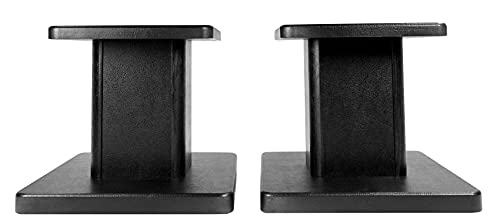
- 66 lb load capacity for heavier speakers
- EVA pads help reduce vibration and slipping
- Cable clips and ties support a cleaner desk
Best For: heavier desktop speakers and tidy studio setups
Precision Isolation Control
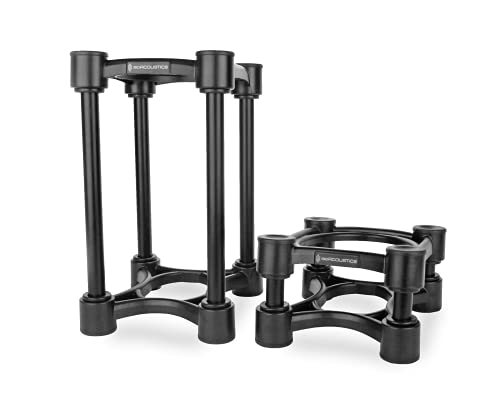
- 14 height and tilt variations for tuning placement
- Patented isolation helps reduce surface vibration
- Designed to improve stereo image and reduce smear
Best For: monitor placement tuning and acoustic isolation
Angled Metal Isolation Stands

- 5-degree tilt helps aim speakers at ear level
- Rubber feet and top pads reduce movement and vibration
- C-shape design saves space under the stand
Best For: compact desks needing angled metal speaker support
Angled Foam Speaker Isolation

- Five angle settings for flexible monitor tilt
- High-density foam helps support and isolate speakers
- Compact format saves space on desks or stands
Best For: small monitors needing compact angled isolation pads
Adjustable C-Shaped Stand
Desk Speaker Stands for Most Bookshelf Speakers

- 6° tilt aims speakers toward your ears
- Anti-vibration pads help cut resonance
- C-shaped frame frees desk space
Best For: Compact bookshelf and computer speaker setups
Silicone Isolation Stand
Audioengine DS2 Desktop Speaker Stands

- 15-degree tilt improves speaker aim
- Silicone damping reduces vibration
- Compact pair suits small desktop speakers
Best For: Small speakers needing tilted isolation on a desk
Foam Isolation Pads
Studio Monitor Isolation Pads for Small Speakers

- High-density foam helps damp vibration
- Multiple angles support better positioning
- Sized for many 3" to 4.5" speakers
Best For: Small monitors and bookshelf speakers on compact desks
Heavy-Duty Desk Stability
Desktop Speaker Stands with Built-In Cable Management

- Heavy-duty steel build supports up to 55 lbs
- Integrated isolation pads help cut desk resonance
- Cable-management opening keeps wiring hidden
Best For: Home studios and creator desks that need sturdy support and a cleaner layout
Adjustable-Angle Accuracy
Kanto SP6HD Desktop Speaker Stands

- Heavy steel and foam padding help reduce resonance
- 6-inch height suits 4–7 inch studio monitors
- Rotating top plates and cable routing add flexibility
Best For: Medium to large bookshelf speakers and studio monitors that need damping and aim adjustment
Low-Profile Listening Angle
Kanto S4 Tilted Desktop Speaker Stands

- 16-degree tilt aims speakers toward your ears
- Foam padding helps reduce resonance
- Low-profile metal design keeps desktops clean
Best For: Small desks and compact studio monitors that need a low, angled stand
Rock-Solid Desktop Isolation – Rockville 8-inch Pair
If you want desktop speaker stands with isolation that can handle heavier gear, the Rockville RHT8B pair is built for stability and cleaner desktop sound. The 66 lb load rating, EVA isolation pads, and cable management extras make it a practical pick for studio monitors, bookshelf speakers, or gaming setups.
Best For: Users who need sturdy, budget-friendly stands for heavier desktop speakers and monitors.
Pros:
- Supports up to 66 pounds, giving it a higher capacity than many compact stands.
- Included EVA isolation pads help reduce vibration and add a no-slip surface.
- Pre-drilled holes, cable clips, and ties make setup and cable routing easier.
- 8-inch height helps position speakers closer to ear level for desktop listening.
Cons:
- Fixed-height design offers less placement flexibility than adjustable isolation stands.
- Medium-density fiber core construction may be less refined than premium isolation-focused designs.
This is a straightforward choice if your priority is stability, basic acoustic isolation, and a clean desktop setup. It leans more toward durable everyday use than advanced tuning adjustments.
Precision Isolation Control – IsoAcoustics ISO-130 Pair
The IsoAcoustics ISO-130 is a strong fit if you’re shopping for desktop speaker stands with isolation and want more control over positioning. With height and tilt adjustment plus patented isolation design, it’s aimed at improving monitor placement, reducing surface resonance, and refining stereo imaging.
Best For: Listeners and producers who want adjustable isolation stands for fine-tuning monitor height and angle.
Pros:
- Offers 14 height and tilt variations for more precise speaker placement.
- Patented IsoAcoustics isolation is designed to reduce vibrations through the supporting surface.
- Helps focus tweeters toward ear level for improved monitor alignment.
- Can reduce internal reflections and smear for a cleaner stereo image.
Cons:
- 20 lb weight capacity is lower than some heavier-duty desktop stands.
- Smaller footprint may not suit larger speakers that need more top surface area.
This pair stands out for users who care more about acoustic performance and adjustability than sheer load capacity. It’s a more specialized option for dialing in monitor placement on a desk or studio surface.
Angled Metal Isolation Stands – JiffyPoint C-Shape Pair
These desktop speaker stands with isolation are a good option if you want a compact metal design with built-in vibration control. The 5-degree upward tilt, rubber feet, and anti-slip top pads are geared toward cleaner placement and more stable listening on a desk.
Best For: Desktop users who want low-profile metal stands with vibration-absorbing pads and a slight angle.
Pros:
- 5-degree tilt helps align speakers more closely with ear level.
- All-steel construction adds stability and durability.
- Rubber feet and top pads help absorb vibration and reduce slipping.
- C-shaped design creates space underneath the stand for a tidier desk.
Cons:
- Fixed 4.12-inch height may not work for users needing more elevation.
- 30 lb capacity is solid, but lower than some heavier-duty alternatives.
This model fits well in compact desks where you want a practical mix of elevation, isolation, and space-saving design. It’s especially appealing if you prefer metal over foam or wood-based stands.
Angled Foam Speaker Isolation – Liquid Stands 5-inch Pads
If you prefer isolation pads instead of rigid stands, this Liquid Stands option is a compact way to improve placement on a desk or floor. The foam wedge design, multiple angle settings, and non-slip surface are built to elevate small studio monitors while helping reduce vibration.
Best For: Small studio monitors that need angled isolation pads with flexible positioning.
Pros:
- Five angle settings give you more flexibility for monitor tilt.
- High-density foam construction is designed for support and stability.
- Non-slip surface helps keep speakers securely in place.
- Compact size makes it easy to fit on a desk without taking much space.
Cons:
- Best suited to smaller monitors, not larger bookshelf speakers.
- Foam pad format does not provide the height of full desktop stands.
This is a smart pick if your setup benefits more from angled isolation than from a traditional stand. It focuses on simple, space-saving monitor support for smaller speakers.
Adjustable C-Shaped Stand – Desk Speaker Stands for Most Bookshelf Speakers
If you want desktop speaker stands with isolation that also clean up your desk, this PUTORSEN pair focuses on angle, fit, and vibration control. The 6° tilt helps aim sound toward your ears, while the anti-vibration pads and EVA contact points are designed to reduce resonance and protect your speakers.
Best For: Small to medium bookshelf speakers, computer speakers, and studio monitors that need a tilted desktop setup with extra desk clearance.
Pros:
- 6° tilt helps align speakers toward ear level for a better listening angle.
- Adjustable depth range of about 5.5" to 7.5" adds fit flexibility.
- Anti-vibration pads and soft EVA pads help reduce resonance and protect surfaces.
- C-shaped design frees up desk space and leaves room underneath the speakers.
Cons:
- 12 lb weight capacity may limit use with heavier speakers.
- Best suited to speakers that fit the stand’s depth and preset slot design.
Overall, this is a practical choice if you want a stable desktop stand that adds isolation, improves positioning, and keeps your workspace cleaner. The combination of tilt and vibration reduction makes it especially appealing for compact audio setups.
Silicone Isolation Stand – Audioengine DS2 Desktop Speaker Stands
For desktop speaker stands with isolation, the Audioengine DS2 keeps things simple: a tilted platform, silicone damping, and a compact footprint. Its 15-degree angle is meant to improve the sound stage, while the isolation design helps reduce vibration that can blur bass and overall clarity.
Best For: Small bookshelf speakers, desktop speakers, and studio monitors that benefit from angled placement and vibration dampening.
Pros:
- 15-degree tilt is designed to improve listening angle and sound stage.
- Silicone isolation helps minimize vibration-degrading bass.
- Compact size works for many small speakers and desktop setups.
- Includes two stands with a 3-year warranty and US-based support.
Cons:
- 8 lb maximum load is lower than some competing stands.
- Small footprint means it is not intended for larger speakers.
This is a strong pick if you want a tidy, no-fuss isolation stand for smaller speakers. The combination of tilt and damping makes it a solid upgrade for focused nearfield listening on a desk.
Foam Isolation Pads – Studio Monitor Isolation Pads for Small Speakers
If you are shopping for desktop speaker stands with isolation in a foam-pad format, the SMPad 4 is built to dampen vibration while giving you angle options. The high-density acoustic foam is meant to support small speakers and can be arranged in multiple configurations to help you fine-tune listening position.
Best For: 3" to 4.5" bookshelf speakers and studio monitors that need simple isolation pads for desktop use.
Pros:
- High-density acoustic foam is designed to absorb vibration.
- Multiple configurations let you adjust speaker angle.
- Supports up to 16 lb and fits many popular small speaker models.
- Low-profile pads keep desktop setups compact and uncluttered.
Cons:
- Works only with smaller speakers in the 3" to 4.5" range.
- Does not raise speakers as high as rigid desktop stands.
This is the simplest isolation-first option in the group, especially if you want foam damping instead of a raised metal stand. It is best when your priority is reducing resonance and keeping small monitors stable on a desk.
Heavy-Duty Desk Stability – Desktop Speaker Stands with Built-In Cable Management
If you want desktop speaker stands with isolation that also clean up a desk, this heavy-duty steel pair is built for stable placement and reduced vibration transfer. The fixed-height design lifts 5–8 inch monitors or bookshelf speakers off the surface, while the integrated cable opening helps keep wiring out of sight.
Best For: Home studios, creator desks, podcast setups, and gaming stations that need sturdy support and a tidier layout.
Pros:
- Reinforced steel construction supports up to 55 lbs for solid, stable placement.
- Integrated isolation pads help reduce vibration and desk resonance.
- Built-in cable management opening keeps speaker and power cords neater.
- Raises speakers to free up desk space and improve organization.
Cons:
- Fixed 9.6-inch height does not adjust.
- Speakers are not included.
Overall, this is a practical choice if your priority is sturdy desktop support with basic isolation and a cleaner setup. It’s especially appealing when you want one stand pair to handle both organization and speaker positioning.
Adjustable-Angle Accuracy – Kanto SP6HD Desktop Speaker Stands
For buyers comparing desktop speaker stands with isolation, the Kanto SP6HD focuses on vibration control and more precise aiming. Its heavy steel build and closed-cell foam padding are designed to reduce resonance, while the 6-inch height and rotating top plates help bring the tweeters closer to ear level.
Best For: Medium to large bookshelf speakers and 4–7 inch studio monitors that benefit from resonance damping and angle adjustment.
Pros:
- Heavy steel construction with closed-cell foam padding helps absorb resonance.
- 6-inch height is suited to bringing speakers closer to ear level.
- Top plates rotate up to 15 degrees left or right for better aiming.
- Includes two top plate sizes and cable-routing hollow columns.
Cons:
- Fixed height offers no vertical adjustment.
- 30 lb load capacity is lower than some heavier-duty options.
The SP6HD stands out when sound positioning matters as much as isolation. It’s a strong fit for users who want a cleaner desk, controlled resonance, and a bit of angle flexibility.
Low-Profile Listening Angle – Kanto S4 Tilted Desktop Speaker Stands
If you’re shopping for desktop speaker stands with isolation in a compact form, the Kanto S4 keeps things simple and low-profile. The 16-degree tilt aims compatible speakers toward your ears, while foam padding and solid metal construction help maintain stability and limit unwanted resonance.
Best For: Compact desks and smaller studio monitors where a low stand profile and angled listening position matter most.
Pros:
- 16-degree tilt helps direct higher frequencies toward the listener.
- Foam padding is designed to reduce undesirable resonance.
- Solid metal construction keeps the stands stable and durable.
- Low-profile design helps preserve a cleaner desktop look.
Cons:
- Supports only up to 8 lbs.
- Best suited to 3–4 inch studio monitors, not larger speakers.
The S4 is the most compact option here, so it makes the most sense when desk space is tight and your speakers are small. It trades capacity for a neat footprint and straightforward angled monitoring.
How We Picked the Best Desktop Speaker Stands with Isolation
We prioritized isolation effectiveness, build quality, speaker compatibility, stability on a desk, and ease of setup. For Desktop Speaker Stands with Isolation, the best options do more than lift speakers off the surface: they reduce resonance, keep drivers aimed properly, and support the weight of your monitors without wobble.
Quick Comparison
In general, there are three types here: rigid stands with isolation features, dedicated isolation stands with angle or height adjustment, and foam isolation pads. Rigid stands usually offer the most consistent positioning, while foam pads are a simpler, lower-profile choice for reducing vibration. Adjustable stands can be ideal if you need to fine-tune tweeter height or toe-in for your desk layout.
Key Buying Factors for Desktop Speaker Stands with Isolation
Height and Listening Alignment
Your tweeters should sit close to ear level for the clearest imaging. Taller stands help raise compact monitors, while tilted designs can improve alignment when your desk height is fixed.
Isolation Material and Design
Look for EVA pads, silicone isolation, damping foam, or decoupled platforms that limit energy transfer into the desk. If your desk vibrates easily, stronger isolation matters more than slight differences in height.
Weight Capacity and Footprint
Check both the speaker weight rating and the stand base size. A heavier stand is often more stable for medium and larger monitors, but the footprint still needs to fit your desk without crowding your keyboard or interface.
Tilt, Cable Management, and Adjustability
A few degrees of tilt can help aim speakers directly at your listening position. Built-in cable routing is useful if you want a cleaner desktop and fewer accidental pulls on the stands.
Who Should Buy Which Desktop Speaker Stands with Isolation?
If you want the simplest upgrade, foam isolation pads are a budget-friendly way to reduce vibration. If you need better positioning and a more finished look, choose metal or composite stands with isolation feet or pads. For serious nearfield listening, Desktop Speaker Stands with Isolation that combine height, tilt, and solid load handling are usually the best all-around choice.
For small speakers, low-profile pads or compact tilted stands may be enough. For heavier bookshelf speakers and studio monitors, prioritize sturdier platforms with higher capacity and a wider base so you get both isolation and dependable support.
