Choosing among digital mixing consoles for mobile recording can be difficult when compact models combine USB interfaces, Bluetooth playback, effects, and live-sound controls in very different ways.
This roundup compares 10 options across channel count, recording connectivity, microphone support, portability, and workflow features so you can match a mixer to your setup and budget.
Best 10 Digital Mixing Consoles for Mobile Recording Picks for 2026
Compact Recording Hub
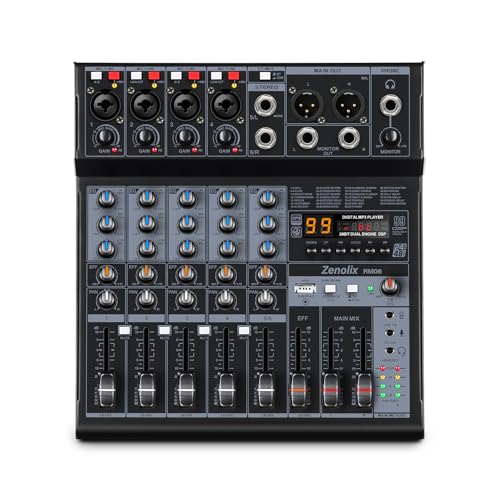
- 24-bit/192 kHz USB-C recording
- Bluetooth and onboard USB recording
- Four combo inputs with 48V phantom power
Best For: Podcasts, home studios, livestreams, and rehearsals
Large-Format Control
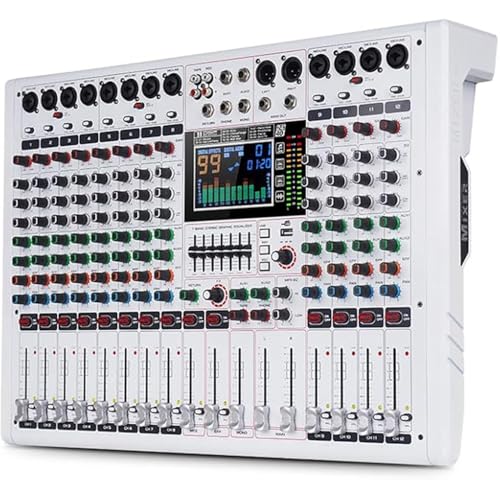
- 12 channels with independent controls
- Color LCD, Bluetooth, and USB playback
- Seven-stage EQ and 99 DSP effects
Best For: Performances, karaoke, studios, and broadcasting
Established Digital Console
PreSonus StudioLive 16.0.2 USB

- 18-in/16-out USB multichannel recording
- 16 inputs with 12 XMAX mic preamps
- Scene recall and extensive processing
Best For: Live multitrack recording, rehearsals, and studio work
Feature-Packed Value Mixer
MIX-12 Bluetooth 12-Channel Mixer

- 12 channels with XLR and 1/4-inch inputs
- Bluetooth playback and USB MP3 support
- 48V phantom power and 99 DSP effects
Best For: Beginners, DJs, karaoke, and live gigs
Flexible 8-Channel Pick

- Eight XLR/1/4-inch input channels
- USB, Bluetooth, and flash-drive support
- 3-band EQ with reverb and delay
Best For: Small recording, streaming, and live setups
High-Input-Capacity Choice

- Sixteen channels for complex setups
- 99 DSP effects and 7-band master EQ
- Bluetooth and U-disk playback
Best For: Studios, rehearsals, karaoke, and small venues
Versatile 12-Channel Pick

- 12 input channels for larger setups
- USB recording and Bluetooth playback
- 48V phantom power and ultra-thin design
Best For: Multi-microphone and instrument recording setups
Feature-Rich 8-Channel Option

- 3-band EQ for detailed tone shaping
- Bluetooth, USB recording, and MP3 player
- Two-year warranty listed
Best For: Mobile-device recording and small events
Compact 8-Channel Value

- Eight channels in a slim 1.57-inch body
- USB recording, MP3 playback, and reverb
- 48V phantom power for compatible microphones
Best For: Space-conscious home studios and karaoke setups
Compact Recording Hub – Zenolix RM06
For shoppers comparing digital mixing consoles for mobile recording, the Zenolix RM06 is a compact six-channel option with USB-C connectivity, Bluetooth playback, onboard recording, and a 24-bit/192 kHz USB audio interface. Its combination of combo inputs, channel EQ, effects, and loopback makes it suited to portable home and streaming setups.
Best For: Home studios, podcasts, livestreams, rehearsals, and small mobile setups.
Pros:
- USB-C interface supports 24-bit/192 kHz recording and loopback.
- Four XLR/6.35 mm combo inputs include 48V phantom power.
- Bluetooth, USB playback, onboard recording, and 99 effects add flexibility.
- Includes both 6.35 mm and 3.5 mm headphone outputs.
Cons:
- Six-channel capacity is more limited than larger performance consoles.
- It is corded electric rather than battery powered.
The RM06 stands out when portability, computer recording, and quick source management matter more than a large channel count. It is a practical fit for creators who want one compact mixer for recording, monitoring, and live audio tasks.
Large-Format Control – GF12 Pro 12-Channel Mixer
The GF12 Pro gives mobile recording buyers a 12-channel digital mixer with independent channel controls, a color LCD, Bluetooth, USB playback, and 99 DSP effects. It is designed for users who need more inputs and hands-on control for performances, karaoke, broadcasting, or larger audio setups.
Best For: Small to medium performances, karaoke venues, studios, and broadcast-style applications.
Pros:
- Twelve channels provide more input capacity than compact six-channel mixers.
- Each channel includes gain, balance, EQ, effects send, and volume controls.
- Color LCD and Bluetooth/USB connectivity simplify operation and playback.
- Seven-stage master equalizer and 99 DSP effects support sound customization.
Cons:
- Its listed dimensions make it less convenient for highly portable rigs.
- The supplied specifications do not identify a multichannel computer recording interface.
- A 30-day return and exchange policy is listed.
The GF12 Pro is better suited to expanded live setups than minimalist mobile recording kits. Choose it when twelve-channel capacity, visible controls, and built-in effects are priorities.
Established Digital Console – PreSonus StudioLive 16.0.2 USB
Among digital mixing consoles for mobile recording, the PreSonus StudioLive Classic 16.0.2 USB is the most recording-focused option in this group. It combines 16 input channels, 18-in/16-out USB audio, onboard processing, scene recall, and software support for Mac, Windows, iPad, iPhone, iPod touch, and Android control workflows.
Best For: Multichannel live recording, rehearsal capture, studio work, and users wanting deeper routing and recall.
Pros:
- 18-in/16-out USB 2.0 interface records all channels and the main mix.
- Twelve Class A XMAX mic preamps support multiple microphone sources.
- Fat Channel processing, two digital effects processors, and a 31-band main EQ are built in.
- Includes Studio One Artist, Capture, UC Surface, and QMix-UC software support.
Cons:
- At 20 pounds, it is substantially less portable than compact mixers.
- USB recording is specified at 24-bit/44.1 or 48 kHz rather than higher sample rates.
- Its 16-inch-wide console form factor may require a dedicated case or workspace.
The StudioLive is the strongest choice here for serious multitrack capture and repeatable live setups. Its weight is a tradeoff for broader I/O, physical faders, processing, and software-based control.
Feature-Packed Value Mixer – MIX-12 Bluetooth 12-Channel Mixer
The MIX-12 is a 12-channel option for digital mixing consoles for mobile recording, combining Bluetooth input, USB MP3 playback, XLR and 1/4-inch connections, 48V phantom power, and 99 DSP effects. Its straightforward channel EQ and fader layout can suit beginners and DJs who want flexible source connections.
Best For: Beginner recording setups, karaoke, DJ events, live gigs, and general-purpose audio mixing.
Pros:
- Twelve channels accommodate microphones, instruments, line sources, and headphones.
- Bluetooth supports wireless playback from phones and other smart devices within the listed 33-foot range.
- Includes 48V phantom power for compatible condenser microphones.
- Offers 99 DSP effects plus three-band channel and seven-band master EQ.
Cons:
- The supplied notes do not specify a USB multichannel recording specification.
- At 6.46 kg, it is less convenient for frequent transport.
- Its corded design requires access to power during use.
The MIX-12 emphasizes connectivity and built-in effects over clearly documented computer-recording specifications. It makes sense for users who want a versatile 12-channel mixer for playback, live sound, and basic recording duties.
Flexible 8-Channel Pick – USB/Bluetooth Recording Mixer
For creators comparing digital mixing consoles for mobile recording, this 8-channel board offers several practical ways to bring audio into a setup. It combines eight mic inputs, USB connectivity, Bluetooth playback, headphone monitoring, and direct USB flash-drive recording in a relatively slim chassis.
Best For: Mobile-friendly home recording, podcasting, streaming, small performances, and karaoke setups needing multiple inputs.
Pros:
- Eight channels support XLR and unbalanced 1/4-inch connections for multiple microphones and devices.
- USB, Bluetooth, and USB flash-drive functions support playback and recording workflows.
- Per-channel gain, 3-band EQ, faders, PFL monitoring, plus reverb and delay provide useful mix control.
- Headphone monitoring and LED peak indicators help with live level checks.
Cons:
- It is corded electric, so mobile recording still requires a suitable power source.
- Bluetooth and software-update capabilities are not fully detailed in the supplied specifications.
This is a versatile option when you want more inputs than a compact mini mixer while retaining phone, computer, Bluetooth, and flash-drive flexibility. Its eight-channel layout is especially practical for small recording or live setups.
High-Input-Capacity Choice – 16-Channel DSP Mixer
This 16-channel console is aimed at users who need substantial input capacity and detailed sound shaping. For digital mixing consoles for mobile recording, its Bluetooth and USB playback options add convenient wireless or file-based sources, while independent channel controls and extensive DSP effects support more involved mixes.
Best For: Larger home studios, rehearsals, karaoke, small venues, DJ events, and live performances requiring many channels.
Pros:
- Sixteen channels provide room for microphones, instruments, line sources, and headphones.
- Bluetooth streaming, U-disk playback, and a digital display offer flexible music-input options.
- Ninety-nine DSP effects include reverb, delay, and ambience for varied applications.
- Independent channel mute, 3-band channel EQ, and a 7-band master graphic EQ support hands-on control.
Cons:
- At 8.26 kg and roughly 18.9 inches wide, it is less convenient for highly portable mobile rigs.
- The supplied details do not confirm USB recording to a mobile device or software-update support.
- Its 110-volt corded power requirement limits use away from a suitable outlet.
Choose this model when channel count and onboard processing matter more than a compact footprint. It offers the broadest routing and effects capacity in this group, but its size and weight make it better suited to a semi-permanent or carefully transported setup.
Compact Mobile Option – 5-Channel USB/Bluetooth Mixer
With a compact 5-channel design, this mixer is a practical entry point for digital mixing consoles for mobile recording. It includes USB-B connectivity for computer, phone, or tablet recording, USB-A playback and recording, Bluetooth audio, headphone monitoring, and 48V phantom power for compatible condenser microphones.
Best For: Compact podcasting, live streaming, basic mobile recording, small acoustic setups, and portable content creation.
Pros:
- Small, lightweight enclosure measures about 7.4 inches wide and weighs 0.78 kg.
- USB-B can connect to a computer, phone, or tablet for mixing and recording with an OTG adapter for phones.
- Three XLR inputs include switchable 48V phantom power, with additional stereo RCA and 1/4-inch inputs.
- Headphone monitoring, Bluetooth playback, USB-A support, echo, delay, and 2-band EQ add useful flexibility.
Cons:
- Only five channels and a 2-band EQ provide less control than the larger mixers.
- USB, Bluetooth, and 4/5-channel functions cannot be used simultaneously.
- Bluetooth is specified to work within 1.5 feet, which is a very limited range.
This is the most portable choice of the three and makes sense for simple, space-conscious recording rigs. Keep its simultaneous-function limits and short Bluetooth range in mind if your workflow depends on multiple digital sources at once.
Versatile 12-Channel Pick – FULUODE CT-120S Mixer
For creators comparing digital mixing consoles for mobile recording, the FULUODE CT-120S offers 12 input channels, USB recording, Bluetooth playback, and a built-in MP3 player. Its 48V phantom power and XLR/TRS outputs make it adaptable for microphones, instruments, karaoke, and live setups.
Best For: Mobile recording setups that need multiple inputs and flexible playback options.
Pros:
- 12 channels provide room for multiple microphones and instruments.
- Includes USB recording, Bluetooth, and DJ MP3 input.
- 48V phantom power supports compatible condenser microphones.
- Ultra-thin 1.57-inch design is easier to transport.
Cons:
- Requires corded 110V power.
- At 4.3 kg, it is not the lightest option in this group.
- Warranty information lists only 35 days.
The CT-120S is the strongest choice here for channel count and connection flexibility. It is well suited to users who want one console for recording, playback, karaoke, and small live performances, provided the short listed warranty is acceptable.
Feature-Rich 8-Channel Option – AX-80 Digital Mixer
The AX-80 is a practical choice among digital mixing consoles for mobile recording, combining eight channels with 3-band equalization, USB recording, Bluetooth streaming, and an integrated MP3 player and recorder. Its LCD feedback and balanced inputs help make adjustment and playback more straightforward.
Best For: Portable recording, podcasting, karaoke, and small event setups using phones or tablets.
Pros:
- 3-band EQ allows independent high, mid, and low adjustment.
- Supports Bluetooth playback from a phone, tablet, or MP3 player.
- USB recording and built-in MP3 playback support MP3, WAV, and WMA files.
- Includes 48V phantom power and a stated two-year warranty.
Cons:
- The notes specify that it cannot connect to a MacBook for recording.
- Uses corded 110V power rather than battery power.
- Has fewer channels than the 12-channel model.
With its equalization controls, wireless playback, and longer stated warranty, the AX-80 is a balanced option for creators working from compatible mobile devices. MacBook users should look elsewhere for computer recording support.
Compact 8-Channel Value – FULUODE CT-80S Mixer
For buyers seeking digital mixing consoles for mobile recording without moving up to a larger channel count, the FULUODE CT-80S combines eight inputs with Bluetooth, USB recording, MP3 playback, and reverb. Its slim 1.57-inch profile makes it a convenient fit for compact studio, karaoke, and live-music setups.
Best For: Compact home studios, karaoke systems, and small live performances.
Pros:
- Eight channels support multiple microphones and instruments.
- Built-in Bluetooth, MP3 player, and USB recording add flexibility.
- 48V phantom power supports compatible condenser microphones.
- Ultra-thin design helps conserve setup space.
Cons:
- Uses corded 110V power.
- Fewer channels than the CT-120S.
- Supplied details do not identify Bluetooth in the connectivity specification.
The CT-80S is a space-conscious alternative for smaller recording and performance systems. It retains the core playback, recording, and phantom-power features while offering a lighter listed weight than the 12-channel FULUODE model.
How We Picked the Best Digital Mixing Consoles for Mobile Recording
We focused on the features that matter most when recording away from a permanent studio: usable channel capacity, USB recording support, XLR microphone inputs, 48V phantom power, onboard effects, monitoring controls, and practical portability. We also considered whether a console is better suited to solo creators, small bands, livestreaming, rehearsal capture, or basic location work.
Product names and specifications can vary by seller, so verify the current input layout, USB functions, power requirements, and included accessories before buying. A mixer marketed as “digital” may still provide mainly analog mixing with digital effects or a simple USB interface rather than full scene-based digital-console control.
Quick Comparison
| Setup type | Recommended channel range | Prioritize |
|---|---|---|
| Solo recording or podcasting | 5–8 channels | Low noise, USB stability, compact size, and easy monitoring |
| Small band or rehearsal capture | 8–12 channels | Enough microphone inputs, phantom power, and flexible routing |
| Live performance and larger ensembles | 12–16 channels | Input headroom, independent controls, effects, and durable construction |
| Mobile streaming or playback | 5–12 channels | Bluetooth, USB playback, vocal effects, and straightforward operation |
Key Buying Factors for Digital Mixing Consoles for Mobile Recording
Inputs and Channel Capacity
Count microphones, instruments, stereo playback devices, and future additions before choosing a channel number. Combo XLR/TRS inputs are flexible, while dedicated stereo channels are useful for keyboards, phones, and media players. Leave spare capacity if your setup may grow.
USB Recording and Device Compatibility
Confirm whether USB supports stereo recording, multitrack transfer, playback, or only MP3 playback. Check compatibility with your computer, tablet, or phone and determine whether an adapter or powered hub is required. For mobile work, a dependable interface and simple monitoring path are often more valuable than extra effects.
Phantom Power, Effects, and Control
Condenser microphones require 48V phantom power, but phantom power should be used carefully with incompatible equipment. Built-in reverb, delay, and DSP can simplify live vocals and streaming, although they may not replace software effects for detailed production.
Portability and Power
Compare chassis size, knob spacing, weight, power supply requirements, and protection for travel. A compact mixer is easier to transport, but larger consoles usually provide more direct control and room for additional inputs.
Who Should Buy Which Digital Mixing Consoles for Mobile Recording?
Solo musicians, podcasters, and mobile creators should favor a compact 5- or 6-channel model with USB recording and simple monitoring. Small bands and rehearsal engineers will generally benefit from 8 to 12 channels, multiple XLR inputs, phantom power, and onboard effects. Performers managing several microphones, stereo instruments, or stage sources should consider a 12- or 16-channel console with more independent controls.
If Bluetooth and MP3 playback are central to your workflow, treat them as convenience features rather than substitutes for a reliable wired recording connection. Buyers who need true multitrack editing, recallable scenes, remote control, or advanced routing should confirm those functions explicitly; many affordable mixers in this category are best understood as analog consoles with digital connectivity and effects.
