Last updated on October 22nd, 2026
Dolby Atmos can make movie soundtracks feel bigger and more directional, but the right setup depends as much on your room and installation plans as it does on a channel-count label.
These 10 picks span soundbars with surround speakers, packaged home theater systems, and a receiver-based option. Use the guide below to narrow them down by placement, connectivity, and upgrade potential.
Best 10 Dolby Atmos Home Theater Speakers Picks for 2026
Flexible 5.1 Pick

- 5.1 layout with wired rear speakers
- Wireless 5.25-inch subwoofer
- HDMI eARC and app-based EQ
Best For: Adjustable TV surround sound without a separate speaker system
Dedicated Speaker Pick
Klipsch Reference Cinema 5.1.4

- Four Atmos-equipped satellites
- Front and rear height effects
- Wired speaker system with subwoofer
Best For: Dedicated theaters prioritizing separate speakers and height effects
LG TV Companion

- 7.1.3 Dolby Atmos and DTS:X
- Wireless rear-speaker connectivity
- LG TV integration and room calibration
Best For: Compatible LG TVs needing integrated surround features
Height-Channel Soundbar

- 5.1.2 layout with up-firing drivers
- HDMI eARC and CEC sync
- 10-band EQ and 121 app presets
Best For: Adjustable Atmos height effects in a soundbar system
Best Component Bundle
Klipsch Reference with Onkyo TX-NR7100

- Up-firing Atmos floorstanders
- Includes center, surrounds, and 12-inch subwoofer
- 9.2-channel Onkyo receiver with room calibration
Best For: A wired, receiver-based home theater
Best App-Controlled Soundbar

- Front and rear surround speakers
- 6.5-inch wireless subwoofer
- App EQ and HDMI eARC
Best For: Soundbar buyers who want surround speakers and app tuning
Best All-in-One Receiver Kit
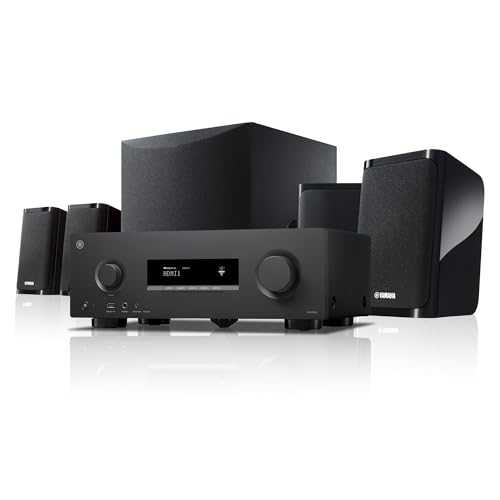
- Receiver, 5.1 speakers, and cables included
- Automatic room optimization
- 4K/120, 8K/60, and HDMI eARC
Best For: A complete wired 5.1 setup in one box
Best for Simple Setup

- 5.1-channel Atmos without rear speakers
- VoiceMX dialogue enhancement
- App EQ and HDMI eARC
Best For: Streamlined surround with adjustable sound
Best for LG TV Owners

- 5.1.3-channel Atmos and DTS:X
- Wireless-connectivity rear speakers
- LG WOW features and room calibration
Best For: LG TV setups with room for rear speakers
Best for Flexible Rear Surround

- Wireless rear surround speakers
- Dolby Atmos and DTS:X
- AI Sonic room calibration
Best For: 5.1 surround with flexible speaker placement
Flexible 5.1 Pick – ULTIMEA Poseidon M80
If you’re comparing dolby atmos home theater speakers but prefer a soundbar setup, the ULTIMEA Poseidon M80 pairs a three-channel front bar with two wired rear speakers and a wireless subwoofer. It’s a practical step up from TV audio for movies, sports, and games.
Best For: Viewers who want rear surround effects and adjustable sound without assembling a separate speaker system.
Pros:
- Dedicated rear speakers provide more distinct surround effects than a front bar alone.
- 5.25-inch wireless subwoofer adds bass while offering flexible placement.
- HDMI eARC supports Dolby Atmos; the app and remote offer six EQ modes plus bass and surround adjustments.
Cons:
- Rear speakers must be wired to the subwoofer, which still needs a power outlet.
- Does not decode DTS audio.
The key trade-off is placement: the subwoofer can connect wirelessly to the bar, but rear-speaker cables remain. For Dolby Atmos playback, plan to use HDMI eARC and check your source’s audio format.
Dedicated Speaker Pick – Klipsch Reference Cinema 5.1.4
For shoppers seeking dolby atmos home theater speakers rather than a soundbar, the Klipsch Reference Cinema system offers a 5.1.4 layout with four Atmos-equipped satellite speakers. Its front and rear height effects make it a strong fit for a dedicated home theater.
Best For: Buyers planning a wired speaker setup with height effects at both the front and back of the room.
Pros:
- Four Atmos-equipped satellites deliver front and rear height effects.
- Tractrix horns and aluminum tweeters are designed for extended high-frequency response.
- Includes a center channel and a subwoofer with a built-in all-digital amplifier.
Cons:
- Wired components require more setup and cable planning than a soundbar package.
- No wireless speaker connectivity is listed.
Choose this system if separate speakers and a 5.1.4 layout matter more than minimal wiring. The supplied notes do not identify a bundled receiver, so confirm your amplification and connection needs before buying.
LG TV Companion – LG S90TR 7.1.3 Soundbar
Among dolby atmos home theater speakers, the LG S90TR is a soundbar-based option built around a 7.1.3-channel layout, wireless rear-speaker connectivity, and Dolby Atmos and DTS:X support. Its LG TV integration is especially relevant if you already own a compatible LG set.
Best For: LG TV owners who want a feature-rich surround soundbar with rear speakers and simplified TV control.
Pros:
- 7.1.3 channels include an up-firing center designed to improve dialogue clarity.
- Rear speakers connect wirelessly without a separate receiver.
- Compatible LG TV features include WOW Orchestra, WOW Interface, and built-in WOWCAST wireless Dolby Atmos.
- Room calibration adjusts audio settings based on microphone measurements.
Cons:
- LG-specific integration features are most useful with a compatible LG TV.
- The 49.2-inch-wide bar needs a suitably sized TV stand or wall space.
This is the most TV-integrated choice here for a matching LG setup. If you use another TV brand, weigh its core surround and calibration features separately from the LG-specific extras.
Height-Channel Soundbar – ULTIMEA Skywave F40
If you want dolby atmos home theater speakers with dedicated height channels in a soundbar package, the ULTIMEA Skywave F40 uses a 5.1.2 layout. It combines two up-firing drivers, two rear surround speakers, and a 5.25-inch subwoofer for sound around and above the listening position.
Best For: Buyers who want a 5.1.2 Atmos soundbar and extensive app-based sound adjustments.
Pros:
- Two up-firing channels add a dedicated height component to the surround layout.
- HDMI eARC supports the system’s 5.1.2-channel Dolby Atmos playback and CEC control sync.
- The app provides 13-step surround adjustment, a 10-band EQ, and 121 presets.
Cons:
- Does not support DTS.
- The listed subwoofer is wired, and the included rear-surround cable calls for cable routing.
The Skywave F40 makes sense when height effects and fine-grained tuning outweigh the convenience of a mostly wireless setup. Check your source formats before committing, particularly if you play DTS content.
Best Component Bundle – Klipsch Reference with Onkyo TX-NR7100
If you want dolby atmos home theater speakers with a separate receiver, this bundle pairs Klipsch Reference speakers and a 12-inch powered subwoofer with an Onkyo TX-NR7100. The R-625FA floorstanders have built-in up-firing channels for height effects, while the center and bookshelf surrounds complete the 5.1 speaker package.
Best For: Buyers who want a component-based surround system with built-in Atmos elevation speakers and an included AV receiver.
Pros:
- Up-firing channels in both front floorstanding speakers add overhead effects without separate height speakers.
- Includes a dedicated center speaker, bookshelf surrounds, and a 12-inch powered subwoofer.
- Onkyo 9.2-channel receiver supports Dolby Atmos, 8K video, and automatic room calibration.
Cons:
- The supplied speakers form a 5.1 package despite the receiver’s 9.2-channel capacity.
- Wired components require speaker placement and connections.
This is the pick for a traditional theater layout with room to use a capable receiver. Check your space for the floorstanding fronts and plan on running speaker wire.
Best App-Controlled Soundbar – ULTIMEA Poseidon D80 7.1
The ULTIMEA Poseidon D80 takes a soundbar-based approach to dolby atmos home theater speakers, combining the bar with two front surrounds, two rear surrounds, and a 6.5-inch wireless subwoofer. Its Atmos decoding and spatial processing are designed to place effects around the listening area.
Best For: Viewers who want multiple surround speakers, app-based sound tuning, and a soundbar rather than a separate AV receiver.
Pros:
- Included front and rear surround speakers expand the sound field beyond the bar.
- HDMI eARC, optical, and AUX connections accommodate different TV setups.
- ULTIMEA app offers EQ presets, custom tuning, and over-the-air updates.
Cons:
- Does not support DTS decoding.
- The bar, four surround speakers, and subwoofer need more placement space than a standalone soundbar.
Choose the D80 if flexible EQ controls and discrete surround speaker placement matter most. Check your content sources for DTS before buying.
Best All-in-One Receiver Kit – Yamaha YHT-4970U 5.1
For shoppers comparing dolby atmos home theater speakers in a single-box package, the Yamaha YHT-4970U includes a 5.1 speaker set, powered subwoofer, RX300A receiver, speaker wire, and subwoofer cable. The receiver supports Dolby Atmos and DTS Virtual:X, alongside 4K/120 and 8K/60 video.
Best For: Buyers setting up a wired 5.1 home theater who want the receiver, speakers, cables, and setup tools together.
Pros:
- Includes five speakers, a powered subwoofer, receiver, speaker wire, and subwoofer cable.
- Setup microphone enables automatic room-based sound optimization.
- Supports HDMI eARC, 4K/120, 8K/60, and Bluetooth Multipoint.
Cons:
- The supplied 5.1 speaker set does not include dedicated overhead or up-firing height speakers.
- Requires wiring and positioning five separate speakers.
The YHT-4970U makes sense if you want a conventional surround setup without sourcing each component separately. For physical height channels, note what is—and is not—in the included speaker package.
Best for Simple Setup – ULTIMEA Poseidon M60
If you want dolby atmos home theater speakers without placing rear speakers, the ULTIMEA Poseidon M60 offers a 5.1-channel soundbar with side-firing drivers and a wired subwoofer. Its app gives you plenty of ways to adjust the sound.
Best For: Viewers who want a streamlined Atmos setup and customizable sound without rear speakers.
Pros:
- Five built-in speakers, including side-firing drivers, provide surround sound without separate rears.
- VoiceMX enhances dialogue, while the app offers a 10-band EQ and sound presets.
- HDMI eARC supports Dolby Atmos and TV control through CEC.
Cons:
- The subwoofer requires a wired connection.
- No separate rear speakers for sounds coming from behind the listening position.
Choose this model when easy placement matters more than having physical rear channels; the wired subwoofer still needs a spot near the bar.
Best for LG TV Owners – LG S80TR 5.1.3 Soundbar
For shoppers comparing dolby atmos home theater speakers to pair with an LG TV, the S80TR combines a 5.1.3-channel soundbar, wireless-connectivity rear speakers, and a wireless subwoofer. Its LG-specific features add synchronized TV audio and shared control.
Best For: LG TV owners who want rear surround speakers and integrated TV-and-soundbar controls.
Pros:
- Dolby Atmos and DTS:X support with rear speakers and an up-firing center channel.
- WOW Orchestra synchronizes compatible LG TV and soundbar speakers; WOW Interface enables one-remote control.
- Built-in room calibration adjusts audio to the listening space.
Cons:
- WOW Orchestra and WOW Interface are LG TV-focused benefits.
- Rear speakers and a subwoofer require more placement space than a soundbar alone.
The S80TR makes the most sense when you can position rear speakers and want the LG TV integration. Otherwise, some of its distinguishing features may go unused.
Best for Flexible Rear Surround – TCL S65K S Series
If your dolby atmos home theater speakers need physical rear channels, the TCL S65K pairs a 5.1-channel soundbar with wireless surround speakers and a wireless 6.5-inch subwoofer. AI Sonic room calibration helps tailor its sound to your space.
Best For: Viewers who want separate rear speakers, wireless subwoofer placement, and automatic room calibration.
Pros:
- Wireless surround speakers offer flexible placement for rear-channel sound.
- Supports both Dolby Atmos and DTS:X.
- Built-in center channel supports clear dialogue, and AI Sonic calibrates sound for the room.
Cons:
- Separate rear speakers and a subwoofer take up more space than a single bar.
- The specified 5.1-channel layout does not list dedicated height channels.
This is a practical choice when rear-speaker placement is feasible. Check your room layout before buying if you need a compact, all-in-one setup.
How We Picked the Best Dolby Atmos Home Theater Speakers
We selected 10 options that represent different ways to build an Atmos-capable home theater: compact soundbar packages, systems with separate surround speakers, and traditional speaker-and-receiver setups. The most useful comparison points are what comes in the box, how the system connects to a TV, where its speakers must go, and how much room it leaves for future upgrades. A higher advertised channel count alone does not guarantee better sound in your space.
Quick Comparison: Which Setup Fits?
For the simplest TV upgrade, start with a soundbar-based package such as the TCL S65K or one of the ULTIMEA systems. The LG S80TR and S90TR are worth comparing if you want a soundbar package with rear surrounds, particularly alongside a compatible LG TV. If you prefer separate speakers and an AV receiver, compare the Klipsch Reference Cinema package, the Klipsch-and-Onkyo bundle, and the Yamaha YHT-4970U. Check each listing carefully: packages that look similar may include different receivers, speakers, or cables.
Key Buying Factors for Dolby Atmos Home Theater Speakers
Speaker Layout and Room Placement
Atmos uses height information, but systems reproduce it in different ways. Some use dedicated or upward-firing speaker drivers; others rely more heavily on sound processing. Upward-firing effects depend on ceiling height, shape, and reflectivity. Separate rear speakers also need space behind or beside the seating position. Before buying, map out where every component and power outlet will go.
TV and Source Compatibility
Check for HDMI eARC or ARC on both your TV and the system, and confirm that your TV or streaming device can pass the audio formats you use. If you connect game consoles or other video sources through an AV receiver, verify its supported video features and HDMI connections rather than assuming that an Atmos label covers them. Optical connections may be useful for basic audio, but they are not a substitute for checking your intended Atmos signal path.
Subwoofer, Wiring, and Expandability
A wireless subwoofer typically still needs a nearby power outlet. Likewise, wireless rear speakers may need power or a connection to another module. Soundbars usually minimize setup work, while an AV receiver and passive speakers offer more flexibility to replace or add components later. Include stands, mounts, speaker wire, and cable routing in your budget where needed.
Who Should Buy Which Dolby Atmos Home Theater Speakers?
Choose a soundbar package if you want fewer components and straightforward daily use. Choose one with included rear speakers if surrounding effects matter more to you than the smallest possible footprint. Consider the LG options if TV integration is a priority, but verify compatibility with your specific model. Pick a receiver-based system if you can accommodate more wiring and want greater control over speaker placement or future upgrades. For any of these Dolby Atmos Home Theater Speakers, the best choice is the one whose actual speaker layout, connections, and installation requirements fit your room—not simply the one with the largest number on its box.
