A good elliptical can support endurance work, recovery sessions, cross-training, and low-impact conditioning without placing the same stress on joints as running. The right choice depends on stride length, resistance range, stability, and how closely the machine fits your training plan.
We selected 10 elliptical options spanning full-size home trainers, compact foldable models, recumbent designs, air walkers, and seated under-desk machines. Use the guide below to match the format and features to your goals, available space, and budget.
Best 10 Elliptical Trainers for Athletes Picks for 2026
Recovery-Focused Pick

- Seated, low-impact full-body design
- 16 electromagnetic resistance levels
- SunnyFit app and preset workouts
Best For: Recovery cardio and supported full-body training
Heavy-Duty Training Pick

- 18-inch stride for taller users
- 400-pound stable loading capacity
- Quiet magnetic resistance with 16 levels
Best For: Progressive home cardio and taller athletes
Quiet Compact Pick
Ancheer Hyper-Quiet Elliptical

- Under-20-decibel magnetic operation
- 400-pound capacity with steel frame
- 14 resistance levels and pulse sensors
Best For: Quiet training in apartments and shared spaces
Space-Saving Mobility Pick
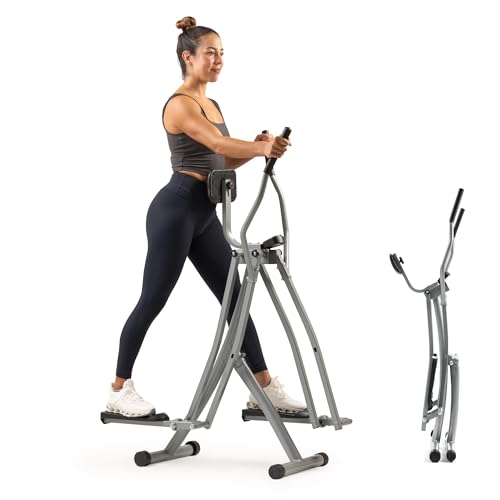
- 30-inch low-impact air-walking stride
- Folds flat for compact storage
- Full-body motion with SunnyFit app
Best For: Gentle conditioning and small-space storage
Best Seated Option

- 12 manual speed levels and three auto programs
- Quiet, compact, and ready without assembly
- LCD tracking with remote-controlled settings
Best For: Seated exercise, recovery, and office use
Best Full-Body Trainer

- 16 magnetic resistance levels for progressive workouts
- 15.5-17-inch stride and 350-pound capacity
- Quiet rear-drive system with app-compatible tracking
Best For: Home cardio and full-body conditioning
Best Compact Recovery Pick
Cubii JR1 Under Desk Elliptical

- Smooth, low-impact seated elliptical motion
- Eight manual resistance levels
- LCD activity tracking with Cubii app support
Best For: Desk exercise, mobility, and low-impact recovery
High-Capacity Pick
ANCHEER 16-inch Foldable Elliptical

- 16-inch stride with three pedal angles
- 16 magnetic resistance levels
- Stated 550-pound maximum capacity
Best For: Athletes and larger users seeking adjustable, stable home cardio
Compact Training Pick
Dripex 16-Level Magnetic Elliptical

- Quiet 13.2-pound internal flywheel
- Forward/reverse full-body movement
- Compact frame with 265-pound capacity
Best For: Athletes training in apartments or smaller workout spaces
Connected Stride Pick
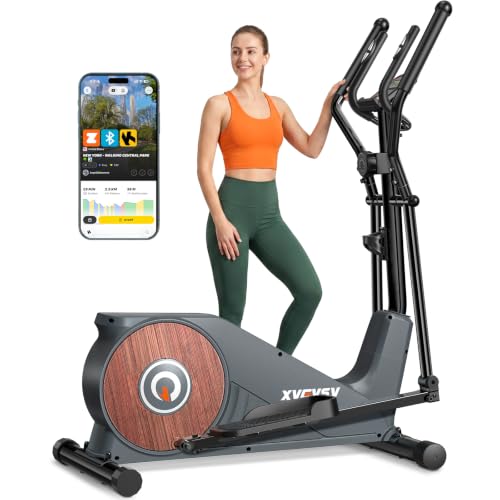
- 15.5-inch natural-style stride
- App connectivity and LCD workout tracking
- 16 resistance levels with three grip positions
Best For: Athletes wanting versatile, connected low-impact training
Recovery-Focused Pick – Sunny Recumbent Cross Trainer
For athletes seeking elliptical trainers for athletes that can support recovery days, the Sunny recumbent cross trainer combines low-impact movement with adjustable electromagnetic resistance. Its seated design and moving handles allow you to train your arms and legs while keeping comfort and accessibility in focus.
Best For: Low-impact full-body cardio, recovery sessions, and users who prefer a supported seated workout.
Pros:
- Sixteen resistance levels accommodate both recovery work and more challenging sessions.
- Moving handles and elliptical foot pedals provide simultaneous upper- and lower-body training.
- Padded seating, mesh back support, and easy seat adjustment improve workout comfort.
- SunnyFit app access, 12 preset workouts, and four user programs add training variety.
Cons:
- The recumbent format is less suited to athletes specifically seeking an upright running-style stride.
- Its 300-pound maximum weight recommendation is lower than some competing options in this roundup.
This is a practical choice when joint-friendly training and comfort matter more than a traditional standing elliptical experience. The performance monitor also tracks metrics including speed, RPM, watts, calories, and heart rate.
Heavy-Duty Training Pick – Niceday 18-Inch Elliptical
Athletes comparing elliptical trainers for athletes will appreciate this Niceday model’s 18-inch stride, 16 resistance levels, and high 400-pound weight recommendation. It is designed to deliver a stable, quiet home workout while taking up less floor space than many full-size machines.
Best For: Taller users and athletes who want a stable, compact machine for progressive home cardio training.
Pros:
- The 18-inch stride is designed to accommodate users up to 6 feet 3 inches.
- Sixteen magnetic resistance levels support recovery work through higher-intensity training.
- A carbon steel base and 400-pound capacity emphasize stability during harder efforts.
- Operation below 20 decibels and Kinomap Bluetooth support suit home training.
Cons:
- The digital monitor tracks six core metrics but offers less listed workout programming than some alternatives.
- Although compact, its 61-inch height may still require careful placement in smaller rooms.
With its long stride, quiet magnetic system, and durable frame, this is one of the more performance-oriented choices for athletes training at home. Transport wheels and included setup tools also make positioning and assembly more manageable.
Quiet Compact Pick – Ancheer Hyper-Quiet Elliptical
This Ancheer machine is a useful option for athletes searching for elliptical trainers for athletes that fit shared spaces without sacrificing adjustable resistance. Its 15-inch stride, steel construction, pulse sensors, and under-20-decibel operation support consistent indoor training with minimal disruption.
Best For: Apartment or home-gym users who need quiet, compact cardio with straightforward progress tracking.
Pros:
- Fourteen resistance levels allow gradual progression from light cardio to harder intervals.
- The 400-pound loading capacity and heavy-duty steel frame support a sturdy training platform.
- Pulse sensors and the LCD display track heart rate plus time, speed, distance, calories, and odometer data.
- Transport wheels, a device holder, and compact dimensions improve everyday convenience.
Cons:
- The 15-inch stride is shorter than the Niceday model’s 18-inch stride.
- It provides fewer resistance levels than some other machines in this selection.
The Ancheer stands out when noise control and durability are priorities. It is not the longest-stride option, but its quiet magnetic drive, sturdy construction, and lifetime service support make it a practical everyday trainer.
Space-Saving Mobility Pick – Sunny Smart Air Walker
For athletes who want a different take on elliptical trainers for athletes, the Sunny Smart Air Walker uses a simulated walking and skiing motion with a maximum 30-inch stride. Its low-impact full-body movement, foldable frame, and free SunnyFit app make it especially practical for light conditioning or limited-space home use.
Best For: Low-impact mobility work, beginners, seniors, and users who need a foldable full-body trainer.
Pros:
- The 30-inch stride creates a long, fluid air-walking motion that engages the arms, legs, and core.
- Its frame folds flat for storage under furniture or in other compact spaces.
- Adjustable abdominal support, non-slip pedals, and a floor stabilizer add security and comfort.
- SunnyFit app connectivity provides guided workouts, metrics, scenic routes, and challenges.
Cons:
- Its 220-pound maximum weight recommendation is lower than the other machines listed here.
- The air-resistance design and simple monitor may be less suited to athletes seeking extensive resistance programming.
- Its one-year frame and 180-day parts warranties are shorter than the listed lifetime service offered by some competitors.
This air walker is best viewed as a compact, joint-friendly movement trainer rather than a conventional performance elliptical. The foldable construction and four-step assembly are compelling for users prioritizing storage and ease of setup.
Best Seated Option – Putnen Under Desk Elliptical
For athletes seeking elliptical trainers for athletes that can support light movement and recovery between demanding sessions, the Putnen is a compact seated pedal exerciser. It offers manual or automatic operation, forward and backward pedaling, and 12 speed levels in a quiet, portable design.
Best For: Seated exercise, low-impact leg movement, rehabilitation, and office use.
Pros:
- Manual 12-level speed control plus three automatic programs.
- Forward and backward pedaling can engage multiple lower-body muscle groups.
- Compact 8.1-pound design with quiet operation and no assembly.
- LCD display tracks speed, distance, time, counter, and calories.
Cons:
- Designed for seated use rather than full standing workouts.
- Remote control requires separately purchased batteries.
- Its compact format is less suited to high-intensity athletic training.
The Putnen is best viewed as a convenient supplemental trainer rather than a primary conditioning machine. Its low-impact motion and portability make it practical for active recovery, mobility work, or adding gentle movement during desk time.
Best Full-Body Trainer – pooboo E399 Elliptical
Among elliptical trainers for athletes, the pooboo E399 is the strongest fit for users who want a conventional home machine with adjustable resistance and a longer stride. Its rear-drive design, 16-pound flywheel, 16 resistance levels, and 350-pound capacity support more substantial conditioning than a seated mini elliptical.
Best For: Home cardio, endurance building, full-body conditioning, and athletes who need adjustable training intensity.
Pros:
- Sixteen magnetic resistance levels accommodate progressive workouts.
- 15.5- to 17-inch stride is designed to fit users up to 6 feet 5 inches.
- Quiet 20 dB magnetic drive system supports home use.
- Monitor tracks time, speed, distance, calories, pulse, and more; app compatibility adds workout tracking.
Cons:
- Requires assembly, unlike compact pedal exercisers.
- Its foldable home-gym frame still needs substantially more space than an under-desk model.
- The supplied details do not specify a dedicated athletic training program library.
The E399 offers the most complete training platform in this group. Its resistance range, stride, stability-focused frame, and full-body motion make it the logical choice for athletes prioritizing structured home cardio over portability.
Best Compact Recovery Pick – Cubii JR1 Under Desk Elliptical
The Cubii JR1 is a compact choice for athletes comparing elliptical trainers for athletes as a way to add low-impact movement outside regular workouts. Its seated design provides smooth elliptical motion with eight manual resistance levels, while the built-in display helps track everyday activity.
Best For: Desk-based movement, gentle conditioning, mobility work, and low-impact recovery sessions.
Pros:
- Smooth, low-impact motion is designed to reduce stress on knees, joints, and back.
- Eight manual resistance levels allow some control over workout effort.
- LCD display tracks calories, strides, and distance.
- Compact seated format works at home or in an office.
Cons:
- Its 150-pound maximum weight recommendation limits suitability for some users.
- Manual app entry is needed to record display data in the Cubii mobile app.
- Seated operation is not a substitute for a full standing elliptical workout.
The JR1 is a practical supplementary device for keeping the legs moving during work or recovery. Athletes wanting intense resistance training should choose a full-size machine, but those prioritizing accessibility and consistent low-impact activity may appreciate its approachable design.
High-Capacity Pick – ANCHEER 16-inch Foldable Elliptical
For athletes comparing elliptical trainers for athletes, the ANCHEER stands out for its combination of a 16-inch stride, adjustable pedal angles, and substantial stated weight capacity. Its magnetic resistance system is designed for quiet, low-impact home training, while 16 resistance levels provide room to vary workout intensity.
Best For: Athletes and larger users who want a stable, adjustable elliptical for varied home cardio sessions.
Pros:
- 16-inch stride and three pedal-angle settings support a more personalized gait.
- Sixteen magnetic resistance levels accommodate warm-ups through harder cardio.
- Stated 550-pound maximum capacity and reinforced steel frame emphasize stability.
- Arrives 98% pre-assembled and includes transport wheels, pulse grips, and a lifetime warranty.
Cons:
- The larger frame and heavy-duty construction may be more machine than casual users need.
- The notes do not specify app connectivity or built-in workout programming.
The ANCHEER is a practical choice when stride comfort, adjustability, and maximum support matter more than connected features. Its quiet drive and pre-assembly also make it easier to use consistently at home.
Compact Training Pick – Dripex 16-Level Magnetic Elliptical
The Dripex is a space-conscious option among elliptical trainers for athletes, pairing a compact steel frame with a 13.2-pound internal flywheel and 16 resistance levels. Its bidirectional motion and dual-action handlebars support full-body sessions, while the quiet magnetic drive suits apartments and shared spaces.
Best For: Athletes who need a compact, quiet machine for full-body conditioning in a smaller home workout area.
Pros:
- Thirteen-point-two-pound internal flywheel is designed for smooth, consistent resistance.
- Sixteen resistance levels support progression from light cardio to harder training.
- Forward and reverse motion plus dual-action handlebars engage upper and lower body.
- LCD tracks time, speed, distance, calories, pulse, and odometer data.
Cons:
- The 14-inch maximum stride is shorter than the stride lengths on the other listed models.
- Its stated 265-pound capacity may limit suitability for heavier users.
- The warranty is listed as one year.
The Dripex makes the most sense for athletes prioritizing a quiet, compact footprint and useful basic tracking. Consider the shorter stride and lower capacity carefully if you are taller or need a more expansive running-like motion.
Connected Stride Pick – E317 15.5-inch Elliptical
For athletes comparing elliptical trainers for athletes, the E317 offers a middle-ground stride with a 15.5-inch path, 16 magnetic resistance levels, and bidirectional pedal motion. Its three-position handlebars and KP/ZT Smart Fitness APP connectivity add flexibility for full-body and data-focused home workouts.
Best For: Athletes who want a quiet, low-impact trainer with app connectivity and multiple upper-body grip positions.
Pros:
- 15.5-inch stride is designed to provide a more natural walking- or running-like motion.
- Sixteen resistance levels support recovery work, daily cardio, and endurance training.
- Three handlebar grip positions encourage varied upper-body engagement.
- LCD tracking and KP/ZT Smart Fitness APP support data-driven workouts.
Cons:
- The product has a stated one-year warranty.
- The notes do not provide a detailed description of the app’s workout library or compatibility beyond KP/ZT Smart Fitness APP.
- It is not described as foldable, which may matter for tight storage areas.
The E317 is a balanced choice for athletes who value stride comfort and connected tracking without giving up quiet magnetic resistance. Its 400-pound stated capacity also gives it broader support than the Dripex, though buyers should still verify fit and available space.
How We Picked These Elliptical Trainers for Athletes
We focused on features that matter during consistent athletic training rather than treating every elliptical as interchangeable. Our criteria included stride length, resistance adjustability, motion smoothness, frame stability, noise, footprint, user comfort, and the machine’s suitability for intervals or longer sessions. We also included several form factors because athletes may need a primary conditioning machine, a recovery tool, or a compact option for light movement while working.
Product specifications can vary by model and seller, so verify current dimensions, weight limits, warranty coverage, and included features before purchasing.
Quick Comparison
| Best For | Recommended Format | What to Prioritize |
|---|---|---|
| Hard conditioning sessions | Full-size elliptical | Long stride, stable frame, broad resistance range |
| Small spaces | Foldable or compact elliptical | Stored footprint, transport wheels, usable stride |
| Joint-friendly recovery | Recumbent cross trainer | Adjustable seat, back support, smooth motion |
| Light daily movement | Under-desk elliptical | Quiet operation, low profile, simple controls |
| Whole-body variety | Air walker or arm-exerciser model | Upper-body engagement, balance, range of motion |
Key Buying Factors for Elliptical Trainers for Athletes
Stride Length and Biomechanics
A longer stride generally feels more natural for taller users and athletes accustomed to running or longer locomotion. Shorter strides can work well for compact spaces and moderate workouts, but check that the motion does not feel cramped.
Resistance and Training Progression
Multiple resistance levels help you progress from easy aerobic work to challenging intervals. Magnetic systems are typically quieter and smoother for home use. Confirm that the resistance range offers enough challenge for your current fitness level and future progression.
Stability, Comfort, and Fit
Look for a substantial base, secure pedals, comfortable handles, and an adjustable position when available. A machine that feels unstable or forces poor posture can undermine training quality, especially during harder efforts.
Noise, Size, and Connectivity
Measure both the operating and storage footprint. Quiet operation matters in shared homes or apartments. If structured workouts are important, check whether the console, display, heart-rate tracking, or app connectivity provides useful data rather than merely adding features.
Who Should Buy Which Elliptical Trainers for Athletes?
Choose a full-size elliptical if you want the best platform for regular endurance sessions, tempo work, and interval training. Prioritize stride length and frame stability over the smallest possible footprint.
Choose a recumbent model if back support, easier mounting, or low-impact recovery is more important than a running-like posture. It can suit athletes returning from injury or combining cardio with rehabilitation-focused training.
Choose a foldable or compact trainer if space is limited but you still want a conventional standing workout. Confirm folded dimensions and make sure compactness does not compromise stride comfort.
Choose an under-desk elliptical for light movement during seated work, not as a substitute for demanding cardio. These machines are best for circulation, activity breaks, and low-intensity supplemental movement.
Choose an air walker or arm-exerciser design if you value movement variety and additional upper-body involvement. These formats can complement, rather than replace, a primary performance-oriented cardio machine.
