Choosing the right monitor can make documentary production easier in bright locations, cramped interiors, and fast-moving run-and-gun setups. The best field monitors for documentaries help you judge focus, exposure, color, and framing without slowing down the shoot.
This lineup covers compact HDMI displays, daylight-readable touchscreen monitors, SDI-capable broadcast models, and monitor-recorders for crews that need more than a basic preview screen.
Best 10 Field Monitors for Documentaries Picks for 2026
Sunlight-Ready Touchscreen Pick
VILTROX DC-A1 7-Inch Field Monitor

- 2800-nit stated brightness and detachable sunshade
- Waveform, LUT, false-color, and focus-assist tools
- 4K HDMI loop-through with flexible power options
Best For: Outdoor documentary crews needing a bright, versatile monitor
Large Production Monitor
SEETEC P173-9HSD 17.3-Inch Display

- Large Full HD screen for shared on-set viewing
- 3G-SDI, HDMI, YPbPr, video, audio, and DVI-I inputs
- Includes sunshade, tally kit, V-mount plate, and U bracket
Best For: Studio, production-station, and director monitoring
Monitor-and-Recorder Choice
Blackmagic Video Assist 5-Inch 3G

- Combines monitor, recorder, scope, and viewfinder functions
- 2500 cd/m² stated brightness with a Full HD display
- Supports professional scopes, HDR, 3D LUTs, and focus assist
Best For: Compact documentary rigs needing integrated recording
Run-and-Gun Professional Pick
SmallHD Indie 7 On-Camera Monitor
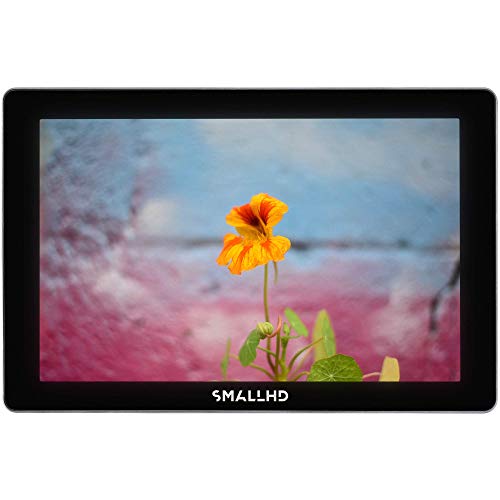
- 1000-nit stated brightness and 1920x1200 IPS display
- Lightweight aluminum chassis for mobile production
- 3G-SDI/HDMI I/O with waveform, peaking, and LUT tools
Best For: Run-and-gun crews needing professional on-camera monitoring
Best Pro Monitoring

- 1400-nit Full HD touchscreen
- Custom 3D LUT and professional scopes
- 4K60 HDMI and camera control
Best For: Documentary crews needing advanced monitoring and daylight visibility
Best Color-Focused Pick

- 10-bit 1080p display
- 100% DCI-P3 color coverage
- Waveform and ARRI False Color
Best For: Compact documentary rigs focused on color and exposure tools
Best Large Budget Monitor
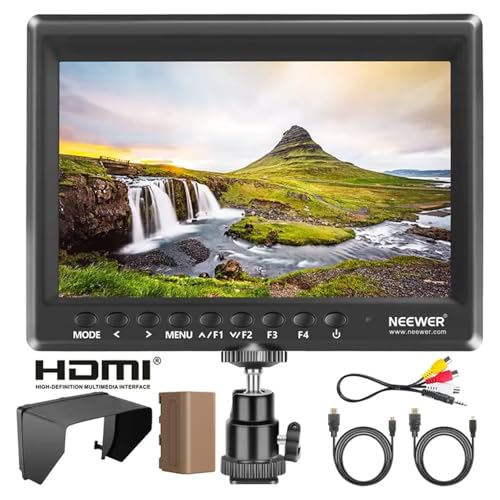
- Large 7-inch IPS display
- Includes 4400mAh battery and sunshade
- Useful focus and framing aids
Best For: Location shooters wanting a larger, ready-to-use monitor kit
Compact EVF Pick
Portkeys LEYE III 4K Electronic Viewfinder

- Adjustable +8D to -3D diopter
- 2.9-inch 1440x900 LCD
- Waveform, peaking, false color, and 3D LUT tools
Best For: Operators seeking a compact eyepiece-style documentary monitor
Hands-Free 7-Inch Choice
Voice Control 7-Inch Camera Field Monitor

- Voice-command operation for hands-free adjustments
- 4K input/output with 1920x1200 IPS display
- NP-F, USB-C PD, and 7–24V power options
Best For: Remote documentary setups needing a large, flexible monitor
Professional Control Pick
Portkeys LH5C 5.4-Inch Camera Monitor

- Touchscreen camera control for supported models
- 800-nit display with sunshade and 178° viewing angle
- Freeze-frame overlay plus waveform and 3D LUT tools
Best For: Documentary crews prioritizing camera control and continuity matching
Sunlight-Ready Touchscreen Pick – VILTROX DC-A1 7-Inch Field Monitor
For filmmakers comparing field monitors for documentaries, the VILTROX DC-A1 is a practical choice for bright outdoor work. Its 7-inch 1920×1080 touchscreen, 2800-nit stated brightness, detachable sunshade, and monitoring tools are suited to fast-paced documentary production.
Best For: Outdoor documentary crews that need a bright touchscreen monitor with scopes, focus aids, and 4K HDMI loop-through.
Pros:
- Bright 7-inch display with a detachable hood for outdoor viewing.
- Includes waveform, histogram, vectorscope, false color, and focus-assist tools.
- Supports 4K HDMI input and output, plus audio monitoring through a headphone jack.
- Accepts NP-F batteries, DC power, and compatible USB-C power.
Cons:
- The monitor is limited to a Full HD 1920×1080 display resolution.
- Built-in cooling fans may add complexity for quiet production environments.
The DC-A1 offers a strong feature set for documentary shooting in changing light. Its brightness, touch controls, customizable shortcut keys, and multiple power options make it particularly useful for mobile crews.
Large Production Monitor – SEETEC P173-9HSD 17.3-Inch Display
The SEETEC P173-9HSD takes a different approach to field monitors for documentaries, prioritizing a large 17.3-inch Full HD viewing area and broad input support. It is better suited to a production station, studio, or larger on-set monitoring position than lightweight handheld work.
Best For: Documentary sets that need a large shared display with SDI, HDMI, component, composite, and DVI-I connectivity.
Pros:
- Large 17.3-inch 1920×1080 screen for collaborative viewing.
- Supports 3G-SDI, HDMI, YPbPr, video, audio, and DVI-I inputs.
- Includes matching outputs, a headphone jack, and built-in speaker.
- Supplied with a sunshade, V-mount battery plate, tally kit, and U bracket.
Cons:
- Its 3.3 kg weight is less convenient for run-and-gun documentary shooting.
- The listed 400 cd/m² brightness may be less suitable for direct sunlight than brighter portable monitors.
- A 40 ms response time is relatively slow for fast-moving monitoring needs.
Choose the P173-9HSD when screen size and connectivity matter more than portability. Its metal cabinet, tally lights, and wide range of video connections can make it useful as a director or client monitor.
Monitor-and-Recorder Choice – Blackmagic Video Assist 5-Inch 3G
Blackmagic Design Video Assist 5'' 3G Portable Monitor, Recorder, Scope, and Viewfinder
Check Price On AmazonThe Blackmagic Design Video Assist 5-inch 3G combines a portable monitor with recording, scopes, and viewfinder functions. For documentary teams evaluating field monitors for documentaries, it provides a compact way to add professional monitoring tools to compatible camera setups.
Best For: Documentary shooters who want a portable 5-inch monitor with recording capability, professional scopes, HDR, and 3D LUT support.
Pros:
- Combines monitoring, recording, scope, and viewfinder functions in one unit.
- Offers a 5-inch 1920×1080 LCD with stated 2500 cd/m² brightness.
- Includes professional scopes, focus assist, HDR, and 3D LUT support.
- Provides HDMI connectivity and a two-year warranty according to the supplied details.
Cons:
- The 5-inch screen is smaller than the 7-inch and 17.3-inch alternatives here.
- The supplied notes do not specify the recording formats or storage media.
- Its listed weight of 771 g may be substantial for a compact on-camera monitor.
The Video Assist is compelling when recording and monitoring need to travel together. Verify camera compatibility, recording specifications, and mounting requirements before choosing it for a particular documentary rig.
Run-and-Gun Professional Pick – SmallHD Indie 7 On-Camera Monitor
The SmallHD Indie 7 is designed for demanding mobile production, making it a strong candidate among field monitors for documentaries. Its 7-inch daylight-viewable display, lightweight aluminum chassis, 3G-SDI and HDMI connectivity, and PageBuilder toolset support fast camera operation in the field.
Best For: Run-and-gun documentary crews wanting a durable touchscreen monitor with waveform, focus peaking, LUTs, and optional camera control.
Pros:
- 1000-nit stated brightness and a 1920×1200 IPS display support daylight monitoring.
- Lightweight, slim milled-aluminum body is intended for mobile production.
- Provides 3G-SDI and HDMI inputs and outputs.
- PageBuilder includes focus peaking, HD waveform, and 3D LUT tools.
Cons:
- Optional camera control requires compatible RED cameras, a cable, and a separate license.
- The monitor’s 17.3-watt power consumption may require careful battery planning.
- The supplied notes list a one-year manufacturer warranty.
The Indie 7 balances portability with professional monitoring features. It is especially attractive for documentary operators who need a responsive touchscreen and robust image-analysis tools without moving up to a larger production monitor.
Best Pro Monitoring – VILTROX DC550 Pro II 5.5-inch
For filmmakers comparing field monitors for documentaries, the VILTROX DC550 Pro II stands out for its bright display, extensive exposure tools, and 4K workflow support. Its 5.5-inch Full HD touchscreen reaches 1400 nits, making it a strong option for outdoor interviews and location work.
Best For: Documentary crews needing advanced monitoring, custom LUTs, and strong daylight visibility.
Pros:
- 1400-nit touchscreen with Full HD resolution and a 160-degree viewing angle.
- Includes waveform, histogram, vectorscope, focus peaking, false color, and zebra tools.
- Supports custom 3D LUT imports, 4K at 60Hz HDMI transmission, and loop-out.
- Offers Wi-Fi and USB-C camera control for select Sony, Canon, Nikon, and Fujifilm cameras.
Cons:
- Its extensive feature set may be more than a simple camera-monitoring setup requires.
- Camera-control compatibility varies by camera brand and model.
The DC550 Pro II is a feature-rich choice for documentary shooters who want precise exposure and focus assessment in changing locations. Triple power options and the included accessories also make it practical for extended field production.
Best Color-Focused Pick – Portkeys PT6 5.2-inch
The Portkeys PT6 is a compact option among field monitors for documentaries, combining a 10-bit 1080p panel with 100% DCI-P3 coverage. Its built-in exposure and focus tools help solo operators and small crews evaluate footage more confidently while shooting.
Best For: Filmmakers prioritizing color coverage, compact size, and essential professional monitoring aids.
Pros:
- 10-bit 1920 x 1080 display with 1500:1 contrast ratio.
- Provides 100% DCI-P3 coverage for vibrant color presentation.
- Includes waveform, vectorscope, peaking, and ARRI False Color.
- Supports 4K HDMI input, an additional HDMI input, and 3D-LUT output capabilities.
Cons:
- Its 600-nit brightness may be less suitable for intense direct sunlight than brighter monitors.
- The smaller 5.2-inch screen provides less viewing area than a 7-inch monitor.
With NP-F and Canon LP-E6-style battery plates plus barrel and USB-A power options, the PT6 fits a range of documentary camera rigs. It is a sensible middle ground for crews that value color presentation without moving to a larger monitor.
Best Large Budget Monitor – NEEWER F100 7-inch
The NEEWER F100 offers a larger screen at an accessible feature level, making it a practical consideration when choosing field monitors for documentaries. Its 7-inch IPS display, sunshade, included battery, and broad HD format support are useful for interviews, handheld shooting, and location setups.
Best For: Documentary shooters who want a large monitoring surface and a ready-to-use battery-powered kit.
Pros:
- 7-inch IPS display with 1280 x 800 resolution and a matte finish.
- Includes peaking, histogram, safe frames, check field, pixel-to-pixel, and image-flip tools.
- Comes with a 4400mAh F750 battery rated for up to 3.5 hours of runtime.
- Includes a sunshade, 360-degree mini ball head, and HDMI cables for common camera connections.
Cons:
- Its 450-nit brightness is lower than that of many brighter daylight-focused monitors.
- The display resolution is lower than Full HD options in this roundup.
- It weighs 1.9 pounds, which may add noticeable bulk to smaller rigs.
The F100 prioritizes screen size and included accessories over advanced color-management features. For documentary teams that need a straightforward monitor with useful composition aids and flexible USB power, it can be a capable location companion.
Compact EVF Pick – Portkeys LEYE III 4K Electronic Viewfinder
Portkeys LEYE III 4K HDMI Electronic Viewfinder 2.4 Inch LCD Monitor [Adjustable +8D~-3D]
Check Price On AmazonFor documentary shooters who prefer a compact eyepiece-style monitor, the Portkeys LEYE III is a practical choice among field monitors for documentaries. Its adjustable diopter, round eye mask, and monitoring tools support focused viewing in changing production conditions.
Best For: Documentary filmmakers who want a lightweight electronic viewfinder with exposure and focus-assist tools.
Pros:
- Adjustable +8D to -3D diopter accommodates different eyesight needs.
- 2.9-inch LCD provides 1440×900 effective resolution with 8-bit color depth.
- Includes waveform, histogram, peaking, false color, zebra, guides, and 3D LUT support.
- CNC-machined metal rear cover is designed for added durability.
Cons:
- The 2.9-inch display is less suitable for teams needing a large shared viewing screen.
- Uses a Canon E6 battery, which may require a dedicated battery setup.
The LEYE III favors portability and eyepiece viewing over a large on-camera display. It is a focused tool for operators who value diopter adjustment and a broad set of image-analysis features in a compact body.
Hands-Free 7-Inch Choice – Voice Control 7-Inch Camera Field Monitor
This 7-inch model stands out among field monitors for documentaries when a larger viewing area and hands-free operation are useful. Voice commands, 4K input/output, and a color-focused IPS display make it suited to demanding DSLR video and remote-location setups.
Best For: Documentary crews wanting a large monitor with voice control, color coverage, and flexible power options.
Pros:
- Built-in voice control enables hands-free adjustments during complex setups.
- Supports pure 4K signal transmission through its input/output connection.
- 7-inch 1920×1200 IPS display covers 100% of the BT.709 color gamut.
- Accepts NP-F batteries, USB-C PD, and 7–24V DC power.
Cons:
- At 1.77 pounds, it is heavier than compact field-monitor options.
- The supplied notes do not specify a sunshade or included battery.
Its main advantage is workflow flexibility: the larger screen supports shared viewing, while voice control can reduce interruptions during filming. The multiple power methods are also useful for long gimbal or remote-location shoots.
Professional Control Pick – Portkeys LH5C 5.4-Inch Camera Monitor
The Portkeys LH5C is a strong all-around option among field monitors for documentaries, combining camera control, an 800-nit display, and advanced monitoring tools. Its touchscreen control and freeze-frame overlay are especially useful for continuity and shot matching in the field.
Best For: Documentary filmmakers who need camera control, outdoor visibility, and detailed composition and exposure tools.
Pros:
- Touchscreen can control supported Sony, Canon, and Panasonic camera settings.
- 800-nit 5.4-inch display includes a sunshade and 178-degree viewing angle.
- Offers waveform, histogram, audio meters, false color, zebra, peaking, and 3D LUT support.
- Freeze-frame overlay comparison helps match continuity between takes.
Cons:
- Camera-control functions depend on model compatibility and supported connections.
- Battery is not included.
- It outputs 1080p60 despite supporting 4K30p input.
The LH5C is built for operators who want more than basic image display. Its camera-control features, outdoor-ready brightness, and continuity tools make it particularly useful for documentary work involving repeated setups or changing locations.
How We Picked the Best Field Monitors for Documentaries
We evaluated these monitors based on the demands of documentary production: dependable image monitoring, outdoor visibility, focusing assistance, connection flexibility, physical portability, and compatibility with common cameras and rigs. We also considered practical features such as waveform displays, false color, vectorscopes, peaking, 3D LUT support, HDMI loop-through, SDI connectivity, touchscreen control, and camera-control integration.
A monitor does not need every professional feature to be useful. A lightweight HDMI display may be the better choice for a solo filmmaker, while a production team working with SDI cameras may need stronger signal handling and a larger screen.
Quick Comparison
- Best for bright outdoor shooting: Choose a high-nit display, especially for direct sunlight or documentary work where a hood is inconvenient.
- Best for focus and exposure: Prioritize a sharp Full HD screen with waveform, false color, zebras, and focus peaking.
- Best for professional workflows: Look for 3G-SDI, HDMI loop-through, multiple signal formats, and reliable power options.
- Best for recording: A monitor-recorder such as the Blackmagic Video Assist can add capture and monitoring in one device.
- Best for lightweight rigs: Compact 5-inch monitors reduce weight on gimbals and small camera cages.
Key Buying Factors for Field Monitors for Documentaries
Brightness and Outdoor Readability
Brightness matters when filming outdoors, near windows, or in changing daylight. A higher-nit monitor is easier to see without relying on a hood, but it may consume more power. For frequent exterior work, prioritize daylight visibility over a basic low-brightness display.
Monitoring Tools
Documentary subjects rarely stay still, so accurate focus and exposure tools are valuable. Waveforms and false color help prevent clipped highlights and underexposed faces, while peaking and image magnification make manual focusing faster. 3D LUT support is useful when you need to preview a log-to-display conversion on set.
Inputs, Outputs, and Camera Control
Confirm whether your camera uses HDMI or SDI and check the supported resolution and frame rates. HDMI loop-out is useful for sending a feed to another monitor or recorder. Camera-control support can reduce trips to the camera, but compatibility varies by camera brand and connection type.
Size, Power, and Mounting
A 5-inch monitor is easier to mount on a gimbal or compact cage, while a 7-inch model provides a more comfortable view for interviews and tripod work. Check battery compatibility, DC input options, mounting points, and total rig weight before buying.
Who Should Buy Which Field Monitors for Documentaries?
Solo filmmakers and run-and-gun shooters should favor a compact HDMI monitor with strong brightness, touchscreen controls, and essential exposure tools. Interview and tripod-based crews may prefer a larger 7-inch display for easier composition and client viewing.
Broadcast and cinema crews should prioritize SDI connectivity, robust signal support, scopes, and dependable power options. Editors or filmmakers who need an on-set backup should consider a monitor-recorder. Finally, gimbal operators and minimalist rigs benefit from the smallest monitor that still provides adequate brightness, resolution, and focusing aids.
