Personal sound amplifiers can make conversations, television, and everyday activities easier to follow by bringing selected sounds closer and making voices more prominent.
We compare 10 popular options across comfort, controls, microphone design, power, and included accessories so you can choose a device that matches your listening needs and routine.
Best 10 Personal Sound Amplifiers Picks for 2026
Best Adjustable Amplification

- Up to 50+ dB of ambient sound gain
- Includes earbuds, headphones, case, and batteries
- Up to 80 hours of battery life
Best For: Seniors and adults needing flexible everyday amplification
Best Long-Battery Duo
Williams Sound PockeTalker Ultra DUO

- 20–40 dB of acoustic gain
- Includes headset and single earbud
- Up to 100 hours on two AAA batteries
Best For: TV listening, speeches, and conversations with accessory flexibility
Best Rechargeable Convenience
Rechargeable Hearing Amplifier
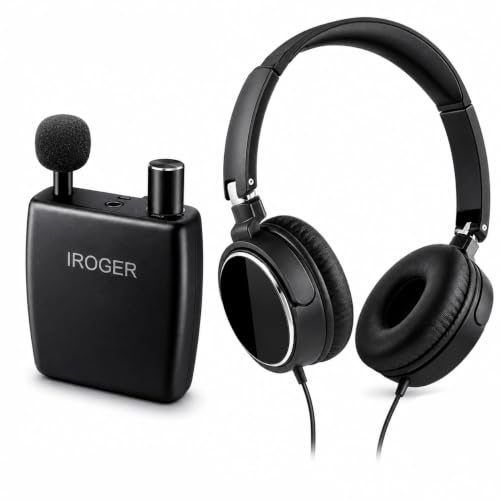
- Auto Gain Control adapts to surroundings
- Up to 120 hours per charge
- One-knob operation and directional microphone
Best For: Simple, rechargeable everyday sound enhancement
Best Maximum Gain
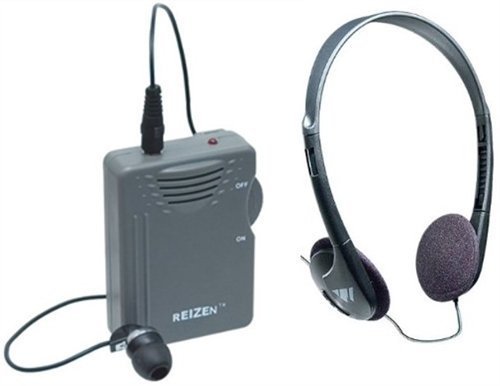
- Listed 120 dB of gain
- Includes mini earphone, headphones, and batteries
- Built-in microphone with belt clip
Best For: Powerful amplification for lectures and small-group conversations
Best Simple Amplifier
Williams Sound Pocketalker Ultra

- Up to 40 dB amplification with tone and volume controls
- Includes headphones, earbud, extension cord, lanyard, and batteries
- Portable design with a five-year manufacturer warranty
Best For: Simple conversation, TV, and small-group listening
Best Wireless Conversation Aid
ConvoAssist Personal Sound Amplifier

- Two wireless microphones support conversations with two speakers
- No app or pairing setup; connects automatically from the case
- Up to eight hours per charge with additional case recharges
Best For: Understanding conversations and TV dialogue with wireless convenience
Best Versatile Microphone Kit
Joanbro Personal Sound Amplifier

- Up to 50 dB additional acoustic gain with noise-control features
- Three removable microphones for conversations, groups, and TV
- Tone and volume controls plus a broad accessory package
Best For: Flexible corded listening across home, meetings, and TV
Best Rechargeable Pick
Auto-Gain Directional Sound Amplifier

- Up to 65dB maximum gain with automatic adjustment
- One-hour charge delivers up to 120 hours of use
- Directional microphone and simple volume knob
Best For: Seniors wanting long battery life and easy controls
Best for TV Listening
IceHeat 50dB Personal Sound Amplifier
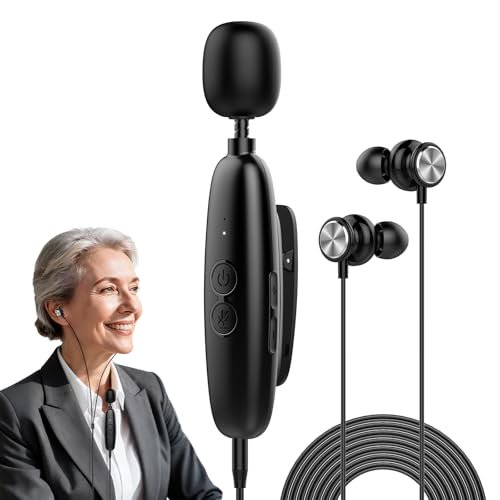
- 50dB gain with seven-level tone control
- Rechargeable lithium-ion battery
- Designed for TV and conversations up to 30 feet away
Best For: TV viewers and seniors who want adjustable tone
Best Flexible Pocket Model

- Detachable earbuds support mono or stereo listening
- Includes headphones, microphones, and dual earbuds
- Up to 30 hours on the included AAA battery
Best For: Users needing versatile listening for TV and activities
Best Adjustable Amplification – SuperEar SE7500
The SuperEar Plus SE7500 is a versatile choice among personal sound amplifiers for users who want adjustable everyday amplification. It offers up to 50+ dB of ambient sound gain, a volume wheel, discreet earbuds, and included headphones for conversations, television, meetings, worship services, and outdoor listening.
Best For: Seniors and adults seeking customizable amplification for home, social, and outdoor use.
Pros:
- Adjustable volume control and up to 50+ dB of ambient sound gain.
- Includes earbuds, headphones, batteries, carry case, and belt clip.
- Up to 80 hours of battery life with automatic shut-off.
- Compact design supports portable indoor and outdoor use.
Cons:
- Uses two AAA batteries rather than a rechargeable battery.
- Sound amplification is not described as having automatic environmental adjustment.
The SE7500 stands out for its complete accessory package and flexible wearing options. Its manual volume control and long battery life make it practical for routine listening, while the included case helps with portability.
Best Long-Battery Duo – Williams Sound PockeTalker Ultra DUO
The Williams Sound PockeTalker Ultra DUO is one of the more flexible personal sound amplifiers for conversations, speeches, and TV listening. It combines external volume and tone controls with a removable microphone, a listening headset, a single earbud, and up to 100 hours of battery life.
Best For: Users who want multiple listening accessories and extended battery life for TV, meetings, and conversations.
Pros:
- Provides 20–40 dB of acoustic gain with separate volume and tone controls.
- Includes both a folding headphone and a single earbud.
- Up to 100 hours of operation on two AAA batteries.
- Removable microphone, extension cord, and integrated belt clip add flexibility.
Cons:
- AAA batteries are replaceable but not included.
- The supplied specifications list no noise-control feature.
This DUO package is appealing if you value accessory choice over a minimalist setup. Its long battery life, TV listening cord, and five-year manufacturer warranty support regular home and portable use.
Best Rechargeable Convenience – Rechargeable Hearing Amplifier
This rechargeable model is a practical option among personal sound amplifiers for users who prefer simple controls and automatic adjustment. Its Auto Gain Control responds to changing surroundings, while the directional microphone focuses on the speaker in front of you and the battery can last up to 120 hours per charge.
Best For: Users who want rechargeable operation, one-knob control, and directional amplification for everyday listening.
Pros:
- Auto Gain Control adjusts amplification as surroundings change.
- Delivers up to 65 dB of sound gain.
- Charges in about one hour and lasts up to 120 hours.
- Includes a two-year manufacturer warranty and lifetime repair service.
Cons:
- The supplied notes do not specify included charging accessories.
- Only one sound amplifier is listed among the included components.
With fast charging, extended runtime, and a single control knob, this amplifier is designed for straightforward daily use. Its directional microphone may be especially useful when the main goal is following a nearby speaker.
Best Maximum Gain – Reizen Loud Ear 120dB
The Reizen Loud Ear is designed for shoppers comparing high-output personal sound amplifiers. It provides listed gain of up to 120 dB, uses a built-in microphone, and includes a mini earphone, two AAA batteries, and a free pair of headphones for lectures, small-group conversations, and noisy environments.
Best For: Users prioritizing powerful amplification and a simple belt-clip design.
Pros:
- Offers a listed 120 dB of gain.
- Can pick up sound at a distance of up to 100 feet.
- Includes a single earphone, headphones, and two AAA batteries.
- Belt clip supports portable carrying.
Cons:
- Uses a single-ear listening setup by default.
- The supplied specifications list no noise-control feature.
- High gain may be more than some users need for ordinary listening.
The Loud Ear is best suited to buyers who want maximum listed amplification rather than a feature-rich interface. Its included accessories and belt clip make it ready for portable use, but shoppers should consider whether single-ear listening fits their preferences.
Best Simple Amplifier – Williams Sound Pocketalker Ultra
The Williams Sound Pocketalker Ultra is a straightforward choice among personal sound amplifiers for one-on-one conversations, television listening, and small groups. Its handheld microphone can be positioned near the desired sound to help reduce distracting background noise, while external volume and tone controls make quick adjustments simple.
Best For: Seniors who want a simple, portable amplifier for conversations, TV, and car listening.
Pros:
- Amplifies sound by up to 40 dB with separate volume and tone controls.
- Includes headphones, a single-ear earbud, microphone extension cord, and neck lanyard.
- Comes with 20 AAA batteries and a five-year manufacturer warranty.
Cons:
- It is a personal sound amplifier, not a hearing aid.
- Battery-powered operation requires AAA battery replacements.
- It has no stated noise-control feature, so microphone placement remains important.
Choose the Pocketalker Ultra when ease of use and included accessories matter more than wireless operation. People with severe hearing impairment should consult a licensed audiologist.
Best Wireless Conversation Aid – ConvoAssist Personal Sound Amplifier
The ConvoAssist is a wireless option among personal sound amplifiers, using clip-on microphones to transmit speech directly to earbuds or compatible headphones. Its automatic connection, two-speaker support, and rechargeable case make it especially convenient for conversation and TV dialogue.
Best For: People who can hear speech but need help understanding conversations or following dialogue.
Pros:
- Two wireless microphones can capture two speakers at once from up to 100 feet away.
- Automatically powers on and connects when removed from the charging case.
- Works with existing in-ear or over-ear headphones and includes wired earbuds with multiple tip sizes.
- Provides up to eight hours of listening per charge, with additional recharges from the case.
Cons:
- Requires earbuds or headphones for listening.
- Wireless microphone placement and charging add components compared with a basic handheld amplifier.
- The supplied notes do not specify an amplification-gain rating.
ConvoAssist stands out for modern, low-setup listening and two-person conversations. It is a practical fit for users who prioritize wireless convenience and rechargeable operation.
Best Versatile Microphone Kit – Joanbro Personal Sound Amplifier
The Joanbro personal sound amplifier is designed for flexible listening at home or away, with three removable microphone options and up to 50 dB of additional acoustic gain. Adjustable tone and volume controls let users tailor the sound for conversations, group settings, or long-distance TV listening.
Best For: Users who want multiple microphone and cable options for TV, meetings, church, restaurants, or everyday conversations.
Pros:
- Offers three microphone configurations, including 2-meter and 6-meter cable options.
- Provides up to 50 dB of additional acoustic gain with noise cancellation and automatic gain control.
- Includes a headphone, single earbud, belt clip, batteries, extension cable, and suction-cup microphone setup.
- Features separate tactile tone and volume controls.
Cons:
- The corded design may be less convenient than a wireless device.
- Several microphone and cable options may require more setup and storage.
- Users need to start at low volume and adjust carefully to the listening environment.
Joanbro is a strong choice when microphone placement and listening distance vary. Its broad accessory set is useful for both close conversations and extended TV listening, although the wired setup is less streamlined.
Best Rechargeable Pick – Auto-Gain Directional Sound Amplifier
For shoppers comparing personal sound amplifiers, this rechargeable model emphasizes straightforward controls, extended battery life, and clearer speech in everyday settings. Its automatic gain control and directional microphone are useful for users who want amplification without frequent manual adjustments.
Best For: Seniors and adults seeking a simple, rechargeable amplifier for daily conversations and travel.
Pros:
- Automatic gain control adjusts amplification in real time, with up to 65dB of sound gain.
- Directional noise-reducing microphone focuses on voices in front of the wearer.
- One-hour charging provides up to 120 hours of use.
- Compact design, two-year warranty, and lifetime repair service.
Cons:
- Uses a manual volume knob rather than more advanced controls.
- The supplied details do not specify a formal noise-control rating.
This is a practical choice when long runtime and simple operation matter most. The directional microphone and automatic gain control add convenience, while the compact build supports portable use.
Best for TV Listening – IceHeat 50dB Personal Sound Amplifier
This IceHeat model is one of the more approachable personal sound amplifiers for TV watching and conversations. It combines 50dB of gain with seven-level tone control, noise cancellation, and rechargeable operation for users who want to fine-tune listening at home or on the go.
Best For: Seniors who primarily need clearer TV audio, family conversations, and group listening.
Pros:
- Amplifies audio from up to 30 feet away, according to the supplied product information.
- Seven-level tone control helps tailor sound to different listening situations.
- Rechargeable lithium-ion battery supports convenient ongoing use.
- Designed for TV listening, restaurants, church, theater, travel, and outdoor activities.
Cons:
- Its 50dB gain is lower than some higher-powered amplifiers.
- The supplied details do not state the exact battery runtime.
- Coverage includes a one-year manufacturer warranty.
Choose this model if flexible tone adjustment and TV use are higher priorities than maximum listed amplification. Its rechargeable format and broad recommended-use list make it suitable for everyday listening.
Best Flexible Pocket Model – MEDca Duo-Mic Voice Enhancer
Among personal sound amplifiers, the MEDca Pocket Sound stands out for its flexible earbud setup and pocket-sized design. It includes detachable earbuds for mono or stereo listening, matched-output drivers for clearer sound, and accessories suited to TV, events, and outdoor activities.
Best For: Users who want a versatile pocket amplifier with one-ear or two-ear listening options.
Pros:
- Detachable earbuds can be used in mono or stereo mode.
- Includes stereo headphones, dual earbuds, a swivel microphone, and an extra microphone set.
- Matched-output drivers are designed for clear, crisp sound.
- Provides up to 30 hours of battery life with the included AAA battery.
Cons:
- Its AAA battery format requires replacement rather than built-in USB charging.
- The pocket-style setup includes more components than a simple one-piece amplifier.
- The supplied information does not provide a rechargeable-battery option.
This model is a strong fit for shoppers who value configuration choices over minimal hardware. Mono/stereo flexibility and the included accessories make it adaptable for TV, events, and outdoor listening.
How We Picked the Best Personal Sound Amplifiers
We focused on practical features that matter in daily use rather than relying on amplification claims alone. Our comparison considers microphone directionality, tone and volume controls, headphone or earbud comfort, rechargeable versus replaceable power, portability, included accessories, and ease of operation for older adults.
We also looked for options suited to different situations, including one-on-one conversations, television listening, group settings, and occasional use. A personal sound amplifier is not the same as a professionally fitted hearing aid, so buyers should treat these devices as listening aids and consult a hearing professional if hearing loss is persistent, sudden, or worsening.
Quick Comparison
| Best For | Features to Prioritize |
|---|---|
| Conversations at home | Clear voice pickup, simple volume control, comfortable headset |
| Multiple listening situations | Adjustable tone, directional microphone, interchangeable earpieces |
| Travel and portability | Compact pocket design, durable controls, long battery life |
| Frequent daily use | Rechargeable battery, charging case or dock, lightweight fit |
| Occasional backup use | Replaceable batteries, straightforward operation, low accessory cost |
Key Buying Factors for Personal Sound Amplifiers
Sound Pickup and Controls
Directional microphones can help emphasize sound from in front of you, while dual microphones may provide a broader listening experience. Look for separate volume and tone controls if voices sound muffled or background noise is distracting. More gain is not automatically better; excessive volume can be uncomfortable and may amplify unwanted noise.
Comfort and Included Listening Options
Check whether the package includes headphones, earbuds, an ear speaker, or multiple fitting choices. Over-ear headphones may be easier to handle, while earbuds can be more discreet. A lightweight pocket unit with a clip is useful when you do not want to wear the amplifier on your ears.
Power and Maintenance
Rechargeable models reduce the need to keep spare batteries available, but they must be charged regularly. Battery-powered models can be convenient for travel or emergency backup. Compare expected runtime, charging accessories, battery availability, and the ease of cleaning or replacing earpieces.
Who Should Buy Which Personal Sound Amplifiers?
Choose a rechargeable model if you use amplification every day and prefer a simpler routine. A pocket amplifier with a directional microphone is a practical choice for conversations, appointments, and listening across a table. Buyers who want flexibility should consider packages with both headphones and earbuds, while shoppers seeking the easiest setup should favor large controls and minimal adjustments.
If you experience difficulty understanding speech even in quiet settings, ringing in the ears, one-sided hearing changes, pain, or a sudden drop in hearing, arrange a professional hearing evaluation rather than relying solely on an amplifier.
