Finding the right personal sound amplifier can make conversations, television, and everyday listening easier without forcing shoppers to sort through confusing technical specifications. The best choice depends on comfort, volume control, microphone directionality, battery life, and how discreetly the device fits into a daily routine.
This roundup compares 10 senior-friendly personal sound amplifiers, including pocket-style amplifiers, headphone models, rechargeable options, and products designed for more focused voice enhancement.
Best 10 Senior-Friendly Personal Sound Amplifiers Picks for 2026
Portable TV & Conversation Pick

- Handheld amplifier with tactile volume wheel
- Includes headphones, earbuds, clip, and AAA battery
- Up to 50+ dB amplification and 30-hour battery life
Best For: TV listening, conversations, and portable everyday use
Rechargeable Noise-Control Pick
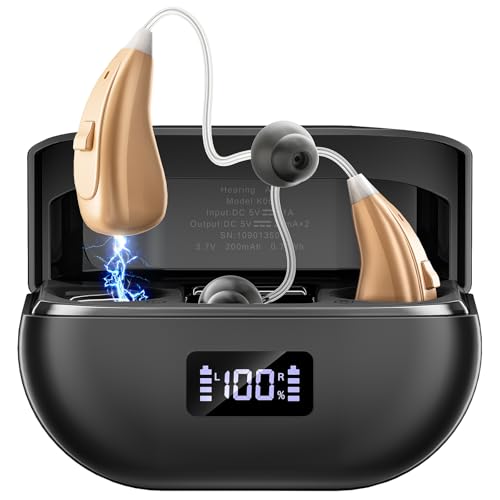
- Adaptive noise cancellation with 16-channel processing
- One-button control with five volume levels
- 25+ hours per charge and 100+ hours with case
Best For: Discreet in-ear use in conversations and noisy settings
Long-Battery-Life Classic
Williams Sound PockeTalker Ultra DUO

- 20–40 dB acoustic gain with volume and tone controls
- Includes headset, earbud, microphone, and TV cord
- Up to 100 hours using two AAA batteries
Best For: TV, speeches, and conversations with flexible listening options
Simple Rechargeable Amplifier
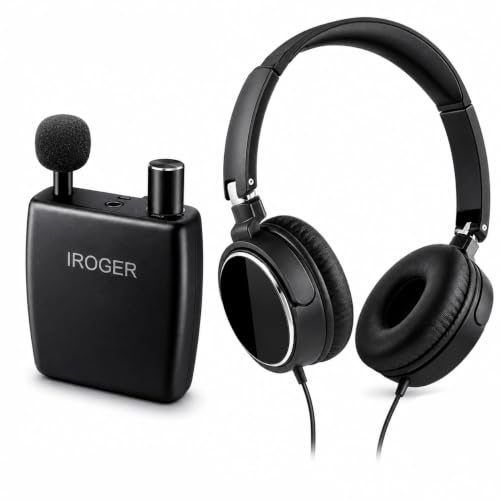
- One-knob power and volume control
- Automatic gain control with directional microphone
- About one-hour charging and up to 120-hour runtime
Best For: Simple portable conversation enhancement at home or on the go
Best All-Around Pick

- Up to 50+ dB of ambient sound gain
- Includes earbuds, headphones, batteries, and case
- Adjustable volume with up to 80 hours of battery life
Best For: Everyday conversations, TV listening, travel, and social gatherings
Best Simple Design
Williams Sound Pocketalker 2.0

- Lightweight at approximately 0.09 kg
- Simple button controls for straightforward use
- Includes two AAA batteries
Best For: Everyday use, travel, exercise, and compatible 3.5 mm audio devices
Best Customizable Fit

- Seven volume levels and three listening modes
- Five ear-tip sizes for fit customization
- Two-ear design works with TV, phones, and tablets
Best For: Users wanting adjustable settings and a personalized in-ear fit
Rechargeable Clarity Pick

- Three-position frequency adjustment
- Rechargeable setup with up to 40 hours of use
- Includes headphones, earbuds, charger, and belt clip
Best For: Seniors seeking flexible, rechargeable everyday listening
Most Flexible Microphone Setup

- Three removable microphone types
- Tone and volume controls
- Includes long TV-listening cable and accessories
Best For: Seniors needing adaptable microphone placement
Longest Battery Life
Rechargeable Directional Amplifier

- Up to 120 hours of claimed use
- Simple one-knob operation
- Directional microphone and two-year warranty
Best For: Seniors wanting low-maintenance portable amplification
Portable TV & Conversation Pick – SuperEar SE5000
For shoppers comparing senior-friendly personal sound amplifiers, the SuperEar SE5000 is a straightforward handheld option for TV listening, conversations, and everyday activities. Its tactile volume wheel, swivel microphone, included headphones and earbuds, and pocket-friendly design make it simple to use around the home or on the go.
Best For: Seniors who want a portable amplifier for television, family conversations, and general ambient-sound enhancement.
Pros:
- Includes stereo headphones, stereo earbuds, belt clip, and a AAA battery.
- Tactile volume wheel allows easy sound-level adjustments.
- Offers up to 50+ dB of ambient-sound amplification and up to 30 hours of battery life.
- Can be carried in a pocket or attached with the stainless steel belt clip.
Cons:
- Does not connect directly or wirelessly to a television.
- Requires a disposable AAA battery.
The SE5000 is a practical choice when ease of handling and included listening accessories matter more than wireless TV connectivity. Its handheld format also makes it flexible for use in different rooms and outdoor settings.
Rechargeable Noise-Control Pick – OTC Hearing Aids
Among senior-friendly personal sound amplifiers, these OTC hearing aids emphasize discreet in-ear comfort, adaptive noise cancellation, and rechargeable convenience. Their one-button operation and automatic memory are designed for users who want simple controls across quiet and noisy environments.
Best For: Seniors seeking discreet rechargeable amplification for conversations, restaurants, television, and everyday activities.
Pros:
- Adaptive noise cancellation and 16-channel processing are designed to clarify speech.
- One-button control provides five volume levels, with automatic memory for preferred settings.
- Each device weighs 3 grams and uses soft medical-grade materials.
- Provides 25+ hours of use per charge and 100+ hours with the charging case.
Cons:
- In-ear controls and fitting may be less convenient for users who prefer external volume wheels.
- The supplied listing does not specify a software-update schedule.
This model stands out for users prioritizing discreet wear, rechargeable power, and background-noise management. The charging case and simple button control can also reduce day-to-day battery management.
Long-Battery-Life Classic – Williams Sound PockeTalker Ultra DUO
The Williams Sound PockeTalker Ultra DUO is a dependable option in senior-friendly personal sound amplifiers, pairing external volume and tone controls with both a folding headset and a single earbud. It is suited to television, speeches, and conversations when replaceable batteries and simple physical controls are preferred.
Best For: Seniors who want a traditional portable amplifier with flexible listening accessories and extended battery life.
Pros:
- Includes a listening headset, single earbud, microphone, and TV listening cord.
- External volume and tone controls support straightforward adjustments.
- Provides 20–40 dB of acoustic gain and up to 100 hours of battery life.
- Removable microphone, extension cord, and integrated belt clip add setup flexibility.
Cons:
- Uses two AAA batteries, which are not included.
- It has no listed noise-control feature.
- The supplied notes list a 2-foot TV listening cord, which may limit placement distance.
The PockeTalker Ultra DUO is a strong fit for buyers who value long runtime and accessory flexibility over rechargeable operation or noise cancellation. Its physical controls are also easy to understand for many users.
Simple Rechargeable Amplifier – I8-Pro Sound Amplifier
For shoppers seeking senior-friendly personal sound amplifiers with minimal controls, the I8-Pro uses one knob for power and volume. Its automatic gain control adjusts amplification as surroundings change, while a directional microphone is designed to focus on the person speaking.
Best For: Seniors who prefer a simple rechargeable amplifier for conversations, shopping, travel, and home use.
Pros:
- One knob handles power and volume without complicated menus.
- Automatic gain control adjusts amplification as the environment changes.
- Directional microphone is designed to focus on the speaker in front.
- Charges in about one hour and can last up to 120 hours per charge.
Cons:
- The supplied notes do not list a dedicated noise-control feature.
- Only the sound amplifier is listed among the included components.
The I8-Pro is appealing when simple operation and unusually long rechargeable runtime are top priorities. Its compact design supports portable use, though buyers wanting included headphones or earbuds may need to confirm the package contents carefully.
Best All-Around Pick – SuperEar SE7500
The SuperEar SE7500 is a practical choice among senior-friendly personal sound amplifiers for conversations, television, meetings, worship services, and outdoor listening. It offers adjustable volume, a high-sensitivity microphone, discreet earbuds, and included headphones for flexible everyday use.
Best For: Seniors who want a versatile amplifier for home, social gatherings, TV listening, and travel.
Pros:
- Provides up to 50+ dB of ambient sound gain.
- Includes earbuds, headphones, batteries, a carry case, and belt clip.
- Offers adjustable volume and up to 80 hours of battery life.
- Automatic shut-off helps conserve battery power.
Cons:
- Uses disposable AAA batteries rather than a rechargeable battery.
- Sound isolation and microphone carry noise may not suit every user.
With multiple listening options and long stated battery life, the SE7500 is a well-rounded amplifier for users who value portability and straightforward controls.
Best Simple Design – Williams Sound Pocketalker 2.0
The Williams Sound Pocketalker 2.0 is one of the more straightforward senior-friendly personal sound amplifiers for users who prioritize lightweight operation. Its button controls, included AAA batteries, and in-ear listening setup make it suitable for everyday use, travel, and compatible audio devices.
Best For: Seniors seeking a lightweight, easy-to-use amplifier for daily activities and travel.
Pros:
- Lightweight design weighs about 0.09 kg.
- Includes two AAA batteries.
- Uses simple button controls.
- Works with devices that have a 3.5 mm audio jack.
Cons:
- The supplied notes provide limited information about volume adjustment and battery life.
- Compatibility depends on having a 3.5 mm audio jack.
The Pocketalker 2.0 keeps the feature set focused and portable, making it a sensible option when uncomplicated controls matter more than extensive customization.
Best Customizable Fit – J-105 Hearing Amplifier
The J-105 is a customizable option among senior-friendly personal sound amplifiers, offering seven volume levels, three listening modes, and five ear-tip sizes. Its two-ear design and clip are intended to support comfortable use for conversations, television, outdoor activities, and noisy environments.
Best For: Seniors who want multiple volume and mode settings plus several ear-tip options.
Pros:
- Provides seven volume levels and three listening modes.
- Includes five ear-tip sizes for a more personalized fit.
- Designed for two-ear use and does not require left- or right-ear placement.
- Compatible with televisions, smartphones, and tablets.
Cons:
- Uses disposable batteries.
- The supplied notes do not specify battery life.
- Its maximum sound output of up to 139 dB means users should follow safe-volume practices.
The J-105 stands out for fit and listening customization, making it appealing for users who want more control over comfort and sound settings in different environments.
Rechargeable Clarity Pick – SuperEar SE9000HP
The SuperEar SE9000HP is a practical choice among senior-friendly personal sound amplifiers for users who want adjustable sound settings and a complete rechargeable listening kit. Its three-position frequency switch, tactile volume wheel, and multiple wearing options make it adaptable for conversations, television, and everyday activities.
Best For: Seniors who want a rechargeable amplifier with flexible headphones and earbuds for home, travel, and daily conversations.
Pros:
- Three-position high-medium-low frequency switch helps tailor sound for different environments.
- Complete package includes headphones, ergonomic earbuds, batteries, charger, USB cable, and belt clip.
- Compact design offers up to 40 hours of operation per charge.
Cons:
- The included package has several components, which may require sorting and setup.
- Sound adjustment is limited to three frequency positions rather than continuously variable tone control.
Choose this model when rechargeable convenience and wearing flexibility matter more than a minimal accessory package. The illuminated power button and tactile controls may also be useful for straightforward daily operation.
Most Flexible Microphone Setup – Joanbro 50dB Sound Amplifier
This Joanbro model stands out among senior-friendly personal sound amplifiers for its three removable microphone options. With adjustable tone and volume controls, noise reduction features, and cables for conversations or television listening, it is designed for users who need different microphone placements in different settings.
Best For: Seniors who want microphone flexibility for conversations, group settings, church, meetings, or long-distance TV listening.
Pros:
- Offers three microphone types, including a wireless-style option and extensions up to 19 feet.
- Provides adjustable tone and volume controls with a tactile design.
- Includes an anti-dropping headphone, single earbud, belt clip, batteries, cables, and fastening accessories.
- Noise cancellation, automatic gain control, and noise reduction are designed to help limit distracting background sound.
Cons:
- The multiple cables and microphone accessories may feel cumbersome for users seeking a simple setup.
- It uses two AAA batteries rather than a built-in rechargeable battery.
- Users need to start at a low volume and adjust tone and volume for their environment.
This is a strong fit when placement options are important, particularly for television or noisy group situations. It offers more configuration choices than a basic pocket amplifier, though that flexibility comes with extra components.
Longest Battery Life – Rechargeable Directional Amplifier
For shoppers comparing senior-friendly personal sound amplifiers, this rechargeable model emphasizes simple operation and extended battery life. Its single control knob handles power and volume, while automatic gain control and a directional microphone are designed to support clearer voices in front of the listener.
Best For: Seniors who prioritize easy controls, fast charging, and long-lasting portable use.
Pros:
- One knob controls on/off operation and volume without small buttons.
- Built-in battery charges in about one hour and provides up to 120 hours of use.
- Directional noise-canceling microphone focuses on sounds from in front of the user.
- Includes a two-year manufacturer warranty and lifetime repair service.
Cons:
- The supplied notes list only the sound amplifier as an included component.
- It does not offer the microphone, tone, or accessory selection found with more configurable models.
- The product details identify noise control as none, despite describing a directional noise-canceling microphone.
This model is best suited to buyers who value a straightforward control scheme and fewer battery changes. Its compact form and extended claimed runtime make it convenient for travel and regular daily use.
How We Picked the Best Senior-Friendly Personal Sound Amplifiers
We focused on features that matter in real-world use: simple controls, clear sound amplification, comfortable listening accessories, practical battery performance, and microphone placement. We also considered whether each design works better for conversations, television, group settings, or general everyday listening.
Because personal sound amplifiers are not the same as professionally fitted hearing aids, shoppers should review the product’s intended use and consult a hearing professional if hearing loss is sudden, severe, or affecting safety.
Quick Comparison
| Type | Best For | Features to Check |
|---|---|---|
| Pocket amplifier | Flexible conversation and television listening | Microphone direction, volume dial, included accessories |
| Headphone amplifier | Simple, over-ear listening | Comfort, cord length, left/right balance |
| Rechargeable model | Frequent daily use | Charging time, runtime, charging indicator |
| Earbud or compact model | Less noticeable personal listening | Fit, feedback control, ease of insertion |
Key Buying Factors for Senior-Friendly Personal Sound Amplifiers
Controls and Operation
Look for large, tactile volume controls and a straightforward power switch. A simple interface is especially helpful for users who do not want to manage smartphone apps or multiple listening modes.
Comfort and Fit
Headphones may be easiest to position, while earbuds can feel lighter and more discreet. Check whether the package includes multiple eartip sizes or alternative listening accessories. Glasses wearers should pay close attention to headphone pressure and cable placement.
Microphone Performance
Directional microphones can help emphasize a speaker in front of the listener, while omnidirectional designs may be more useful for general ambient awareness. Some amplification can also increase background noise, so microphone design and volume adjustment are important.
Power and Maintenance
Rechargeable units reduce the need to replace batteries, but they must be charged consistently. Disposable-battery models may be convenient as backups. Confirm the expected runtime, charging method, battery access, and whether replacement parts are readily available.
Sound Quality and Safety
High maximum gain is not automatically better. Start at a low volume and increase gradually. Shoppers should favor products with manageable volume adjustment and stop using one that causes discomfort, ringing, or distorted sound.
Who Should Buy Which Senior-Friendly Personal Sound Amplifiers?
Choose a pocket-style amplifier if you want flexible placement, a handheld volume control, and the ability to switch between headphones and an earbud. These models are often practical for conversations and television.
Choose a headphone-style amplifier if simplicity and stable positioning matter most. Over-ear headphones can be easier for some seniors to handle than small earpieces.
Choose a rechargeable amplifier for frequent use and fewer battery changes, provided the user can remember to charge it. A long-runtime model can be convenient for daily routines or travel.
Choose a compact or earbud design when discretion and portability are priorities. Confirm the fit before relying on it for extended listening, and make sure the controls remain easy to operate.
Overall, the best Senior-Friendly Personal Sound Amplifiers balance understandable controls, comfortable listening, useful battery life, and sound enhancement suited to the user’s typical environment.
