A ceiling cable system can make room-scale VR feel less restricted by keeping headset wires off the floor and reducing tangles during active play. The right setup should retract smoothly, stay quiet, and support your headset’s cable without adding distracting resistance.
We compared 10 options across pulley design, installation, compatibility, play-space coverage, and everyday usability to help you choose a safer, cleaner setup for your gaming room.
Best 10 VR Ceiling Cable Systems for Gaming Rooms Picks for 2026
Best Overall Coverage
AMVR VR Cable Management System

- Six retractable pulleys for broader room coverage
- Noise-dampening and 360-degree cable-holder design
- Adhesive and screw-hook installation options
Best For: Larger play spaces and multi-headset households
Best Compact Kit

- Three rotating retractable cable pulleys
- Drill-free or permanent installation choices
- Includes essential hooks, stoppers, wrench, and ring hook
Best For: Smaller VR play areas and simple installations
Best Established Six-Pack
KIWI design VR Cable Management
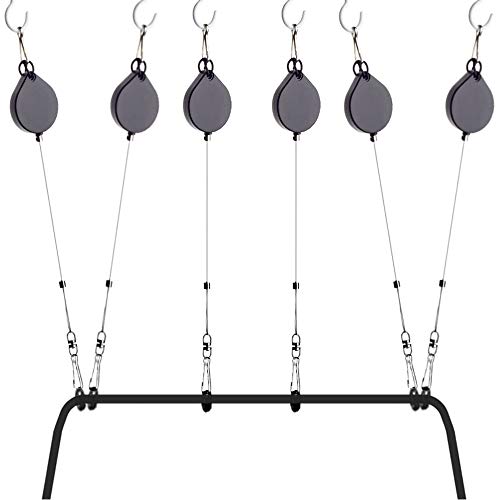
- Six retractable pulleys with 360-degree rotation
- Broad compatibility across major wired VR platforms
- Low-profile adhesive plates for drop ceilings
Best For: Dedicated VR rooms with broad headset compatibility needs
Best Drill-Free Value
CALIDAKA 3-Pack VR Pulley System
- Drill-free adhesive mounting option
- Noise-dampening and 360-degree rotation
- Retractable lines extend up to 71 inches
Best For: Renters and casual users needing compact cable control
Best Value Cable Set
Orzero VR Retractable Cable Management
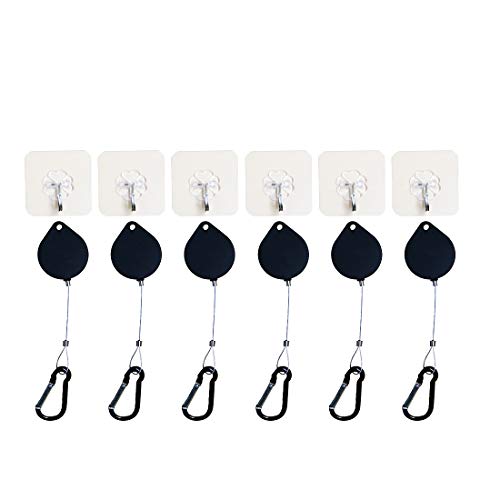
- Six retractable cable ropes for multi-point coverage
- Broad compatibility with popular wired VR headsets
- Includes hooks, buckles, key rings, and screwdriver
Best For: Multi-headset gaming rooms needing several cable points
Premium Wireless-Feel System
VR Wire II Endgame Pulley System

- Designed for a 12-by-12-foot playspace
- Rotating pulleys reduce tug during movement
- Supports 360-degree turns and removable guide wires
Best For: Room-scale players wanting smoother overhead cable handling
Best Drill-Free Option
DS.Distinctive STYL Retractable Ceiling System
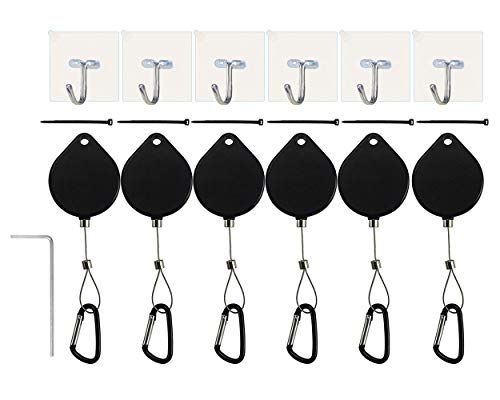
- Six adhesive hooks and retractable pulleys
- No drilling required on suitable smooth surfaces
- Designed for Vive, Rift, PlayStation VR, and Microsoft MR
Best For: Renters and casual players seeking simple installation
Quiet Drill-Free Pick
Retractable VR Ceiling Cable System
- Three retractable hooks with screw or adhesive mounting
- Noise-dampening design for less cable distraction
- Supports multiple VR platforms and cable sizes
Best For: Compact gaming rooms needing flexible, quieter cable routing
PC Link Cable Option

- Connects Oculus Quest 2 to a PC
- Supports up to 3 Gbps data transfer
- Offers fast charging up to 3 A
Best For: Quest 2 PC or Steam VR users needing a wired link
Large-Coverage Choice
Six-Pack VR Cable Pulley System

- Six retractable hooks for broader room coverage
- Extends up to 1.8 meters
- Includes screw and adhesive mounting hardware
Best For: Large room-scale spaces and multi-platform VR setups
Best Overall Coverage – AMVR VR Cable Management System
For larger gaming areas, this six-pulley AMVR system is a versatile option among VR ceiling cable systems for gaming rooms. Its retractable lines, 360-degree cable bracket, and dual mounting options help keep wired headset cables above the floor while reducing tug and pulley noise.
Best For: Gamers who want broad headset compatibility and more ceiling pulleys for a spacious play area.
Pros:
- Six retractable pulleys help cover a larger setup.
- Silicone, ABS, rubber, and noise-damper construction is designed to reduce noise and cable tension.
- Supports adhesive or screw-hook installation.
- Includes three silicone band sizes and a ring hook for cable adjustment and expanded movement.
Cons:
- The VR link cable is not included.
- Adhesive and screw mounting options may suit different ceiling surfaces differently.
- The retractable cable extends up to 71 inches, which may limit reach in larger rooms.
AMVR stands out when you need a six-point system with flexible mounting and compatibility across many wired headsets. Its included accessories and 18-month warranty add practical value for a more permanent gaming-room installation.
Best Compact Kit – NOWHYX 3-Pack VR Cable Hooks
This three-pack is a compact choice for VR ceiling cable systems for gaming rooms where you want a straightforward overhead setup. Each pulley offers 360-degree rotation, moderate retractable tension, and a choice between drill-free adhesive hooks and screw hooks.
Best For: Smaller play spaces and shoppers seeking a basic three-pulley kit with flexible installation.
Pros:
- Three pulleys provide a simpler, lower-count installation.
- 360-degree rotating holders support movement in different directions.
- Retractable lines extend up to 71 inches and automatically rebound.
- Includes adhesive hooks, screw hooks, rubber stoppers, a wrench, and a ring hook.
Cons:
- Three pulleys may offer less coverage than six-pack systems.
- The adhesive mounting option is intended for smooth ceilings, while textured surfaces may favor screw hooks.
- Compatibility is described for wired VR headsets, not wireless-only setups.
NOWHYX keeps the installation relatively simple without omitting the key accessories. It is a practical fit when three overhead attachment points are enough and you prefer a compact kit.
Best Established Six-Pack – KIWI design VR Cable Management
KIWI design’s six-pack is built for keeping a wired headset cable off the floor across a dedicated play area. As one of the VR ceiling cable systems for gaming rooms, it combines 360-degree retractable pulleys with adhesive ceiling plates and broad compatibility with popular PC and console VR headsets.
Best For: Dedicated gaming rooms using Quest, Rift, Vive, Valve Index, PlayStation VR, or similar wired headsets.
Pros:
- Six pulleys help distribute cable management across the play space.
- 360-degree rotation and automatic rebound support movement during gameplay.
- Compatible with many headsets, including Quest 3/2, Rift S, Vive, Valve Index, PS VR2, and Pico 4.
- Adhesive plates are designed to hold on drop ceilings and remain relatively unobtrusive.
Cons:
- The notes emphasize adhesive mounting rather than providing detailed dual-installation hardware.
- Users may need to add tape to some pulley connection points.
- The kit is intended for cable management and does not include a VR headset or link cable.
KIWI design is a strong choice when broad compatibility and six-point coverage matter. Its discreet adhesive plates and automatic-rebound design make it well suited to a permanent VR room arrangement.
Best Drill-Free Value – CALIDAKA 3-Pack VR Pulley System
The CALIDAKA three-pack offers a practical entry point for VR ceiling cable systems for gaming rooms, especially when you want to avoid drilling. Its noise-dampening construction, rotating cable holders, and retractable lines help keep a wired headset cord managed overhead.
Best For: Renters or casual VR users who need a compact, drill-free cable-management setup.
Pros:
- Adhesive hooks enable a drill-free installation option.
- Noise-dampening materials are designed to reduce pulley noise and cable tug.
- 360-degree cable-holder rotation helps accommodate different movement directions and cable types.
- Retractable wire extends up to 71 inches and rebounds automatically.
Cons:
- Three pulleys provide less coverage than six-pulley alternatives.
- Adhesive mounting may not suit every ceiling surface or long-term installation.
- The product is described primarily for wired VR headset cable management.
CALIDAKA focuses on the features most useful for a basic setup: quiet operation, rotating holders, and two mounting approaches. Choose it when a smaller system and drill-free installation are higher priorities than maximum room coverage.
Best Value Cable Set – Orzero VR Retractable Cable Management
For shoppers comparing VR ceiling cable systems for gaming rooms, the Orzero six-piece set offers a flexible way to lift wired headset cables off the floor. Its retractable ropes, adhesive hooks, carabiners, and included key rings support several popular PCVR and PlayStation-compatible headsets.
Best For: Gamers who need multiple retractable cable points and broad headset compatibility.
Pros:
- Six retractable wire ropes provide coverage for larger setups or spare units.
- Compatible with Quest models, Rift S, Valve Index, HTC Vive, HP Reverb G2, and Sony PlayStation link cables.
- Automatic rebound helps keep cables elevated while allowing a full range of motion.
- Includes adhesive hooks, mountaineering buckles, key rings, and a screwdriver.
Cons:
- Adhesive mounting may not suit every ceiling or wall surface.
- The system is designed for wired headsets and does not replace wireless play.
Orzero is a practical, compact choice when you want several cable-management points in one package. Its broad compatibility is especially useful for households using more than one wired VR platform.
Premium Wireless-Feel System – VR Wire II Endgame Pulley System
Among VR ceiling cable systems for gaming rooms, the VR Wire II Endgame is built for a more polished overhead setup. Its rotating pulley design follows movement across a 12-by-12-foot playspace, while the cable glides through the wheels to reduce direct tugging and twisting stress.
Best For: Dedicated room-scale players who want smoother overhead cable movement and 360-degree turns.
Pros:
- Dynamic retractor and rotating pulley wheel system are designed to reduce cable tug.
- Overhead tracking supports smooth 360-degree turns across the play area.
- Silent pulley wheels let the cable glide through the detachable holding bracket.
- Non-destructive mounting uses four small pins, with guide wires removable in seconds.
Cons:
- Its 12-by-12-foot playspace design may be more than needed for compact rooms.
- Mounting still requires ceiling pins and a screw hook rather than an entirely adhesive setup.
The VR Wire II Endgame is the most feature-focused option here for room-scale play. Choose it when minimizing cable tug and preserving freedom to turn matter more than keeping installation as simple as possible.
Best Drill-Free Option – DS.Distinctive STYL Retractable Ceiling System
If you prefer VR ceiling cable systems for gaming rooms without drilling, this six-pack from DS.Distinctive STYL uses adhesive hooks and retractable pulleys. The setup is intended to keep cables off the floor for compatible HTC Vive, Oculus Rift, PlayStation VR, and Microsoft MR systems.
Best For: Renters or casual VR players who want a drill-free cable-management installation.
Pros:
- Drill-free adhesive hooks are designed for smooth surfaces.
- Six retractable pulleys help keep the cable elevated and reduce floor snags.
- Retractable clips are designed to avoid restricting movement or tugging the headset.
- Package includes six hooks, six pulleys, and six carabiners.
Cons:
- Adhesive hooks need 24 hours before adding weight.
- They may remove paint from painted wood or drywall.
- Compatibility is focused on the listed wired VR platforms rather than every headset.
This system makes sense for a straightforward, no-drill installation on suitable smooth surfaces. Follow the adhesive waiting guidance carefully, especially when mounting in a rented or painted room.
Quiet Drill-Free Pick – Retractable VR Ceiling Cable System
For gamers comparing VR ceiling cable systems for gaming rooms, this three-hook Quivorant setup emphasizes quiet operation, flexible mounting, and compatibility across popular VR platforms. Its retractable cables extend up to 71 inches and automatically rebound to help keep wiring off the floor.
Best For: Players who want a compact, drill-free or screw-mounted cable solution for shared gaming spaces.
Pros:
- Includes three retractable cable hooks with adhesive and screw mounting options.
- Noise-dampening materials and design help reduce cable distraction during play.
- Elastic cable clips accommodate varying cable diameters and support several VR systems.
- Helps reduce trampling, bending, and pulling that can shorten cable life.
Cons:
- The included retractable reach is limited to 71 inches.
- The adhesive mounting option may be less suitable for permanent installations than screw hooks.
- The listed warranty is two months.
This is a practical choice when quiet cable routing and installation flexibility matter more than covering a large play area. The three-point layout should suit many compact rooms, while the included hardware keeps setup straightforward.
PC Link Cable Option – VeeR Quest 2 USB-C Cable
Unlike dedicated VR ceiling cable systems for gaming rooms, this VeeR cable is a direct wired link for connecting an Oculus Quest 2 to a PC. It combines USB-C connectivity with high-speed data transfer and fast charging for PC or Steam VR sessions.
Best For: Quest 2 owners who need a wired PC connection rather than overhead cable suspension.
Pros:
- Designed for connecting Oculus Quest 2 to a PC for VR gaming.
- Supports USB-C male-to-male connectivity and up to 3 gigabits per second data transfer.
- Provides fast charging with a listed maximum current of 3 A.
Cons:
- It is a single connection cable, not a ceiling pulley or retractable management system.
- The supplied compatibility details specifically identify Oculus Quest 2 and PCs rather than a broad range of headsets.
- A wired cable can still require floor or overhead routing to reduce trip hazards.
This product makes sense as a Quest 2 PC-link accessory, but it should not be mistaken for a ceiling management kit. Pair it with a separate routing solution if you need a cleaner room-scale play area.
Large-Coverage Choice – Six-Pack VR Cable Pulley System
For larger play spaces, this six-pack Marsrut system offers more ceiling attachment points than many VR cable setups. The retractable hooks extend up to 1.8 meters, and the package includes both screw and adhesive mounting hardware for flexible installation.
Best For: Room-scale players who want multiple overhead cable points and broad headset compatibility.
Pros:
- Includes six cable hooks, six screw hooks, eight adhesive hooks, and a ring hook.
- Up to 1.8 meters of extension can help support movement across a larger play area.
- Listed compatibility covers Quest, PSVR, HTC Vive, Valve Index, Rift, HP Reverb G2, and other systems.
- Retractable design helps reduce floor-level cable tangles and trip risks.
Cons:
- Installation still requires choosing between screw mounting and adhesive mounting based on the ceiling surface.
- The larger six-hook arrangement may be more hardware than needed for a small room.
- Specific pull-tension settings and cable-length adjustment details are not provided.
With six retractable points and a longer stated extension, this is the most suitable option here for expansive room-scale layouts. Its broad compatibility and included mounting assortment also make it a versatile starting point for multi-headset gaming rooms.
How We Picked These VR Ceiling Cable Systems for Gaming Rooms
We focused on the features that matter during real room-scale play: retractable travel, cable routing, rotation, noise, installation method, and compatibility with popular headsets and link cables. We also considered whether a system uses a complete pulley set or only addresses part of the cable-management setup.
Drill-free kits can suit renters and temporary gaming spaces, while screw-mounted or more robust systems may be preferable for a permanent room. Product listings vary in the number of pulleys, hooks, adhesive mounts, and accessories included, so confirm the package contents before buying.
Quick Comparison
| What to compare | Best for | What to check |
|---|---|---|
| Six-piece pulley kits | Larger or more flexible play spaces | Mounting strength and cable capacity |
| Three-piece systems | Compact rooms and simpler layouts | Coverage and retraction distance |
| Drill-free designs | Renters and temporary setups | Adhesive surface requirements |
| Rotatable hooks | Frequent turning and movement | Noise and swivel range |
| Link-cable products | PC VR users needing a cable | USB-C compatibility and data rating |
Key Buying Factors for VR Ceiling Cable Systems for Gaming Rooms
Headset and Cable Compatibility
Check whether the system is intended for your headset, including Quest, Valve Index, HTC Vive, Rift, PSVR, or PSVR2. Compatibility usually concerns mounting and cable routing rather than electronic support, so also verify that your existing link cable has the required connector, length, charging support, and data-transfer capability.
Play-Space Size and Pulley Layout
Measure the usable area rather than the whole room. A larger space may benefit from six pulleys or additional anchor points, while a compact play area may work well with three. Keep the cable path overhead and away from lights, fans, shelving, and other obstructions.
Retraction, Rotation, and Noise
Smooth retraction helps keep slack off the floor, but excessive spring tension can pull on the headset or restrict movement. Rotating hooks can reduce twisting when you turn, while quieter mechanisms are better for shared rooms and longer sessions.
Mounting and Safety
Drill-free adhesive mounts are convenient but depend on a clean, smooth, properly prepared ceiling. For permanent installations, secure mechanical fasteners may provide greater confidence when the ceiling material allows them. Test every mount gradually before active play and stop using any component that loosens or catches.
Who Should Buy Which VR Ceiling Cable Systems for Gaming Rooms?
- Choose a six-pulley system if you have a larger playspace, want more routing flexibility, or need to manage a longer cable path.
- Choose a three-pulley system if your room is compact and you want a simpler, lower-cost installation.
- Choose a drill-free kit if you rent, rearrange your gaming room, or cannot drill into the ceiling.
- Choose a rotatable, noise-reduced design if you turn frequently or play near others.
- Choose a dedicated link cable only when your current cable is unsuitable; a ceiling pulley system and a USB-C link cable solve different problems.
Before final installation, map your headset’s movement, check cable slack at every edge of the playspace, and confirm that the system retracts without tugging. Good VR Ceiling Cable Systems for Gaming Rooms should disappear into the background rather than become another constraint.
