Finding the right personal sound amplifier can feel overwhelming when you are comparing gain levels, controls, batteries, and listening accessories. The best beginner-friendly models keep setup simple while making speech, television, and everyday conversations easier to hear.
We compared 10 personal sound amplifiers across usability, portability, power options, sound adjustment, and included accessories to help first-time buyers narrow the choices quickly.
Best 10 Personal Sound Amplifiers for Beginners Picks for 2026
Best Overall Starter Pick

- Includes headphones, earbuds, and a belt clip
- Tactile volume wheel for simple adjustments
- Up to 30 hours of battery life
Best For: TV, conversations, and everyday home listening
Best Simple Clip-On Option

- Compact clip-on design weighs 2.4 ounces
- Includes dual earphone and two AAA batteries
- Button-controlled adjustable volume
Best For: Portable, uncomplicated dual-ear amplification
Best Long-Battery Starter
Rechargeable Hearing Amplifier
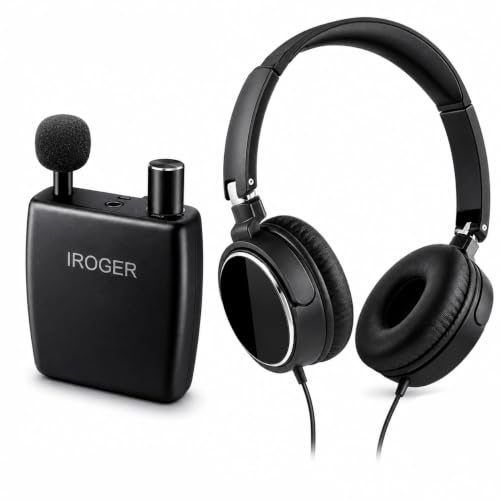
- Single knob controls power and volume
- Automatic gain control adjusts to surroundings
- Up to 120 hours of use per charge
Best For: Beginners prioritizing simple controls and extended runtime
Best Discreet In-Ear Design

- Lightweight, nearly invisible clear-tube design
- Six silicone tips help customize the fit
- Rechargeable operation lasts up to 20 hours
Best For: Discreet everyday amplification with a customizable in-ear fit
Best All-Around Starter

- Up to 50+ dB ambient sound gain
- Includes earbuds, headphones, batteries, and case
- Up to 80 hours of battery life
Best For: Beginners wanting flexible everyday listening options
Best for Maximum Loudness
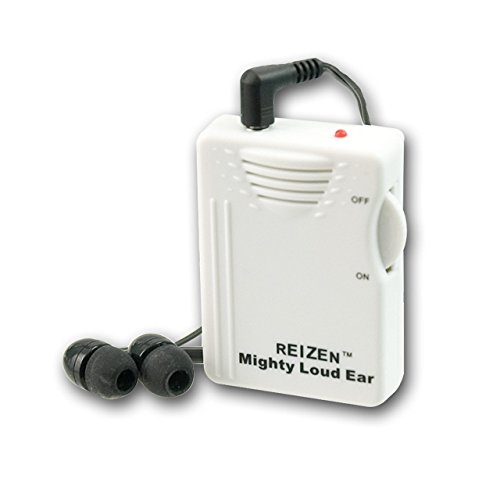
- 120 dB listed sensitivity
- Built-in microphone with adjustable volume
- Includes dual earphone and batteries
Best For: Beginners prioritizing strong, straightforward amplification
Best for Customizable Listening

- Three removable microphone configurations
- Adjustable volume and tone controls
- Includes headphones, earbud, cables, and belt clip
Best For: Beginners wanting flexible setup options for varied environments
Complete Rechargeable Pick

- Rechargeable system with up to 40 hours of operation
- Three-position frequency switch and tactile volume control
- Includes headphones, earbuds, charger, cable, and belt clip
Best For: Beginners seeking a flexible everyday amplifier
Simple Long-Range Option
IceHeat Personal Sound Amplifier
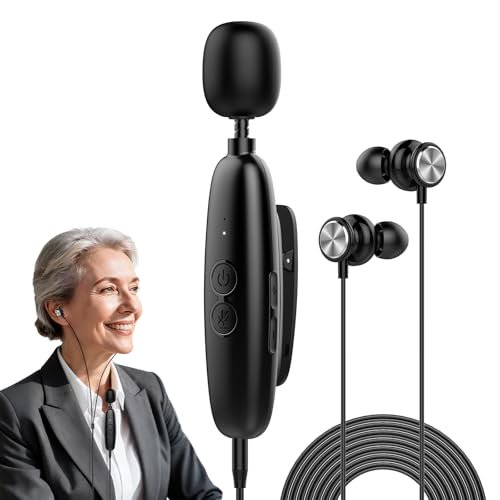
- Up to 50dB gain with seven-level tone control
- Rechargeable lithium-ion battery
- Designed for audio capture up to 30 feet away
Best For: Beginners wanting simple rechargeable TV and conversation support
Compact Pocket Pick
AVA-99 Personal Sound Amplifier

- Lightweight, clip-on design for pocket or belt use
- Built-in microphone with volume and tone controls
- Includes a mini in-ear earphone and uses one AAA battery
Best For: Beginners who want portable, straightforward amplification
Best Overall Starter Pick – SuperEar SE5000
For beginners comparing personal sound amplifiers for beginners, the SuperEar SE5000 is a practical home-and-everyday option. Its handheld design, tactile volume wheel, included headphones and earbuds, and up to 30 hours of battery life make it straightforward to use for conversations, television listening, and activities around the house.
Best For: Beginners who want a versatile handheld amplifier for TV, conversations, and daily listening.
Pros:
- Includes both stereo headphones and discreet stereo earbuds.
- Tactile volume control wheel is easy to adjust.
- Pocket-sized design includes a belt clip for portability.
- Uses one included AAA battery and offers up to 30 hours of battery life.
Cons:
- Does not connect directly or wirelessly to a television.
- Handheld amplifier design may be less discreet than an in-ear model.
The SE5000 is a strong starting point when ease of control and flexible listening accessories matter more than a fully concealed design.
Best Simple Clip-On Option – Reizen Loud Ear 110dB
The Reizen Loud Ear is a compact choice for shoppers new to personal sound amplifiers for beginners. It uses a built-in microphone, button-controlled volume, and a dual earphone, while its clip-on format and included AAA batteries keep setup simple.
Best For: Beginners seeking a basic, portable amplifier with dual-ear listening and straightforward controls.
Pros:
- Compact 2.5-by-1.75-inch design weighs 2.4 ounces.
- Includes a dual earphone and two AAA batteries.
- Clip-on format supports portable use.
- Adjustable volume control helps tailor listening levels.
Cons:
- Does not include stated noise control.
- Requires two AAA batteries rather than rechargeable power.
- Provides fewer included accessories than some competing options.
Choose the Reizen when you want a no-frills, battery-powered amplifier that is easy to carry and operate without extra features or menus.
Best Long-Battery Starter – Rechargeable Hearing Amplifier
For beginners evaluating personal sound amplifiers for beginners, this rechargeable model emphasizes simple operation and extended use. Its single control knob handles power and volume, while automatic gain control and a directional microphone are designed to support clearer, more comfortable everyday listening.
Best For: Beginners who prefer rechargeable power, minimal controls, and long battery life.
Pros:
- One knob controls power and volume.
- Automatic gain control adapts amplification as surroundings change.
- Directional microphone focuses on the speaker in front of you.
- Charges in about one hour and can last up to 120 hours per charge.
Cons:
- Supplied notes list the battery description as AA, so charging details may be worth confirming.
- Its 4.8-ounce weight is heavier than some compact alternatives.
- No noise-control feature is listed.
This model is appealing if avoiding frequent battery replacement is a priority and you value a single, easy-to-understand control instead of multiple settings.
Best Discreet In-Ear Design – MSA PRO Sound Amplifier
The MSA PRO is a discreet option for people beginning to explore personal sound amplifiers for beginners. Its lightweight clear tubing, adjustable volume, rechargeable base, and multiple silicone tips are designed for a more concealed and customizable fit during conversations, television viewing, music, and everyday activities.
Best For: Beginners who prefer a lightweight, nearly invisible in-ear amplifier with rechargeable operation.
Pros:
- Small, lightweight design is intended to be virtually unnoticeable.
- Clear tubing fits either the right or left ear.
- Includes six silicone tips for fit customization.
- Rechargeable battery provides up to 20 hours of continuous use.
Cons:
- Shorter stated runtime than the 30- and 120-hour options in this roundup.
- In-ear fit may require experimenting with the included silicone tips.
- Supplied notes do not list automatic gain control or noise control.
The MSA PRO makes the most sense when discretion and a customizable ear fit are more important than maximum battery runtime or advanced sound processing.
Best All-Around Starter – SuperEar SE7500
For beginners comparing personal sound amplifiers for beginners, the SuperEar SE7500 is a straightforward, versatile option for everyday listening. It offers adjustable volume, discreet earbuds, headphones, and a compact design for conversations, television, meetings, and outdoor activities.
Best For: Beginners who want a portable amplifier with both discreet earbuds and traditional headphones.
Pros:
- Provides up to 50+ dB of ambient sound gain.
- Includes earbuds, headphones, batteries, and a carry case with belt clip.
- Offers adjustable volume and up to 80 hours of battery life with automatic shut-off.
Cons:
- Uses disposable AAA batteries rather than a rechargeable battery.
- Designed for sound amplification, not described as a medical hearing aid.
The SE7500 is a practical introduction to personal amplification because it combines simple controls with flexible wearing options and useful included accessories.
Best for Maximum Loudness – Reizen Mighty Loud Ear
If you are new to personal sound amplifiers for beginners and prioritize strong amplification, the Reizen Mighty Loud Ear offers 120 dB sensitivity and a built-in microphone. Its adjustable volume and dual earphone make it a simple choice for amplifying voices and other sounds.
Best For: Beginners seeking a lightweight, dual-ear amplifier with powerful listed sensitivity.
Pros:
- Features 120 dB sensitivity for substantial sound enhancement.
- Includes a built-in microphone and adjustable volume control.
- Comes with a dual earphone and two batteries.
Cons:
- Does not include noise control.
- The supplied specifications list both AAA and AA battery requirements, so battery details should be verified before purchase.
- Offers fewer included accessories than some complete amplifier kits.
The Mighty Loud Ear keeps the setup uncomplicated and emphasizes amplification power, making it suitable for shoppers who want basic controls without extra configuration.
Best for Customizable Listening – Joanbro Pocket Amplifier
Among personal sound amplifiers for beginners, the Joanbro pocket amplifier stands out for its flexible microphone and tone options. It includes three removable microphone setups, adjustable volume and tone controls, and accessories for conversations, group settings, or long-distance television listening.
Best For: Beginners who want to experiment with microphone placement, tone adjustment, and different listening situations.
Pros:
- Provides an additional 50 dB of acoustic gain and includes noise-reduction features.
- Offers three microphone types, including 2 m and 6 m cable options.
- Includes headphones, an earbud, belt clip, batteries, extension cable, and fastening strap.
- Provides separate volume and tone controls.
Cons:
- The larger accessory set may be more complicated than necessary for simple everyday use.
- Requires disposable AAA batteries and provides about 40 hours of moderate use.
- Its corded microphone options may be less convenient for users seeking a completely wireless setup.
This model is a strong choice when a beginner values adaptability more than minimal controls, especially for television, meetings, restaurants, and church or lecture settings.
Complete Rechargeable Pick – SuperEar SE9000HP
For beginners comparing personal sound amplifiers, the SuperEar SE9000HP is a practical starter option with straightforward controls, multiple wearing choices, and a rechargeable setup. Its three-position frequency switch and tactile volume wheel make it useful for conversations, television listening, and everyday activities.
Best For: Beginners who want a versatile, rechargeable amplifier for home, travel, and daily listening.
Pros:
- Includes rechargeable batteries, charger, USB cable, headphones, earbuds, belt clip, and manual.
- Offers high, medium, and low frequency settings for different environments.
- Provides up to 40 hours of operation per charge, according to the supplied product information.
- Supports over-the-ear earbuds or stereo headphones with a lightweight, pocket-friendly design.
Cons:
- The included package requires attention to several wearing and charging components.
- The product information lists both rechargeable AA batteries in the package notes and two AAA batteries in the specifications, so buyers should verify the exact battery configuration.
With its complete accessory bundle and adjustable sound controls, the SE9000HP is a strong choice for beginners who value flexibility and extended rechargeable use.
Simple Long-Range Option – IceHeat Personal Sound Amplifier
The IceHeat personal sound amplifier is aimed at beginners who want simple controls and rechargeable convenience. It offers up to 50dB of gain, seven-level tone control, and noise-cancelling functionality for uses such as television listening, family gatherings, and conversations.
Best For: Beginners looking for an easy-to-use amplifier with tone adjustment and rechargeable power.
Pros:
- Provides up to 50dB of gain and seven levels of tone control.
- Designed to capture audio from up to 30 feet away, according to the supplied notes.
- Rechargeable lithium-ion battery supports convenient cordless use.
- Recommended for TV listening, restaurants, gatherings, church, travel, and outdoor activities.
Cons:
- The supplied information does not specify the expected runtime per charge.
- Only one included component is identified: the personal sound amplifier.
Its clear control layout and broad list of recommended uses make the IceHeat a beginner-friendly choice, especially for shoppers prioritizing tone adjustment and rechargeable operation.
Compact Pocket Pick – AVA-99 Personal Sound Amplifier
For beginners who prefer a small, portable device, the AVA-99 personal sound amplifier combines a built-in microphone, volume and tone controls, and a belt clip. It is designed for general sound amplification during conversations, television listening, bird watching, and other indoor or outdoor situations.
Best For: Beginners who prioritize lightweight portability and simple pocket or belt-clip operation.
Pros:
- Compact design can fit in a pocket or attach to a belt, hat, or other gear.
- Built-in microphone avoids the need to manage a separate external microphone.
- Includes a mini in-ear earphone and offers volume and tone controls.
- Uses one AAA battery and is intended for both indoor and outdoor applications.
Cons:
- Operation depends on a replaceable AAA alkaline battery rather than the rechargeable capability mentioned in the feature specifications.
- The supplied notes list a 100-foot hearing range, but actual performance may vary by environment.
- In-ear fit may not suit users who prefer over-ear headphones or earbuds.
The AVA-99 keeps the learning curve low with basic controls and a lightweight clip-on design, making it a useful starting point for portable amplification.
How We Picked the Best Personal Sound Amplifiers for Beginners
We focused on features that matter most to new users: straightforward controls, comfortable listening accessories, practical volume adjustment, portability, and dependable power options. The lineup includes pocket amplifiers, headphone-style designs, rechargeable models, and devices with tone or noise-control settings.
Because personal sound amplifiers are not the same as professionally fitted hearing aids, we also considered whether each product clearly communicates its intended use. A beginner-friendly device should be easy to test, adjust, clean, and return if it does not provide comfortable sound.
Quick Comparison
| Feature | Why It Matters | Best For |
|---|---|---|
| Rechargeable battery | Reduces the need to keep replacement batteries available | Frequent daily use |
| Pocket design | Keeps the amplifier lightweight and easy to carry | Users who prefer headphones or earbuds |
| Adjustable volume | Helps match amplification to different environments | First-time users |
| Tone or noise controls | Can make speech more comfortable in changing settings | Television, conversation, and outdoor listening |
Key Buying Factors for Personal Sound Amplifiers for Beginners
Controls and Sound Adjustment
Look for a large, clearly marked volume control and a design that is easy to operate without a smartphone. Multiple tone settings can be useful, but too many controls may make setup harder for a first-time buyer.
Power and Battery Life
Rechargeable units are convenient for regular use, while replaceable-battery models can be useful when you want a quick swap away from home. Check the stated runtime and charging method before buying.
Comfort and Fit
Headphones may feel familiar and stable, while earbuds can be more discreet. Pocket amplifiers offer flexibility, but the cable, earpiece, and control unit should be comfortable during extended listening.
Gain, Clarity, and Background Noise
Higher gain is not automatically better. Excessive amplification can make background noise uncomfortable or cause distortion. Start at a low setting and increase gradually, especially in busy rooms.
Safety and Expectations
Personal sound amplifiers can help some people hear everyday sounds more clearly, but they do not replace a hearing evaluation or prescription hearing aids. Stop using a device if it causes pain, ringing, dizziness, or sudden changes in hearing, and seek professional advice for persistent or worsening difficulty.
Who Should Buy Which Personal Sound Amplifiers for Beginners?
- Choose a rechargeable model if you want simple daily charging and do not want to manage disposable batteries.
- Choose a pocket amplifier if portability and flexible headphone or earbud use matter most.
- Choose a headphone-style amplifier if you prefer an intuitive fit and want fewer small components to handle.
- Choose adjustable tone or noise control if you expect to use the device in both quiet rooms and busier environments.
- Choose a basic volume-controlled model if this is your first amplifier and ease of setup is more important than advanced features.
For the best results, test the amplifier in a quiet setting first, keep the volume conservative, and compare comfort as well as loudness. The right choice should make speech easier to follow without making ordinary sounds harsh or overwhelming.
