Last updated on October 23rd, 2026
An XLR input lets you connect a professional microphone, but the right recorder depends on more than the connector. Channel count, power options, monitoring, and recording format can make the difference between an easy shoot and a complicated setup.
These 10 portable recorders span compact two-input models, podcast-focused units, and multichannel field recorders. Use the guide below to narrow the list to the way you actually record.
Best 10 Portable Digital Recorder with Xlr Picks for 2026
Compact Two-Input Pick

- Two locking XLR/TRS inputs
- 32-bit float recording up to 96 kHz
- OLED waveform display
Best For: Portable two-source interviews and podcasts
Built-In Effects Pick

- Four-track simultaneous recording
- Built-in X/Y mics and two XLR/TRS inputs
- Onboard effects and USB interface
Best For: Music and video creators who want onboard effects
Accessible Four-Track Pick

- Four tracks with 32-bit float recording
- Stereo mics plus two XLR/TRS inputs
- Spoken guidance and USB-C connectivity
Best For: Guided four-track recording on location
Camera-Rig Four-Input Pick
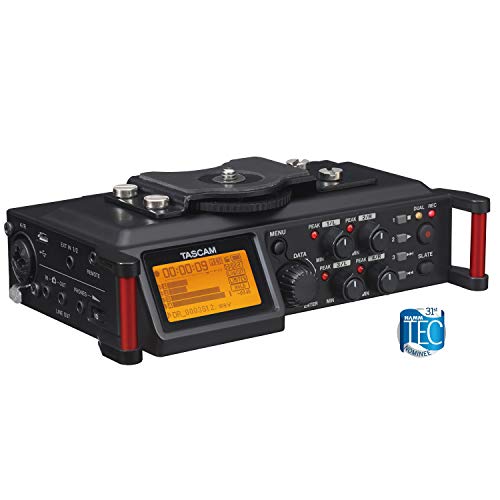
- Four XLR/TRS inputs with phantom power
- Mounts above or below a camera
- Lower-level safety copy option
Best For: Four-mic camera production
Most Versatile
Zoom H5 4-Track Handheld Recorder
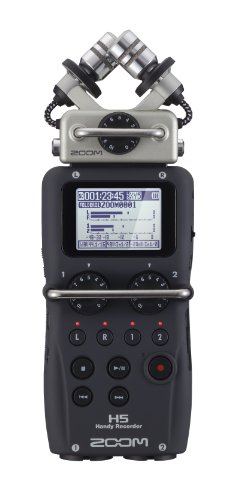
- Two XLR/TRS inputs with phantom power
- Swappable, shock-mounted X/Y capsule
- Four-track recording on SD/SDHC
Best For: Flexible handheld recording for film and music
Best for Podcast Groups
Zoom PodTrak P4 Podcast Recorder

- Four XLR mic inputs with phantom power
- Four individually controlled headphone outputs
- Mix-minus for phone and USB interviews
Best For: Multi-guest podcasts and remote interviews
Best for Unpredictable Levels

- 32-bit float recording
- Two locking XLR/TRS inputs
- Compact design for field rigs
Best For: Two-mic location recording with changing levels
Best for Songwriting

- Two XLR combo inputs
- Four tracks plus a bounce track
- Built-in rhythms and battery power
Best For: Musicians layering demos on the go
Most Versatile Handheld

- Four XLR/TRS combo inputs
- Built-in X/Y stereo mics
- Six-track 32-bit float recording
Best For: Multi-source interviews and portable recording
Best for Film Production

- Six XLR inputs
- Up to 14 recording tracks
- Timecode I/O for video sync
Best For: Multi-mic location sound for film
Compact Two-Input Pick – Zoom H1 XLR
If you need a portable digital recorder with XLR connections for interviews or a two-mic podcast, the Zoom H1 XLR keeps the setup straightforward. Its two locking XLR/TRS combo inputs record 32-bit float audio at up to 96 kHz.
Best For: Two-source recording when you already have external microphones or instruments.
Pros:
- Two locking XLR/TRS inputs accommodate microphones and instruments.
- OLED waveform display provides a quick visual check while recording.
- 3.5 mm stereo input and headphone output add connection and monitoring options.
- Supports SDXC cards up to 1 TB.
Cons:
- Limited to two recording channels rather than the four tracks offered by other models here.
- Requires two AA batteries and an SD card for portable recording.
Choose this model for a small, focused two-input rig; look to a four-track option if you need to capture more sources at once.
Built-In Effects Pick – Zoom H4n Pro All Black
The Zoom H4n Pro is a portable digital recorder with XLR/TRS inputs for creators who want built-in stereo microphones as well as connections for external sources. It supports four-track simultaneous recording and captures WAV audio at up to 24-bit/96 kHz.
Best For: Music, podcast, or video recording setups that can use onboard stereo mics and built-in effects.
Pros:
- Built-in X/Y microphones pair with two XLR/TRS combo inputs.
- Four-track recording offers more room for layered capture than a two-channel recorder.
- Includes compression, limiting, low-cut filtering, and other effects.
- Can serve as a 2-in/2-out USB audio interface for PC or Mac.
Cons:
- Records at up to 24-bit/96 kHz, not 32-bit float.
- Rated battery life is up to 5.5 hours in standard use, or up to 8 hours in Stamina mode.
This is a practical choice if its stereo microphones and onboard processing matter more to you than 32-bit float recording.
Accessible Four-Track Pick – Zoom H4essential
For a portable digital recorder with XLR inputs and built-in stereo microphones, the Zoom H4essential offers four tracks with 32-bit float recording. Its two XLR/TRS inputs accept external microphones, instruments, or a mixer feed.
Best For: Four-track field, podcast, or music recording with spoken menu guidance.
Pros:
- Combines built-in stereo mics with two XLR/TRS inputs.
- 32-bit float recording helps accommodate both quiet and loud sources.
- USB-C connection supports recording or streaming to a phone, tablet, or computer while saving to SD card.
- Spoken menu guidance helps users navigate the recorder.
Cons:
- Provides two XLR/TRS inputs, so the remaining tracks rely on its built-in microphones.
- Requires two AA batteries.
Pick the H4essential if you want a mix of onboard stereo capture, external inputs, and guided controls in a four-track recorder.
Camera-Rig Four-Input Pick – TASCAM DR-70D
The TASCAM DR-70D is a portable digital recorder with XLR connections designed around camera-based production. Four combo XLR/TRS inputs with phantom power let you connect multiple microphones, while its compact body can mount above or below a camera.
Best For: Videographers who need four external mic inputs and camera-friendly mounting.
Pros:
- Four XLR/TRS inputs provide individual gain controls.
- Built-in microphones offer an additional on-set capture option.
- Dual Recording mode makes a lower-level safety copy to help protect against distorted takes.
- Records to SD, SDHC, or SDXC cards up to 128 GB.
Cons:
- Uses four AA batteries, more than the two-AA Zoom models in this roundup.
- Its 128 GB stated card limit is lower than the 1 TB support listed for the H1 XLR and H4essential.
Its main advantage is straightforward four-microphone connectivity on a camera rig, especially when individual gain control and a safety recording matter.
Most Versatile – Zoom H5 4-Track Handheld Recorder
The Zoom H5 is a portable digital recorder with XLR inputs that suits anyone switching between handheld stereo recording and external microphones. Its detachable, shock-mounted X/Y capsule and two XLR/TRS combo inputs let you record up to four tracks simultaneously.
Best For: Filmmakers and musicians who want flexible mic options in a handheld recorder.
Pros:
- Interchangeable input capsules support different recording setups.
- Two XLR/TRS inputs offer selectable phantom power and a -20 dB pad.
- Runs on two AA batteries and records to SD or SDHC cards up to 32 GB.
Cons:
- Only two built-in XLR/TRS inputs, despite four-track recording.
- SD/SDHC card support is limited to 32 GB.
Choose the H5 if adaptable microphone placement matters more than having four XLR inputs. Its USB audio-interface function also gives it a role away from the field.
Best for Podcast Groups – Zoom PodTrak P4 Podcast Recorder
The Zoom PodTrak P4 is a portable digital recorder with XLR inputs built around conversation rather than location sound. Four microphone inputs, four independently controlled headphone outputs, and multitrack recording make it practical for a small podcast panel.
Best For: Podcasters recording multiple guests, including phone or USB remote interviews.
Pros:
- Four XLR microphone inputs with phantom power and four headphone outputs.
- Automatic mix-minus supports remote interviews via phone or USB.
- Programmable sound pads and multitrack recording suit podcast production.
Cons:
- Rated for up to 3.5 hours on two AA batteries.
- Its podcast-focused layout may be less suitable if you need a handheld stereo-mic recorder.
The P4 is the strongest fit here when each speaker needs a mic and headphones. For long untethered sessions, plan around its stated battery runtime.
Best for Unpredictable Levels – Zoom F3 Field Recorder
The Zoom F3 is a portable digital recorder with XLR connections for field work where levels can change without warning. Its 32-bit float recording and two locking XLR/TRS inputs make it a focused choice for dialogue and other location audio.
Best For: Filmmakers and field recordists capturing unpredictable sound with two external microphones.
Pros:
- 32-bit float recording handles quiet passages and sudden peaks without on-the-fly level adjustments.
- Two locking XLR/TRS inputs help keep rigged connections secure.
- Compact body offers battery-powered, standalone, and USB workflows.
Cons:
- Two inputs limit how many microphones you can connect directly.
- No interchangeable microphone capsule is listed in the supplied notes.
Pick the F3 when secure connections and forgiving capture levels matter more than adding extra mic channels. Its small form factor also suits a rig where the recorder stays out of reach.
Best for Songwriting – Zoom R4 Multi-Track Recorder
If you want a portable digital recorder with XLR connections for building songs away from your desk, the Zoom R4 pairs two combo inputs with four-track recording. Its dedicated bounce track lets you combine parts and free up tracks for more layers.
Best For: Musicians recording and layering demos on the go.
Pros:
- 32-bit float recording removes the need to set gain before a take.
- More than 80 built-in rhythm patterns support songwriting sessions.
- Runs on four AA batteries or USB-C and doubles as a 2-in/2-out USB audio interface.
Cons:
- Only two combo inputs, limiting how many external sources you can connect at once.
- Four-track recording may require frequent bouncing on layered projects.
The R4 makes the most sense when overdubbing and quick ideas matter more than recording a full group at once.
Most Versatile Handheld – Zoom H6 Essential
The Zoom H6 Essential is a portable digital recorder with XLR/TRS combo inputs for capturing several sources without giving up the convenience of built-in stereo mics. Four combo inputs and six-track, 32-bit float recording suit interviews, performances, and location work.
Best For: Podcasters and creators who need multiple wired inputs alongside handheld stereo recording.
Pros:
- Four XLR/TRS combo inputs plus built-in X/Y microphones.
- Interchangeable 3.0 mic capsules offer options for different recording setups.
- Works as a USB audio interface while recording to an SD card.
- Spoken menu guidance improves accessibility.
Cons:
- Alternative mic capsules are optional rather than included.
- Requires four AAA batteries for battery operation.
Choose the H6 Essential if you want a flexible handheld setup; its mix of onboard mics and external inputs is the main advantage over a recorder built solely for connected microphones.
Best for Film Production – Zoom F6 Field Recorder
For video shoots that need several microphones and synchronized sound, the Zoom F6 is a portable digital recorder with XLR inputs built around a field-production workflow. Six XLR inputs, up to 14 tracks, and timecode I/O give crews room to manage complex takes.
Best For: Filmmakers and location sound recordists handling multi-mic shoots.
Pros:
- 32-bit float recording with dual A/D converters handles wide dynamic range.
- Six XLR inputs support simultaneous microphone recording.
- Timecode I/O supports audio-to-video synchronization.
- Can also serve as a USB audio interface.
Cons:
- Weighs 2.4 pounds, making it less suited to a lightweight handheld kit.
- Six-input field workflow may be more than a simple demo or interview requires.
The F6 is the strongest fit here when input count and timecode matter; for straightforward handheld recording, its production-focused features may be unnecessary.
How We Picked the Best Portable Digital Recorder with Xlr
We focused on the jobs buyers commonly need an XLR-equipped recorder to do: capture dialogue away from a camera, record several speakers, make music demos, or handle unpredictable sound levels on location. The selection covers different input counts and workflows rather than treating every handheld, podcast, and field recorder as interchangeable. Check the current listing and manufacturer specifications before buying, especially if a particular connector, power option, or recording format is essential.
Quick Comparison: Match the Recorder to the Job
For a small two-microphone kit, compare the Zoom H1 XLR and F3; the F3 is the more field-production-oriented choice. The H4n Pro, H4 Essential, and H5 suit buyers who want a handheld-style recorder with built-in microphones as well as external mic connections. For more involved shoots, compare the TASCAM DR-70D, Zoom H6 Essential, and Zoom F6 by the number of sources you need to record independently. The PodTrak P4 is geared toward multi-person podcasts, while the R4 is designed around portable music-making and multitrack work.
Key Buying Factors for a Portable Digital Recorder with Xlr
Inputs and Track Count
Count the microphones you will record at the same time, then allow room for a future guest or extra source. Two XLR inputs are sufficient for many interviews; a panel or multi-mic shoot needs more. Do not confuse the advertised track count with the number of physical XLR inputs. Also check whether the recorder accepts line-level sources if you plan to connect a mixer.
Recording Format and Level Control
32-bit float recording can provide more room to recover unexpectedly loud or quiet audio in editing, but it does not fix microphone placement, distortion before conversion, or a poor recording environment. With conventional recording, set levels carefully and use headphones throughout the take. Compare sample-rate options and file formats against your editing workflow.
Power, Monitoring, and Connections
Condenser microphones may need phantom power, which can increase battery drain. Check supported batteries and external power options for long sessions. Independent headphone feeds matter for a podcast; reliable headphone monitoring and accessible controls matter on a set. For video work, confirm how you will send audio to the camera or sync separate files afterward. For remote interviews, look for phone or USB connectivity that fits your setup.
Who Should Buy Which Portable Digital Recorder with Xlr?
Choose a compact two-input model if you travel light and record one or two external microphones. Choose a handheld with built-in mics if you also want quick ambient recordings or music sketches. For location sound with several isolated microphones, prioritize a multichannel field or camera-oriented recorder over the smallest unit. Podcasters hosting multiple people should start with the PodTrak P4; musicians building songs away from a computer should look closely at the R4. The best Portable Digital Recorder with Xlr is the one that handles your usual source count without adding unnecessary setup time.
