Choosing a powered mixer with effects can simplify your entire setup by combining mixing, amplification, and built-in sound shaping in one box. That means fewer cables, faster setup, and less gear to carry.
Below, we focus on models that balance power, onboard DSP, connectivity, and ease of use so you can match the right mixer to your venue, instruments, or playback needs.
Best 10 Powered Mixer with Effects Picks for 2026
Compact Studio Mixer
Yamaha MG10XU 10-Input Mixer with Effects

- 10 channels with USB for recording
- SPX digital effects and one-knob compressors
- Rugged metal chassis for everyday use
Best For: Home studios and small live setups
Powered Gig Mixer
Rockville RPM80BT Mixer/Amplifier

- 500W RMS with 2400W peak output
- Bluetooth, USB, and many input options
- Reverb, delay, and 5-band master EQ
Best For: Karaoke, DJ gigs, and small events
Mid-Size Effects Mixer
Yamaha MG12XU 12-Input 4-Bus Mixer

- 12 inputs with 4-bus routing
- SPX effects, compressors, and USB
- D-PRE preamps with metal chassis
Best For: Bands and project studios
Versatile Bluetooth Mixer
Pyle PMXU83BT.5 8-Channel Studio Mixer

- Bluetooth, USB, and computer recording
- 16-bit DSP FX with analog controls
- Compact 8-channel design with phantom power
Best For: Streaming, small studios, and casual live sound
Compact Effects Mixer
Yamaha MG06X 6-Input Compact Stereo Mixer

- 6 channels with 2 mic preamps
- Built-in digital effects and EQ
- Very compact corded mixer design
Best For: Small setups needing simple mixing and onboard effects
DJ Bluetooth Mixer
Pyle 8 Channel Bluetooth DSP FX Mixer

- 8 channels with Bluetooth streaming
- DSP FX plus 16-bit processing
- +48V phantom power and USB support
Best For: DJ and karaoke setups needing wireless playback and effects
12-Channel Effects Mixer
Mackie Mix12FX Compact 12-Channel Mixer

- 12 channels with 4 mic/line inputs
- 12 built-in effects including delays and reverbs
- 3-band EQ with phantom power support
Best For: Small bands and rehearsal setups needing more channels and effects
Compact 4-Channel Mixer with DSP
Aveek 4 Channel Mixer with Bluetooth and USB Recording

- 99 DSP effects with reverb and delay
- Type-C PC recording chip with plug-and-play setup
- 48V phantom power plus Bluetooth/USB playback
Best For: Home karaoke, podcasting, and small streaming setups
Powered Venue Mixer Amplifier
Rockville RPM45 4-Channel Mixer Amplifier
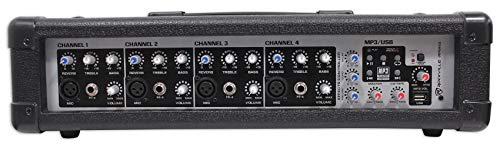
- 1800W peak powered mixer for small venues
- Echo, delay, and reverb with channel controls
- 4 XLR and 4 TRS inputs plus USB and AUX
Best For: Live music, karaoke, and small venue sound setups
Beginner 6-Channel Mixer with DSP
6-Channel Audio Mixer for Beginners

- 6 channels with independent gain, EQ, and volume
- DSP effects: reverb, delay, and echo
- Bluetooth, USB/MP3, and 48V phantom power
Best For: Beginners and compact home setups
Compact Studio Mixer – Yamaha MG10XU 10-Input Mixer with Effects
If you want a powered mixer with effects for clean recording, small live setups, or rehearsal use, the Yamaha MG10XU is built around simple controls and proven studio features. Its 10 channels, USB connectivity, SPX digital effects, and one-knob compressors make it easy to shape a mix without adding complexity.
Best For: Home studios, podcasters, and small bands that want a straightforward mixer with built-in effects and USB recording.
Pros:
- 10-channel layout with USB connectivity for easy computer integration
- SPX digital effects plus one-knob compressors for quick vocal and instrument shaping
- D-PRE preamps and 3-band EQ help deliver a cleaner, more controlled mix
- Rugged metal chassis is suited to regular transport and use
Cons:
- Not a powered speaker amplifier; it is a mixer with effects
- Designed for compact setups rather than large channel counts
- Requires corded power, so it is not battery operated
The MG10XU stands out if you value dependable sound quality and easy operation over extra frills. It offers a practical balance of effects, compression, and USB recording in a compact footprint.
Powered Gig Mixer – Rockville RPM80BT Mixer/Amplifier
If you need a powered mixer with effects that can also drive speakers, the Rockville RPM80BT is built for live gigs, karaoke, rehearsal spaces, and DJ use. It combines Bluetooth, USB, multiple mic and line inputs, and onboard reverb and delay so you can manage playback and vocals from one unit.
Best For: Users who want an all-in-one powered mixer/amp for small events, karaoke, and practice spaces.
Pros:
- 500W RMS output and 2400W peak for speaker driving power
- 8 XLR and 8 1/4-inch TRS inputs plus Bluetooth, USB, and RCA support
- 5-band master EQ and per-channel reverb/delay for flexible control
- 48V phantom power supports condenser microphones
Cons:
- Larger feature set may be more than casual users need
- Best suited to small- to mid-size setups rather than full-scale production
- Powered design means you must account for speaker matching and setup
This is a strong choice if you want amplification and effects in one box. Its mix of power, connectivity, and channel count makes it especially useful when you need a versatile, self-contained system.
Mid-Size Effects Mixer – Yamaha MG12XU 12-Input 4-Bus Mixer
The Yamaha MG12XU is a solid option if you want a powered mixer with effects features in a compact, professional-style layout for rehearsals, recording, or small live work. With 12 inputs, SPX digital effects, USB connectivity, and one-knob compressors, it gives you useful mixing tools without overwhelming the workflow.
Best For: Bands, churches, and project studios that need a reliable 12-channel mixer with built-in effects and USB.
Pros:
- 12-input, 4-bus design handles a little more complexity than smaller mixers
- Built-in SPX digital effects and one-knob compressors simplify everyday mixing
- D-PRE mic preamps and metal chassis support clean sound and durability
- Bi-directional USB makes computer recording and playback easier
Cons:
- Not a speaker-powered amplifier
- Requires corded electric power
- May be more mixer than needed for very basic solo setups
For users who want a step up in channel count while keeping the interface approachable, the MG12XU is an easy recommendation. It focuses on dependable audio quality and practical built-in effects rather than gimmicks.
Versatile Bluetooth Mixer – Pyle PMXU83BT.5 8-Channel Studio Mixer
The Pyle PMXU83BT.5 is a practical powered mixer with effects-style processing for users who want Bluetooth streaming, USB recording, and straightforward hands-on control. Its 8-channel layout, 16-bit DSP FX, 48V phantom power, and compact footprint make it a flexible pick for small studios, podcasts, or casual live use.
Best For: Creators and small venues that need an easy-to-use mixer for streaming, recording, and simple live sound.
Pros:
- Bluetooth, USB, and direct-to-computer recording support flexible playback and capture
- 4 XLR/1/4 combo inputs plus RCA and mono/stereo channels cover many sources
- 16-bit DSP FX and analog effects add useful sound shaping
- Compact design with LED meters and simple front-panel controls
Cons:
- Eight channels may feel limited for larger groups
- Effects are useful, but not as advanced as higher-end digital mixers
- Best for light to moderate use rather than demanding pro installs
This Pyle mixer is appealing when convenience matters as much as features. It keeps the learning curve low while still offering the connectivity and processing needed for everyday recording or small events.
Compact Effects Mixer – Yamaha MG06X 6-Input Compact Stereo Mixer
If you want a powered mixer with effects in a very small footprint, the Yamaha MG06X is built for straightforward small-rig mixing. It gives you 6 channels, 2 microphone preamps, 4 dedicated stereo line channels, built-in digital effects, and EQ, making it a practical choice for simple live setups or compact recording use.
Best For: Small setups that need basic mic input, stereo line sources, and onboard effects.
Pros:
- 6-channel analog layout keeps operation simple.
- 2 microphone preamps support basic vocal or speech use.
- Built-in digital effects add quick polish without extra gear.
- Compact size is easy to place in tight spaces.
Cons:
- Only 6 channels, so it is not aimed at larger input counts.
- Feature set is focused on essentials rather than advanced routing.
Overall, the MG06X is a clean, compact option if you value easy setup and onboard effects over a feature-heavy console. Its mix of mic preamps, stereo inputs, and digital processing makes it a sensible fit for lean audio jobs.
DJ Bluetooth Mixer – Pyle 8 Channel Bluetooth DSP FX Mixer
For buyers comparing a powered mixer with effects for DJ-style or karaoke use, the Pyle PMXU83BT packs a lot into one compact board. It offers 8 channels, Bluetooth wireless streaming, DSP FX, USB, an audio interface, +48V phantom power, and a 16-bit DSP processor, so it can handle several common small-venue sources in one unit.
Best For: DJ, karaoke, and small live setups that want wireless playback and built-in effects.
Pros:
- Bluetooth streaming makes phone playback easy.
- 8 channels provide more flexibility than very small mixers.
- +48V phantom power supports compatible microphones.
- DSP FX and 16-bit processing add onboard sound shaping.
Cons:
- It is still a compact mixer, so it is not meant for larger production rigs.
- Feature focus is broad, not specialized for one pro workflow.
The PMXU83BT is a value-oriented option when convenience matters, especially if you want wireless audio plus effects in one device. Its combination of Bluetooth, USB, and multi-input support makes it versatile for casual performance and event use.
12-Channel Effects Mixer – Mackie Mix12FX Compact 12-Channel Mixer
If you need a powered mixer with effects for a compact live or recording setup, the Mackie Mix12FX gives you a practical 12-channel format with integrated processing. It includes 4 mic/line inputs, 4 stereo line inputs, 3-band EQ, low cut filtering, phantom power, and 12 built-in effects such as reverbs, choruses, and delays.
Best For: Small bands, rehearsal rooms, and basic recording setups that need more channels and onboard effects.
Pros:
- 12 channels offer more input capacity than many compact mixers.
- 12 integrated effects cover reverb, chorus, and delay.
- 4 mic/line inputs include phantom power for condenser mics.
- Dedicated stereo RCA inputs/outputs help with playback or recording.
Cons:
- No Bluetooth or USB features are listed in the supplied notes.
- Best suited to compact applications rather than large-scale mixing.
The Mix12FX stands out for giving you a larger channel count and a straightforward effects section without adding complexity. It is a solid fit when you want dependable small-system mixing with useful onboard sound processing.
Compact 4-Channel Mixer with DSP – Aveek 4 Channel Mixer with Bluetooth and USB Recording
If you want a powered mixer with effects for karaoke, streaming, or small live setups, this Aveek 4-channel model gives you a practical mix of inputs and built-in processing. It supports microphones, guitars, keyboards, computers, Bluetooth playback, USB recording, and 99 DSP effect options, so it covers a lot of everyday uses without a complicated workflow.
Best For: Home karaoke, podcasting, live streaming, and small recording or rehearsal setups that need simple effect control.
Pros:
- 99 DSP effects with reverb and delay options for flexible vocal shaping
- Built-in PC recording chip with plug-and-play Type-C connection
- 48V phantom power on channels 1-2 for condenser microphones
- Bluetooth and USB playback/recording support for easy media use
Cons:
- Only 4 channels, so larger multi-source setups may feel limited
- Bluetooth is for playback, not for connecting an output device
This is a budget-friendly mixer if you need effects, recording, and basic live control in one compact board. The feature set is broad, but it is best matched to smaller setups rather than demanding venue use.
Powered Venue Mixer Amplifier – Rockville RPM45 4-Channel Mixer Amplifier
The Rockville RPM45 is a powered mixer with effects built for users who need onboard amplification along with core mixing controls. With 1800W peak output, 4 XLR and 4 TRS inputs, USB and AUX connectivity, and adjustable echo, delay, and reverb, it is aimed at small to medium venues that need a straightforward all-in-one solution.
Best For: Musicians, DJs, and event organizers who want a powered mixer for small venues, karaoke, and presentations.
Pros:
- Powered design with 1800W peak output and 225W x 2 RMS at 8 ohms
- Adjustable echo, delay, and reverb for live vocal and music processing
- 4 XLR and 4 TRS inputs plus USB, AUX, and effect loop I/O
- +15V phantom power and fan cooling for practical stage use
Cons:
- Heavier and bulkier than compact desktop mixers
- Feature set is focused on small to medium venues, not large systems
If you need built-in power plus effects in one box, this Rockville model is the most venue-ready option here. Its controls and connections are well suited to live use, but the size makes it less portable than smaller mixers.
Beginner 6-Channel Mixer with DSP – 6-Channel Audio Mixer for Beginners
This powered mixer with effects is a simple choice if you want more input headroom without a steep learning curve. The 6-channel layout, Bluetooth and USB/MP3 playback, DSP reverb/delay/echo, and 48V phantom power make it useful for beginner-friendly karaoke, podcasting, streaming, and small live sessions.
Best For: Beginners who want a compact mixer for vocals, streaming, and small performances with built-in effects.
Pros:
- 6 input channels with independent gain, EQ, and volume control
- Built-in DSP effects including reverb, delay, and echo
- 48V phantom power for condenser microphones
- Bluetooth and USB/MP3 playback plus USB sound card support
Cons:
- No powered speaker output details are provided in the notes
- Designed for compact use, so it may not suit larger stage rigs
For buyers who want an easy-entry mixer with effects and flexible playback options, this model covers the basics well. It stands out more for simplicity and versatility than for high-end processing or venue power.
How We Picked the Best Powered Mixer with Effects
For this roundup, we prioritized a Powered Mixer with Effects that offers a practical mix of output power, usable effect presets, channel count, and real-world connectivity. We also looked for features that matter in daily use, such as phantom power for condenser mics, Bluetooth or USB playback, EQ controls, and compact designs that are easier to transport.
Quick Comparison
Not every buyer needs the same thing. Smaller mixers are usually best for solo performers, podcasts, and desktop recording, while larger channel counts are better for bands, church audio, rehearsal spaces, and karaoke hosts. If you need built-in amplification for passive speakers, a powered model can save you from buying a separate amp. If you already have active speakers, you may value onboard effects and routing flexibility more than raw wattage.
Key Buying Factors for a Powered Mixer with Effects
Power and Speaker Match
Check RMS power first, then match it to your speaker impedance and intended room size. Peak numbers can look impressive, but RMS is the more useful figure for judging steady output.
Effects Quality and Control
A good Powered Mixer with Effects should provide useful reverbs, delays, and vocal enhancements without making setup complicated. Simple one-knob or preset-based DSP is often enough for live use, while deeper editing may appeal to recording-focused buyers.
Inputs, Phantom Power, and Connectivity
Count your microphones, instruments, and playback sources before buying. XLR combo inputs, 48V phantom power, Bluetooth, USB, and RCA inputs can make one unit far more versatile than another.
Build and Portability
Compact mixers are easier to move between gigs, but larger chassis may offer better control layout and more channels. If the unit will travel often, look for solid knobs, a durable enclosure, and a clear front-panel layout.
Who Should Buy Which Powered Mixer with Effects?
Singers, DJs, and karaoke users often do well with compact models that include Bluetooth, USB playback, and straightforward effects. Small bands and worship teams usually benefit from more channels, phantom power, and stronger routing options. If your main goal is simplicity, choose the smallest Powered Mixer with Effects that still covers your microphone and playback needs; if you need growth room, step up to a higher-channel model with extra headroom.
In short, the best choice is the one that matches your speakers, source count, and workflow rather than the one with the biggest headline specs.
