The best smart exercise bikes for athletes turn indoor rides into structured, measurable training sessions. The right model can support interval work, endurance rides, cross-training, and recovery without requiring a full gym setup.
We compared these 10 bikes across connectivity, resistance control, fit adjustment, ride feel, training features, and value so you can choose a setup that matches your goals and available space.
Best 10 Smart Exercise Bikes for Athletes Picks for 2026
Best Overall

- Personalized plans and performance estimates
- 360-degree swiveling HD touchscreen
- 100-level magnetic resistance
Best For: Connected cross-training and coached workouts
Best for App Flexibility
Schwinn IC4 Indoor Cycling Bike

- Compatible with Peloton and Zwift apps
- 100 micro-adjustable resistance levels
- Dual-sided SPD and toe-cage pedals
Best For: Athletes using multiple cycling platforms
Best Budget Smart Ride

- Bluetooth app connectivity
- 25-pound flywheel with belt drive
- 300-pound maximum user weight
Best For: Affordable app-connected home training
Best for Performance Training

- 29-pound performance flywheel
- 330-pound capacity and stable frame
- Extended fit range for taller riders
Best For: High-intensity intervals and endurance rides
Connected Training Pick

- 16 digital resistance levels
- Dual-sided SPD and toe-clip pedals
- iFIT adaptive workouts and app syncing
Best For: Guided indoor cycling and connected training
Power Training Pick
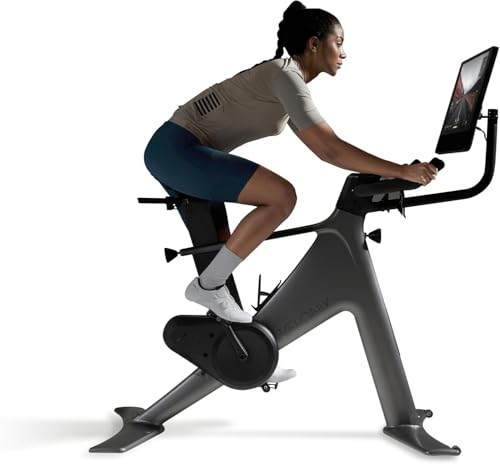
- 2300W motorized belt drive
- Real-road simulations and guided classes
- 300-pound maximum user weight
Best For: Structured, immersive training for intermediate cyclists
HIIT Conditioning Pick
YOSUDA Air-Resistance Exercise Bike

- Responsive fan-based resistance
- Preset and custom interval programs
- Dual-action full-body training
Best For: HIIT, sprints, and full-body conditioning
Best with Extra Features
Sunny Smart Indoor Cycling Bike

- Quiet magnetic resistance with micro-adjustments
- SunnyFit app with workouts and virtual routes
- Pulse sensors, metric display, and adjustable fit
Best For: App-connected indoor cardio and personalized training
Progressive Resistance Pick
PitPat S1-Pro Indoor Cycling Bike

- 32 calibrated magnetic resistance levels
- Bluetooth app tracks speed, RPM, distance, and calories
- Stable 300-pound frame with quiet belt drive
Best For: Data-focused intervals and progressive home training
Low-Impact Conditioning Pick

- Wide cushioned seat and padded backrest
- SunnyFit app with workouts and scenic tours
- 16 resistance levels plus included resistance bands
Best For: Joint-friendly cardio and seated cross-training
Best Overall – Peloton Cross Training Bike
For athletes seeking smart exercise bikes for athletes with structured coaching, the Peloton combines personalized workout recommendations with a rotating touchscreen and broad cross-training options. Its 100-level magnetic resistance and performance estimates support varied home training.
Best For: Athletes who want guided cycling plus strength, yoga, Pilates, barre, and other workouts in one connected platform.
Pros:
- Personalized weekly plans, class recommendations, and performance estimates.
- 21.5-inch Full HD touchscreen swivels 360 degrees for off-bike workouts.
- 100 levels of manual magnetic resistance and adjustable seat and handlebars.
- Supports riders up to 297 pounds and includes Bluetooth 5.2 and USB-C charging.
Cons:
- Peloton All-Access Membership costs $49.99 per month to unlock content and applicable features.
- At 178 pounds, the bike is extremely heavy to move or assemble.
- Wi-Fi and a compatible heart-rate monitor may be needed for the full connected experience.
This is the most complete choice for athletes who value coaching variety and measurable progress, provided the ongoing membership and substantial equipment weight fit your setup.
Best for App Flexibility – Schwinn IC4 Indoor Cycling Bike
The Schwinn IC4 is a practical pick among smart exercise bikes for athletes who want flexible app compatibility without being tied to one training platform. Its magnetic resistance, dual-sided pedals, and race-style fit support focused indoor rides.
Best For: Athletes who use cycling apps such as Peloton or Zwift and want clip-in pedal compatibility with adjustable training resistance.
Pros:
- 100 micro-adjustable magnetic resistance levels.
- Works with popular cycling apps including Peloton and Zwift; subscriptions are separate.
- Dual-sided pedals provide SPD clips and toe cages.
- Console tracks heart rate, speed, time, distance, calories, and RPMs.
Cons:
- App memberships and subscriptions are not included.
- The bike arrives unassembled and requires user assembly.
- The included LCD console is more basic than a built-in touchscreen.
Choose the IC4 if you already have a preferred training app or want to switch between platforms. Its 330-pound capacity and broad resistance range also make it suitable for demanding home sessions.
Best Budget Smart Ride – YOSUDA Magnetic Exercise Bike
The YOSUDA offers a straightforward entry point for athletes shopping for smart exercise bikes for athletes on a tighter setup budget. It pairs a belt drive and 25-pound flywheel with Bluetooth app support, adjustable fit, and a 300-pound capacity.
Best For: Home riders who want app-connected training, a compact basic console, and a stable bike for interval or everyday workouts.
Pros:
- Bluetooth-enabled smart app supports riding scenarios and cycling competitions.
- 25-pound flywheel and belt drive provide stable, quieter operation.
- Adjustable handlebars and four-way padded seat accommodate riders from 4’8″ to 6’0″.
- 300-pound capacity, cage pedals, and resistance-bar flywheel stop support safer training.
Cons:
- The LCD display is more limited than a built-in workout screen.
- App features depend on compatible devices and connectivity.
- Listed dimensions and height specifications are inconsistent, so verify available space before purchase.
This YOSUDA is best suited to athletes who prioritize core cycling functionality and app access over an integrated display. Its adjustable fit and quiet belt drive make it a sensible home-training option.
Best for Performance Training – Sunny Orion Smart Bike
The Sunny Orion targets athletes who want smart exercise bikes for athletes with a stronger, more performance-oriented ride feel. Its 29-pound flywheel, magnetic resistance, extended fit range, and stable frame are suited to endurance rides, intervals, and standing efforts.
Best For: Taller or heavier athletes who need a stable bike for higher-intensity indoor cycling and structured workouts through the SunnyFit app.
Pros:
- 29-pound performance flywheel supports smooth momentum and consistent cadence.
- Heavy-duty frame supports riders up to 330 pounds and standing rides.
- Extended 28.5–40-inch inseam range and 5’1″–6’10” rider support.
- Quiet magnetic resistance and belt drive provide low-maintenance operation.
Cons:
- Offers 35 resistance levels, fewer than some competing bikes with 100 levels.
- Training features rely on the SunnyFit app rather than an integrated touchscreen.
- The larger performance-oriented frame may require more floor space than compact models.
The Orion stands out when fit range, stability, and ride momentum matter more than a built-in display. It is a strong match for athletes planning demanding intervals, endurance sessions, and standing climbs at home.
Connected Training Pick – NordicTrack T Series 9
The NordicTrack T Series 9 is one of the more approachable smart exercise bikes for athletes who want structured indoor cycling without a complicated setup. Its 16 digital resistance levels, dual-sided pedals, LCD stats, and optional iFIT features support everything from recovery rides to progressively harder cardio sessions.
Best For: Athletes who want app-guided workouts, adaptive resistance, and compatibility with cycling cleats or athletic shoes.
Pros:
- 16 digital resistance levels accommodate recovery work and endurance training.
- Dual-sided pedals support SPD cycling cleats and regular athletic shoes.
- iFIT can automatically adjust resistance and offers route-based Google Maps workouts with membership access.
- Built-in transport wheels and a device shelf suit home-gym use.
Cons:
- Many connected features, including SmartAdjust and app syncing, require an iFIT Train membership.
- The 250-pound maximum user weight is lower than some heavier-duty options.
This bike is a practical choice for athletes who value guided programming and flexible pedal options. It is less compelling if you want fully independent training without a subscription, but its compact home-gym design and adaptive iFIT ecosystem add useful structure.
Power Training Pick – Speediance VeloNix Smart Bike
The Speediance VeloNix is built for athletes seeking a more powerful smart exercise bike for athletes-style training at home. Its motorized belt drive, intelligent resistance changes, simulated gear shifting, real-road simulations, and integrated Performance Hub are suited to structured rides and demanding intervals.
Best For: Intermediate cyclists who want immersive courses, high-powered resistance transitions, and a sturdy bike with a 300-pound maximum user weight.
Pros:
- 2300W motorized belt drive delivers smooth power transitions.
- Interactive modes include free rides, real-road simulations, guided classes, and race segments.
- Performance Hub tracks detailed metrics and supports built-in entertainment.
- Pre-assembled construction and an industrial-grade aluminum-alloy frame simplify setup and add stability.
Cons:
- At 130 pounds and nearly 63 inches tall, it is a substantial piece of equipment for smaller spaces.
- The supplied specifications list 10 resistance levels, offering fewer stated levels than some digitally adjustable bikes.
The VeloNix stands out for riders who prioritize power, immersion, and a realistic gear-shifting feel. Its larger footprint makes it better suited to a dedicated training area than a compact workout corner.
HIIT Conditioning Pick – YOSUDA Air-Resistance Exercise Bike
The YOSUDA Air-Resistance Exercise Bike is a strong option among smart exercise bikes for athletes who train with intervals, sprints, and full-body conditioning. Its fan resistance responds to effort rather than preset levels, while the dual-action handlebars, interval programs, Bluetooth app connectivity, and 350-pound capacity support demanding workouts.
Best For: HIIT, functional fitness, WOD, recovery conditioning, and athletes who want both upper- and lower-body training.
Pros:
- Air resistance increases immediately as you pedal and push harder.
- LCD console tracks RPM, speed, time, distance, calories, and watts.
- Preset and custom interval modes include 10/20 and 20/10 formats.
- Bluetooth connectivity works with KINOMAP, Zwift, and the FED app.
Cons:
- Air resistance is effort-based, so there are no preset resistance levels or manual intensity settings.
- Fan resistance can be less quiet than a belt-only indoor cycling bike.
- Assembly is required, although the bike arrives 80% pre-assembled.
This YOSUDA model is better suited to explosive conditioning than traditional steady-state cycling. Its adjustable fit, dual-drive system, and full-body movement make it especially useful for athletes who want a versatile interval machine.
Best with Extra Features – Sunny Smart Indoor Cycling Bike
For athletes seeking smart exercise bikes for athletes, this Sunny Health & Fitness indoor cycle combines quiet magnetic resistance with SunnyFit app connectivity. Its heart-rate sensors, adjustable riding position, and performance display make it practical for structured home cardio sessions.
Best For: Athletes who want app-connected training, pulse tracking, and a customizable upright cycling setup.
Pros:
- Smooth, quiet magnetic resistance with micro-adjustments.
- SunnyFit app access includes more than 1,000 workouts and 10,000 routes.
- Handlebar pulse sensors and a monitor track key ride metrics, including RPM and heart rate.
- Four-way seat and two-way handlebar adjustment support a personalized fit.
Cons:
- The listed specifications identify one resistance level rather than a multi-level resistance range.
- The monitor is battery powered, so it does not provide a powered display experience.
This is a well-rounded choice when connected workouts and basic training feedback matter more than advanced resistance programming. The 300-pound capacity and adjustable contact points add versatility for home use.
Progressive Resistance Pick – PitPat S1-Pro Indoor Cycling Bike
This PitPat S1-Pro is a strong option among smart exercise bikes for athletes who want clearly defined resistance progression. Bluetooth app connectivity, 32 calibrated magnetic levels, and a stable steel frame support data-focused home rides, including harder sprint efforts.
Best For: Athletes prioritizing progressive resistance, app-based ride tracking, and a compact bike for interval training.
Pros:
- Offers 32 hardware-calibrated magnetic resistance levels.
- PitPat app tracks speed, RPM, distance, and calories through Bluetooth.
- Silent belt drive is designed to operate below 25dB.
- Steel frame supports up to 300 pounds and includes transport wheels.
Cons:
- The stated fit range is limited to users from 5’1" to 5’11".
- The bike is corded electric, which may limit placement compared with battery-powered models.
With its unusually broad resistance range and ride-data tracking, the S1-Pro is suited to athletes building repeatable workouts at home. Its compact footprint and quiet drive are useful when space and noise are concerns.
Low-Impact Conditioning Pick – Sunny Smart Recumbent Bike
For athletes who need lower-impact conditioning or recovery-friendly cardio, this Sunny smart recumbent bike offers a supportive alternative to an upright cycle. The wide cushioned seat, backrest, pulse sensors, SunnyFit app, and 16 magnetic resistance levels make it practical for controlled indoor sessions.
Best For: Athletes seeking joint-friendly cardio, seated comfort, and optional upper-body work during home workouts.
Pros:
- Recumbent design with a wide cushioned seat and padded backrest supports comfortable riding.
- SunnyFit app provides trainer-led workouts, scenic tours, and progress tracking without membership fees.
- Sixteen magnetic resistance levels allow adjustable workout intensity.
- Included 20-pound resistance bands add full-motion upper-body exercise.
Cons:
- Its recumbent layout is less suited to standing climbs or sprint-focused upright cycling.
- The 46.1-inch depth and 25.6-inch width require more floor space than the compact upright option.
This bike is best viewed as a comfort-first conditioning tool rather than a performance road-bike substitute. Its easy on/off design, 300-pound capacity, and integrated resistance bands broaden its usefulness for recovery, cross-training, and low-impact fitness.
How We Picked the Best Smart Exercise Bikes for Athletes
We focused on features that matter beyond basic cardio: smooth and controllable resistance, stable construction, useful performance feedback, ergonomic adjustability, and compatibility with guided workouts or training apps. We also considered whether each bike suits serious intervals, steady endurance work, cross-training, or lower-impact exercise.
Because “smart” can mean different things, we separated full connected-training systems from bikes that simply provide app support or basic workout data. A bike with many digital features is not automatically the best choice; dependable fit, quiet operation, and consistent resistance often have a greater effect on training quality.
Quick Comparison
| Best For | Prioritize | Look For |
|---|---|---|
| Structured training | Connected coaching | Workout library, metrics, and automatic resistance changes |
| Performance-focused riders | Ride feel | Stable frame, precise resistance, and a responsive drivetrain |
| Cross-training | Versatility | Multiple resistance modes, app compatibility, and adjustability |
| Small spaces | Convenience | Compact footprint, quiet belt drive, and easy transport |
| Comfort-focused training | Fit and support | Adjustable handlebars, padded seat, and a suitable riding position |
Key Buying Factors for Smart Exercise Bikes for Athletes
Resistance and Training Control
Magnetic resistance is usually quieter and smoother than friction resistance, while air resistance can deliver a more demanding full-body effort. Athletes training with intervals should look for a wide resistance range and controls that allow quick changes without disrupting cadence.
Connectivity and Metrics
Check which metrics the bike records, such as cadence, speed, distance, heart rate, and power. Also confirm whether required coaching content needs a subscription. App compatibility matters if you already use a preferred training platform or want to export workout data.
Fit, Stability, and Comfort
A bike should support your preferred riding position without rocking during hard efforts. Look for several seat and handlebar adjustment points, a strong weight capacity, and pedals that work with your footwear. A comfortable fit helps reduce unnecessary strain during longer sessions.
Noise, Footprint, and Maintenance
Quiet belt-driven bikes are better for shared homes, while compact designs are easier to place in bedrooms or apartments. Consider transport wheels, floor protection, ventilation, and access to replacement parts before buying.
Who Should Buy Which Smart Exercise Bikes for Athletes?
Choose a fully connected bike if you want guided classes, coaching, and automated training structure. Performance-oriented riders should prioritize stable construction, accurate metrics, and fine resistance control over entertainment features. Cross-trainers may prefer a versatile bike that works with multiple apps and supports varied workout styles.
For apartment use or frequent early-morning training, choose a quiet magnetic model with a manageable footprint. If comfort, balance, or joint-friendly exercise is the priority, a recumbent design can provide more back support and easier access. Buyers on a tighter budget should focus on dependable adjustability, smooth resistance, and basic app connectivity rather than paying for features they will not use.
