Choosing a speaker selector switch with volume control is one of the easiest ways to manage multi-room audio without adding a full distribution system. The right model lets you play music in several zones, trim levels independently, and keep your amp protected.
Below, we focus on practical options for home audio setups, from compact 2-channel selectors to larger 6-zone units. The goal is simple: help you find the best fit for your system, wiring, and number of listening areas.
Best 10 Speaker Selector Switch with Volume Control Picks for 2026
Multi-Zone 6-Channel Control

- Controls up to 6 speaker pairs
- Independent volume controls per zone
- Supports 8-ohm speakers, 100W max/channel
Best For: Home theater or stereo setups needing multi-zone volume control
Impedance-Safe 6-Zone Selector

- Automatic impedance protection circuitry
- Individual on/off buttons with volume controls
- Heavy-duty screw terminals for 12-18 AWG wire
Best For: Single-amplifier whole-home audio systems
Dual-Input Whole-House Control
Theater Solutions TS6DV Selector

- Dual inputs for two amps or receivers
- Controls 6 zones with volume knobs
- Handles up to 300W RMS per channel
Best For: Whole-house audio systems needing two-source switching
Audiophile 4-Zone Control

- Controls four speaker pairs or zones
- Individual volume knobs for each zone
- Compact metal cast construction
Best For: Smaller distributed audio systems with four zones
Impedance-Safe Multi-Zone Pick
Monoprice SSVC-4.1 4-Channel Selector
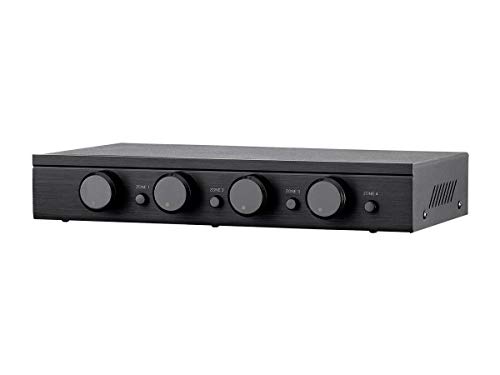
- Automatic impedance protection
- Individual zone volume controls
- Supports up to four speaker pairs
Best For: Multi-room systems needing safe switching and per-zone volume control
Compact 4-Zone Controller
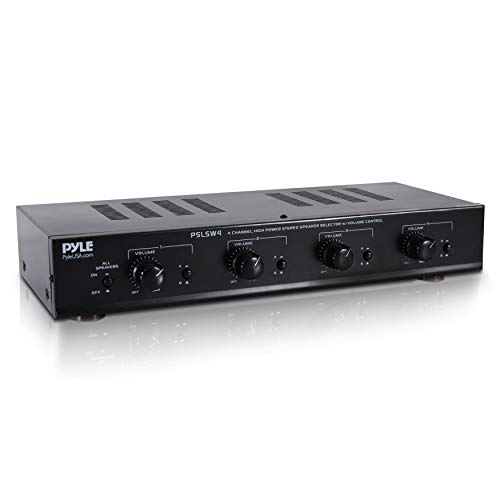
- Independent volume controls for each pair
- Supports up to four speaker pairs
- Includes overload protection
Best For: Small home audio setups that need simple zone switching
Simple A/B Room Switcher
Monoprice 4-Channel Selector with Volume
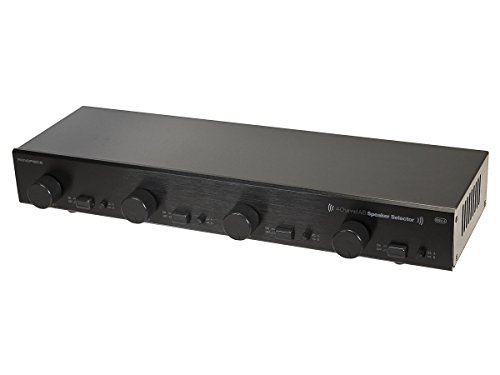
- Maintains an 8-ohm load
- Accepts up to 14 AWG wire
- Rated at 100 watts per channel
Best For: Basic multi-room audio with 8-ohm speakers
6-Zone Home Audio Control
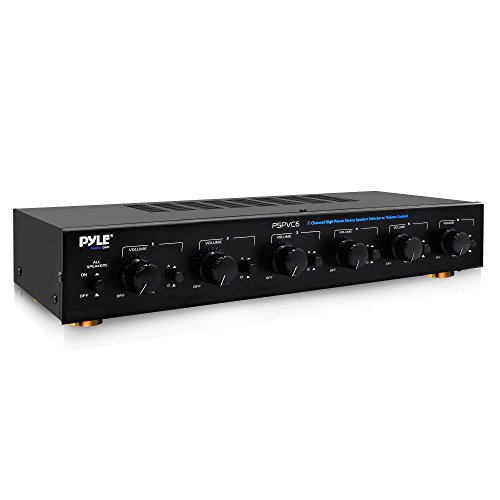
- Supports 6 pairs of speakers
- Stereo, corded-electric distribution box
- Compact 16.92-inch-wide design
Best For: Multi-room systems with up to 6 speaker pairs
Compact Two-Zone Control
Monoprice A/B Speaker Selector

- Independent volume controls built in
- Supports up to 100 watts/channel
- Accepts bare wire up to 14AWG
Best For: Small stereo setups with two destinations
Four-Zone Compact Pick
Pyle 4 Channel Speaker Selector
- Controls up to four pairs of speakers
- Independent volume controls on each channel
- Includes overload protection
Best For: Compact multi-zone home audio systems
Multi-Zone 6-Channel Control – Pyle PSLSW6 Speaker Selector
If you want a speaker selector switch with volume control for a home theater or stereo setup, the Pyle PSLSW6 is built around multi-zone management and simple front-panel operation. It can handle up to 6 speaker pairs, uses independent volume controls for each channel, and includes overload protection for added peace of mind.
Best For: Home theater or stereo users who want to control up to 6 speaker pairs with independent zone volume.
Pros:
- Controls up to 6 speaker pairs at once or in combination
- Independent audio source volume controls for each pair
- Supports 8-ohm speakers and up to 100W max per channel
- Uses screw-type terminals that accept up to 14-gauge speaker wire
Cons:
- Designed for 8-ohm speakers only
- 100W max power per channel may be limiting for higher-power systems
The PSLSW6 is a straightforward pick if your priority is flexible zone control with easy wiring and per-pair volume adjustment. Its compact tabletop design and built-in safety protection make it a practical fit for a multi-room listening setup.
Impedance-Safe 6-Zone Selector – Monoprice SSVC-6.1 Selector
Monoprice SSVC-6.1 Single Input 6-Channel Speaker Selector - With Volume Control, Black
Check Price On AmazonThe Monoprice SSVC-6.1 is a speaker selector switch with volume control for users who want safe multi-room audio from a single amplifier. It adds automatic impedance protection, individual zone on/off buttons, and per-zone volume knobs, making it a practical choice when you need simple control without sacrificing amplifier safety.
Best For: Single-amplifier systems that need safe switching and individual volume control for multiple speaker pairs.
Pros:
- Automatic impedance protection circuitry helps protect the amplifier
- Individual zone on/off buttons and volume controls
- Supports up to 6 channels with 100 watts/channel continuous handling
- Heavy-duty screw terminals support 12-18 AWG speaker wire
Cons:
- Single-input design may not suit dual-source setups
- Best results depend on staying within the stated impedance and power limits
For a clean, no-fuss distributed audio setup, the SSVC-6.1 covers the essentials well. It focuses on safe operation, accurate switching, and direct zone control, which is exactly what many whole-home systems need.
Dual-Input Whole-House Control – Theater Solutions TS6DV Selector
Theater Solutions TS6DV Dual Input 6 Zone Speaker Selector Box Volume Controls
Check Price On AmazonIf you need a speaker selector switch with volume control for a multi-source home audio system, the Theater Solutions TS6DV gives you two amp or receiver inputs and control over 6 zones. Its passive design, zone-by-zone volume knobs, and impedance protection make it a solid fit for distributed audio installations.
Best For: Whole-house or commercial audio setups that need dual inputs and control across 6 zones.
Pros:
- Dual-input passive design lets you switch between two amps or receivers
- Controls up to 6 zones with individual volume controls
- Handles up to 300 watts RMS per channel with 8-ohm speakers
- Includes removable screw-bolt connectors and pre-printed zone labels
Cons:
- Requires raw speaker wire connections for all system wiring
- Passive design means it depends on the connected receiver or amplifier
The TS6DV stands out when source flexibility matters as much as zone control. With its dual-input layout and sturdy steel housing, it is well suited to organized multi-room systems where easy identification and reliable switching are priorities.
Audiophile 4-Zone Control – OSD Audio RSVC4 Selector
The OSD Audio RSVC4 is a compact speaker selector switch with volume control for smaller distributed audio setups. It controls four pairs of speakers or zones, adds individual volume knobs, and is designed to help protect low-ohm amplifiers while keeping switching simple and accurate.
Best For: Smaller home or commercial background-music systems that need control over four speaker pairs.
Pros:
- Controls four pairs of speakers or 4 zones
- Individual volume control knobs for each zone
- Compatible with low-ohm amplifiers rated at 2 x 80W RMS
- Metal cast construction with a compact footprint
Cons:
- Supports fewer zones than 6-channel selector options
- Details do not list advanced protection features beyond amplifier compatibility
The RSVC4 is a practical fit if you do not need a large multi-zone controller. Its compact build and zone-by-zone volume adjustment make it useful for background music setups where clean control matters more than maximum channel count.
Impedance-Safe Multi-Zone Pick – Monoprice SSVC-4.1 4-Channel Selector
If you want a speaker selector switch with volume control for a multi-room setup, the Monoprice SSVC-4.1 is built around safe, straightforward control. It handles up to four speaker pairs from one amplifier, adds individual zone on/off buttons and level controls, and includes automatic impedance protection to help keep the load in range.
Best For: Home users who want to distribute one amp to multiple speaker pairs with built-in impedance protection and per-zone volume control.
Pros:
- Automatic impedance protection helps support safe multi-speaker operation.
- Individual zone on/off buttons and volume controls make adjustments easy.
- Heavy-duty screw terminals accept 12–18 AWG speaker wire.
- Isolated left/right grounds support floating-ground or bridged amplifiers.
Cons:
- Rated power is limited to 100 watts per channel continuous.
- Minimum impedance requirements depend on how many speakers are selected.
Overall, this is a practical choice if your priority is reliable distribution with protection rather than extra features. It’s especially appealing for systems where safe switching and independent zone control matter more than complexity.
Compact 4-Zone Controller – Pyle PSLSW4 Speaker Selector
The Pyle PSLSW4 is a compact speaker selector switch with volume control designed for simple multi-zone home audio setups. It lets you connect up to four speaker pairs, uses independent volume knobs for each pair, and includes overload protection for added peace of mind during everyday listening.
Best For: Budget-minded home theater or stereo users who want basic four-zone speaker switching with independent volume control.
Pros:
- Controls up to four speaker pairs from one amplifier.
- Independent volume knobs let you tailor each zone.
- Front panel switches make zone selection simple.
- Overload protection adds a layer of safety.
Cons:
- Designed for 8-ohm speakers only.
- Maximum power handling is capped at 100 watts per channel.
This model makes sense if you want an uncomplicated tabletop controller for a small multi-room system. Its strengths are basic zone management, easy access controls, and a compact footprint rather than advanced amplification features.
Simple A/B Room Switcher – Monoprice 4-Channel Selector with Volume
This Monoprice speaker selector switch with volume control is a straightforward way to send audio to different rooms while keeping the load at 8 ohms. It supports up to four channels, accepts up to 14 AWG wire, and is rated at 100 watts per channel, making it a practical fit for basic distributed audio use.
Best For: Listeners who want a no-frills 4-channel speaker selector with volume control for 8-ohm speakers.
Pros:
- Maintains an 8-ohm load for compatible speaker setups.
- Accepts speaker wire up to 14 AWG.
- Rated for 100 watts per channel.
- Designed for routing audio to different rooms.
Cons:
- Less feature-rich than models with impedance protection.
- No detailed zone-by-zone control features are listed in the notes.
For simple multi-room distribution, this model keeps the setup focused and easy to understand. It’s best when you want a basic selector that matches 8-ohm systems and doesn’t add unnecessary complexity.
6-Zone Home Audio Control – Pyle 6 Pair Speaker Selector
This speaker selector switch with volume control is built for larger home audio setups that need one hub for multiple listening areas. The Pyle PSPVC6 supports up to 6 pairs of speakers and uses corded power with stereo output, making it a practical option for distributing sound across several zones.
Best For: Multi-room or multi-zone systems that need independent control over up to 6 pairs of speakers.
Pros:
- Handles up to 6 pairs of speakers in one distribution box
- Compact black unit with a wide tabletop-friendly footprint
- Uses speaker wire connections for straightforward wiring
- Designed for multi-channel amplifier control
Cons:
- No detailed wattage-per-channel rating is provided in the notes
- May be more selector than needed for smaller setups
Overall, the PSPVC6 makes sense when you want a central speaker selector switch with volume control for a larger home system. Its 6-zone layout is the main selling point, especially if you need organized control over several speaker pairs.
Compact Two-Zone Control – Monoprice A/B Speaker Selector
If you want a simpler speaker selector switch with volume control, this Monoprice A/B unit is aimed at small two-zone setups. It distributes two stereo audio sources to up to two destinations and supports bare speaker wire up to 14AWG, which keeps installation straightforward for basic home audio use.
Best For: Small stereo systems that need independent volume control for up to two destinations.
Pros:
- Built-in independent volume controls for both channels
- Supports up to 100 watts per channel
- Accepts bare speaker wire up to 14AWG
- Compact two-channel A/B layout for simpler systems
Cons:
- Limited to two destinations, so it is not a multi-room hub
- No extra zone count beyond the basic A/B design
For buyers who only need a practical two-way selector, the Monoprice model offers the core controls without unnecessary complexity. Its independent volume knobs and 14AWG support make it a solid fit for modest stereo installs.
Four-Zone Compact Pick – Pyle 4 Channel Speaker Selector
This speaker selector switch with volume control is designed for users who want a compact way to manage several zones without moving up to a larger distribution box. The Pyle PSLSW4.5 supports up to four pairs of 8-ohm speakers, includes independent volume controls, and is built for easy tabletop placement.
Best For: Home theater or stereo setups that need four-zone control with individual volume adjustment.
Pros:
- Supports up to four pairs of speakers
- Independent volume controls for each channel
- Screw-type connectors support up to 14AWG speaker wire
- Includes overload protection for added security
Cons:
- Rated at 100W per channel, which may not suit higher-power systems
- Designed for 8-ohm speakers, so compatibility is more specific
The PSLSW4.5 is a good middle-ground choice if you want multiple zones and per-channel volume control in a smaller footprint. Its overload protection and simple wiring approach make it especially appealing for straightforward home audio setups.
How We Picked the Best Speaker Selector Switch with Volume Control
We looked for speaker selector switches with volume control that balance ease of use, zone count, and basic protection for your amplifier. The best options offer clear labeling, solid wire compatibility, and either impedance protection or conservative power handling for safer everyday use.
We also favored units that make setup straightforward for typical home audio installs, especially for users connecting multiple rooms from a single receiver or amplifier.
Quick Comparison
In this category, the main tradeoff is usually between channel count and simplicity. Smaller 2- and 4-channel models are best for modest setups, while 6-zone selectors are better for whole-home audio or larger entertainment spaces. Some units offer independent zone controls, while others focus on paired A/B switching or dual-input flexibility.
Key Buying Factors for a Speaker Selector Switch with Volume Control
Number of Zones
Match the selector to how many speaker pairs you plan to run now, with a little room for future expansion. Buying too small means replacing the unit later; buying too large may add unnecessary cost and bulk.
Impedance Protection
If you are connecting multiple speaker pairs to one amplifier, impedance protection can help reduce the risk of overloading the amp. This is especially important in larger multi-room setups.
Volume Control Style
Some models use individual zone knobs, while others use on/off buttons with level control or fixed attenuation. Choose the layout that feels easiest to adjust during daily use.
Power and Wire Compatibility
Check the wattage rating and supported wire gauge before buying. For cleaner installs, many users prefer units that accept 14 AWG wire and can handle typical home receiver outputs without strain.
Single-Input Versus Dual-Input
Single-input units are ideal when one music source feeds every room. Dual-input selectors add flexibility if you want to switch between two sources or system paths.
Who Should Buy Which Speaker Selector Switch with Volume Control?
If you want a simple, affordable setup for a small home audio system, a 2-channel or 4-channel selector is often enough. If you are wiring several rooms, a 6-zone model is the better long-term choice. For users who care most about safe operation and balanced sound across rooms, look for a Speaker Selector Switch with Volume Control that includes impedance protection and clearly separated zone controls.
In short, choose based on zone count, control style, and protection features—not just price. That approach will help you get a system that is easy to use now and still practical later.
