Last updated on October 22nd, 2026
Matching speaker levels by ear is difficult, especially when room acoustics and listening distance affect what you hear. An SPL meter gives you a repeatable reading for setting channel levels and checking playback volume.
These eight options span basic handheld testers and meters with more formal specifications. The right choice depends on whether you need a quick setup tool or documented measurement accuracy.
Best 8 Spl Meter for Audio Calibration Picks for 2026
Standards-Focused Pick
CRYSOUND CRY2831 Class 2 Sound Level Meter

- IEC 61672-1:2013 Class 2 rated
- A/C/Z and Fast/Slow settings
- 29–138 dB measurement range
Best For: Class 2-rated sound-level checks with flexible weighting
Easy-Read Pick
TopTes TS-501B Sound Level Meter

- 2.25-inch backlit display
- A/C weighting and 30–130 dB range
- MAX/MIN and data hold
Best For: Easy-to-read home audio level spot checks
Response-Control Pick
Tadeto SL720 Digital Sound Level Meter

- A/C weighting
- Selectable Fast/Slow response
- 30–130 dB range; ±2.0 dB accuracy
Best For: Portable checks needing Fast/Slow response control
Traceability Pick
Triplett 3550 SoniChek PRO NIST Version
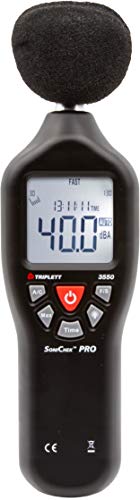
- NIST traceability certificate
- IEC651 and ANSI S1.4 Type 2 design
- A/C weighting and Fast/Slow response
Best For: Documented traceability for handheld SPL checks
Certificate Pick
SM-130DB Type 2 Sound Level Meter
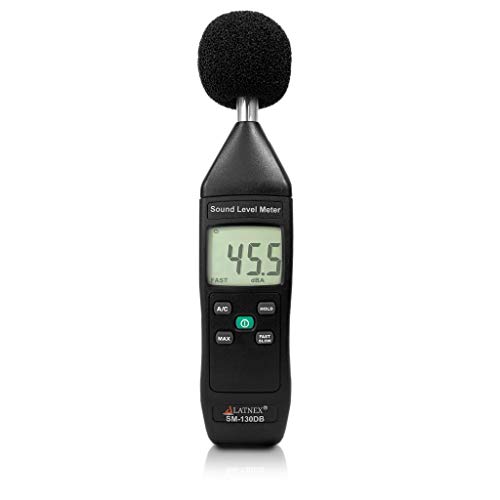
- Calibration certificate included
- 35–130 dB range; 0.1 dB resolution
- Two-year warranty
Best For: Buyers who want documented Type 2 measurement
Flexible Modes Pick
Goldeep SL750A Sound Level Meter

- A/C weighting options
- FAST/SLOW response and MAX/MIN
- 30–130 dB measurement range
Best For: Home audio checks needing adjustable modes
Simple Readings Pick
RISEPRO HT-80A Digital Sound Meter

- 30–130 dB range
- A weighting and FAST response
- Backlight, hold, and MAX/MIN
Best For: Basic A-weighted audio level checks
Remote Probe Pick
MT-91D Split Sound Level Meter

- Extendable wired microphone
- 35–135 dB; IEC 61672-1 Class 2
- FAST/SLOW and backlit display
Best For: Measuring in hard-to-reach positions
Standards-Focused Pick – CRYSOUND CRY2831 Class 2 Sound Level Meter
If you want an SPL meter for audio calibration with a stated IEC 61672-1:2013 Class 2 rating, the factory-calibrated CRYSOUND CRY2831 is a strong option for checking sound levels. Its A, C, and Z weighting options give you more flexibility than an A/C-only meter.
Best For: Buyers who want a Class 2-rated meter with multiple weighting options for sound-level checks.
Pros:
- IEC 61672-1:2013 Class 2 rating and stated ±1.5 dB accuracy.
- A, C, and Z frequency weighting plus Fast and Slow time weighting.
- 29–138 dB measurement range and 20 Hz–12.5 kHz frequency range.
- IP54-rated enclosure for use beyond a typical indoor listening room.
Cons:
- The supplied notes do not list measurement logging or calibration software.
- Its broader field-oriented feature set may be more than a basic home-theater check requires.
Choose this one when the documented Class 2 rating and weighting choices matter more to you than a minimal, pocket-size meter.
Easy-Read Pick – TopTes TS-501B Sound Level Meter
The TopTes TS-501B is a straightforward SPL meter for audio calibration checks when a large display is a priority. Its 2.25-inch backlit screen and A/C weighting suit hands-on level checks in a home theater or audio system.
Best For: Home audio users who want an easy-to-read handheld meter for spot checks.
Pros:
- Large, backlit 2.25-inch display.
- A/C weighting, a 30–130 dB range, and stated ±1.5 dB accuracy.
- MAX/MIN readings and data hold help capture and review levels.
- Includes three AAA batteries and a carry case.
Cons:
- The supplied notes list A/C weighting but not Z weighting.
- No Fast/Slow response selection is listed.
This is a practical choice if display readability and simple level checks matter more than additional measurement modes.
Response-Control Pick – Tadeto SL720 Digital Sound Level Meter
The Tadeto SL720 gives buyers looking for an SPL meter for audio calibration checks both A/C weighting and selectable Fast/Slow response. Those controls are useful when you want to switch between quicker readings and a steadier display while checking sound levels.
Best For: Users who want basic weighting and response controls in a portable meter.
Pros:
- A/C weighting and selectable Fast/Slow response.
- 30–130 dB measurement range with 0.1 dB display resolution.
- Backlit, four-digit LCD for reading levels in dim spaces.
Cons:
- Stated accuracy is ±2.0 dB.
- The supplied notes do not specify a measurement frequency range or standards rating.
Pick the SL720 for convenient manual level checks, while keeping its stated accuracy in mind if you need tighter measurement specifications.
Traceability Pick – Triplett 3550 SoniChek PRO NIST Version
If documentation matters when choosing an SPL meter for audio calibration checks, this Triplett 3550 SoniChek PRO configuration includes a certificate of traceability to NIST. It also provides A/C weighting and Fast/Slow response for manual sound-level measurements.
Best For: Buyers who need documented NIST traceability alongside handheld SPL readings.
Pros:
- Includes a certificate of traceability to NIST.
- Designed according to IEC651 Type 2 and ANSI S1.4 Type 2 standards.
- A/C weighting, Fast/Slow response, and a 30–130 dB range.
- Includes a case, mic windscreen, batteries, USB cable, and AC/DC output leads.
Cons:
- The stated frequency range ends at 8 kHz.
- The supplied notes list A/C weighting but not Z weighting.
This version stands out for its traceability certificate; check whether its listed 31.5 Hz–8 kHz frequency range fits the measurements you plan to make.
Certificate Pick – SM-130DB Type 2 Sound Level Meter
If you want an SPL meter for audio calibration with documented calibration, the SM-130DB includes a calibration certificate and measures 35–130 dB. Its stated ±1.8 dB accuracy and 0.1 dB resolution make its specifications easy to assess before you buy.
Best For: Buyers who prioritize a Type 2 meter with an included calibration certificate.
Pros:
- Includes a calibration certificate and cites the EN 61672 Type 2 standard.
- Uses a 1/2-inch electret condenser microphone with 0.1 dB resolution.
- Includes a 9V battery and a two-year warranty.
Cons:
- Its 35 dB lower limit excludes quieter readings.
- The supplied notes do not specify A/C weighting or FAST/SLOW response options.
This is the documentation-focused choice here, though buyers needing particular weighting controls should confirm those features before ordering.
Flexible Modes Pick – Goldeep SL750A Sound Level Meter
The Goldeep SL750A is a versatile SPL meter for audio calibration checks when you want to switch between A- and C-weighted readings. It covers 30–130 dB and lists ±1.5 dB accuracy, with FAST and SLOW response modes for changing or steadier sound.
Best For: Home audio users who want selectable weighting and response settings.
Pros:
- Offers A/C weighting and FAST/SLOW response modes.
- Tracks MAX/MIN readings and provides data hold.
- Includes two AAA batteries and a microphone windbreak.
Cons:
- Its specified frequency response tops out at 8 kHz.
- No calibration certificate is mentioned in the supplied notes.
The adjustable measurement modes make it a practical option for comparing audio levels, while the stated frequency range is worth checking against your intended tests.
Simple Readings Pick – RISEPRO HT-80A Digital Sound Meter
For straightforward SPL meter for audio calibration checks, the RISEPRO HT-80A measures 30–130 dB with stated ±1.5 dB accuracy. Its A-weighted, FAST-response setup keeps operation simple, and the backlit display helps in dim rooms.
Best For: Users who want basic A-weighted level checks without switching measurement modes.
Pros:
- Provides data hold plus MAX and MIN readings.
- Backlit display supports use in dark spaces.
- Includes a carrying pouch and automatic power-off.
Cons:
- Only A weighting and FAST response are specified.
- Its stated frequency range ends at 4 kHz.
Choose this for uncomplicated readings and convenient display features, not for tests that require C weighting or a SLOW response setting.
Remote Probe Pick – MT-91D Split Sound Level Meter
The MT-91D takes a different approach to an SPL meter for audio calibration: its wired microphone lets you position the probe while keeping the display in hand. It measures 35–135 dB, cites IEC 61672-1 Class 2, and offers FAST and SLOW response settings.
Best For: Checking sound levels where a built-in microphone is awkward to position.
Pros:
- Extendable wired microphone reaches vents, gaps, and other tight spots.
- Provides FAST/SLOW response, data hold, and MAX/MIN readings.
- Backlit display and disableable auto-off support longer monitoring sessions.
Cons:
- The microphone is non-detachable.
- Its stated accuracy is ±2 dB, and the supplied notes do not specify A/C weighting.
The remote probe is the main reason to pick this model; for speaker-level checks, verify that its stated measurement options match your method.
How We Picked the Best Spl Meter for Audio Calibration
We focused on features that matter when setting audio levels: stated measurement class or accuracy, A- and C-weighting where specified, readable displays, useful level ranges, and calibration documentation. We also considered practical differences between a simple spot-check tool and a meter intended for more repeatable measurements. Product-listing claims are not a substitute for checking the current specifications, included accessories, and calibration paperwork before purchase.
Quick Comparison
Start with the level of confidence your task requires. The CRY2831 lists IEC 61672-1:2013 Class 2 compliance and factory calibration; the Triplett 3550 SoniChek PRO is listed with NIST certification. Those are the first options to investigate if measurement documentation matters. The SM-130DB is listed as Type 2, but confirm its applicable standard and calibration status with the seller. The TopTes TS-501B and Tadeto list A/C weighting, useful when choosing between general noise checks and speaker-level setup. The Goldeep, RISEPRO, and MT-91D may suit straightforward checks; verify their current weighting, response-time, and accuracy specifications before relying on them for calibration.
Key Buying Factors for an Spl Meter for Audio Calibration
Weighting and Response Time
For many home-theater channel-level procedures, C-weighting and a slow response are commonly recommended. They help produce steadier readings from the test noise used in those procedures. Follow your receiver’s or calibration software’s instructions rather than assuming one setting fits every test. A-weighting is useful for many general noise measurements, but it responds differently to low frequencies.
Accuracy, Range, and Calibration
A stated Class 2 rating is more informative than an unspecified accuracy claim, provided the listing identifies the standard and the instrument’s documentation supports it. Check that the meter covers the levels you intend to measure without operating at the edge of its range. Factory calibration, a calibration certificate, and current traceable calibration are not interchangeable claims: confirm exactly what is included and whether recalibration is available if you need defensible results.
Ease of Use
A legible display, convenient controls, and a suitable tripod mount can make repeated readings easier. Measure from the listening position, keep the microphone orientation consistent, and use the same weighting and response settings throughout a comparison. An SPL meter helps match levels; it does not replace a measurement microphone and software for detailed frequency-response or subwoofer integration work.
Who Should Buy Which Spl Meter for Audio Calibration?
For occasional home-theater setup, choose a handheld model whose confirmed settings match your equipment’s calibration instructions; the TopTes or Tadeto are sensible starting points if you need the listed A/C weighting. If documented specifications are a priority, compare the CRY2831 and Triplett 3550 first, then verify which calibration documents accompany the unit you receive. Consider the SM-130DB if its Type 2 claim meets your requirements after verification. For basic volume or noise spot checks, the Goldeep, RISEPRO, or MT-91D may be sufficient once you confirm their specifications. If your goal is precise room equalization rather than level matching, budget for a compatible measurement microphone instead.
