When it comes to achieving the perfect sound setup, the role of a room calibration microphone can’t be overstated. In 2026, you’ll find a variety of options tailored to audiophiles and sound engineers alike. Each microphone offers unique features and benefits, making it essential to know which one suits your specific needs. Ready to discover the top contenders that can elevate your audio experience? Let’s explore the best choices available this year.
Audyssey ACM1HB Replacement Calibration Microphone for AVRs

If you’re looking for a reliable solution to enhance your home theater or audio setup, the Audyssey ACM1HB Replacement Calibration Microphone is an excellent choice for owners of Denon, Marantz, Onkyo, Integra, Teac, and Tascam AVRs. This omnidirectional microphone captures sound from all directions, ensuring precise sound measurement and delivering accurate room acoustics correction. It works exclusively with specific AVR models, making it essential for calibrating Audyssey-enabled systems. Supporting MultEQ, MultEQ XT, and MultEQ XT32 technologies, it facilitates easy calibration according to your AVR instructions, enhancing your overall audio experience and restoring ideal sound quality.
Best For: Owners of Denon, Marantz, Onkyo, Integra, Teac, and Tascam AVRs seeking to optimize their home theater audio experience.
Pros:
- Omnidirectional design captures sound from all directions for precise measurement.
- Supports multiple MultEQ technologies for effective room acoustics correction.
- Authentic replacement mic ensures optimal calibration quality for Audyssey-enabled systems.
Cons:
- Limited compatibility only works with specific AVR models, not for general use.
- Replacement microphone may require additional setup and understanding of AVR calibration processes.
- Not suitable for non-Audyssey systems, restricting its use for other audio setups.
Sony Calibration Mic Measurement Microphone ECM-AC2

The Sony Calibration Mic ECM-AC2 stands out as an ideal choice for audiophiles and home theater enthusiasts seeking precise sound optimization. Weighing just 1.44 ounces, this boundary measurement microphone is easy to handle and offers a signal-to-noise ratio of 75 dB. It’s compatible with around 150 Sony receivers and various other brands, ensuring versatility in your setup. The auto calibration feature simplifies the process, displaying error codes if there’s an issue with connections. With a strong customer rating of 4.6 out of 5 stars, it’s a reliable tool for achieving the perfect audio experience.
Best For: Audiophiles and home theater enthusiasts seeking precise sound optimization in their audio setups.
Pros:
- Highly compatible with approximately 150 Sony receivers and other brands.
- Auto calibration feature simplifies setup and optimizes sound quality.
- Lightweight design makes it easy to handle during measurements.
Cons:
- Corded power source limits mobility and placement options.
- Single channel may not meet the needs of more complex audio systems.
- Error codes displayed may require troubleshooting knowledge for resolution.
miniDSP UMIK-1 USB Measurement Calibrated Microphone

For audiophiles and sound engineers seeking precision, the miniDSP UMIK-1 USB Measurement Calibrated Microphone stands out with its unique calibration file tailored to each unit. Its sensitivity supports SPL monitoring, ensuring you capture accurate sound measurements. You’ll appreciate its impressive frequency response, making it suitable for various applications in acoustic measurement. Plus, the plug-and-play installation works seamlessly on Windows, Mac, Linux, and iDevices, allowing compatibility with all acoustic software, including Dirac Live and REW. With a mini tripod, USB cable, windscreen, and padded transport case included, you’re all set for precise sound analysis right out of the box.
Best For: Audiophiles and sound engineers who require precise acoustic measurements and analysis.
Pros:
- Unique calibration file for each unit ensures accuracy in sound measurement.
- Plug-and-play installation compatible with multiple operating systems and acoustic software.
- Comes with essential accessories including a mini tripod and padded transport case for easy portability.
Cons:
- Requires external power source via USB, limiting mobility in certain situations.
- May be overkill for casual users or those not engaged in detailed sound analysis.
- Price point may be higher compared to basic microphones, which could deter budget-conscious buyers.
Audyssey ACM1-X Calibrated Microphone for AV Receivers

Designed specifically for audiophiles seeking precise sound calibration, the Audyssey ACM1-X Calibrated Microphone is an essential tool for those using MultEQ-X supported AV receivers. This individually calibrated omnidirectional microphone captures sound from all directions, ensuring thorough data for accurate room acoustics measurement and correction. Each ACM1-X comes with a unique calibration file, providing precision that aligns with Type 1 reference microphones. When paired with the Audyssey MultEQ-X app, you gain enhanced control over calibration settings and detailed insights, elevating your audio experience. Trust Audyssey’s quality assurance to deliver exceptional sound in your home theater or audio setup.
Best For: Audiophiles and home theater enthusiasts seeking precise sound calibration for optimal audio performance.
Pros:
- Individually calibrated for accurate room acoustics measurement.
- Omnidirectional microphone captures sound from all directions, enhancing data accuracy.
- Seamless integration with the Audyssey MultEQ-X app for enhanced calibration control.
Cons:
- Compatibility limited to MultEQ-X supported AV receivers only.
- Requires app interaction for full functionality, which may be a barrier for some users.
- Price point may be higher compared to standard microphones without calibration features.
Dayton Audio EMM-6 Precision Omnidirectional Microphone

Engineered for precision, the Dayton Audio EMM-6 Precision Omnidirectional Microphone excels in room acoustic analysis and audio measurement. With a flat frequency response and true omnidirectional polar pattern, you can expect accurate recordings every time. It boasts a sensitivity of 40 dB and a signal-to-noise ratio of 70 dB, making it ideal for detailed audio assessments. Weighing only 16 ounces and measuring 0.88 x 0.88 x 7.5 inches, it’s easy to handle. The included stand mount, foam windscreen, and transport case add to its convenience. With a solid customer rating of 4.6 stars, it’s a trusted choice for audio enthusiasts.
Best For: The Dayton Audio EMM-6 is best for audio professionals and enthusiasts seeking accurate room acoustic analysis and high-quality audio measurements.
Pros:
- Flat frequency response ensures precise recordings and measurements.
- Lightweight and compact design makes it easy to transport and handle.
- Includes essential accessories like a stand mount, foam windscreen, and transport case for added convenience.
Cons:
- Corded electric power source may limit mobility compared to battery-operated microphones.
- Single-channel input may not be suitable for multi-directional recording needs.
- Calibration required for optimal performance may be a drawback for some users.
Bluesound Omnidirectional Microphone Room Calibration Kit

The Bluesound Omnidirectional Microphone Room Calibration Kit stands out as an excellent choice for audiophiles seeking precise sound optimization in their home audio systems. Compatible with Dirac Live for various Bluesound devices, this high-performance microphone captures sound across a range of 20 Hz to 20 kHz, ensuring accurate calibration. You’ll appreciate the effortless plug-and-play setup, where connecting the microphone to your Bluesound player loads a correction file automatically. With driverless compatibility for Windows and macOS, you can easily optimize your room acoustics. The result? Balanced, natural, and immersive sound that truly reflects the artist’s intent.
Best For: Audiophiles and home audio enthusiasts seeking precise sound calibration and optimization for their audio systems.
Pros:
- Effortless plug-and-play setup allows for quick and easy calibration without complicated installation processes.
- Driverless compatibility with both Windows and macOS ensures smooth operation across all supported systems.
- High-performance sound capture from 20 Hz to 20 kHz delivers accurate calibration results for immersive audio experiences.
Cons:
- Limited compatibility only with specific Bluesound devices, which may restrict use for some users.
- Dependence on Dirac Live software, which may require additional learning for those unfamiliar with the technology.
- Price point may be higher compared to basic calibration options, making it less accessible for budget-conscious consumers.
Superlux ECM999 Measurement Microphone

For those looking to achieve precise audio calibration in both home theaters and professional studios, the Superlux ECM999 Measurement Microphone stands out with its flat frequency response and wide frequency range of 20 Hz to 20 kHz. This omnidirectional condenser mic boasts a sensitivity of 37 dB and a signal-to-noise ratio of 77 dB, ensuring accurate measurements. Weighing just 0.5 kg and measuring 11.02 x 3.15 x 5.12 inches, it’s portable and easy to set up. Compatible with various audio interfaces and calibration software, the ECM999 is ideal for sound technicians and audio enthusiasts seeking reliable performance.
Best For: The Superlux ECM999 Measurement Microphone is best for sound technicians, audio engineers, and home audio enthusiasts seeking precise audio calibration and analysis.
Pros:
- Flat frequency response ensures accurate sound measurements across a wide range.
- Portable design with a carrying case, mic clip, and windscreen for easy transport and setup.
- High maximum sound pressure level (132 dB SPL) allows for versatility in various audio environments.
Cons:
- Requires an XLR cable (not included), which may be an additional expense for users.
- Phantom power requirement (12V–52V) limits compatibility with some devices.
- Lacks built-in features such as onboard recording or monitoring capabilities.
Calibration Microphone for Onkyo and Pioneer Series (3.5mm Plug, 6m)

Ideal for audiophiles and home theater enthusiasts, the Calibration Microphone for Onkyo and Pioneer Series offers a seamless 3.5mm plug connection and a generous 6m cable length. This microphone excels in high-precision audio measurement, capturing detailed sound data to optimize your room’s EQ and speaker balancing effortlessly. Its noise-canceling condenser design minimizes interference, ensuring you get accurate readings. Plus, with compatibility across Onkyo, Denon, and Pioneer calibration ports, it makes setup a breeze. The flexible cable allows you to position the mic perfectly at your ideal listening spot, enhancing your home theater experience right from the start.
Best For: Audiophiles and home theater enthusiasts looking to optimize their sound systems with precise calibration.
Pros:
- High-Precision Audio Measurement: Captures detailed sound data for advanced EQ and accurate speaker balancing.
- Noise-Cancelling Condenser Design: Reduces interference for cleaner measurement results.
- Flexible Placement: The 6m cable allows for ideal microphone positioning at the listening spot.
Cons:
- Limited Compatibility: Primarily designed for Onkyo, Denon, and Pioneer, which may not suit all audio systems.
- Dependent on Calibration Ports: Requires specific calibration ports to function, which may not be available on all receivers.
- Single Connection Type: The 3.5mm TRS plug may limit use with some devices without appropriate adapters.
Dayton Audio iMM-6C Calibrated Measurement USB-C Microphone for iPhone and Android

Looking for a reliable tool to enhance your audio measurements? The Dayton Audio iMM-6C Calibrated Measurement USB-C Microphone is your go-to solution. Compatible with iPhone, iPad, and Android devices, it features a precision condenser design with a true omnidirectional pattern and a calibrated flat frequency response. The rugged construction guarantees durability, while the kickstand elevates and angles the mic for ideal positioning. Plus, the headphone/line-out pass-through jack allows for easy listening or testing signals. Whether you’re a professional or an enthusiast, this microphone delivers the accuracy you need for your audio setups.
Best For: Professionals and audio enthusiasts seeking accurate measurements for their audio setups.
Pros:
- Precision Performance: Features a calibrated flat frequency response and true omnidirectional pattern for accurate audio measurements.
- Durable Design: Built with rugged construction and high-quality components to withstand professional use.
- Convenient Features: Includes a headphone/line-out pass-through jack for easy listening and testing of signals.
Cons:
- Limited Compatibility: Only compatible with devices that have a USB-C port, which may exclude some users.
- Professional Use Required: Best suited for technical applications, which may not appeal to casual users.
- Fixed Microphone Position: The kickstand elevates the mic but may limit flexibility in positioning compared to other models.
IK Multimedia ARC X Room Correction & Monitor Calibration
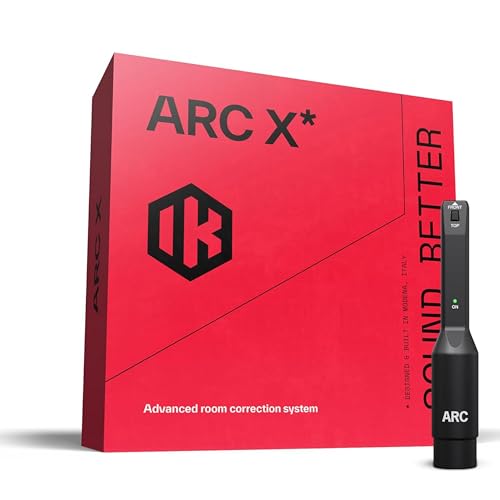
The IK Multimedia ARC X Room Correction & Monitor Calibration system is a game-changer for audio engineers and producers who demand precision in their mixing environments. With Volumetric Response Modelling, it measures room acoustics and applies phase-coherent corrections, ensuring a balanced monitoring setup. You’ll love the real-time calibration options, whether using IK or third-party monitors. Plus, you can audition mixes through over 20 iconic speakers, enhancing your mix translation. Customization options let you adjust tonal balance to your liking, while the included measurement mic simplifies setup. ARC X guarantees reliable results, making it an essential tool for efficient workflows.
Best For: Audio engineers and music producers seeking precise room correction and monitor calibration for optimal mixing environments.
Pros:
- Precision Room Correction: Utilizes advanced Volumetric Response Modelling for accurate acoustic measurements and phase-coherent corrections.
- Real-time Calibration: Compatible with both IK and third-party monitors, allowing for seamless integration in diverse setups.
- Versatile Monitoring Options: Offers the ability to emulate over 20 iconic studio monitors and consumer speakers, enhancing mix translation across various playback systems.
Cons:
- Learning Curve: Some users may find the setup and customization options complex without prior experience.
- Cost: Investment in the system may be significant for hobbyists or those on a tight budget.
- Dependency on Measurement Mic: Accurate results rely on the quality and placement of the included measurement microphone.
Factors to Consider When Choosing a Room Calibration Microphone
When you’re picking a room calibration microphone, consider its compatibility with your AV receivers to guarantee seamless integration. You’ll also want to look at the microphone type and design, as well as its calibration features and accuracy. Don’t forget to check the frequency response range and available connectivity options to match your setup perfectly.
Compatibility With AV Receivers
Choosing the right room calibration microphone for your AV receiver can greatly enhance your audio experience. First, verify the microphone is compatible with your specific AV receiver model, as many are designed for particular brands or series. Look for microphones that support popular calibration technologies like Audyssey’s MultEQ variants or other proprietary systems. Check the connection options, such as USB, 3.5mm, or XLR, since this affects compatibility. Additionally, consider the microphone’s frequency response and sensitivity to match your AV receiver’s specifications. Finally, confirm that the microphone’s features align with your intended use, whether it’s for home theater optimization, professional audio measurement, or simply casual listening adjustments. Getting this right will elevate your sound setup considerably.
Microphone Type and Design
Selecting the right microphone type and design is essential for achieving accurate room calibration results. You should consider omnidirectional microphones, as they capture sound from all directions, enhancing your room acoustics analysis. The design of the microphone, whether it’s boundary or condenser, affects its sensitivity and frequency response, both critical for precise audio measurements. Aim for a flat frequency response; this guarantees all frequencies are captured evenly without distortion or coloration, providing reliable results. Also, look for plug-and-play connectivity to simplify your setup process and make integration into various audio systems easier. Finally, some microphones come with unique calibration files that optimize performance, aligning measurements with industry standards for increased reliability in your sound setup.
Calibration Features and Accuracy
To guarantee accurate room calibration, it’s essential to take into account the calibration features and accuracy of the microphone you choose. Look for microphones that come with unique calibration files specific to each unit, as these provide precise measurements aligned with standard reference microphones. Opt for high-quality models with omnidirectional capabilities, capturing sound from all directions for thorough data on your room’s acoustics. Pay attention to the signal-to-noise ratio; a higher ratio, ideally 75 dB or more, minimizes background noise interference, resulting in clearer audio measurements. Additionally, consider microphones with auto-calibration features that display error codes if measurements fail, helping you troubleshoot any issues and providing reliable calibration results for perfect sound setup.
Frequency Response Range
When calibrating your audio setup, the frequency response range of a microphone plays a significant role in ensuring accurate sound capture. Most calibration microphones feature a range from 20 Hz to 20 kHz, which covers the full spectrum of human hearing. A flat frequency response is vital, as it guarantees that all frequencies are represented equally, preventing any coloration of sound. Look for microphones with a frequency response tolerance of ±2 dB to maintain measurement accuracy. Additionally, pay attention to the microphone’s sensitivity, expressed in dB, as it can impact its ability to measure lower frequencies effectively. Understanding these aspects is essential for optimizing your audio system and achieving better room acoustics correction and calibration results.
Connectivity Options Available
Numerous connectivity options are available for room calibration microphones, each offering distinct advantages for your audio setup. USB connections allow for direct integration with computers and mobile devices, making setup a breeze and ensuring compatibility with acoustic measurement software. If you’re connecting to audio receivers, look for microphones with 3.5mm TRS plugs to facilitate secure data transfer. USB-C connectivity is increasingly common, letting you connect to modern smartphones and tablets for versatile on-the-go analysis. While less common, wireless options with Bluetooth connectivity provide flexibility in microphone placement without the hassle of cables. Finally, compatibility with driverless systems enhances usability, allowing for straightforward plug-and-play functionality across multiple platforms. Choose wisely to match your calibration needs!
Included Accessories and Support
Choosing the right room calibration microphone involves considering several key factors, including the included accessories and support. Look for essential accessories like tripods, windscreens, or transport cases, as these enhance usability and portability. It’s also important to check if the microphone comes with a unique calibration response graph or file, ensuring peak performance for your setup. Additional features, such as headphone or line-out pass-through jacks, allow for real-time monitoring during measurements. Don’t forget to verify that necessary cables, like USB or XLR, are included to avoid extra purchases. Finally, consider microphones that provide warranty information or customer support options, which can be invaluable if you run into issues or have questions.
