Thermal monoculars make it easier to spot heat signatures in darkness, brush, fog, and light cover without relying on visible light.
Below, we’ve rounded up 10 of the best thermal imaging monoculars for field use in 2026, focusing on practical performance, portability, and value.
Best 10 Thermal Imaging Monoculars for Field Use Picks for 2026
Trail-Ready Thermal Scout
TOPDON TS004 13mm 50Hz Night Vision

- 256x192 thermal resolution with 50Hz refresh
- Up to 11 hours from the 5000mAh battery
- IP67 waterproof with 2-meter drop resistance
Best For: outdoor users needing a rugged, long-running thermal monocular
Advanced Field Tracker
AGM Taipan V2 High-Sensitivity Monocular

- Sub-35mK thermal sensitivity for sharper heat detection
- 1.5x-12x zoom plus PIP and hot tracking
- IP67 housing with recording, Wi-Fi, and app control
Best For: hunters and professionals who want advanced imaging tools
Compact Detail Booster
Teslong TTS260 Super Resolution Thermal Monocular

- Super Resolution enhances 256x192 to 512x384
- 12mm lens detects signatures up to 218 yards
- 800x600 OLED eyepiece with 32GB storage
Best For: users who want a compact monocular with a more detailed-looking image
Pocket-Sized Field Viewer
RIX Pocket K2 Portable Thermal Monocular

- 256x192 sensor with 50Hz refresh and NETD<25mK
- Pocketable, lightweight body with EIS
- IP67 waterproof with integrated lens cover
Best For: travelers and field users who prioritize portability
Advanced Field Thermal Clarity
MiLESEEY TNV10PRO 320x240 Thermal Monocular

- True 320x240 IR sensor with 50Hz refresh
- 800x600 OLED display and 4× digital zoom
- Up to 12 hours runtime with 32GB storage
Best For: Users who want clearer handheld thermal imaging and long runtime
Compact High-Resolution Carry
RIX Pocket K3 384 Thermal Monocular
- 384x288 sensor with 15mm objective lens
- 50Hz sensor and 800x600 OLED display
- Pocketable design with Wi-Fi and recording
Best For: Hunters and field observers who want a compact thermal monocular
Helmet-Ready Versatility
RIX Stride ST3 Lite 384 Thermal Monocular

- True 1x design with helmet-mount support
- Wide 17.5° x 13.1° field of view
- 384x288 sensor with NETD <20mK and 50Hz
Best For: Users who need a lightweight thermal monocular for hands-free field use
Trail-Ready Thermal Pick
GOYOJO G215 Thermal Imaging Monocular
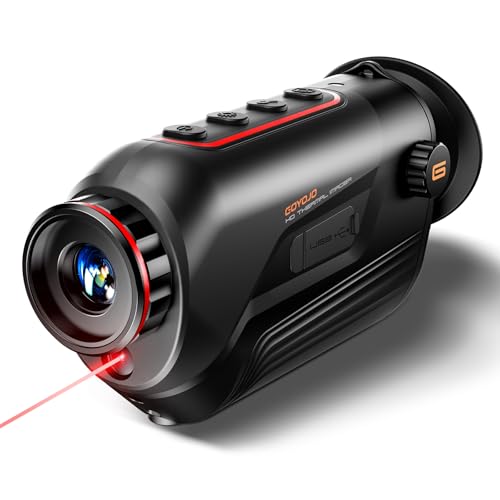
- 256x192 sensor with 50Hz refresh rate
- 6 color palettes and 4X zoom
- IP65 body with replaceable batteries
Best For: Hunters and field users who want a practical weather-resistant thermal monocular
Clear-View Field Scanner
CVLIFE 256x192 Thermal Monocular

- 1024x768 HD display with 0.39" screen
- Picture-in-Picture and hot spot tracking
- WiFi, recording, and 16GB storage
Best For: Users who want a screen-first thermal monocular with strong tracking and recording features
Ultra-Portable Thermal Tool
i4SEE EM10-256 Thermal Monocular

- Only 205g with IP67 ruggedness
- AMOLED touchscreen for comfortable viewing
- 20W quick charging and 6-hour runtime
Best For: Users who want a compact, durable thermal monocular for easy field carry
Trail-Ready Thermal Scout – TOPDON TS004 13mm 50Hz Night Vision
If you want thermal imaging monoculars for field use that balance clarity, endurance, and ruggedness, the TOPDON TS004 is built for practical outdoor scanning. Its 256×192 thermal resolution, 50Hz refresh rate, and 13mm lens are aimed at steady viewing while hiking, camping, or checking wildlife and other heat sources at distance.
Best For: hikers, campers, and field users who want long battery life and a durable, weather-ready thermal monocular.
Pros:
- 256×192 resolution with a smooth 50Hz refresh rate for clear thermal viewing.
- 13mm lens detects up to 410 meters and helps see through fog and dense vegetation.
- 5000mAh battery supports up to 11 hours of use.
- IP67 waterproof design with silicone casing and 2-meter drop resistance.
Cons:
- Detail visibility is listed as clear within 100 yards, so close-range clarity is its strongest area.
- App-based monitoring may be more than some users need for simple spotting.
The TS004 looks like a strong all-around choice when you need a dependable thermal monocular for field use rather than a minimalist gadget. It stands out most for battery life, weather protection, and usable detection range.
Advanced Field Tracker – AGM Taipan V2 High-Sensitivity Monocular
The AGM Global Vision Taipan V2 is a serious pick for thermal imaging monoculars for field use when detection quality and feature depth matter. Its sub-35mK 12m thermal detector, 50Hz refresh, and 1.5x-12x digital zoom give you flexible viewing for hunts, patrols, or nighttime scanning across open ground.
Best For: hunters and professional field users who want advanced imaging features and rugged all-weather performance.
Pros:
- High-sensitivity sub-35mK detector helps reveal subtle heat differences.
- 1.5x-12x digital zoom and multiple thermal palettes increase viewing flexibility.
- Rugged IP67 housing is built for rain, dust, and rough outdoor conditions.
- Built-in recording, Wi-Fi/app control, and advanced tools like PIP and hot tracking add utility.
Cons:
- Up to 7 hours of battery life is solid, but shorter than some longer-running alternatives.
- The feature set is extensive, which may be more than casual users need.
For field work that benefits from more control and more ways to interpret the scene, the Taipan V2 is a capable and well-equipped option. It is especially appealing if you value image tuning, recording, and smart tracking tools in one rugged monocular.
Compact Detail Booster – Teslong TTS260 Super Resolution Thermal Monocular
The Teslong TTS260 is designed for field use when image detail and comfortable viewing matter most. It starts with 256×192 thermal imagery, then uses super resolution to enhance the image up to 512×384, making it easier to pick out outlines, heat signatures, and movement while watching wildlife or surveying property.
Best For: field users who want a compact thermal monocular with sharper-looking images and a comfortable eyepiece.
Pros:
- Super Resolution boosts 256×192 images up to 512×384 for improved detail.
- 12mm lens detects thermal signatures up to 218 yards away.
- 0.32-inch 800×600 OLED eyepiece offers a larger, more immersive view.
- 32GB storage, 8 color modes, and up to 8 hours of battery life support outdoor sessions.
Cons:
- Detection range is useful, but not as far-reaching as some larger-lens options.
- 4x digital zoom is helpful, though not especially aggressive.
The TTS260 is a practical choice if you want better perceived detail without giving up portability. Its upgraded display and super-resolution processing make it appealing for longer looks in the field.
Pocket-Sized Field Viewer – RIX Pocket K2 Portable Thermal Monocular
If portability is the priority, the RIX Pocket K2 is one of the most travel-friendly thermal imaging monoculars for field use in this group. It combines a 256×192 sensor, 50Hz refresh rate, and a lightweight pocketable body with features like EIS and Resolution Enhanced Technology to keep viewing steady and clear on the move.
Best For: hikers, hunters, and field observers who want a very compact thermal monocular they can carry everywhere.
Pros:
- 256×192 sensor with 50Hz refresh and NETD<25mK for responsive detection.
- Resolution Enhanced Technology and EIS improve clarity and stability.
- Very lightweight, pocketable design makes it easy to carry in the field.
- IP67 waterproof rating and integrated lens cover support rough outdoor use.
Cons:
- Its compact form factor may not suit users who prefer a larger viewing device.
- The fixed-focus design may feel less flexible than models with more adjustable optics.
The Pocket K2 is a smart pick when you want a thermal monocular that stays out of the way until you need it. Its strength is convenience: small size, solid protection, and image-stabilizing features that make mobile scanning easier.
Advanced Field Thermal Clarity – MiLESEEY TNV10PRO 320×240 Thermal Monocular
If you want thermal imaging monoculars for field use that prioritize image clarity and smooth viewing, the MiLESEEY TNV10PRO is built for that job. Its true 320×240 IR sensor, 50Hz refresh rate, and 800×600 OLED display are aimed at giving you sharper thermal detail and steadier motion rendering during day or night observation.
Best For: Field users who want a higher-clarity handheld thermal monocular with long battery life and recording.
Pros:
- True 320×240 IR sensor with 12μm detector for improved thermal detail
- 50Hz refresh rate and 800×600 OLED display for smoother, sharper viewing
- Hotspot Tracking, 4× digital zoom, and five palettes for flexible field use
- 4500mAh battery with up to 12 hours runtime plus 32GB built-in storage
Cons:
- Heavier than pocket-sized options at 1.41 pounds
- Field-oriented feature set may be more than casual users need
- Best performance depends on thermal contrast and outdoor conditions
Overall, the TNV10PRO is a strong choice if you value clearer thermal rendering, longer endurance, and built-in video capture in a rugged handheld package. It stands out most when field reliability and image detail matter more than ultra-compact size.
Compact High-Resolution Carry – RIX Pocket K3 384 Thermal Monocular
The RIX Pocket K3 fits the thermal imaging monoculars for field use category well if you want a compact unit that is easy to carry without giving up a higher-resolution sensor. With a 384×288 thermal core, 50Hz frame rate, and built-in Wi-Fi, it is designed for smooth handheld observation and simple field documentation.
Best For: Hunters and field observers who want a pocketable thermal monocular with solid image quality and wireless sharing.
Pros:
- 384×288 sensor and 15mm lens for detailed thermal viewing
- 50Hz frame rate and 800×600 OLED display for smoother visuals
- Compact, pocket-friendly body with 1/4″-20 tripod mounting
- Wi-Fi, photo/audio/video recording, and 8GB memory for field documentation
Cons:
- 2x base magnification may feel limiting for some long-range users
- Detection range is listed under controlled conditions and may vary outdoors
- Smaller form factor may be less comfortable for users wanting larger controls
In practice, the Pocket K3 is a good match for users who value portability, smooth viewing, and convenient sharing features. It is especially appealing if you want a field-ready monocular that can slip into a pocket and still capture usable thermal footage.
Helmet-Ready Versatility – RIX Stride ST3 Lite 384 Thermal Monocular
The RIX Stride ST3 Lite is built for thermal imaging monoculars for field use when hands-free operation matters. Its true 1x base magnification, wide field of view, and helmet-mount support make it a practical pick for patrol-style scanning, vehicle use, and extended night observation.
Best For: Users who need a lightweight thermal monocular for helmet-mounted, handheld, or vehicle use.
Pros:
- True 1x base magnification is suited to natural, hands-free viewing
- Wide 17.5° x 13.1° field of view supports faster scanning
- 384×288 sensor, NETD <20mK, and 50Hz refresh for clear imaging
- Very light at 0.42 lb with helmet, tripod, and vehicle mounting options
Cons:
- 1x base magnification is not aimed at maximum close-up or long-range detail
- As a versatile unit, it may be more specialized than a simple handheld monocular
- Field performance still depends on target contrast and environment
For buyers who need a lightweight thermal tool that can move between helmet, handheld, and vehicle setups, the ST3 Lite is especially flexible. Its wide view and true 1x design make it a strong option when situational awareness is the priority.
Trail-Ready Thermal Pick – GOYOJO G215 Thermal Imaging Monocular
If you want thermal imaging monoculars for field use with a balance of image quality and practical durability, the GOYOJO G215 is built around a 256×192 sensor, 50Hz refresh rate, and a 15mm lens. It adds six color palettes, 4X zoom, WiFi app viewing, and 16GB storage, making it a solid all-around option for nighttime observation, hunting, and outdoor safety work.
Best For: Hunters and outdoor users who want a weather-resistant thermal monocular with simple recording and app connectivity.
Pros:
- 256×192 thermal sensor with 12μm detector for detailed low-light imaging
- 6 color display modes for adapting to different field conditions
- 4X zoom plus 16GB storage for capturing and reviewing important views
- IP65 waterproof rating and replaceable batteries for outdoor use
Cons:
- Lower resolution than some higher-end thermal models
- IP65 protection is good, but not the highest ruggedness level available
- Focused more on practical field use than advanced comfort features
The G215 is a straightforward field tool that prioritizes usable thermal imaging, storage, and weather resistance over extra premium features. For buyers who need a dependable handheld unit for night observation, it covers the basics well.
Clear-View Field Scanner – CVLIFE 256×192 Thermal Monocular
Among thermal imaging monoculars for field use, the CVLIFE model stands out for pairing a 256×192 sensor with a 1024×768 HD display and 50Hz refresh rate. It is designed for real-time tracking, with Picture-in-Picture, hot spot tracking, WiFi/app support, photo and video recording, and 6 color modes to help you adapt to changing outdoor conditions.
Best For: Users who want a more screen-focused thermal monocular for tracking, viewing, and recording in the field.
Pros:
- 1024×768 display and 0.39″ screen for clearer viewing
- 50Hz refresh rate and hot spot tracking for moving targets
- Picture-in-Picture, WiFi, and app connectivity for practical field workflow
- 16GB memory plus photo/video recording for saving observations
Cons:
- 2.4x basic magnification may feel limited for some users
- Heavier feature set may be more than casual buyers need
- Field performance still depends on the 256×192 thermal sensor class
This is a well-rounded option if your priority is seeing more clearly on the display and having useful recording tools built in. It feels geared toward users who want a functional field unit rather than a stripped-down thermal viewer.
Ultra-Portable Thermal Tool – i4SEE EM10-256 Thermal Monocular
If portability matters most in thermal imaging monoculars for field use, the i4SEE EM10-256 is the lightest-feeling option in this group at 205 grams. It combines a 256×192 VOx detector, 50Hz refresh rate, 10mm F1.0 lens, AMOLED touchscreen, and IP67 ruggedness, giving you a compact thermal monocular for hunting, security checks, and outdoor travel.
Best For: Buyers who want a compact, touchscreen thermal monocular with strong durability and quick charging.
Pros:
- Very lightweight at 205 grams for easy carry in the field
- AMOLED touchscreen for viewing without pressing against an eyepiece
- IP67-rated rugged build for all-weather use
- Up to 6 hours runtime plus 20W quick charging
Cons:
- 10mm lens is shorter than the 15mm options in this list
- Fixed focus design may not suit everyone
- Some users may prefer a more traditional eyepiece layout
The EM10-256 is the most travel-friendly pick here and adds modern control features that make extended viewing easier. It is a strong fit for users who value compact size, quick recharge, and rugged carry-anywhere design.
How We Picked the Best Thermal Imaging Monoculars for Field Use
For Thermal Imaging Monoculars for Field Use, the most useful models balance sensor quality, refresh rate, detection range, display clarity, and easy one-handed operation. We favored options that make real-world spotting simpler, not just devices with strong spec sheets.
We also looked at portability, battery life, ruggedness, Wi-Fi or recording features, and whether each unit suits hunting, livestock checks, search work, or general outdoor use.
Quick Comparison
Higher-resolution sensors and better displays usually improve target definition, while a wider field of view helps when scanning. Lower-resolution units can still be effective for close- to mid-range work if they are lightweight, fast to deploy, and affordable. In this roundup, some models prioritize maximum detail, while others emphasize compact carry, helmet mounting, or budget-friendly thermal coverage.
Key Buying Factors for Thermal Imaging Monoculars for Field Use
Resolution and Image Detail
Sensor resolution is one of the biggest factors in target clarity. A 256×192 unit can be solid for basic scanning, while 384×288 and higher typically improve identification at distance. Super-resolution and display enhancements can help, but they do not replace a stronger native sensor.
Lens, Field of View, and Detection Distance
A larger lens and narrower field of view generally support longer-range observation, while a wider view is better for searching open terrain or tracking movement. Think about whether you need scan-first coverage or more detail on distant targets.
Refresh Rate and Usability
For moving subjects, a 50Hz refresh rate often feels smoother and more natural. Fast boot-up, simple controls, and a comfortable grip matter just as much in the field, especially when you are working in cold weather or wearing gloves.
Display, Color Palettes, and Recording
A sharp internal display makes it easier to interpret what you are seeing. Multiple color modes can help separate heat from background clutter, and Wi-Fi or onboard recording can be useful for sharing observations or reviewing sightings later.
Durability and Mounting Options
Field gear should handle dust, bumps, moisture, and rough handling. If you need hands-free use, check for helmet-mount compatibility or accessory support. Otherwise, a compact handheld design is usually the most versatile.
Who Should Buy Which Thermal Imaging Monoculars for Field Use?
Buyers who want the best balance of portability and value should focus on compact 256×192 or 384×288 monoculars with 50Hz operation. If long-range identification matters most, step up to a higher-resolution model with a better lens and display. If your priority is all-day carry, vehicle use, or hands-free scanning, choose the lightest model with the mounting options you actually need.
For most people, the best Thermal Imaging Monoculars for Field Use are the ones that match the environment first and the spec sheet second. Start with your typical distance, terrain, and use case, then choose the model that makes real-world spotting easiest.
