Choosing the right XLR switch box for studio monitors can make A/B comparisons faster, cleaner, and far less frustrating. The best options keep your signal balanced, minimize noise, and simplify switching between interfaces, DACs, and monitoring paths.
In this roundup, we focus on practical, passive selector boxes and splitters that suit small project studios, home listening rooms, and multi-source monitoring setups.
Best 10 Xlr Switch Box for Studio Monitors Picks for 2026
Balanced Source Selector
DoukAudio 3-In-1-Out XLR Switcher

- 3 balanced XLR sources to 1 output
- Passive design needs no external power
- Gold-plated ports with aluminum shielding
Best For: Comparing multiple balanced sources in studio or HiFi setups
Compact A/B Mixer
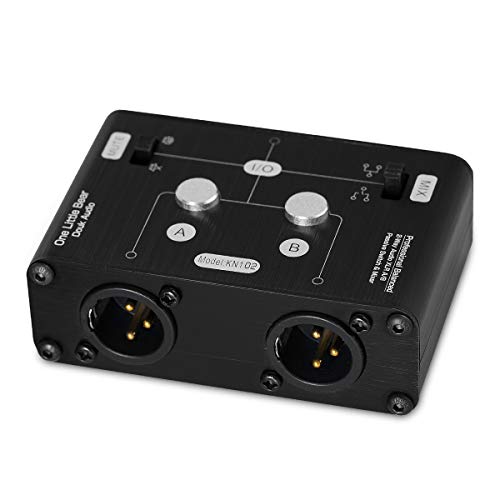
Douk Audio KN102 2-In-1-Out XLR Switcher

- Passive 2-in-1-out balanced XLR switching
- Mix mode and one-key mute included
- Mini aluminum body with gold-plated ports
Best For: Small balanced setups that need simple A/B switching and mute control
Reversible A/B Routing Box
WisWinDa Pro XLR Passive Switch Box

- Reversible passive A/B routing design
- Supports XLR and 1/4 inch inputs
- No external power required
Best For: Flexible balanced routing in studio, conference, or home theater setups
Multi-Output Splitter
Cubilux 4-Way Balanced XLR Splitter Box

- 1-in-4-out balanced XLR distribution
- Passive plug-and-play operation
- Aluminum alloy case for shielding
Best For: Sending one balanced source to multiple monitors, speakers, or amps
3-Way Passive XLR Source Selector
X301 3-Way XLR Stereo Audio Switcher

- Passive, no-power XLR source switching
- 3 stereo inputs to 1 output
- Solid aluminum desktop build
Best For: Switching between three balanced XLR sources in a simple studio setup
4-Input Passive XLR Selector
AS-X2 4-In-1-Out Stereo XLR Selector

- Routes 4 XLR inputs to 1 output
- Passive design with phantom pass-through
- Full aluminum alloy case
Best For: Studio setups that need four-source XLR switching and phantom pass-through support
Compact A/B Switcher
KN102 1-IN-2-OUT Passive XLR Box
- Passive 1-in-2-out / 2-in-1-out routing
- A/B selector plus mix and mute
- Mini aluminum build with gold-plated XLR ports
Best For: Comparing studio monitors and balanced XLR sources
Three-Output Selector

- Passive 1-in-3-out balanced selector
- No power, no mixer, single-output operation
- Heavy aluminum build with gold-plated connectors
Best For: One-source, three-destination XLR switching
Studio Monitor A/B Router
Reversible XLR & TRS Switch Box

- Reversible 1-in-2-out / 2-in-1-out routing
- Works with XLR and 1/4" TRS/TS connectors
- Passive aluminum build with waterproof toggle
Best For: Flexible studio monitor and balanced audio routing
Balanced Source Selector – DoukAudio 3-In-1-Out XLR Switcher
If you need an xlr switch box for studio monitors or other balanced gear, this passive 3-in-1-out selector gives you a straightforward way to compare sources without adding power or active circuitry. It is built for switching between balanced stereo XLR devices, making it useful for desktop audio, HiFi, and studio setups where signal path simplicity matters.
Best For: Switching up to three balanced XLR sources to one output for easy A/B comparison in studio or HiFi systems.
Pros:
- 3-in-1-out balanced XLR switching for source comparison and system management
- Pure passive design with no external power required
- Gold-plated XLR connectors for stable contact and reliable performance
- Shielded aluminum housing helps reduce interference
Cons:
- Only works with balanced XLR sources and outputs
- Not intended for users who need powered routing or gain control
- Best suited to switching, not expanding into multiple outputs
For users who want a simple balanced selector, this model focuses on transparent passive switching and sturdy construction. It fits best when your main goal is comparing DACs, players, mixers, or similar sources feeding one monitor chain.
Compact A/B Mixer – Douk Audio KN102 2-In-1-Out XLR Switcher
For a compact xlr switch box for studio monitors or other balanced equipment, the KN102 is a passive 2-in-1-out selector that lets you choose between two XLR sources with minimal fuss. Its small aluminum enclosure, gold-plated ports, and mix mode make it practical when you want simple source comparison or a quick mute option in a tight setup.
Best For: Users who want a mini passive A/B XLR box with mix and mute options for balanced audio comparison.
Pros:
- 2-in-1-out passive XLR switching for comparing two sources
- Mix mode plus one-key mute adds extra routing flexibility
- All-aluminum shell helps reduce external noise
- Gold-plated XLR ports support stable connection and lower attenuation
Cons:
- Limited to two source paths in this 2-in-1-out version
- Designed for XLR balanced equipment rather than broader input types
- Mini size is great for portability, but not for more complex routing
This is a sensible pick if you want a small passive switcher that keeps setup simple while still offering useful control modes. It is especially appealing when you need quick listening comparisons or a compact routing helper for balanced gear.
Reversible A/B Routing Box – WisWinDa Pro XLR Passive Switch Box
This xlr switch box for studio monitors is aimed at users who need flexible balanced routing without power. The reversible design lets it work as either one source to A or B, or A and B sources feeding a switchable path, and it also supports XLR plus 1/4 inch TS/TRS inputs for broader compatibility in studio, conference, or home theater setups.
Best For: Flexible passive balanced switching when you need reversible A/B routing and XLR or 1/4 inch input support.
Pros:
- Reversible operation supports more than one routing scenario
- Passive hot-swap design requires no external power
- Supports XLR and 1/4 inch TS/TRS input types
- Aluminum alloy enclosure suits studio and install use
Cons:
- Detailed channel routing is less focused than a dedicated source comparer
- Not a powered processor or monitor controller
- Best fit is balanced switching, not advanced signal shaping
If you need one box that can adapt to different balanced switching layouts, this model stands out for its reversible design. It is a practical choice when flexibility matters more than extra features.
Multi-Output Splitter – Cubilux 4-Way Balanced XLR Splitter Box
If your goal is to send one balanced signal to multiple devices, this xlr switch box for studio monitors is actually a 4-way passive splitter built for distribution rather than source selection. It takes one stereo input and feeds up to four outputs, which is useful for studios, live setups, and monitoring chains where you want to connect several amplifiers, speakers, or monitors at once.
Best For: Splitting one balanced XLR stereo source to four outputs for studio, live, or monitor distribution.
Pros:
- 1-in-4-out balanced stereo distribution for multiple devices
- Passive design needs no extra power supply
- Aluminum alloy case adds durability and shielding
- Plug-and-play setup with broad XLR compatibility
Cons:
- Not a true A/B switcher for choosing between sources
- Best for distribution, not source comparison
- Requires XLR-interface gear to use as intended
This model makes sense when you need to duplicate a balanced feed across several destinations with minimal setup. It is less about switching and more about clean, simple signal distribution in a studio or live environment.
3-Way Passive XLR Source Selector – X301 3-Way XLR Stereo Audio Switcher
If you need an xlr switch box for studio monitors and want to avoid constant cable swapping, this passive 3-way selector keeps routing simple. It is built for choosing one of three stereo XLR sources and sending it to a single output, with a minimal signal path and no power required.
Best For: Home studio or audio setup where you want to switch between up to three balanced XLR sources without adding power or active circuitry.
Pros:
- Pure passive design with no amplification, volume control, or power circuit
- Supports 3 stereo XLR inputs and 1 output for source switching
- Minimal internal wiring and reduced circuit traces for a simpler signal path
- Solid aluminum case and knob for durable desktop use
Cons:
- No volume control or signal boosting
- Only handles one selected input at a time
- Designed for XLR switching, so it is not a multi-format solution
For users focused on straightforward balanced audio routing, this box does the core job well: select, connect, and keep moving. Its passive build and compact metal construction make it a practical choice when you want a simple XLR selector for studio monitoring.
Balanced XLR/RCA Monitor Switch – PROZOR 2-IN-2-OUT XLR Balanced/RCA Converter
This xlr switch box for studio monitors is aimed at setups that need flexible routing across both XLR and RCA gear. It offers passive switching, independent volume control, and four connection modes, making it useful when your monitors and source devices do not all use the same connector type.
Best For: Studio or home audio users who need a passive monitor switch with XLR and RCA flexibility plus volume control.
Pros:
- Passive, no-external-power operation
- Four routing modes: XLR to XLR, XLR to RCA, RCA to XLR, and RCA to RCA
- Independent volume control for level adjustment
- Works with powered speakers, amplifiers, audio interfaces, and more
Cons:
- Not an XLR-only device, so the extra flexibility may be unnecessary for simple setups
- Volume control adds another adjustment point to manage
- Compact unit may be best suited to basic switching rather than complex routing
If your monitoring chain mixes balanced and RCA connections, this selector gives you more options than a basic XLR-only switch. It is a practical pick when you want passive switching and volume control in one small box.
4-Input Passive XLR Selector – AS-X2 4-In-1-Out Stereo XLR Selector
For a studio monitor chain that needs a more capable xlr switch box, this 4-input passive selector is built to route several balanced sources into one output. It is also notable for supporting phantom power pass-through, which makes it more versatile for microphone-related switching in a studio or test setup.
Best For: Studio users who want a passive XLR selector with four inputs and phantom power pass-through support.
Pros:
- Routes between 4 XLR input sources to 1 output
- Passive plug-and-play operation with no power supply required
- Supports phantom power pass-through for microphone signals
- Full aluminum alloy case for durability and RFI isolation
Cons:
- Does not provide phantom power itself
- Focused on XLR routing only, with no RCA flexibility
- No mention of volume control or other signal shaping features
This is the most versatile choice here if you need more than a simple A/B style switch. Its combination of four-input routing, passive operation, and phantom pass-through support makes it a strong fit for studio monitoring and microphone switching tasks.
Compact A/B Switcher – KN102 1-IN-2-OUT Passive XLR Box
If you need an xlr switch box for studio monitors or other balanced XLR gear, the KN102 is a simple passive option for routing one source to two outputs or comparing two sources with A/B switching. It adds mix mode and one-key mute, while the all-aluminum shell and gold-plated XLR ports are aimed at stable, low-loss signal transfer.
Best For: Comparing studio monitors, switching between balanced XLR sources, and quickly muting or routing signals in a compact setup.
Pros:
- Reversible 1-in-2-out / 2-in-1-out passive XLR design
- A/B selector with mix mode and one-key mute
- All-aluminum shell with gold-plated XLR ports
- Mini size is easy to place and carry
Cons:
- Only supports balanced XLR connections
- No active amplification or powered features
For a small passive switcher, the KN102 focuses on straightforward routing and easy source comparison rather than extra controls. It fits best where you want dependable balanced switching in a minimal footprint.
Three-Output Selector – XLR 1-in 3-Out Passive Switch
This xlr switch box for studio monitors is built as a passive selector for moving one balanced XLR source to one of three outputs, which makes it useful when you want to avoid constant cable swapping. It is not a mixer, so only one output can be selected at a time, and it keeps the signal path simple with no power circuit or volume control.
Best For: Users who want a manual balanced XLR selector for one source and up to three destinations without changing cables.
Pros:
- 1-in-3-out passive selector for balanced XLR gear
- Simple knob operation with no power required
- Gold-plated XLR connectors and silver-plated shielded cable
- Heavy CNC-machined aluminum alloy construction
Cons:
- Not a mixer, so outputs cannot play simultaneously
- Only one channel can be selected at a time
If you want a sturdy selector for a home audio or balanced system, this model prioritizes direct switching over advanced features. Its larger metal build and passive design suit users who value simplicity and durability.
Studio Monitor A/B Router – Reversible XLR & TRS Switch Box
For anyone shopping for an xlr switch box for studio monitors, this reversible passive A/B box is designed to route one source to two destinations or switch between two sources to one output. It also supports both XLR and 1/4″ TRS/TS connections, making it a flexible pick for monitoring, microphones, mixers, and other balanced audio gear.
Best For: Studio monitor comparison, microphone switching, and flexible balanced routing between XLR and 1/4″ gear.
Pros:
- Reversible 1-in-2-out / 2-in-1-out switching
- Supports both XLR and 1/4″ TRS/TS connectors
- Passive, no external power required
- Compact aluminum alloy chassis with waterproof toggle switch
Cons:
- Like all passive mechanical switches, a pop may occur during switching
- No active processing or amplification features
This is the most flexible of the three for mixed connector setups and general studio use. If you need a straightforward, plug-and-play switch box that can handle both monitor comparison and broader audio routing, it offers a practical middle ground.
How We Picked the Best Xlr Switch Box for Studio Monitors
We focused on balanced signal handling, passive operation, build quality, channel count, and how easily each unit fits a real monitoring workflow. For an Xlr Switch Box for Studio Monitors, the priority is transparent switching with minimal added complexity.
We also favored models with clear input/output labeling, sturdy connectors, and reversible or flexible routing where useful. That matters when you are comparing sources, feeding multiple destinations, or reducing cable swaps.
Quick Comparison
Simple 2-way boxes are best for straightforward A/B monitoring. 3-way and 4-way selectors suit users who regularly compare multiple sources. Splitter-style units are better when one signal needs to feed more than one destination at once.
If you need the cleanest day-to-day workflow, choose the smallest box that matches your routing needs. Extra channels can be helpful, but they also add size and complexity you may not need.
Key Buying Factors for an Xlr Switch Box for Studio Monitors
Balanced Vs. Unbalanced Routing
For studio monitors, balanced XLR connections are usually the safest choice because they help reduce hum and interference. Make sure the box supports balanced stereo or line-level routing if you are working with monitoring gear.
Passive Design
Passive switch boxes do not need power, which keeps them simple and reliable. They are ideal when you want basic source selection without extra gain stages or electronics in the path.
Channel Count and Direction
Check whether you need 1-in-2-out, 2-in-1-out, 3-way selection, or a splitter. Some products are reversible, which is useful if your studio setup changes over time.
Build and Connectivity
Look for metal housings, solid switches, and snug XLR jacks. A durable enclosure is worth it in studio environments where cables are plugged and unplugged often.
Who Should Buy Which Xlr Switch Box for Studio Monitors?
If you only need to compare two sources, a compact 2-way selector is usually the smartest choice. If you manage multiple playback devices, mixers, or monitor feeds, a 3-way or 4-way option will save time. If your goal is distribution rather than selection, choose a splitter-style box instead.
For most buyers, the best Xlr Switch Box for Studio Monitors is the one that matches your exact routing needs while keeping the signal path simple, balanced, and easy to use.
