Choosing the right desktop speaker stands for bookshelf speakers can make a bigger difference than many people expect. The right stand can improve stereo imaging, reduce desk resonance, and place tweeters closer to ear level.
Below, we focus on practical options for different speaker sizes, desk spaces, and listening goals so you can match the stand to your setup with confidence.
Best 10 Desktop Speaker Stands for Bookshelf Speakers Picks for 2026
Editor’s Choice
Kanto S4 Tilted Desktop Speaker Stands

- 16° tilt aims sound toward your ears
- Foam padding helps cut resonance
- Metal build keeps a low-profile desktop look
Best For: small to medium speakers on a clean desk setup
Clean Match
Kanto S4 White Tilted Desktop Speaker Stands
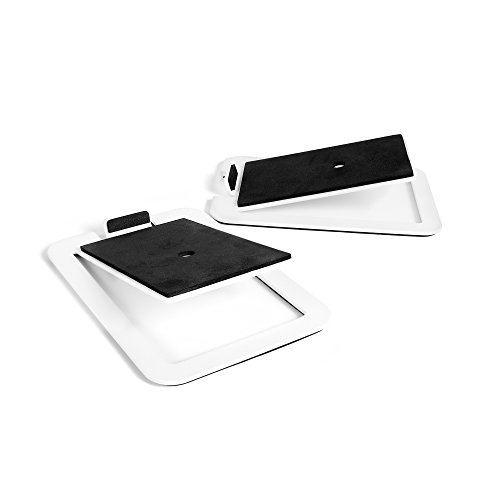
- 16° tilt with foam padding
- White low-profile metal design
- 8 lb capacity per stand
Best For: light-colored desks and medium speaker setups
High Capacity Pick
PEGZONE 16° Desktop Speaker Stands
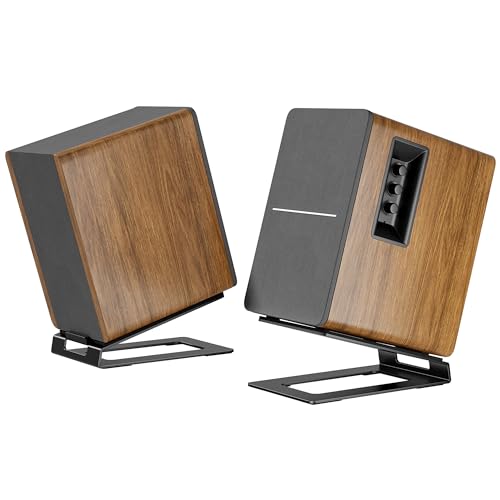
- 22 lb capacity for heavier speakers
- 16° tilt with anti-vibration pads
- Freestanding or screw-mounted use
Best For: heavier bookshelf speakers needing extra stability
Clarity-Focused Desktop Lift
Kanto SP9 Rising Stands for Small Bookshelf Speakers

- 9-inch height lifts speakers toward ear level
- Steel body and foam padding help reduce resonance
- Includes two plate sizes and 15° left/right rotation
Best For: Small to medium bookshelf speakers and compact studio monitors
Tilted Budget Support
PUTORSEN 16° Desktop Speaker Stands

- 16° tilt aims sound toward your ears
- 22 lb capacity with metal base for stability
- Anti-vibration and non-slip pads help reduce resonance
Best For: Most 3-4" bookshelf speakers needing angled desktop placement
Heavier Desktop Audio Platform
Kanto SP6HD Stands for Larger Bookshelf Speakers

- 6-inch height suits medium and large speakers
- Steel build and foam padding help reduce resonance
- Includes two plate sizes plus cable-routing columns
Best For: Medium and large bookshelf speakers or 4-7" studio monitors
Angled Silicone Wedges
HumanCentric Medium Desktop Speaker Stands

- 15° tilt aims sound toward your ears
- Silicone build helps reduce vibration
- Low-profile size suits medium speakers
Best For: compact desk setups needing a simple angled wedge
Tall Steel Speaker Riser Set
suptek Universal Desktop Speaker Stands

- 6.1-inch height lifts speakers toward ear level
- Wide 7.9 x 6.5-inch top plate adds stability
- Supports up to 44 lbs per stand
Best For: buyers who want taller, sturdier speaker stands
Space-Saving TPR Wedges
VIVO Medium Desktop Speaker Stands
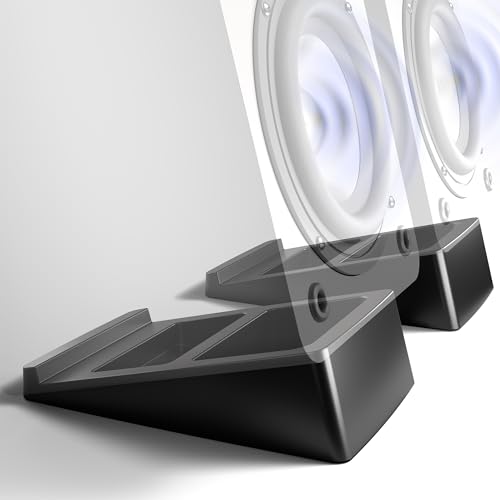
- 15° wedge tilt improves speaker aim
- TPR material helps isolate vibration
- No assembly required for quick setup
Best For: small desk setups that need a simple anti-vibration wedge
Editor’s Choice – Kanto S4 Tilted Desktop Speaker Stands
If you want desktop speaker stands for bookshelf speakers that keep a clean footprint while aiming sound toward your ears, the Kanto S4 is built around that idea. Its 16° tilt, foam padding, and solid metal construction make it a practical option for medium bookshelf speakers and mid-size studio monitors on a desk or studio table.
Best For: Users who want a low-profile, tilted stand with a premium metal build for small to medium speakers.
Pros:
- 16° angle helps direct higher frequencies toward the listener.
- Foam padding helps reduce unwanted resonance and adds stability.
- Solid metal construction and low-profile design keep the desk looking tidy.
- Includes 1/4″-20 mounting support for compatible speakers.
Cons:
- 8 lb load capacity may be limiting for heavier bookshelf speakers.
- Fixed tilt means no height or angle adjustment beyond the built-in slope.
The S4 is a straightforward, well-finished desktop stand for people who value angle, stability, and a minimalist look. If your speakers fit the size and weight range, it offers a clean and reliable setup.
Space Saver – PUTORSEN Adjustable Desktop Speaker Stands
For desktop speaker stands for bookshelf speakers that also free up room on your desk, this PUTORSEN pair uses a cantilevered C-shape design with a 6° tilt. It’s aimed at small and medium bookshelf speakers, computer speakers, and studio monitors, with anti-vibration pads and adjustable depth to help fit different speaker sizes.
Best For: People who want adjustable, space-saving stands with a higher weight capacity.
Pros:
- 6° tilt helps align speakers toward ear level.
- Adjustable depth range works with different speaker sizes.
- Each stand supports up to 12 lbs.
- C-shaped design leaves usable space underneath the speakers.
Cons:
- Best suited to speakers within the stated depth and weight limits.
- Assembly/setup may take a little more effort than fixed risers.
This is a good pick if desk space is tight and you want more flexibility than a simple fixed stand. The adjustable depth and anti-vibration features make it especially practical for mixed home office and listening setups.
Clean Match – Kanto S4 White Tilted Desktop Speaker Stands
If you’re looking for desktop speaker stands for bookshelf speakers in a lighter finish, the white Kanto S4 keeps the same angled, low-profile approach as the black version. It uses a 16° tilt, foam padding, and a metal build to support medium bookshelf speakers and mid-size studio monitors while maintaining a simple desktop layout.
Best For: Buyers who want the S4 design in white for a tidy, modern desktop.
Pros:
- 16° tilt helps direct sound toward listening position.
- Foam padding supports stability and reduces resonance.
- Low-profile white finish blends into lighter desks and setups.
- Metal construction and 8 lb per stand capacity suit medium speakers.
Cons:
- Weight limit may not suit larger bookshelf speakers.
- Fixed angle offers less flexibility than adjustable stands.
This version is mainly about fit and finish, with the same practical S4 formula in a white colorway. It’s a strong choice if you want a neat desktop look and already know your speakers fall within the supported size and weight range.
High Capacity Pick – PEGZONE 16° Desktop Speaker Stands
For desktop speaker stands for bookshelf speakers that prioritize strength, this PEGZONE pair stands out with a 22 lb capacity and a 16° tilt. It’s designed for most bookshelf speakers and includes anti-vibration pads, protective base padding, and two installation methods so you can use it freestanding or secure speakers with screws.
Best For: Heavier bookshelf speakers and users who want both freestanding and screw-mounted setup options.
Pros:
- 22 lb capacity is the highest in this group.
- 16° tilt helps aim sound directly toward the listener.
- Anti-vibration pad and base padding help reduce resonance and scratches.
- Two installation methods add flexibility for setup and stability.
Cons:
- Wooden finish may not match every desk style.
- Fixed tilt and height mean limited adjustment options.
This is the strongest option here if you need more support for heavier speakers. The combination of high load capacity, vibration control, and optional screw mounting makes it a practical desktop choice for sturdier setups.
Clarity-Focused Desktop Lift – Kanto SP9 Rising Stands for Small Bookshelf Speakers
If you’re shopping for desktop speaker stands for bookshelf speakers, the Kanto SP9 is built for listeners who want cleaner sound and a more polished desk setup. Its heavy steel construction and closed-cell foam padding are designed to reduce resonance, while the 9-inch height helps bring smaller speakers closer to ear level for fuller playback.
Best For: Small to medium bookshelf speakers and compact studio monitors that benefit from added height and vibration control.
Pros:
- Heavy steel build with foam padding to help absorb surface vibrations
- 9-inch height helps position tweeters closer to ear level
- Includes two top plate sizes for broader speaker compatibility
- Rotating top plates can tilt up to 15° left or right for better aiming
Cons:
- May be taller than some users want for low-profile desk setups
- Designed mainly for 3 to 4-inch speakers and compact monitors
The SP9 is a practical choice if you want a sturdy desktop stand that prioritizes clarity, cable management, and flexible positioning. It suits a focused desktop audio setup where reducing vibration matters as much as raising the speakers.
Tilted Budget Support – PUTORSEN 16° Desktop Speaker Stands
For buyers comparing desktop speaker stands for bookshelf speakers, the PUTORSEN pair stands out for its simple angled design and sturdy metal support. The 16° upward tilt is meant to aim sound toward your ears, while the anti-vibration pad and non-slip base help keep your desk quieter and the stands more stable.
Best For: Users who want an angled, space-saving stand for most 3-4″ bookshelf speakers.
Pros:
- 16° tilt helps direct sound upward for clearer listening
- Metal base supports up to 22 lbs for stable placement
- Freestanding setup or screw-in installation gives you two mounting options
- Anti-vibration top pad and non-slip base help reduce resonance and movement
Cons:
- Lower profile may not suit setups that need more height
- Compatibility is aimed mainly at most 3-4″ bookshelf speakers
This is a straightforward option if your priority is angled sound projection rather than tall lift. It makes sense for desks where you want more organized placement, less vibration, and a stable stand without much setup effort.
Heavier Desktop Audio Platform – Kanto SP6HD Stands for Larger Bookshelf Speakers
If you need desktop speaker stands for bookshelf speakers that can support larger models, the Kanto SP6HD is aimed at medium and full-size speakers. Its 6-inch height, heavy steel build, and closed-cell foam padding are intended to improve clarity by cutting down on surface vibration while keeping the speakers positioned closer to ear level.
Best For: Medium and large bookshelf speakers or 4-7″ studio monitors on a desktop setup.
Pros:
- Heavy steel construction helps reduce resonance and muddy sound
- 6-inch height is suited to medium and larger bookshelf speakers
- Two included top plate sizes add flexibility for different speaker sizes
- Rotating top plates and hollow columns support aiming and cable routing
Cons:
- Heavier and more substantial than smaller desktop stands
- May be more stand than needed for compact bookshelf speakers
The SP6HD is the most scale-friendly option here if your speakers are bigger and you still want a tidy desktop footprint. It balances stability, vibration control, and placement flexibility in a way that suits serious desk audio setups.
Angled Silicone Wedges – HumanCentric Medium Desktop Speaker Stands
If you want desktop speaker stands for bookshelf speakers that keep things simple, these HumanCentric wedges are a clean low-profile option. The 15° tilt helps aim sound toward your ears, while the silicone build is designed to reduce vibration and keep speakers from shifting on your desk.
Best For: Buyers who want a minimalist angled stand for medium bookshelf, desktop, or studio speakers without adding height or bulk.
Pros:
- 15° angled design helps direct sound upward for better listening.
- Premium silicone construction offers a stable, anti-vibration base.
- Low-profile black finish blends into desks and tabletop setups.
- Fits medium speakers including AudioEngine A5+, HD4, HD6, P4, and HDP6.
Cons:
- Fixed wedge angle gives less placement flexibility than adjustable stands.
- Best suited to medium-sized speakers, not very large bookshelf models.
Overall, this is a straightforward choice if you mainly want improved speaker aim and vibration control in a compact footprint. It’s especially appealing for desk setups where a subtle stand matters more than extra elevation.
Tall Steel Speaker Riser Set – suptek Universal Desktop Speaker Stands
For shoppers comparing desktop speaker stands for bookshelf speakers, this suptek pair stands out if you want real height rather than just a tilt. The 6.1-inch rise helps position speakers closer to ear level, and the wide top plate gives bookshelf or desktop speakers a sturdy, secure platform.
Best For: Users who want taller desktop speaker stands with a stable steel build for bookshelf speakers, studio monitors, or home audio setups.
Pros:
- 6.1-inch height raises speakers for better projection and staging.
- 7.9 x 6.5-inch top plate provides a roomy, stable support area.
- Supports up to 44 lbs per stand for heavier speaker setups.
- Includes anti-slip mat and comes with a lifetime warranty.
Cons:
- Requires assembly, though setup is designed to be quick.
- Taller footprint may not suit very tight desks or shelves.
This is a strong pick if your priority is getting speakers up to listening height rather than using a low wedge. The steel construction and higher load rating make it a practical option for more demanding desktop audio setups.
Space-Saving TPR Wedges – VIVO Medium Desktop Speaker Stands
These VIVO desktop speaker stands for bookshelf speakers are built for a simple, low-bulk setup with a useful 15° tilt. The TPR material helps isolate speakers from the desk, while the compact wedge shape keeps the footprint small for gaming rigs, offices, or desktop audio systems.
Best For: Anyone who wants a compact, no-assembly wedge stand for bookshelf or desktop speakers with anti-vibration support.
Pros:
- 15° tilt helps aim speakers toward ear level.
- TPR material is designed to reduce resonance and desk vibration.
- No assembly required—just place speakers on top.
- Supports up to 22 lbs and fits many bookshelf and gaming speakers.
Cons:
- Lower weight capacity than some steel stand options.
- Fixed wedge design won’t provide height adjustment.
For a clean desktop setup, this VIVO pair makes sense if you prefer a small wedge over a tall riser. It focuses on stability, vibration control, and easy placement rather than maximum elevation.
How We Picked the Best Desktop Speaker Stands for Bookshelf Speakers
We focused on stand design, load capacity, tilt or height options, vibration control, footprint, and compatibility with common bookshelf and compact studio speakers. We also looked for stable materials, useful cable-friendly designs, and shapes that help aim sound toward the listener without taking over the desk.
Quick Comparison
In this category, the main choice is usually between angled wedge-style stands and elevated upright stands. Angled models are ideal for improving ear alignment on lower desks, while taller risers work better when you need more lift for larger speakers or deeper desktops. If your speakers are heavier, prioritize weight rating and base stability first, then think about angle and height.
Key Buying Factors for Desktop Speaker Stands for Bookshelf Speakers
Height and Tilt
Speaker tweeters should point roughly toward ear level for the most natural sound balance. A modest tilt can help on typical desks, while taller stands are better when your monitor or desk height sits low relative to your listening position.
Stability and Weight Capacity
Stands should hold the speaker securely without wobble. Check both the stated capacity and the shape of the base, since a wider footprint often feels more secure on crowded desks.
Vibration Control
Anti-slip pads, foam tops, silicone surfaces, and damping materials help reduce unwanted resonance. This matters if your desk transmits bass energy or if you listen at higher volumes.
Speaker Size and Depth
Make sure the platform supports your speaker’s width and depth, not just its weight. Some Desktop Speaker Stands for Bookshelf Speakers are built for compact monitors, while others can handle larger cabinets more comfortably.
Desk Space and Aesthetics
If your workspace is tight, low-profile wedge stands may be the best fit. If you want a cleaner, more elevated look, taller risers can create a more organized setup and free up space underneath.
Who Should Buy Which Desktop Speaker Stands for Bookshelf Speakers?
Choose angled stands if you want simple ear-level alignment and a compact footprint. Choose taller stands if your speakers need more lift or if you want a more pronounced isolation barrier between the cabinet and the desk. Choose heavier-duty models if your bookshelves speakers are larger, bassier, or positioned on a very firm surface where vibration control matters most.
If you are building a desktop audio setup from scratch, the best choice is usually the stand that fits your speaker dimensions first, then solves your height and angle needs second. That order will help you get better sound without sacrificing desk usability.
